Ruggieri Serena, Quartuccio Maria Esmeralda, Prosperini Luca
Department of Human Neurosciences, Sapienza University, Rome, 00185, Italy.
Neuroimmunology Unit, Santa Lucia Foundation, Rome, 00143, Italy.
Degener Neurol Neuromuscul Dis. 2022 Mar 22;12:61-73. doi: 10.2147/DNND.S313825. eCollection 2022.
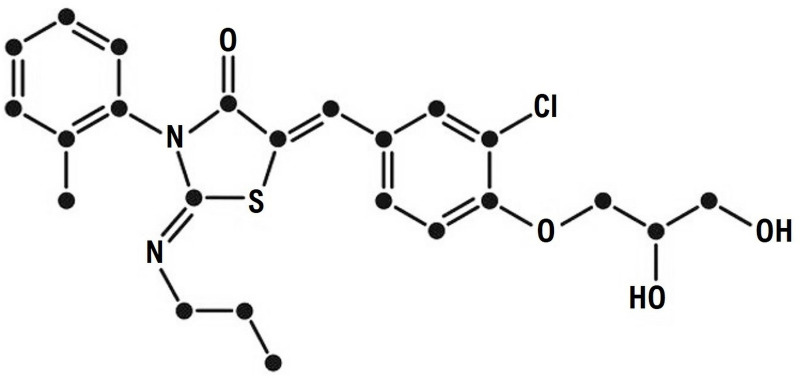
Sphingosine 1-phosphate (S1P) receptors are bioactive lipid metabolites that bind five different types of receptors expressed ubiquitously in human body and mediate a broad range of biological functions. Targeting S1P receptors is nowadays a well-established pharmacological strategy to treat multiple sclerosis (MS). However, the adverse events associated with the ancestor (fingolimod), especially in terms of heart conduction and slow reversibility of its pharmacodynamics effect on lymphocytes, have stimulated a search for a S1P modulator with greater selectivity for S1P (the most important immune mechanism to prevent MS-related neuroinflammation). Ponesimod is a second-generation, orally active, directly bioavailable, highly selective, and rapidly reversible modulator of the S1P receptor. Gradual 14-day up-titration of ponesimod mitigates its first-dose effects on heart rate and facilitates its use over fingolimod, as it does not require first-dose cardiac monitoring. Ponesimod is rapidly eliminated within 1 week of discontinuation, thereby representing a more manageable approach in case of vaccination, pregnancy, or adverse events. However, the fast reversibility of ponesimod may also raise concerns about the possibility of a rapid reactivation of disease activity following its discontinuation. Ponesimod was recently approved for the treatment of relapsing MS forms on the basis of a Phase III, double-blind, double-dummy, randomized clinical trial (OPTIMUM) that demonstrated the superiority of ponesimod over teriflunomide on disease activity markers, without unexpected safety concerns. This review summarizes the pharmacodynamic and pharmacokinetic characteristics of ponesimod, and the main Phase II and III studies that led to its approval. Comparisons of ponesimod with other S1P receptor modulators currently available for MS (fingolimod, ozanimod, siponimod) are also provided.
1-磷酸鞘氨醇(S1P)受体是生物活性脂质代谢产物,可与人体中普遍表达的五种不同类型受体结合,并介导广泛的生物学功能。如今,靶向S1P受体是治疗多发性硬化症(MS)的一种成熟的药理学策略。然而,其前身(芬戈莫德)相关的不良事件,尤其是在心脏传导方面以及其对淋巴细胞药效学作用的缓慢可逆性,促使人们寻找对S1P具有更高选择性的S1P调节剂(这是预防MS相关神经炎症的最重要免疫机制)。波尼莫德是第二代口服活性、直接生物可利用、高度选择性且快速可逆的S1P受体调节剂。波尼莫德14天的逐渐滴定可减轻其对心率的首剂效应,并便于其优于芬戈莫德使用,因为它不需要首剂心脏监测。停药后1周内波尼莫德可迅速消除,因此在接种疫苗、怀孕或出现不良事件时是一种更易于管理的方法。然而,波尼莫德的快速可逆性也可能引发对停药后疾病活动迅速重新激活可能性的担忧。基于一项III期双盲、双模拟、随机临床试验(OPTIMUM),波尼莫德最近被批准用于治疗复发型MS,该试验证明波尼莫德在疾病活动标志物方面优于特立氟胺,且无意外的安全问题。本综述总结了波尼莫德的药效学和药代动力学特征,以及导致其获批的主要II期和III期研究。还提供了波尼莫德与目前可用于MS的其他S1P受体调节剂(芬戈莫德、奥扎莫德、西普尼莫德)的比较。