Department of Biomedical Engineering, The University of Texas at Austin, Austin, Texas, United States of America.
Department of Diagnostic Medicine, The University of Texas at Austin, Austin, Texas, United States of America.
PLoS Comput Biol. 2022 Mar 31;18(3):e1009104. doi: 10.1371/journal.pcbi.1009104. eCollection 2022 Mar.
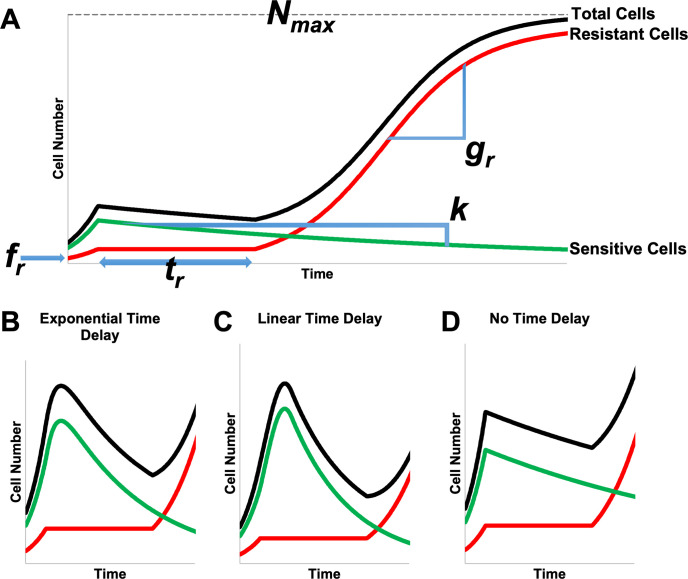
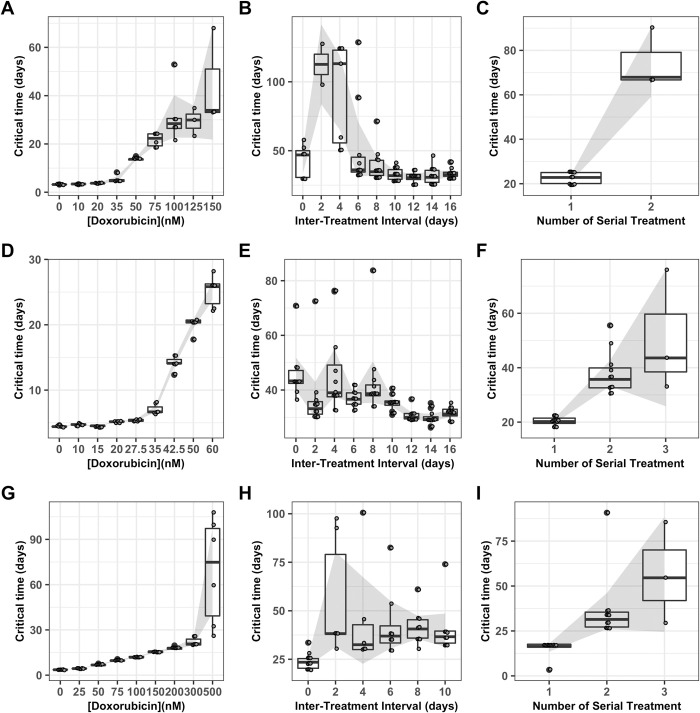
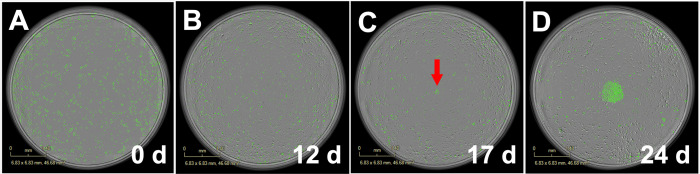
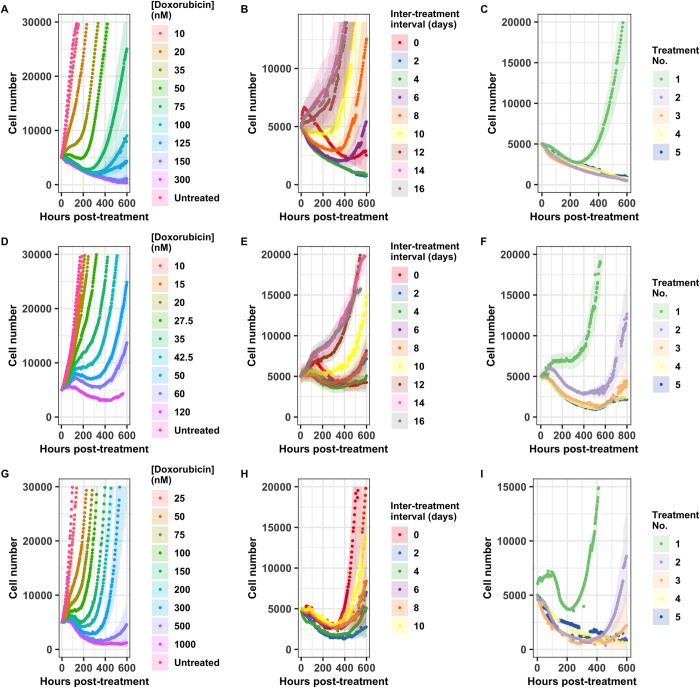
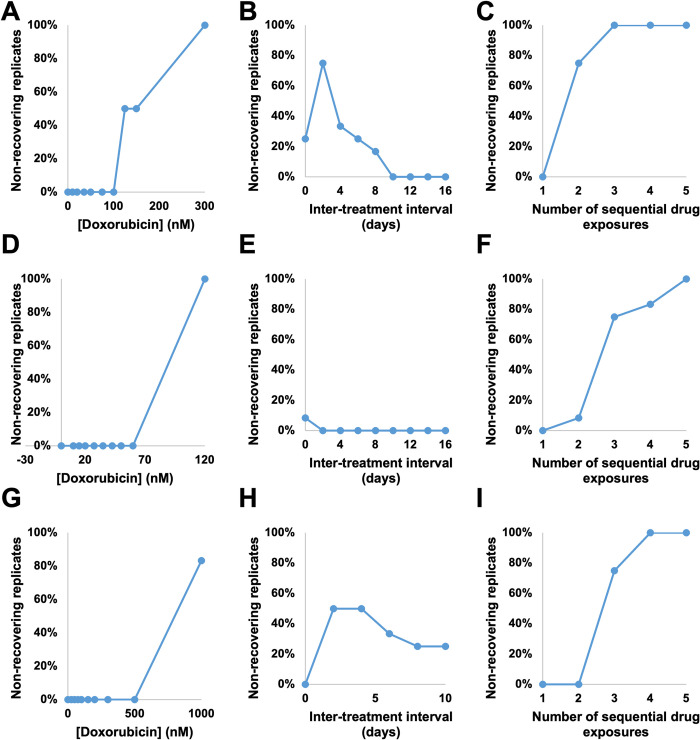
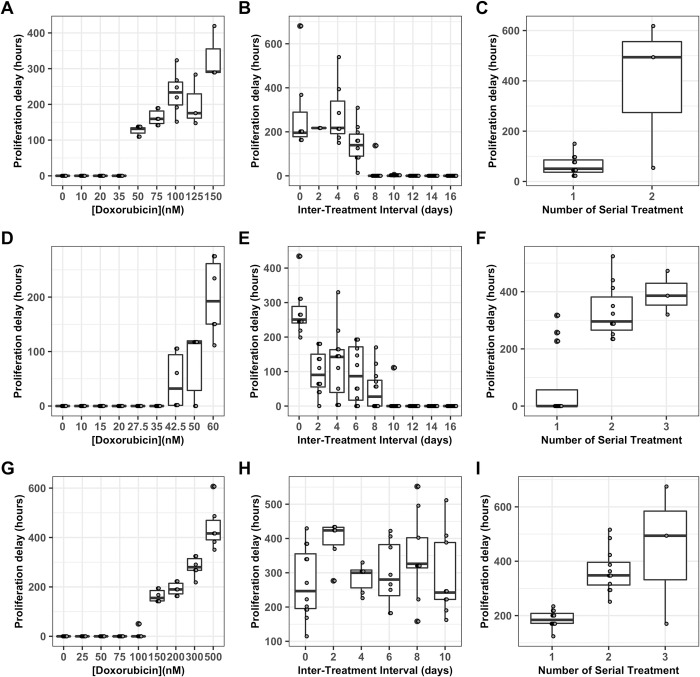
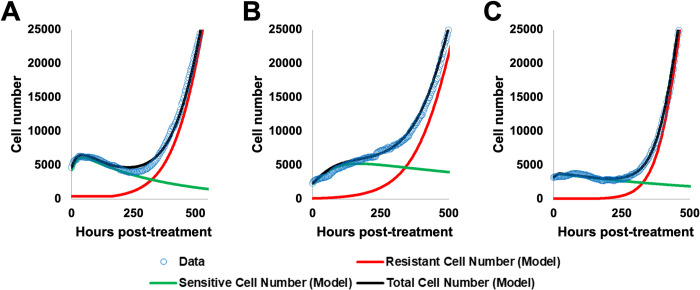
While acquired chemoresistance is recognized as a key challenge to treating many types of cancer, the dynamics with which drug sensitivity changes after exposure are poorly characterized. Most chemotherapeutic regimens call for repeated dosing at regular intervals, and if drug sensitivity changes on a similar time scale then the treatment interval could be optimized to improve treatment performance. Theoretical work suggests that such optimal schedules exist, but experimental confirmation has been obstructed by the difficulty of deconvolving the simultaneous processes of death, adaptation, and regrowth taking place in cancer cell populations. Here we present a method of optimizing drug schedules in vitro through iterative application of experimentally calibrated models, and demonstrate its ability to characterize dynamic changes in sensitivity to the chemotherapeutic doxorubicin in three breast cancer cell lines subjected to treatment schedules varying in concentration, interval between pulse treatments, and number of sequential pulse treatments. Cell populations are monitored longitudinally through automated imaging for 600-800 hours, and this data is used to calibrate a family of cancer growth models, each consisting of a system of ordinary differential equations, derived from the bi-exponential model which characterizes resistant and sensitive subpopulations. We identify a model incorporating both a period of growth arrest in surviving cells and a delay in the death of chemosensitive cells which outperforms the original bi-exponential growth model in Akaike Information Criterion based model selection, and use the calibrated model to quantify the performance of each drug schedule. We find that the inter-treatment interval is a key variable in determining the performance of sequential dosing schedules and identify an optimal retreatment time for each cell line which extends regrowth time by 40%-239%, demonstrating that the time scale of changes in chemosensitivity following doxorubicin exposure allows optimization of drug scheduling by varying this inter-treatment interval.
虽然获得性化疗耐药性被认为是治疗多种癌症的关键挑战,但药物敏感性在暴露后变化的动态特征还知之甚少。大多数化疗方案需要定期重复给药,如果药物敏感性在相似的时间尺度上发生变化,那么可以优化治疗间隔以提高治疗效果。理论工作表明存在这样的最佳方案,但由于难以对癌细胞群体中同时发生的死亡、适应和再生过程进行解卷积,实验验证受到了阻碍。在这里,我们提出了一种通过迭代应用经过实验校准的模型来优化体外药物方案的方法,并证明了其在三种乳腺癌细胞系中对不同浓度、脉冲治疗间隔和连续脉冲治疗次数的治疗方案下对阿霉素敏感性的动态变化进行特征描述的能力。通过自动成像对细胞群体进行长达 600-800 小时的纵向监测,并使用该数据校准一组癌症生长模型,每个模型都由一个常微分方程系统组成,该系统源自能够描述耐药和敏感亚群的双指数模型。我们确定了一个模型,该模型既包含了存活细胞生长停滞期,又包含了对化疗敏感细胞死亡的延迟,在基于 Akaike 信息准则的模型选择中,该模型优于原始的双指数生长模型,并且使用校准模型来量化每个药物方案的性能。我们发现,治疗间隔是决定序贯给药方案性能的关键变量,并为每个细胞系确定了最佳的再治疗时间,这将使细胞再生长时间延长 40%-239%,表明阿霉素暴露后药物敏感性变化的时间尺度允许通过改变这种治疗间隔来优化药物方案。