Mathieson Layla, O'Connor Richard A, Stewart Hazel, Shaw Paige, Dhaliwal Kevin, Williams Gareth O S, Megia-Fernandez Alicia, Akram Ahsan R
Centre for Inflammation Research, Queen's Medical Research Institute, University of Edinburgh, Edinburgh, United Kingdom.
Translational Healthcare Technologies Group, Centre for Inflammation Research, Queen's Medical Research Institute, University of Edinburgh, Edinburgh, United Kingdom.
Front Oncol. 2022 Mar 10;12:834350. doi: 10.3389/fonc.2022.834350. eCollection 2022.
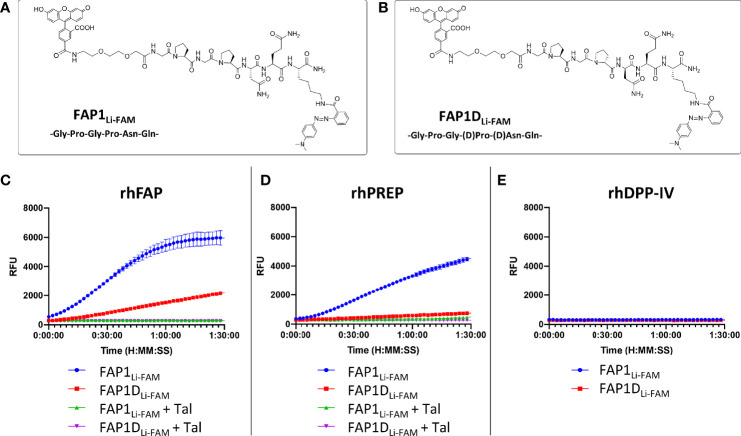
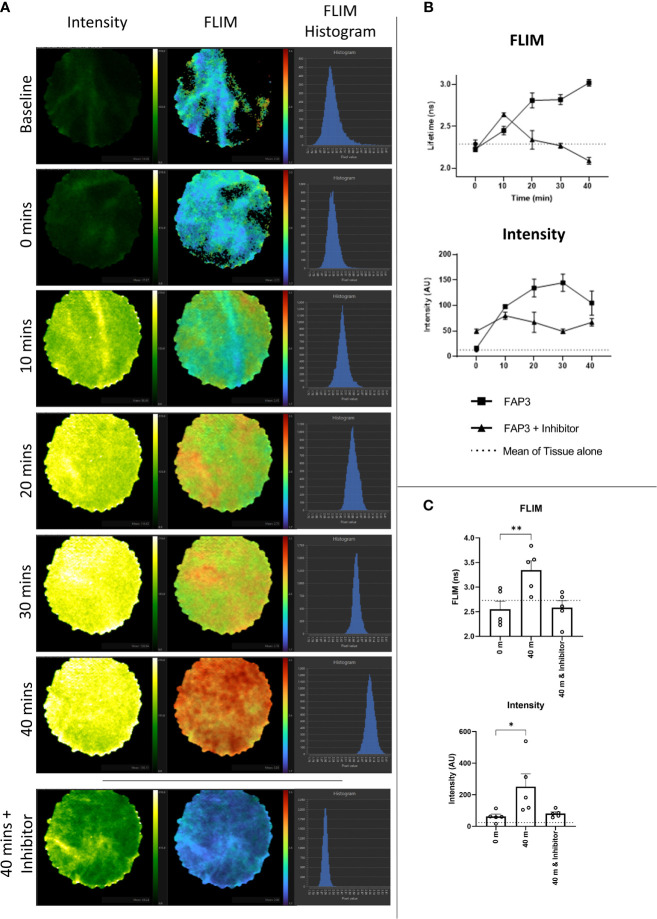
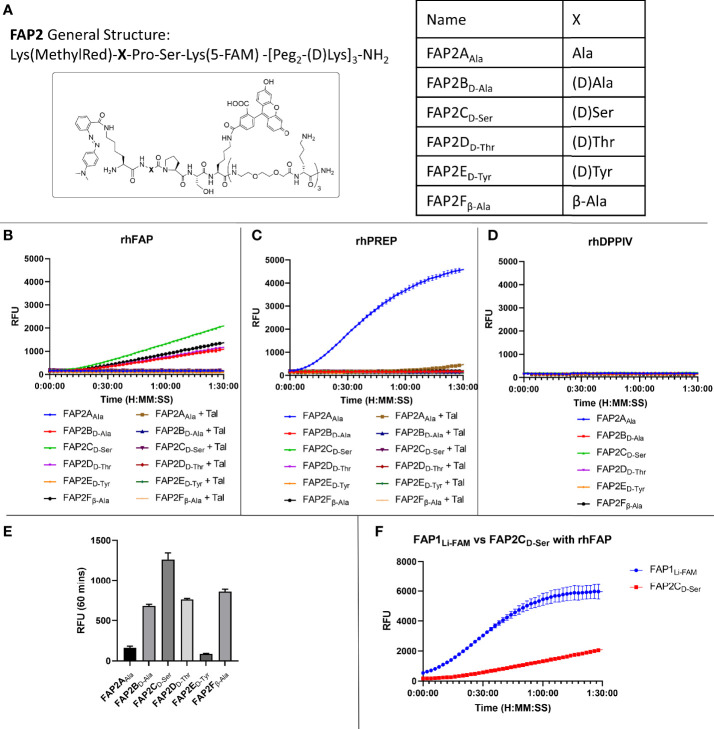
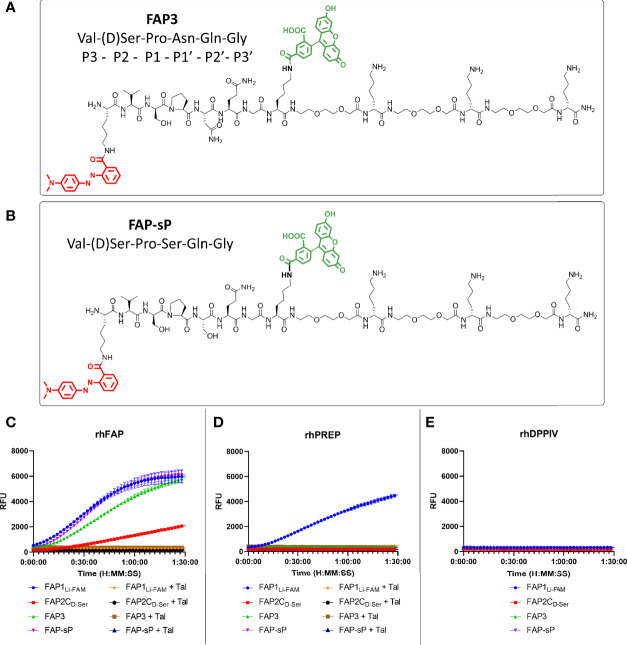
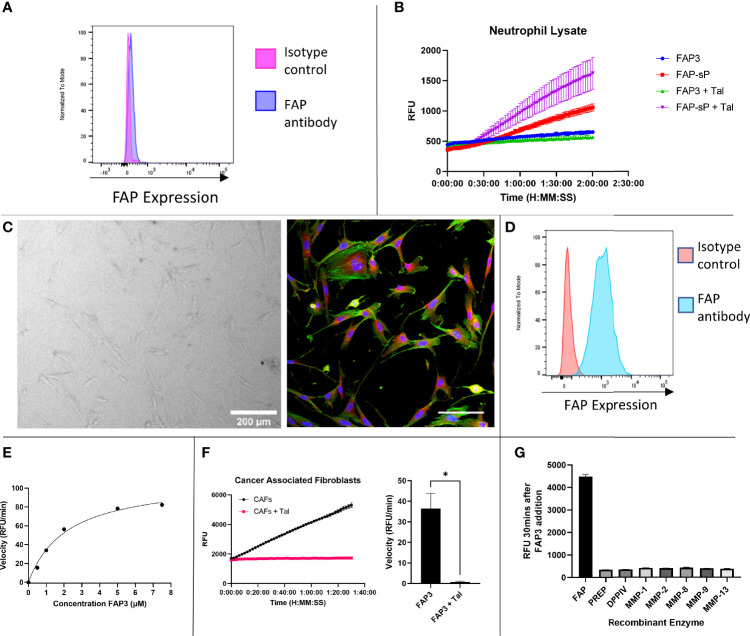
Fibroblast activation protein (FAP) is a cell surface propyl-specific serine protease involved in the regulation of extracellular matrix. Whilst expressed at low levels in healthy tissue, upregulation of FAP on fibroblasts can be found in several solid organ malignancies, including non-small cell lung cancer, and chronic inflammatory conditions such as pulmonary fibrosis and rheumatoid arthritis. Their full role remains unclear, but FAP expressing cancer associated fibroblasts (CAFs) have been found to relate to a poor prognosis with worse survival rates in breast, colorectal, pancreatic, and non-small cell lung cancer (NSCLC). Optical imaging using a FAP specific chemical probe, when combined with clinically compatible imaging systems, can provide a readout of FAP activity which could allow disease monitoring, prognostication and potentially stratify therapy. However, to derive a specific signal for FAP any sequence must retain specificity over closely related endopeptidases, such as prolyl endopeptidase (PREP), and be resistant to degradation in areas of active inflammation. We describe the iterative development of a FAP optical reporter sequence which retains FAP specificity, confers resistance to degradation in the presence of activated neutrophil proteases and demonstrates clinical tractability ex vivo in NSCLC samples with an imaging platform.
成纤维细胞活化蛋白(FAP)是一种细胞表面脯氨酸特异性丝氨酸蛋白酶,参与细胞外基质的调节。虽然在健康组织中表达水平较低,但在包括非小细胞肺癌在内的几种实体器官恶性肿瘤以及慢性炎症性疾病如肺纤维化和类风湿性关节炎中,可发现成纤维细胞上FAP的上调。其全部作用仍不清楚,但已发现表达FAP的癌症相关成纤维细胞(CAF)与乳腺癌、结直肠癌、胰腺癌和非小细胞肺癌(NSCLC)的预后不良及较差的生存率有关。使用FAP特异性化学探针的光学成像与临床兼容的成像系统相结合时,可提供FAP活性的读数,这有助于疾病监测、预后评估并可能对治疗进行分层。然而,为了获得FAP的特异性信号,任何序列都必须对密切相关的内肽酶(如脯氨酰内肽酶(PREP))保持特异性,并在活跃炎症区域具有抗降解能力。我们描述了一种FAP光学报告序列的迭代开发过程,该序列保留了FAP特异性,在存在活化中性粒细胞蛋白酶的情况下具有抗降解能力,并在NSCLC样本中通过成像平台在体外证明了临床可操作性。