The Key Laboratory of Cardiovascular Disease of Wenzhou, Department of Cardiology, The First Affiliated Hospital of Wenzhou Medical University, Wenzhou, Zhejiang, China.
Department of Emergency, The First Affiliated Hospital of Wenzhou Medical University, Wenzhou, Zhejiang, China.
Cardiovasc Ther. 2022 Mar 14;2022:3167959. doi: 10.1155/2022/3167959. eCollection 2022.
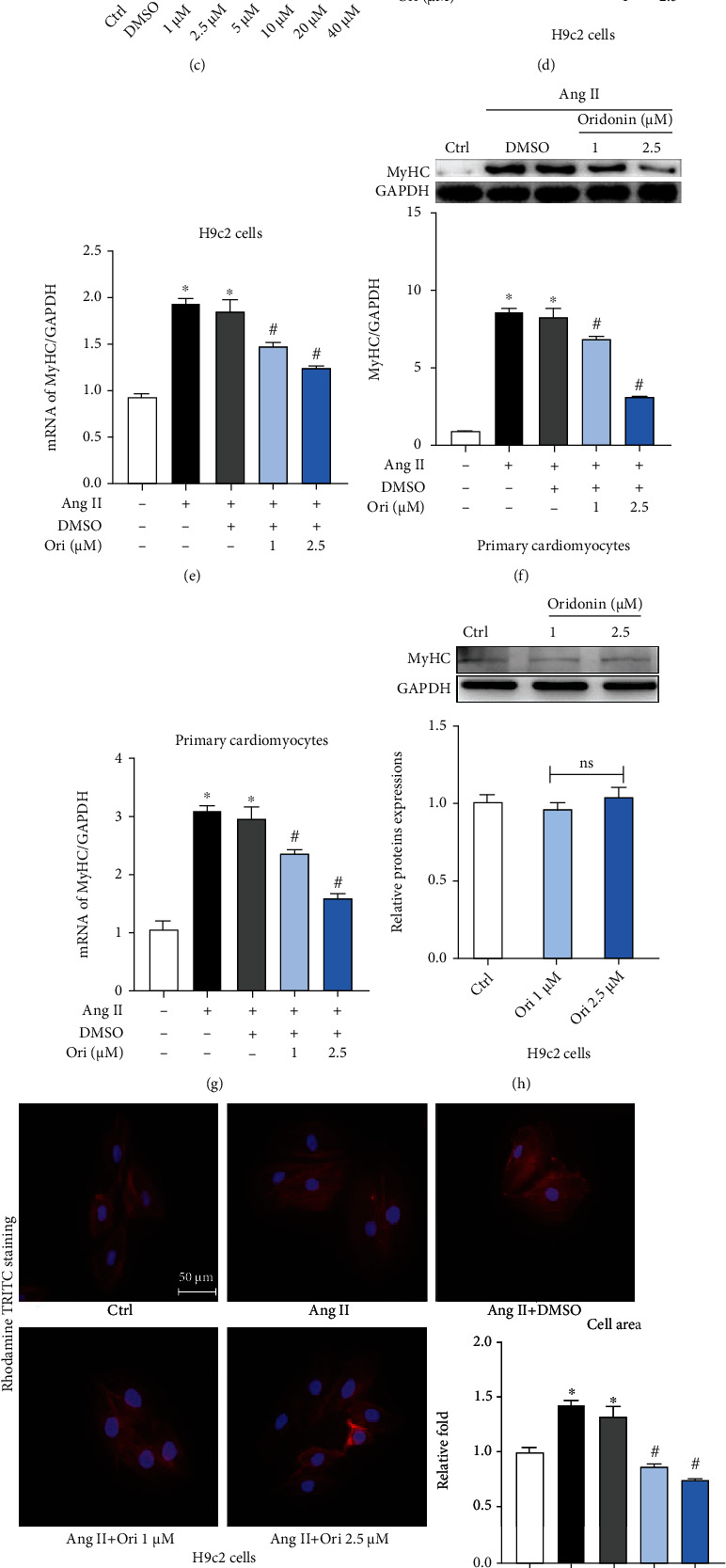
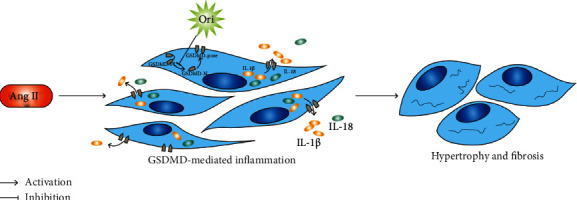
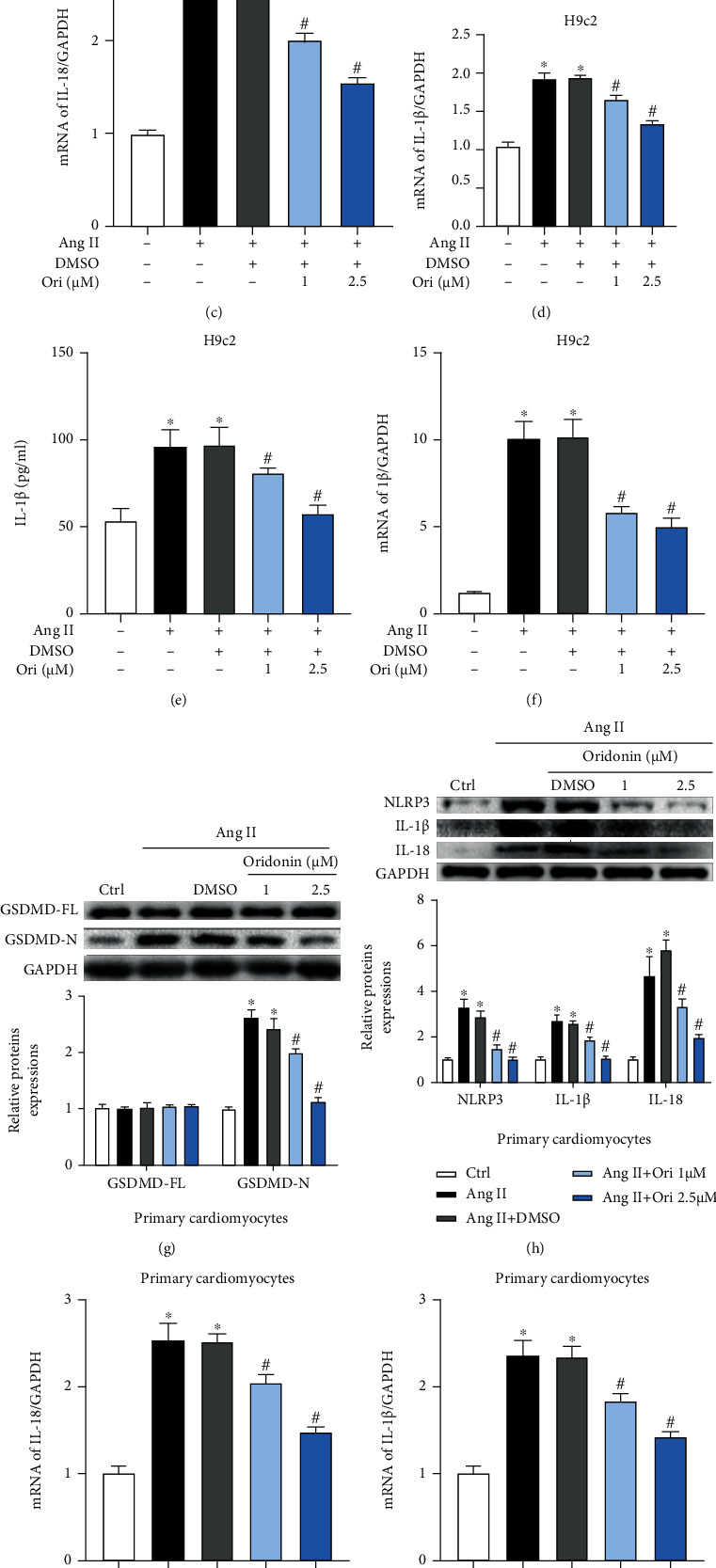
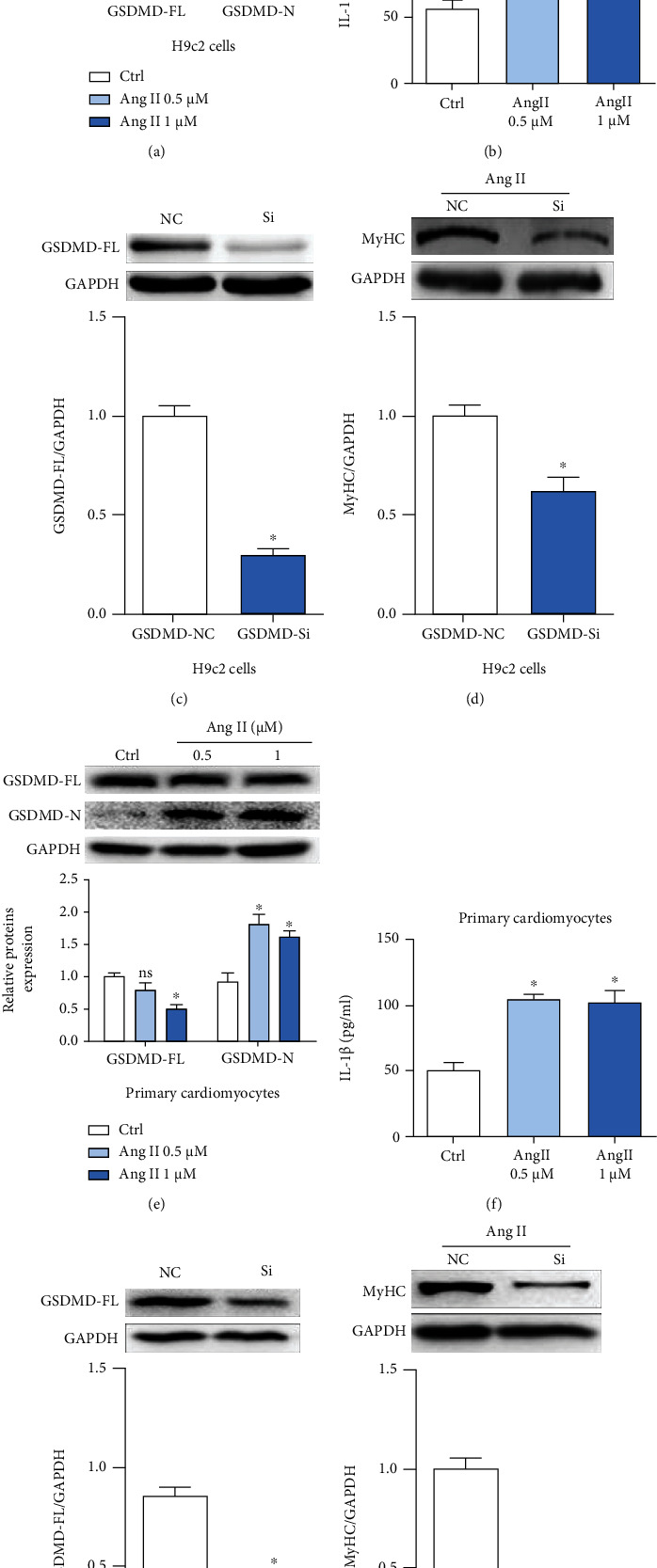
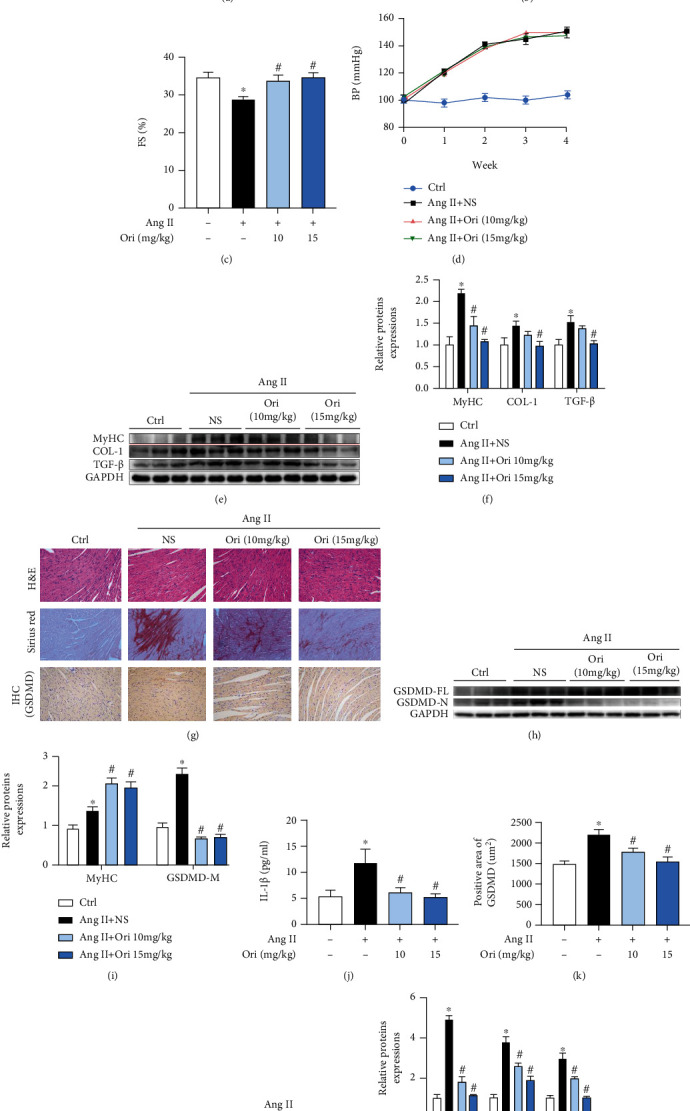
Myocardial remodeling is one of the main lesions in the late stage of chronic heart failure and seriously affects the prognosis of patients. Continuous activation of the renin-angiotensin-aldosterone system (RAAS) contributes to the development of myocardial remodeling greatly, and angiotensin II (Ang II), its main constituent, can directly lead to cardiac remodeling through an inflammatory response and oxidative stress. Since Ang II-induced myocardial remodeling is closely related to inflammation, we tried to explore whether the anti-inflammatory drug oridonin (Ori) can reverse this process and its possible mechanism. Our study investigated that hypertrophy and fibrosis can be induced after being treated with Ang II in cardiomyocytes (H9c2 cells and primary rat cardiomyocytes) and C57BL/6J mice. The anti-inflammatory drug oridonin could effectively attenuate the degree of cardiac remodeling both in vivo and vitro by inhibiting GSDMD, a key protein of intracellular inflammation which can further activate kinds of inflammation factors such as IL-1 and IL-18. We illustrated that oridonin reversed cardiac remodeling by inhibiting the process of inflammatory signaling through GSDMD. After inhibiting the expression of GSDMD in cardiomyocytes by siRNA, it was found that Ang II-induced hypertrophy was attenuated. These results suggest that oridonin is proved to be a potential protective drug against GSDMD-mediated inflammation and myocardial remodeling.
心肌重构是慢性心力衰竭晚期的主要病变之一,严重影响患者的预后。肾素-血管紧张素-醛固酮系统(RAAS)的持续激活极大地促进了心肌重构的发展,其主要组成部分血管紧张素 II(Ang II)通过炎症反应和氧化应激直接导致心脏重构。由于 Ang II 诱导的心肌重构与炎症密切相关,我们试图探讨抗炎药物冬凌草甲素(Ori)是否可以逆转这一过程及其可能的机制。我们的研究表明,Ang II 可诱导心肌细胞(H9c2 细胞和原代大鼠心肌细胞)和 C57BL/6J 小鼠发生肥大和纤维化。抗炎药物冬凌草甲素可通过抑制细胞内炎症的关键蛋白 GSDMD,有效减轻体内和体外的心肌重构程度,GSDMD 可进一步激活各种炎症因子,如 IL-1 和 IL-18。我们表明,冬凌草甲素通过抑制 GSDMD 介导的炎症信号通路来逆转心肌重构。用 siRNA 抑制心肌细胞中 GSDMD 的表达后,发现 Ang II 诱导的肥大减轻。这些结果表明,冬凌草甲素被证明是一种潜在的针对 GSDMD 介导的炎症和心肌重构的保护药物。