Spencer J, Dillon S B, Isaacson P G, MacDonald T T
Clin Exp Immunol. 1986 Sep;65(3):553-8.
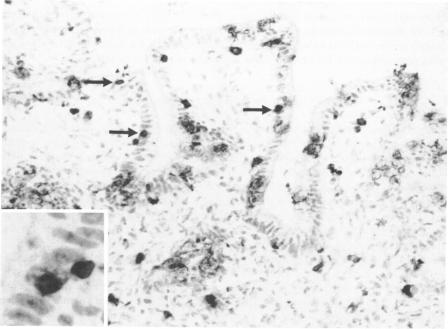
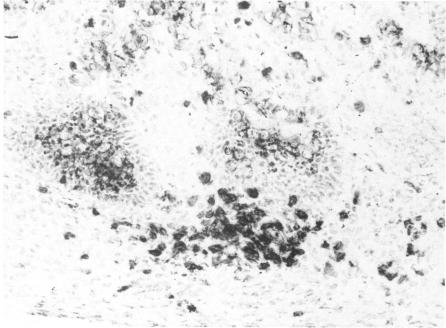
Lymphocytes within fetal human ileum were studied by immunocytochemistry to determine the appearance of T cells in human small intestine and the role of enteric antigen in the accumulation of cells of the suppressor/cytotoxic phenotype in the gut epithelium. In fetal human gut epithelium, cells bearing the pan T cell marker UCHT1 (CD3) were present in all of the specimens studied (11-19 weeks gestation). Of these, UCHT4+ (CD8, suppressor/cytotoxic phenotype) predominated over the leu3a+ (CD4, helper/inducer phenotype), although the differences were not as marked as in postnatal gut. UCHT1+ cells were also present in the lamina propria, frequently as small aggregates beneath the epithelium.
通过免疫细胞化学方法研究了胎儿人回肠中的淋巴细胞,以确定T细胞在人小肠中的出现情况,以及肠道抗原在肠道上皮中抑制/细胞毒性表型细胞积累中的作用。在胎儿人肠道上皮中,所有研究标本(妊娠11 - 19周)中均存在携带泛T细胞标志物UCHT1(CD3)的细胞。其中,UCHT4 +(CD8,抑制/细胞毒性表型)细胞比leu3a +(CD4,辅助/诱导表型)细胞占优势,尽管差异不如出生后肠道中明显。UCHT1 +细胞也存在于固有层中,常在上皮下方形成小聚集体。