Cook W R, MacAlister T J, Rothfield L I
J Bacteriol. 1986 Dec;168(3):1430-8. doi: 10.1128/jb.168.3.1430-1438.1986.
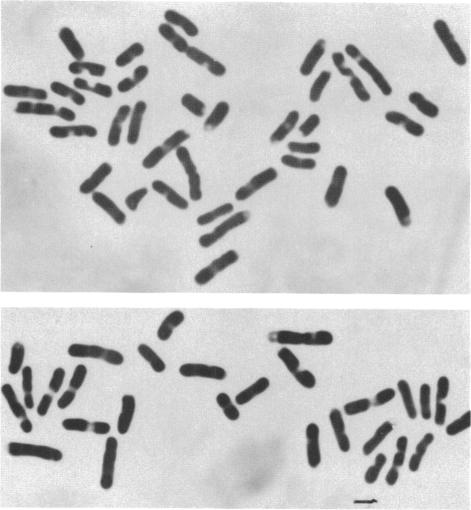
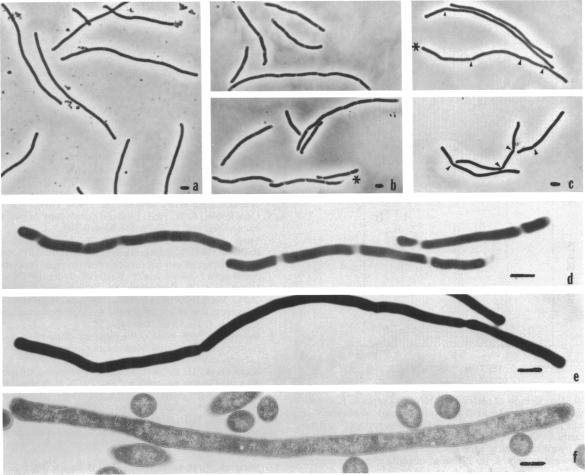
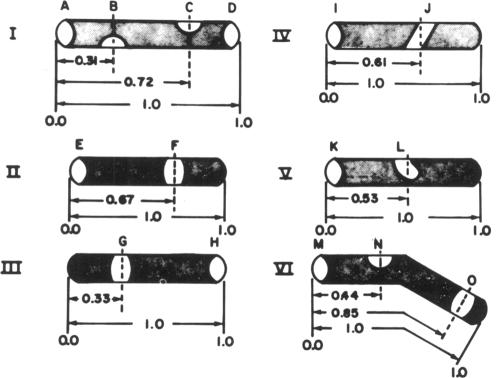
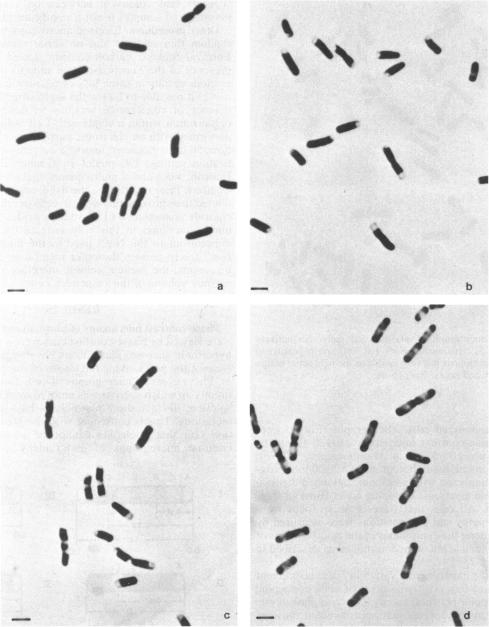
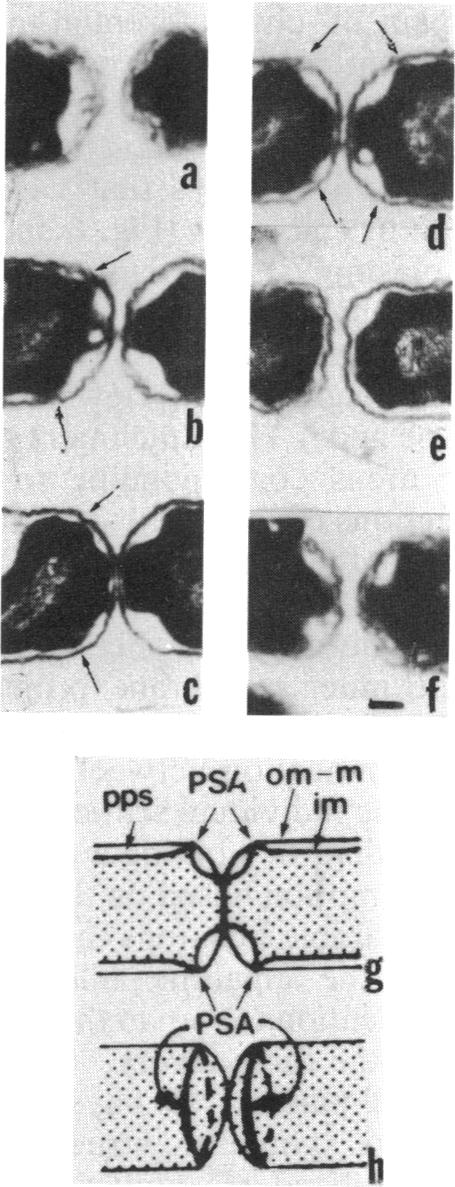
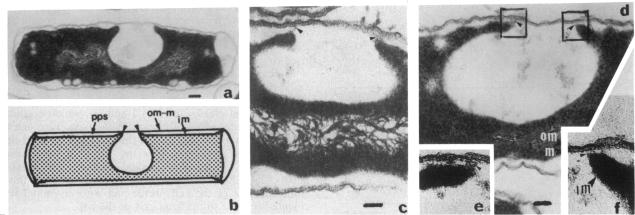
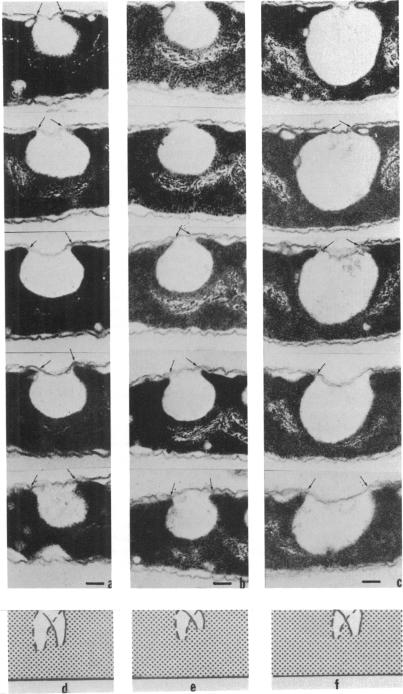
Phase-contrast and serial-section electron microscopy were used to study the patterns of localized plasmolysis that occur when cells of Salmonella typhimurium and Escherichia coli are exposed to hypertonic solutions of sucrose. In dividing cells the nascent septum was flanked by localized regions of periseptal plasmolysis. In randomly growing populations, plasmolysis bays that were not associated with septal ingrowth were clustered at the midpoint of the cell and at 1/4 and 3/4 cell lengths. The localized regions of plasmolysis were limited by continuous zones of adhesion that resembled the periseptal annular adhesion zones described previously in lkyD mutants of S. typhimurium (T. J. MacAlister, B. MacDonald, and L. I. Rothfield, Proc. Natl. Acad. Sci. USA 80:1372-1376, 1983). When cell division was blocked by growing divC(Ts) cells at elevated temperatures, the localized regions of plasmolysis were clustered along the aseptate filaments at positions that corresponded to sites where septum formation occurred when cell division was permitted to resume by a shift back to the permissive temperature. Taken together the results are consistent with a model in which extended zones of adhesion define localized compartments within the periplasmic space, predominantly located at future sites of cell division.
利用相差显微镜和连续切片电子显微镜研究了鼠伤寒沙门氏菌和大肠杆菌细胞暴露于高渗蔗糖溶液时发生的局部质壁分离模式。在分裂细胞中,新生隔膜两侧是隔膜周围局部质壁分离区域。在随机生长的群体中,与隔膜向内生长无关的质壁分离湾聚集在细胞中点以及细胞长度的1/4和3/4处。质壁分离的局部区域由连续的黏附区域界定,这些黏附区域类似于先前在鼠伤寒沙门氏菌lkyD突变体中描述的隔膜周围环形黏附区域(T. J. 麦卡利斯特、B. 麦克唐纳和L. I. 罗斯菲尔德,《美国国家科学院院刊》80:1372 - 1376, 1983)。当通过在高温下培养divC(温度敏感型)细胞来阻断细胞分裂时,质壁分离的局部区域沿着无隔膜丝聚集在与恢复允许温度后允许细胞分裂时隔膜形成位点相对应的位置。综合这些结果与一个模型一致,即扩展的黏附区域界定了周质空间内的局部隔室,主要位于未来的细胞分裂位点。