Abu-Lubad Mohammad A, Helaly Ghada F, Haddadin Weliam J, Jarajreh Dua'a A K, Aqel Amin A, Al-Zeer Munir A
Department of Medical Microbiology and Pathology, Faculty of Medicine, Mutah University, Al-Karak, Jordan.
Department of Microbiology, Medical Research Institute, Alexandria University, Alexandria, Egypt.
Int J Microbiol. 2022 Mar 23;2022:7779770. doi: 10.1155/2022/7779770. eCollection 2022.
Around half of the global population is chronically infected with the stomach bacterium making it one of the most common chronic infections worldwide. induces the production of reactive oxygen species, DNA damage, and accelerates the degradation of the tumor suppressor protein p53, which may lead to cancer development. In this study, we investigated the relationship between infection and the expression of p53 in gastric mucosa in a group of patients from Jordan.
In this retrospective case-control study, the epithelium of gastric glands in subjects chronically infected with was examined for the expression of p53. Paraffin-embedded gastric biopsy samples from the archives for 50 Jordanian patients diagnosed with chronic infection and 25 samples free of infection and any other gastric abnormalities were selected. Samples were analyzed for the presence of as well as p53 expression levels in the mucosa and submucosa by immunohistochemical analyses and Western blotting.
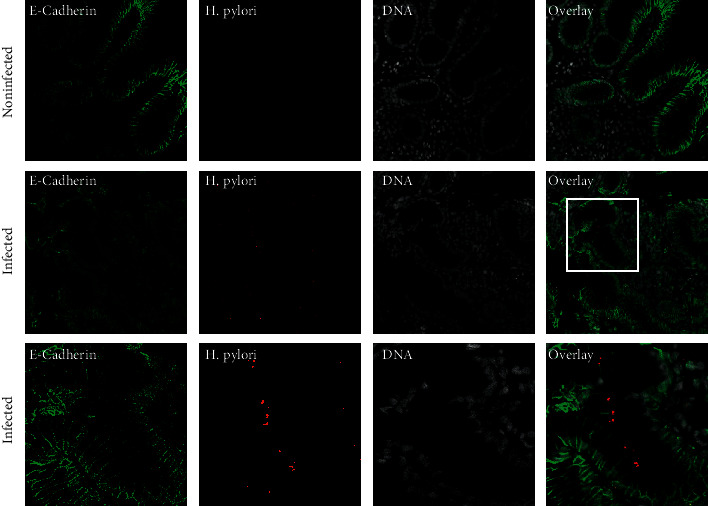
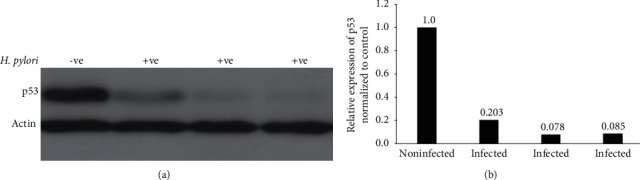
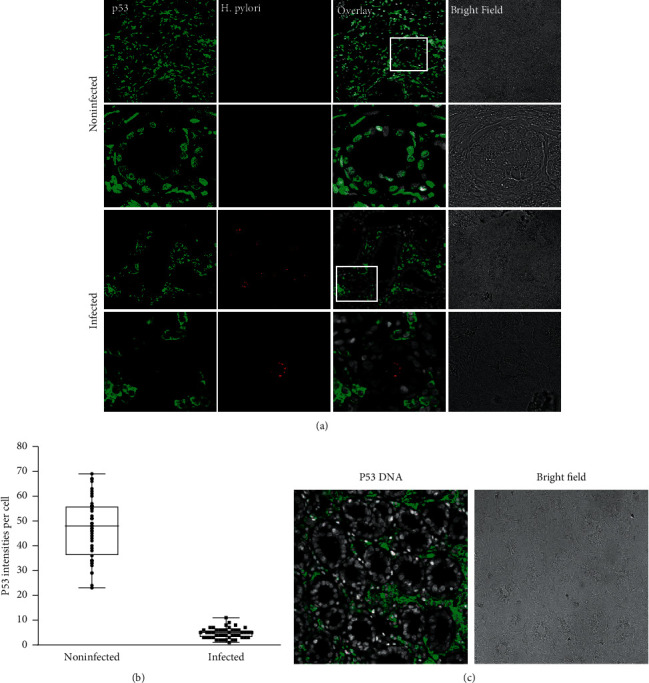
was detected in the gastric tissues of infected individuals ( = 50); whereas, no infection was detected in uninfected healthy individuals ( = 25) using immunohistochemistry. In contrast to the noninfected samples of gastric mucosa, no nuclear p53 expression was detected in the infected samples using immunohistochemistry. In addition, the levels of p53 in -positive samples detected by Western blotting were significantly lower than those in the negative individuals.
Our data reveal that p53 protein expression decreased in gastric mucosa of patients infected with . The loss of this tumor suppressor may play a role in the increased risk for tumor initiation associated with carriage.
全球约一半人口长期感染这种胃部细菌,使其成为全球最常见的慢性感染之一。它会诱导活性氧的产生、DNA损伤,并加速肿瘤抑制蛋白p53的降解,这可能导致癌症发展。在本研究中,我们调查了约旦一组患者中这种感染与胃黏膜中p53表达之间的关系。
在这项回顾性病例对照研究中,对长期感染这种细菌的受试者胃腺上皮进行p53表达检测。从档案中选取50例被诊断为慢性感染这种细菌的约旦患者的石蜡包埋胃活检样本,以及25例未感染该细菌且无任何其他胃部异常的样本。通过免疫组织化学分析和蛋白质印迹法分析样本中该细菌的存在情况以及黏膜和黏膜下层中p53的表达水平。
通过免疫组织化学在感染个体(n = 50)的胃组织中检测到了该细菌;而在未感染的健康个体(n = 25)中未检测到该细菌感染。与未感染的胃黏膜样本相比,通过免疫组织化学在感染样本中未检测到核p53表达。此外,蛋白质印迹法检测到的该细菌阳性样本中的p53水平显著低于阴性个体中的水平。
我们的数据显示,感染这种细菌的患者胃黏膜中p53蛋白表达降低。这种肿瘤抑制因子的缺失可能在与携带该细菌相关的肿瘤发生风险增加中起作用。