Department of Pediatrics, Oregon Health & Science University, Portland, OR, United States.
Knight-Cancer Institute, Department of Biostatistics, Oregon Health & Science University, Portland, OR, United States.
Front Immunol. 2022 Mar 18;13:867937. doi: 10.3389/fimmu.2022.867937. eCollection 2022.
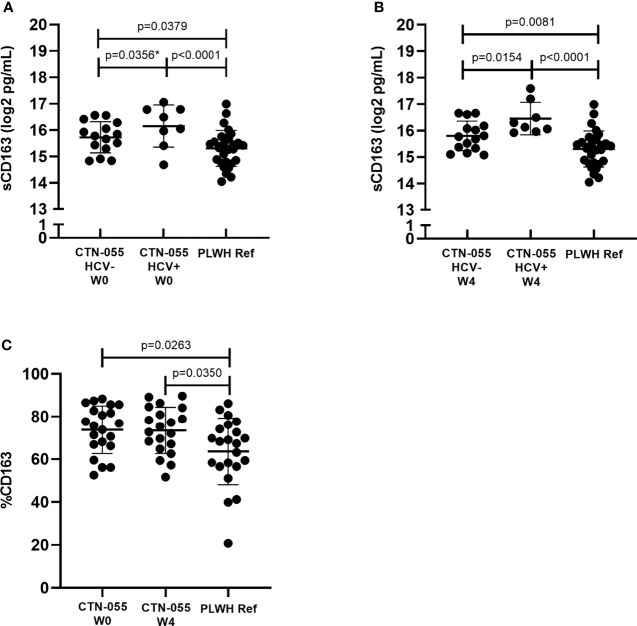
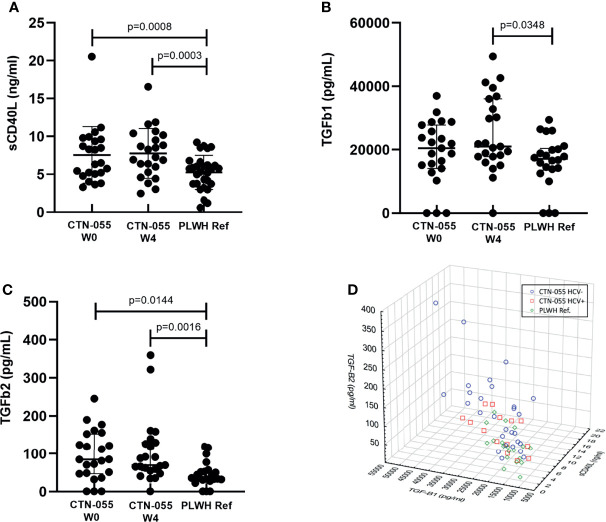
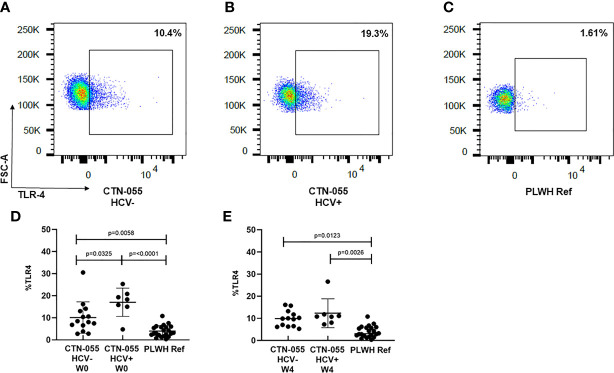
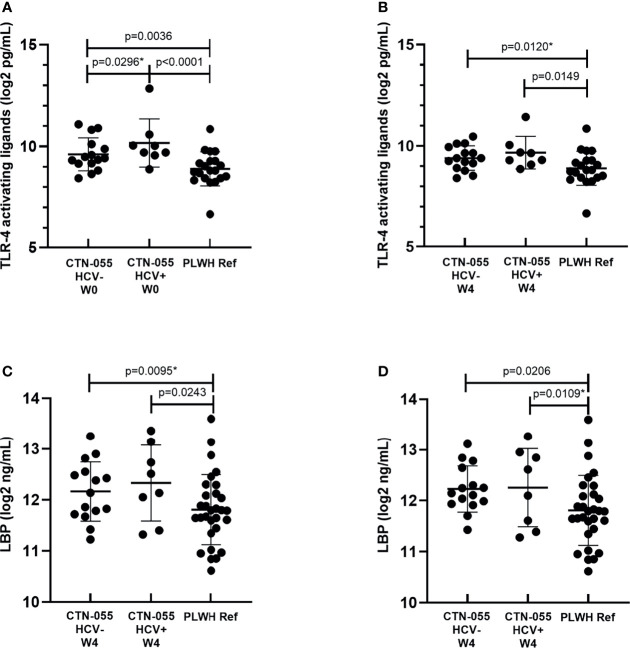
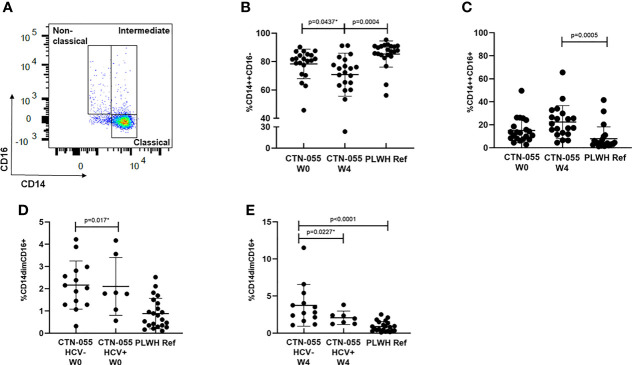
Despite advances in antiretroviral therapy, chronic immune activation continues to be observed among individuals with well-controlled HIV viral loads, and is associated with non-AIDS defining morbidities among people living with HIV. Alcohol use disorder impacts a significant proportion of individuals living with HIV, and alcohol exposure is known to damage the intestinal epithelium which may increase translocation of pathogens and their molecular products, driving systemic immune activation and dysregulation. The aim of this study was to determine if adults living with HIV with well-controlled viral loads, who also suffer from alcohol use disorder with and without hepatitis C virus co-infection (n=23), exhibit evidence of advanced systemic immune activation, intestinal damage, and microbial translocation, as compared to adults living with HIV who are not exposed to chronic alcohol or other substances of abuse (n=29). The impact of a 1-month intervention to treat alcohol-use disorder was also examined. Alcohol-use disorder was associated with evidence of advanced innate immune activation, alterations in monocyte phenotype including increased expression of Toll-like receptor 4, increased burden of stimulatory ligands for Toll-like receptor 4, and alterations in plasma cytokine signature, most notably elevations in soluble CD40 ligand and transforming growth factor beta. Alcohol-associated immune activation was more pronounced among individuals with hepatitis C virus co-infection. Although the 1-month intervention to treat alcohol use disorder did not result in significant reductions in the interrogated indicators of immune activation, our findings suggest that chronic alcohol exposure is a major modifiable risk factor for chronic immune activation and dysregulation among people-living with HIV.
尽管抗逆转录病毒疗法取得了进展,但在病毒载量得到良好控制的 HIV 感染者中仍持续观察到慢性免疫激活,并且与 HIV 感染者的非艾滋病定义性发病有关。酒精使用障碍影响了相当一部分 HIV 感染者,已知酒精暴露会损害肠道上皮细胞,这可能会增加病原体及其分子产物的易位,从而导致全身免疫激活和失调。本研究的目的是确定是否患有酒精使用障碍且病毒载量得到良好控制的 HIV 感染者(n=23),以及同时患有丙型肝炎病毒合并感染(n=23)和不合并感染(n=29)的 HIV 感染者,是否表现出晚期全身免疫激活、肠道损伤和微生物易位的证据,与未接触慢性酒精或其他滥用物质的 HIV 感染者相比。还检查了为期 1 个月的治疗酒精使用障碍干预的影响。酒精使用障碍与先天免疫激活的证据有关,包括单核细胞表型的改变,如 Toll 样受体 4 的表达增加,Toll 样受体 4 的刺激配体负担增加,以及血浆细胞因子特征的改变,特别是可溶性 CD40 配体和转化生长因子β的升高。丙型肝炎病毒合并感染的个体中,酒精相关的免疫激活更为明显。尽管治疗酒精使用障碍的 1 个月干预并没有导致所检测的免疫激活指标显著降低,但我们的研究结果表明,慢性酒精暴露是 HIV 感染者慢性免疫激活和失调的一个主要可改变的危险因素。