Liu Fangfang, Wei Yuxuan, Zhang Huan, Jiang Jizong, Zhang Peng, Chu Qian
Department of Oncology, Tongji Hospital of Tongji Medical College, Huazhong University of Science and Technology, Wuhan, China.
The Second Clinical College of Tongji Medical College, Huazhong University of Science and Technology, Wuhan, China.
Front Oncol. 2022 Mar 17;12:864666. doi: 10.3389/fonc.2022.864666. eCollection 2022.
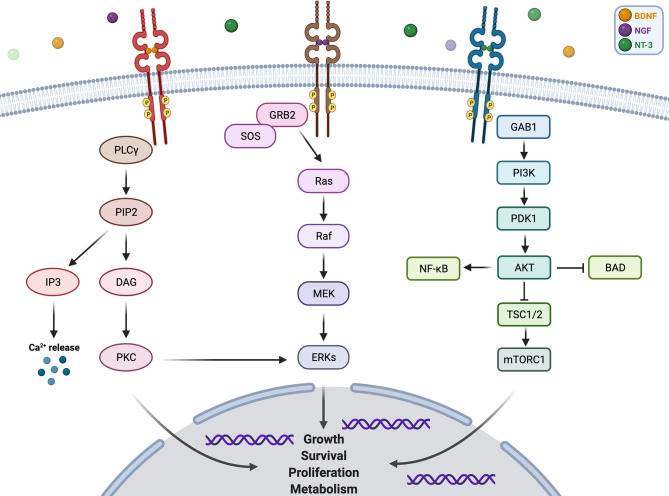
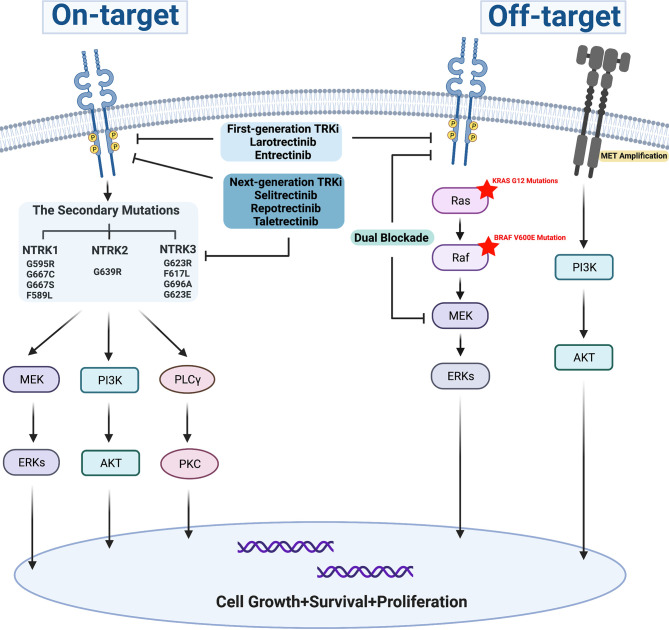
Neurotrophic tropomyosin receptor kinase (NTRK) gene fusion has been identified as an oncogenic driver of various solid tumors, and it is rare in non-smalll cell lung cancer (NSCLC) with a frequency of approximately less than 1%. Next-generation sequencing (NGS) is of priority for detecting NTRK fusions, especially RNA-based NGS. Currently, the tropomyosin receptor kinase (TRK) inhibitors have shown promising efficacy and well tolerance in patients with NTRK fusion-positive solid tumors, regardless of tumor histology. The first-generation TRK inhibitors (larotrectinib and entrectinib) are recommended as the first-line treatment for locally advanced or metastatic NSCLC patients with positive NTRK fusion. However, TRK inhibitor resistance can eventually occur due to on-target or off-target mechanisms. Further studies are under investigation to overcome resistance and improve survival. Interestingly, NTRK fusion might be the mechanism of resistance to epidermal growth factor receptor (EGFR)-tyrosine kinase inhibitors (TKI) in NSCLC patients with EGFR mutation. Regarding immunotherapy, the efficacy of immune checkpoint inhibitors in NSCLC patients harboring NTRK fusion has yet to be well described. In this review, we elucidate the function of NTRK genes, summarize the diagnostic techniques for NTRK fusions, and present clinical data for TRK inhibitors; we also discuss potential mechanisms of resistance to TRK inhibitors.
神经营养性原肌球蛋白受体激酶(NTRK)基因融合已被确定为多种实体瘤的致癌驱动因素,在非小细胞肺癌(NSCLC)中较为罕见,频率约低于1%。下一代测序(NGS)对于检测NTRK融合至关重要,尤其是基于RNA的NGS。目前,原肌球蛋白受体激酶(TRK)抑制剂在NTRK融合阳性实体瘤患者中已显示出有前景的疗效和良好的耐受性,无论肿瘤组织学类型如何。第一代TRK抑制剂(拉罗替尼和恩曲替尼)被推荐作为局部晚期或转移性NTRK融合阳性NSCLC患者的一线治疗。然而,由于靶向或非靶向机制,TRK抑制剂最终可能会出现耐药。正在进行进一步研究以克服耐药性并提高生存率。有趣的是,NTRK融合可能是EGFR突变的NSCLC患者对表皮生长因子受体(EGFR)-酪氨酸激酶抑制剂(TKI)耐药的机制。关于免疫疗法,免疫检查点抑制剂在携带NTRK融合的NSCLC患者中的疗效尚未得到充分描述。在本综述中,我们阐明了NTRK基因的功能,总结了NTRK融合的诊断技术,并展示了TRK抑制剂的临床数据;我们还讨论了对TRK抑制剂耐药的潜在机制。