Wang Tingting, Zhang Hao, Qiu Weibao, Han Yaobao, Liu Hanghang, Li Zhen
Center for Molecular Imaging and Nuclear Medicine, State Key Laboratory of Radiation Medicine and Protection, School for Radiological and Interdisciplinary Sciences (RAD-X), Soochow University, Collaborative Innovation Center of Radiation Medicine of Jiangsu Higher Education Institutions, Suzhou, 215123, PR China.
Paul C. Lauterbur Research Center for Biomedical Imaging, Institute of Biomedical and Health Engineering, Shenzhen Institutes of Advanced Technology, Chinese Academy of Sciences, Shenzhen, 518055, PR China.
Bioact Mater. 2022 Jan 5;16:418-432. doi: 10.1016/j.bioactmat.2021.12.029. eCollection 2022 Oct.
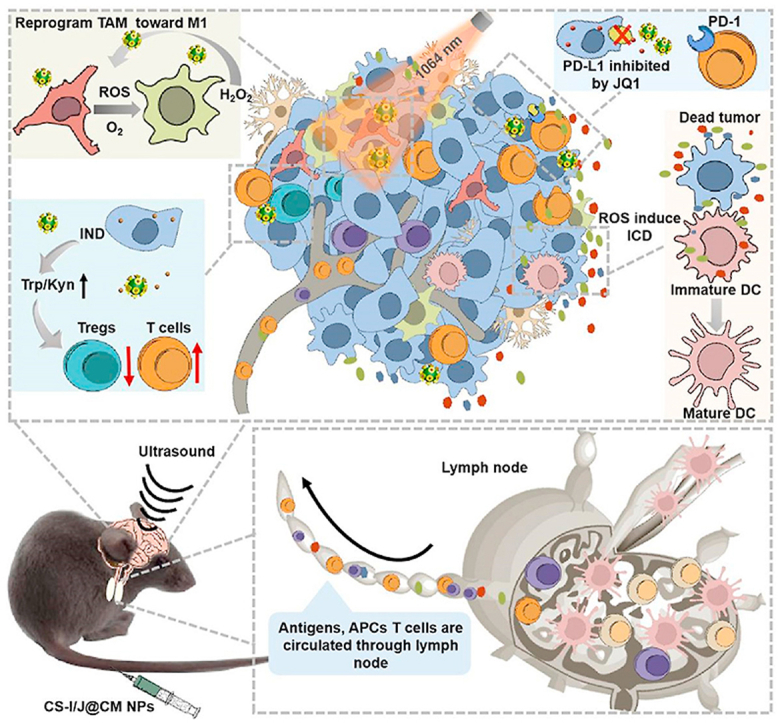
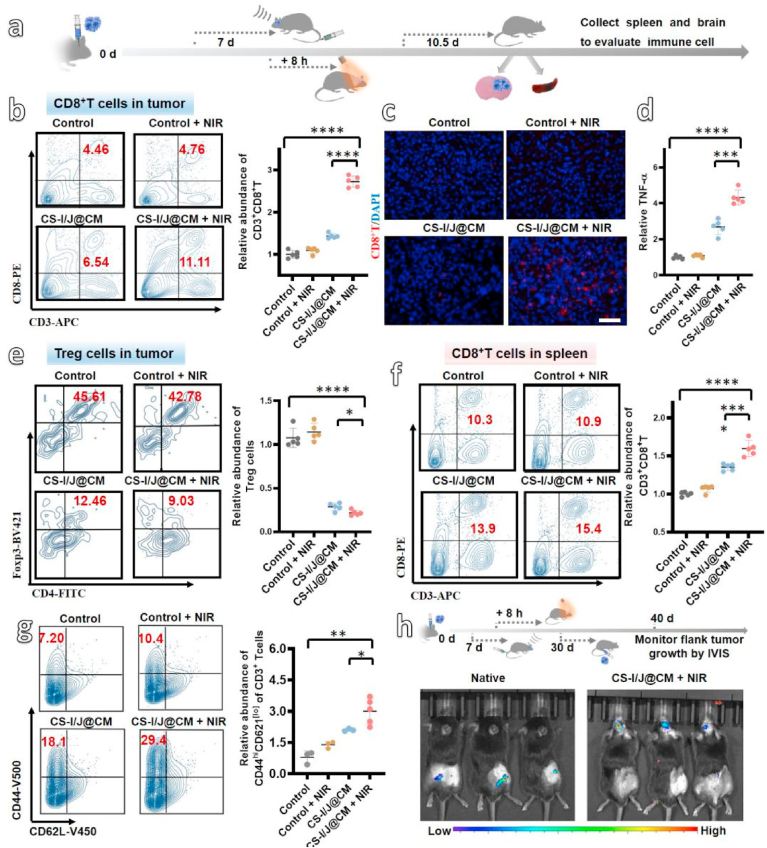
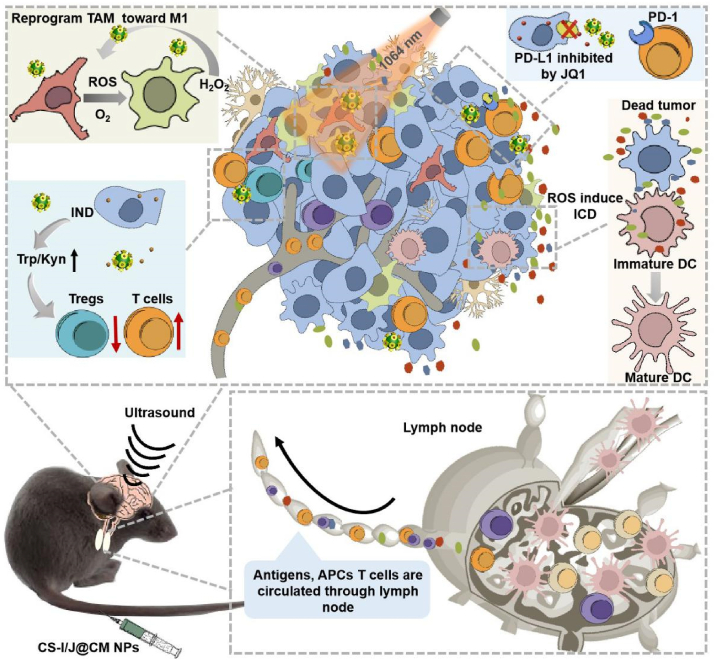
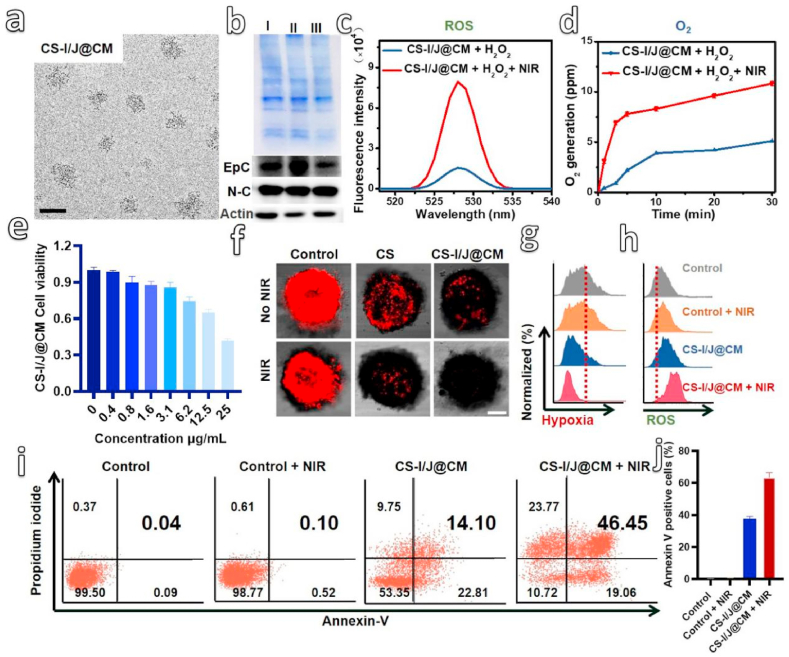
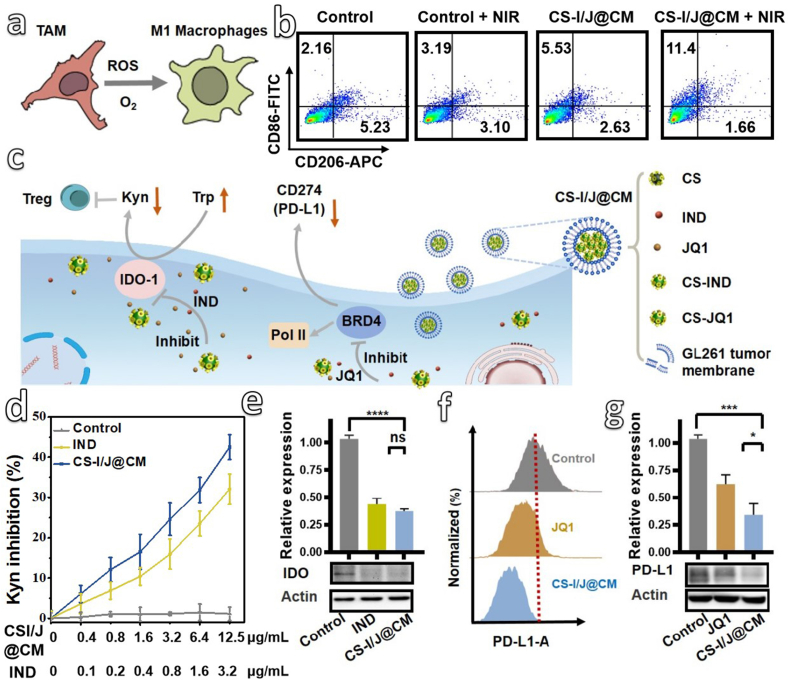
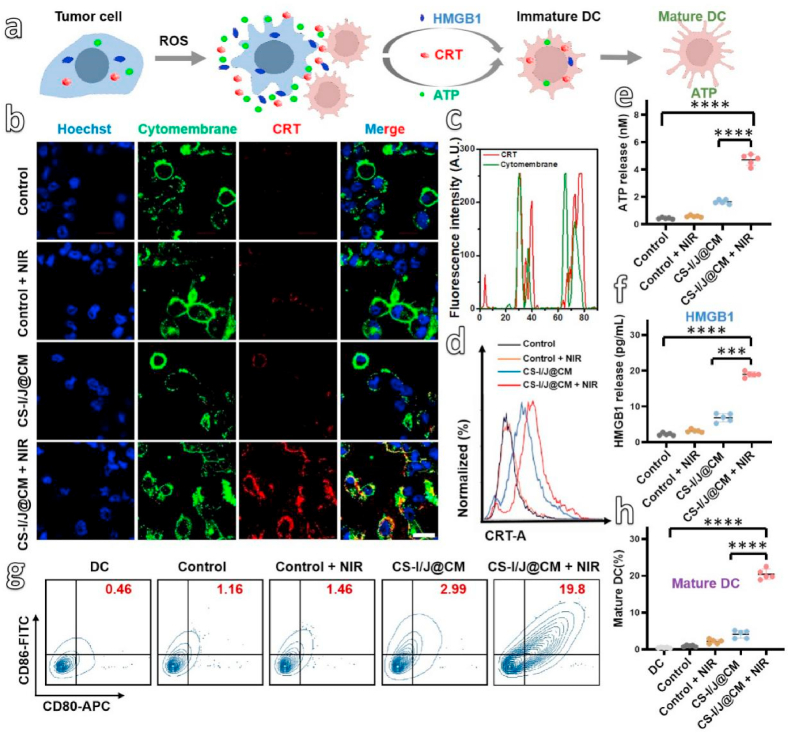
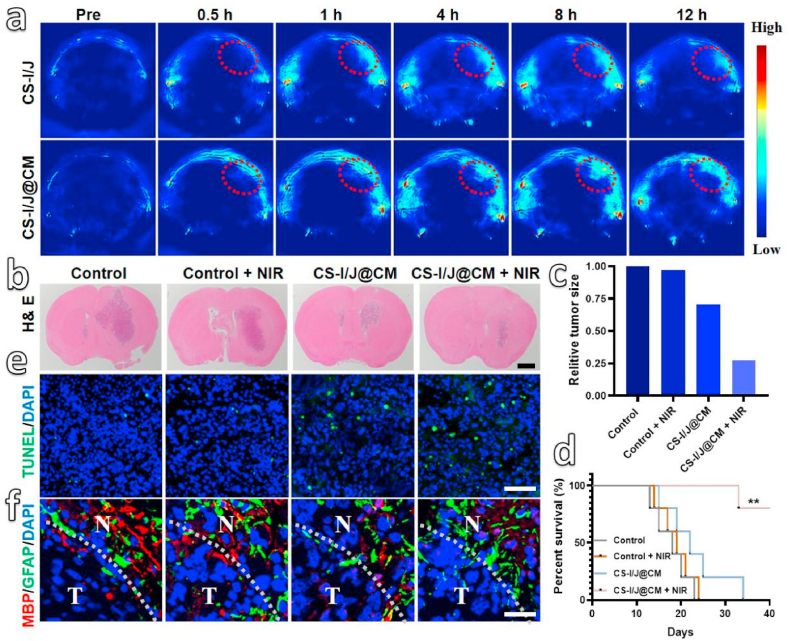
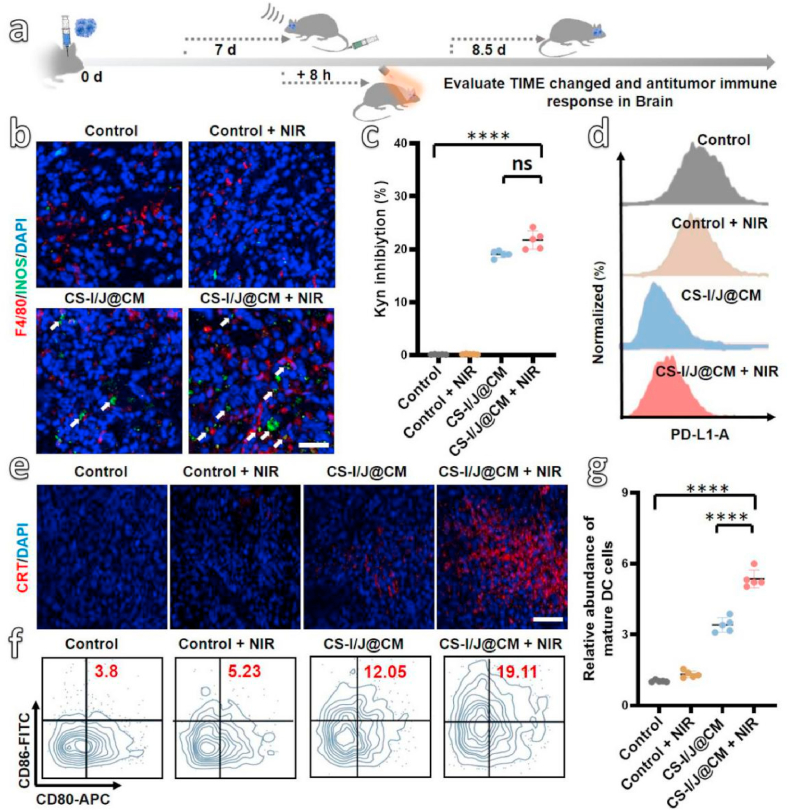
Glioblastoma (GBM), as a very aggressive cancer of central nervous system, is very challenging to completely cure by the conventional combination of surgical resection with radiotherapy and chemotherapy. The success of emerging immunotherapy in hot tumors has attracted considerable interest for the treatment of GBM, but the unique tumor immunosuppressive microenvironment (TIME) of GBM leads to the failure of immunotherapy. Here, we show the significant improvement of the immunotherapy efficacy of GBM by modulating the TIME through novel all-in-one biomimetic nanoparticles ( CS-I/J@CM NPs). The nanoparticles consist of utrasmall Cu Se nanoparticles (NPs) with outstanding intrinsic properties (, photo-responsive Fenton-like catalytic property for inducing immunogenic cell death (ICD) and alleviating the hypoxia of tumor), indoximod (IND, an inhibitor of indoleamine-2,3-dioxygenease in tumor), JQ1 (an inhibitor for reducing the expression of PD-L1 by tumor cells), and tumor cell membrane for improving the targeting capability and accumulation of nanoparticles in tumor. We reveal that these smart CS-I/J@CM NPs could drastically activate the immune responses through remodeling TIME of GBM by multiple functions. They could (1) increase M1-phenotype macrophages at tumor site by promoting the polarization of tumor-associated macrophages through the reactive oxygen species (ROS) and oxygen generated from the Fenton-like reaction between nanoparticles and HO within tumor under NIR II irradiation; (2) decrease the infiltration of Tregs cells at tumor site through the release of IND; (3) decrease the expression of PD-L1 on tumor cells through JQ1. The notable increments of anti-tumor CD8T cells in the tumor and memory T cells (T) in the spleen show excellent therapy efficacy and effectively prevent the recurrence of GBM after modulation of the TIME. This work demonstrates the modulation of TIME could be a significant strategy to improve the immunotherapy of GBM and other cold tumors.
胶质母细胞瘤(GBM)是一种极具侵袭性的中枢神经系统癌症,通过手术切除与放疗和化疗的传统联合治疗方法很难完全治愈。新兴的免疫疗法在热门肿瘤治疗中的成功应用引发了人们对GBM治疗的浓厚兴趣,但GBM独特的肿瘤免疫抑制微环境(TIME)导致免疫疗法失败。在此,我们展示了通过新型一体化仿生纳米颗粒(CS-I/J@CM NPs)调节TIME,可显著提高GBM免疫治疗的疗效。这些纳米颗粒由具有出色固有特性的超小铜硒纳米颗粒(NPs)(具有光响应性类芬顿催化特性,可诱导免疫原性细胞死亡(ICD)并缓解肿瘤缺氧)、吲哚莫德(IND,肿瘤中吲哚胺-2,3-双加氧酶的抑制剂)、JQ1(一种可降低肿瘤细胞PD-L1表达的抑制剂)以及肿瘤细胞膜组成,以提高纳米颗粒在肿瘤中的靶向能力和积累。我们发现,这些智能CS-I/J@CM NPs可通过多种功能重塑GBM的TIME,从而极大地激活免疫反应。它们可以:(1)在近红外II照射下,通过纳米颗粒与肿瘤内HO之间的类芬顿反应产生的活性氧(ROS)和氧气,促进肿瘤相关巨噬细胞的极化,从而增加肿瘤部位的M1表型巨噬细胞;(2)通过释放IND减少肿瘤部位调节性T细胞(Tregs)的浸润;(3)通过JQ1降低肿瘤细胞上PD-L1的表达。肿瘤中抗肿瘤CD8 + T细胞和脾脏中记忆T细胞(Tm)的显著增加显示出优异的治疗效果,并在调节TIME后有效预防GBM的复发。这项工作表明,调节TIME可能是改善GBM和其他冷肿瘤免疫治疗的重要策略。