Lin Sihan, Yin Shi, Shi Junfeng, Yang Guangzheng, Wen Xutao, Zhang Wenjie, Zhou Mingliang, Jiang Xinquan
Department of Prosthodontics, Shanghai Ninth People's Hospital, Shanghai JiaoTong University School of Medicine, No. 639 Zhizaoju Road, Shanghai, 200011, People's Republic of China.
College of Stomatology, Shanghai JiaoTong University, No. 639 Zhizaoju Road, Shanghai, 200011, People's Republic of China.
Bioact Mater. 2022 Mar 24;18:116-127. doi: 10.1016/j.bioactmat.2022.03.024. eCollection 2022 Dec.
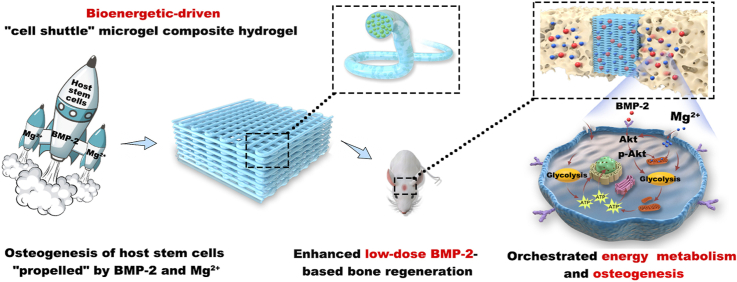
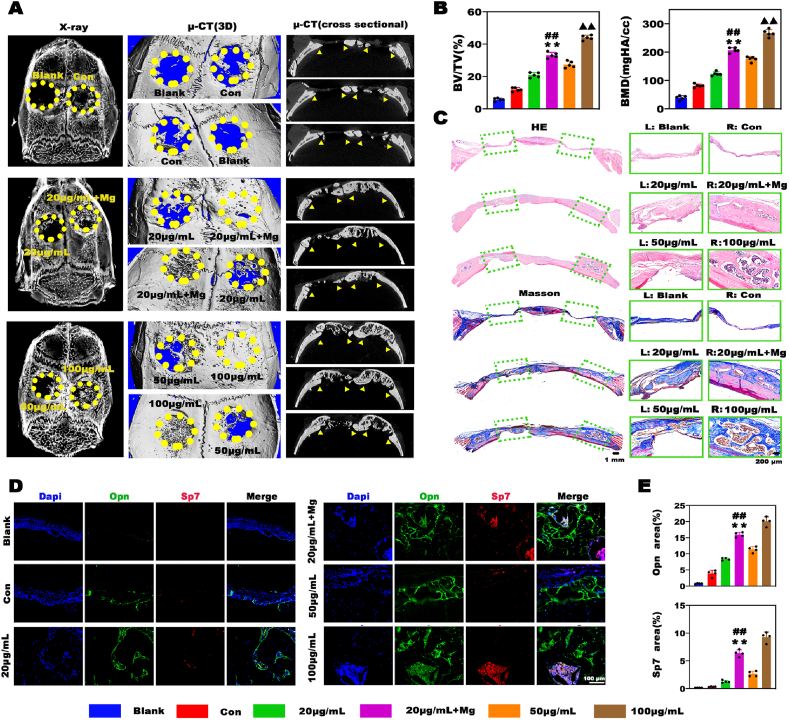
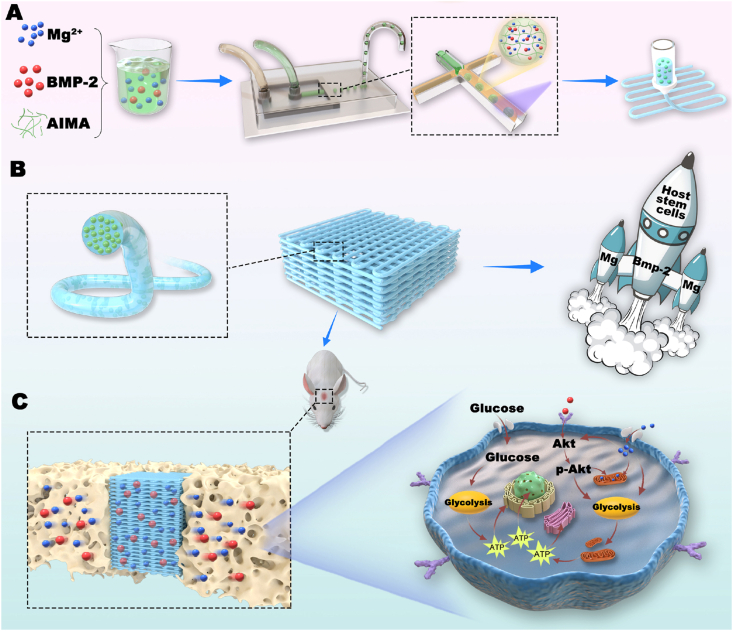
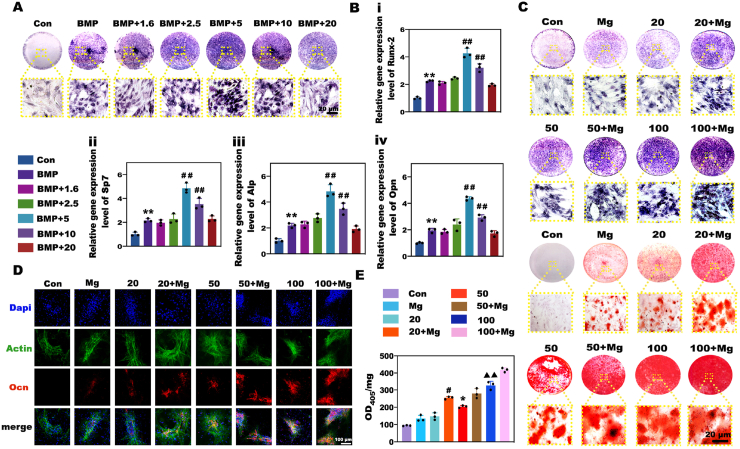
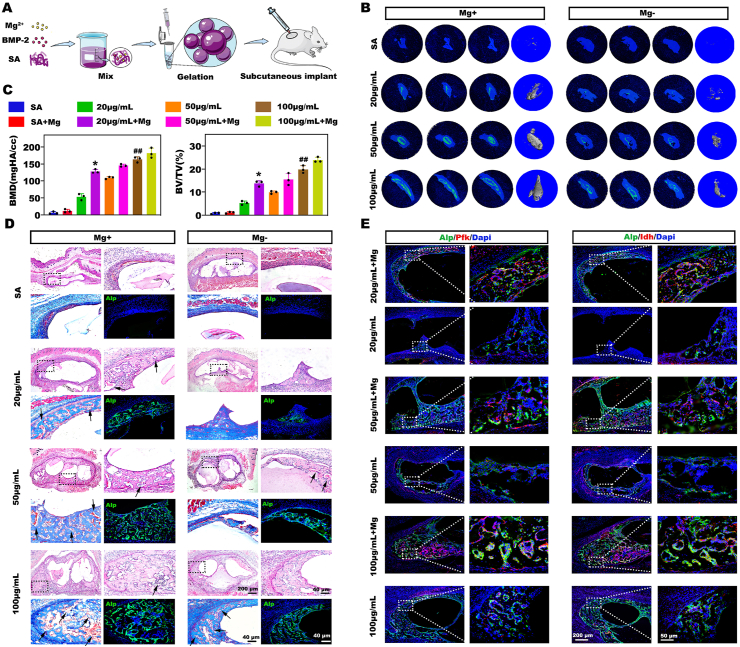
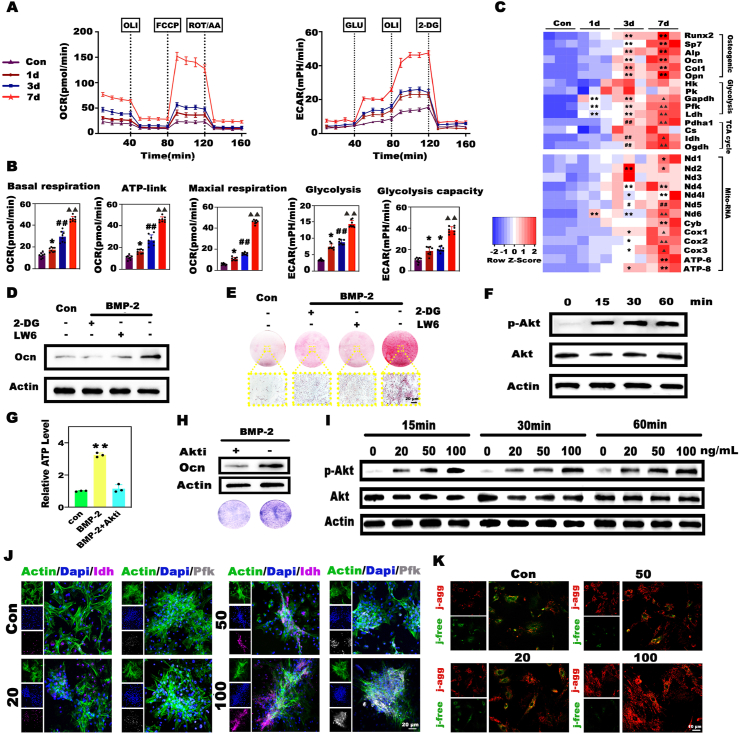
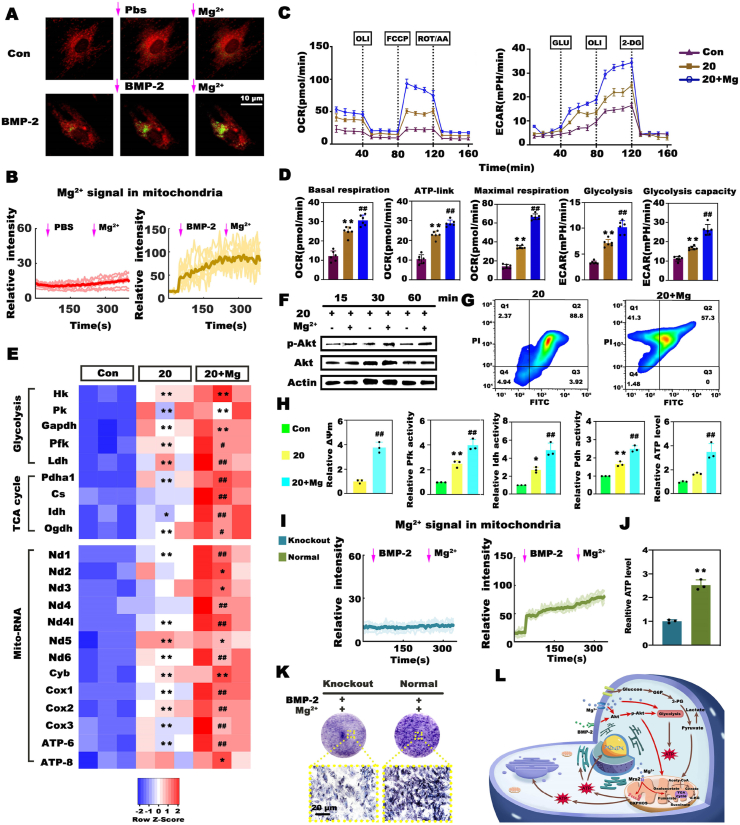
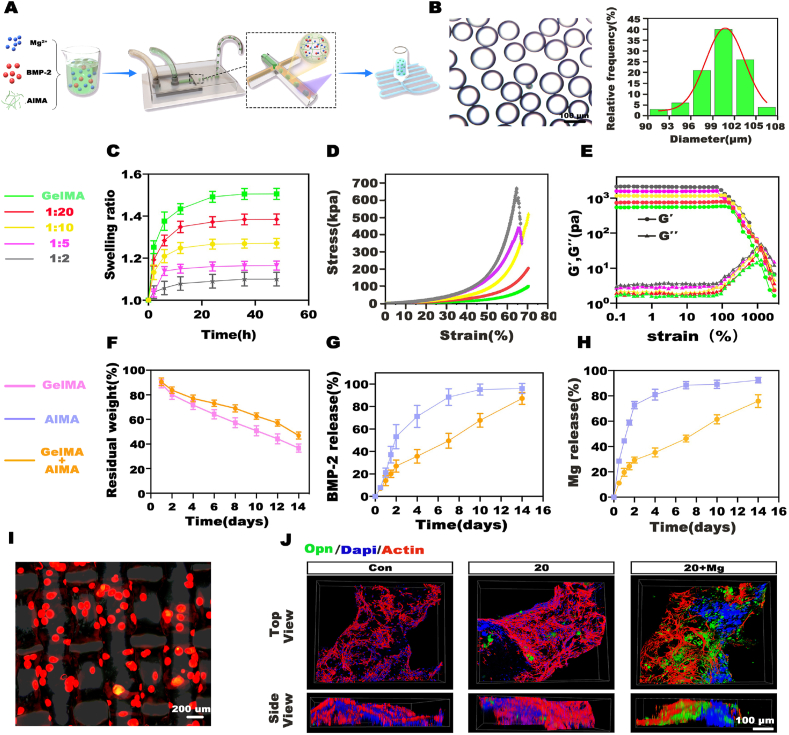
The clinical application of bone morphogenetic protein-2 (BMP-2) is limited by several factors, including ineffectiveness at low doses and severe adverse effects at high doses. To address these efficacy and safety limitations, we explored whether orchestration of energy metabolism and osteogenesis by magnesium ion (Mg) could reduce the dose and thereby improve the safety of BMP-2. Our results demonstrated that rapid metabolic activation triggered by BMP-2 was indispensable for subsequent osteogenesis. Moreover, inadequate metabolic stimulation was shown to be responsible for the ineffectiveness of low-dose BMP-2. Next, we identified that Mg, as an ''energy propellant", substantially increased cellular bioenergetic levels to support the osteogenesis via the Akt-glycolysis-Mrs2-mitochondrial axis, and consequently enhanced the osteoinductivity of BMP-2. Based on the mechanistic discovery, microgel composite hydrogels were fabricated as low-dose BMP-2/Mg codelivery system through microfluidic and 3D printing technologies. An in vivo study further confirmed that rapid and robust bone regeneration was induced by the codelivery system. Collectively, these results suggest that this bioenergetic-driven, cost-effective, low-dose BMP-2-based strategy has substantial potential for bone repair.
骨形态发生蛋白-2(BMP-2)的临床应用受到多种因素的限制,包括低剂量时无效以及高剂量时的严重不良反应。为了解决这些疗效和安全性限制问题,我们探讨了镁离子(Mg)对能量代谢和成骨的调控是否能够降低BMP-2的剂量,从而提高其安全性。我们的结果表明,BMP-2触发的快速代谢激活对于随后的成骨过程不可或缺。此外,代谢刺激不足被证明是低剂量BMP-2无效的原因。接下来,我们发现Mg作为一种“能量推进剂”,通过Akt-糖酵解-Mrs2-线粒体轴显著提高细胞生物能量水平以支持成骨,从而增强了BMP-2的骨诱导活性。基于这一机制发现,通过微流控和3D打印技术制备了微凝胶复合水凝胶作为低剂量BMP-2/Mg共递送系统。一项体内研究进一步证实,该共递送系统可诱导快速且强劲的骨再生。总体而言,这些结果表明,这种基于生物能量驱动、具有成本效益的低剂量BMP-2策略在骨修复方面具有巨大潜力。