Division of Neonatology, Department of Pediatrics, Ann & Robert H. Lurie Children's Hospital of Chicago, Northwestern University Feinberg School of Medicine, Chicago, IL, USA.
Center for Intestinal and Liver Inflammation Research, Stanley Manne Children's. Research Institute, Ann & Robert H. Lurie Children's Hospital of Chicago, Northwestern University Feinberg School of Medicine, Chicago, IL, USA.
Commun Biol. 2022 Apr 6;5(1):320. doi: 10.1038/s42003-022-03252-9.
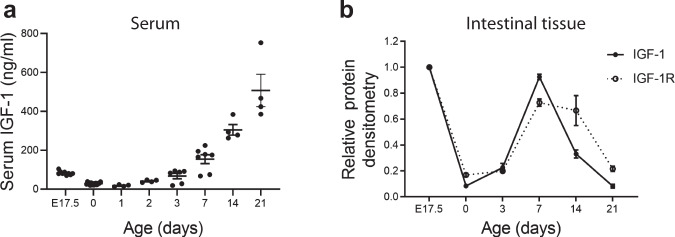
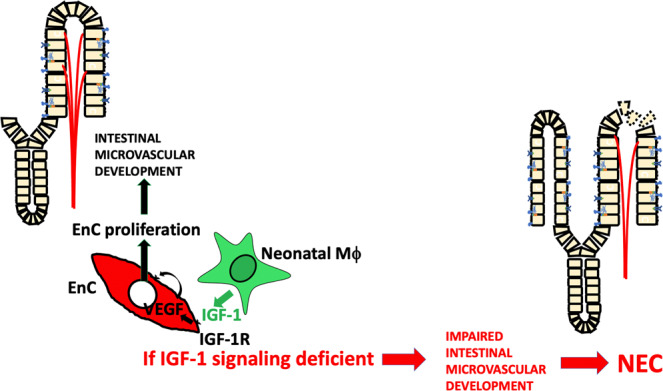
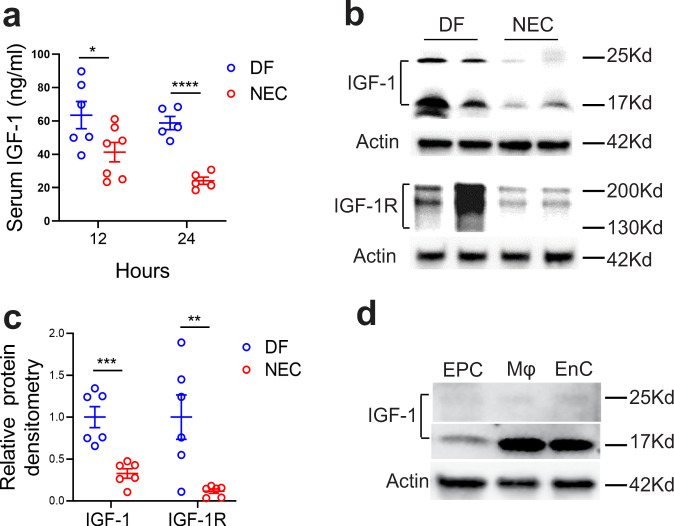
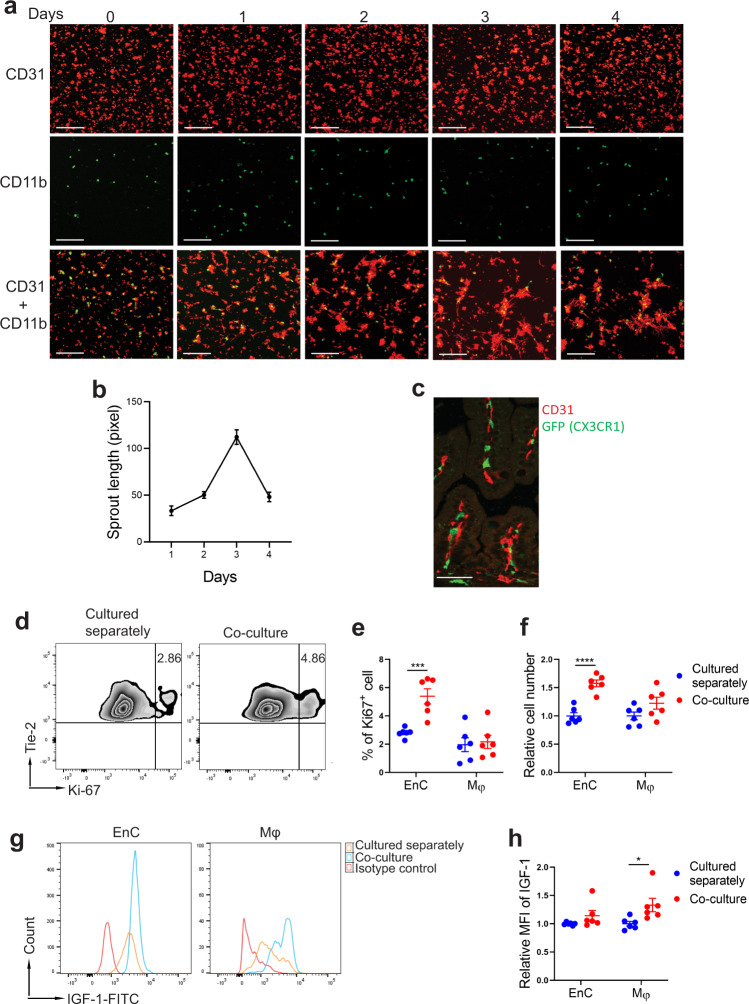
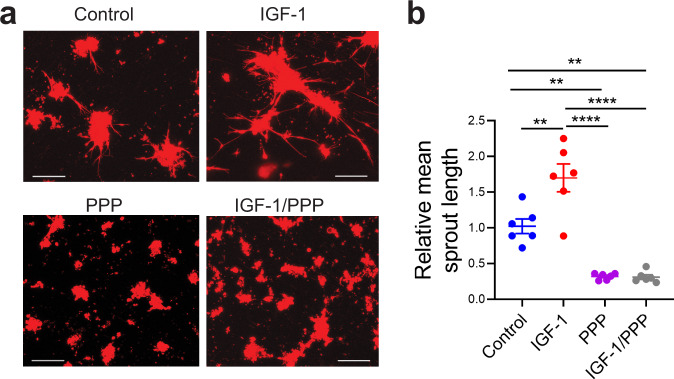
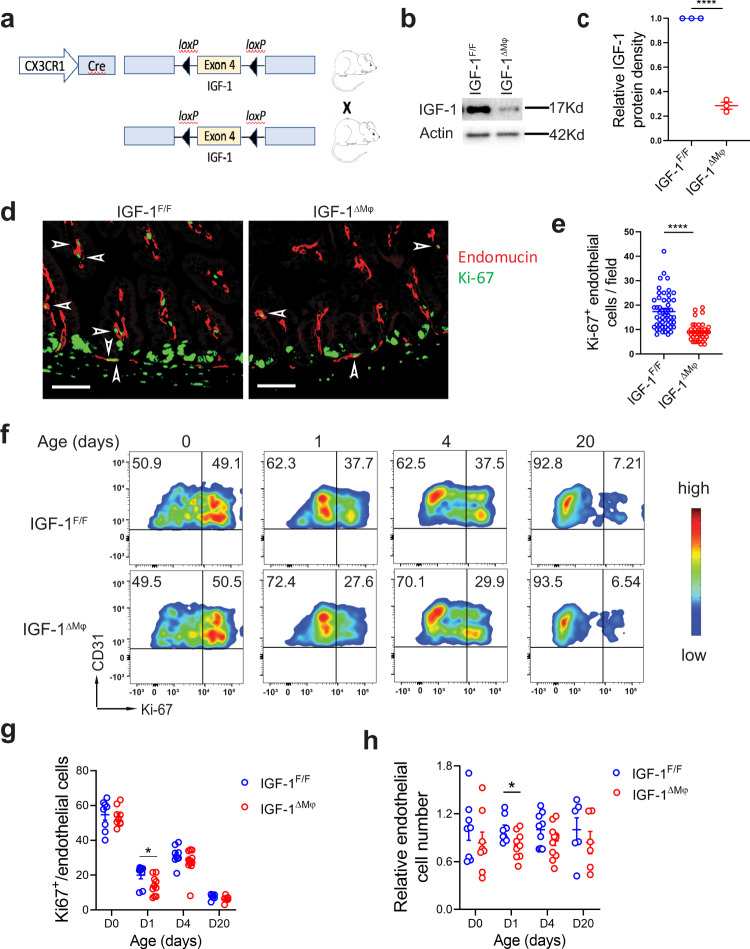
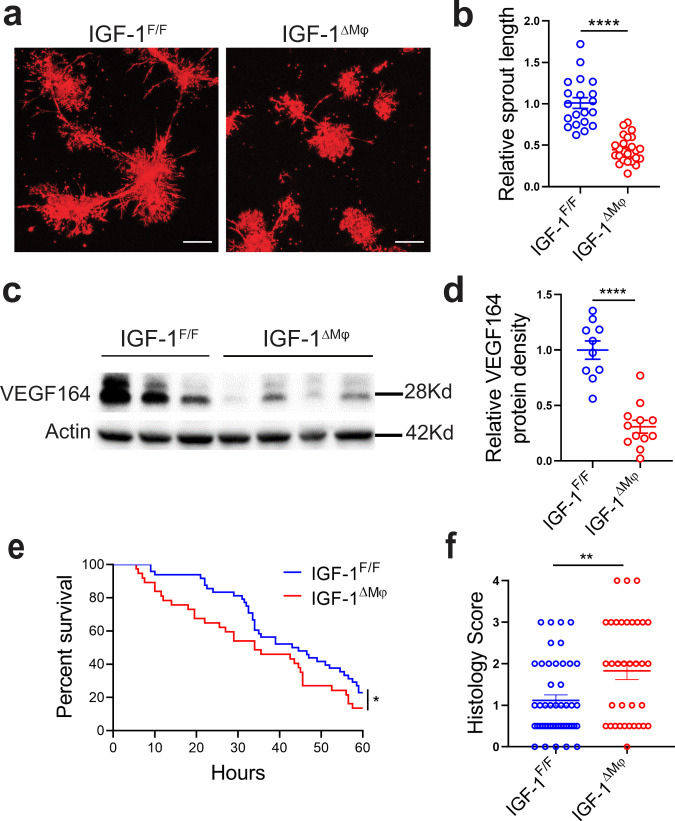
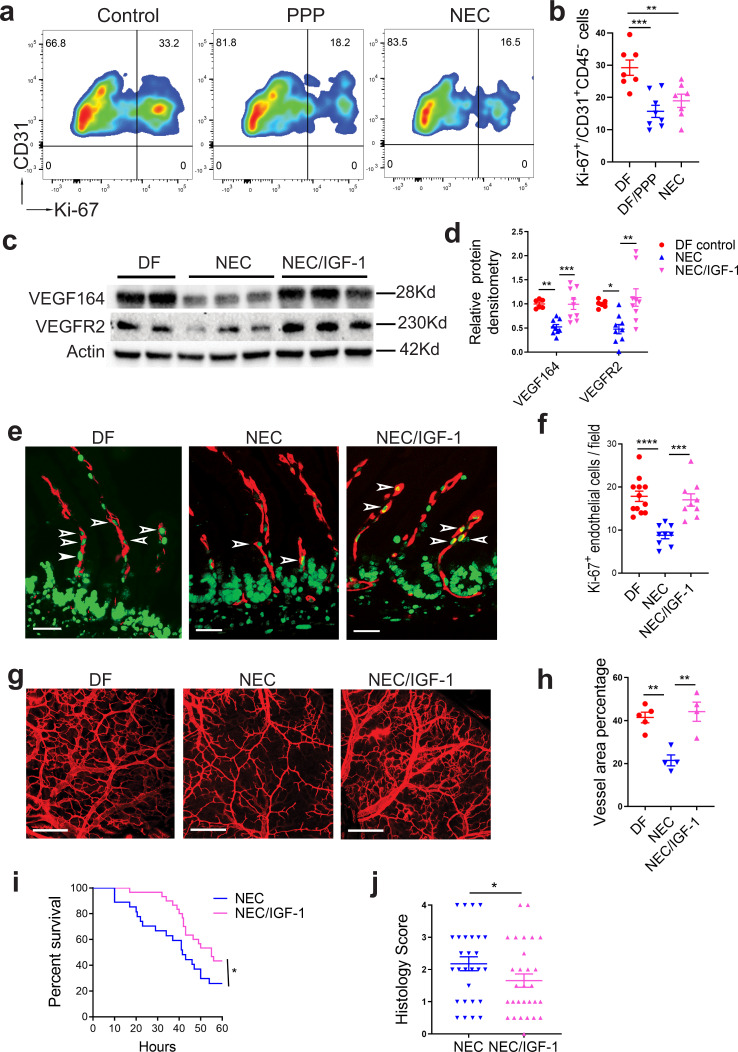
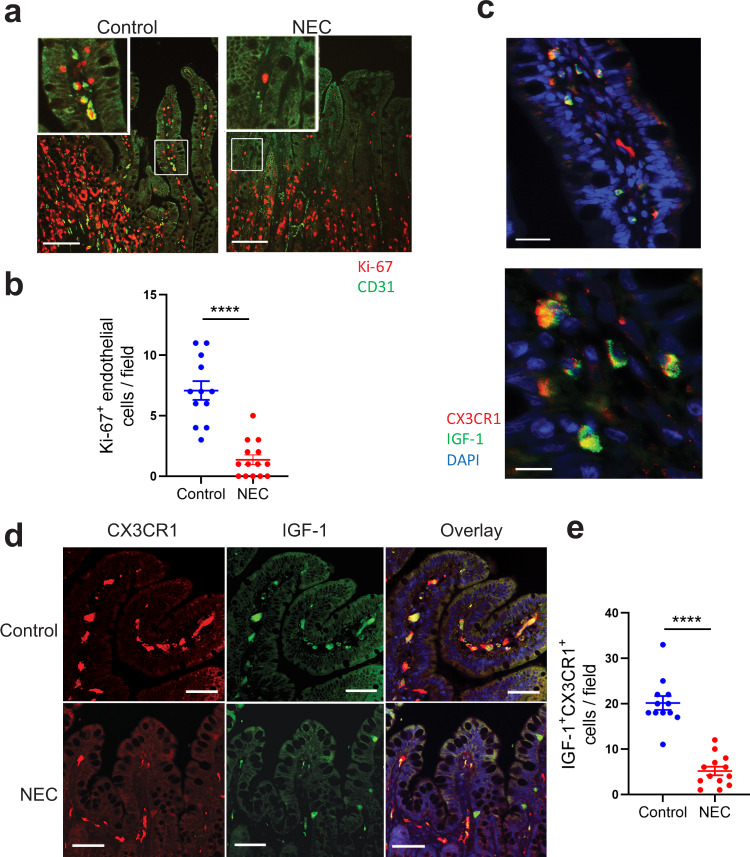
Necrotizing enterocolitis (NEC) is a deadly bowel necrotic disease of premature infants. Low levels of plasma IGF-1 predispose premature infants to NEC. While increasing evidence suggests that defective perinatal intestinal microvascular development plays a role in NEC, the involved mechanism remains incompletely understood. We report here that serum and intestinal IGF-1 are developmentally regulated during the perinatal period in mice and decrease during experimental NEC. Neonatal intestinal macrophages produce IGF-1 and promote endothelial cell sprouting in vitro via IGF-1 signaling. In vivo, in the neonatal intestine, macrophage-derived IGF-1 promotes VEGF expression and endothelial cell proliferation and protects against experimental NEC. Exogenous IGF-1 preserves intestinal microvascular density and protects against experimental NEC. In human NEC tissues, villous endothelial cell proliferation and IGF-1- producing macrophages are decreased compared to controls. Together, our results suggest that defective IGF-1-production by neonatal macrophages impairs neonatal intestinal microvascular development and predisposes the intestine to necrotizing enterocolitis.
坏死性小肠结肠炎(NEC)是一种致命的早产儿肠道坏死性疾病。低水平的血浆 IGF-1 使早产儿易患 NEC。虽然越来越多的证据表明,围产期肠道微血管发育缺陷在 NEC 中起作用,但相关机制仍不完全清楚。我们在这里报告,在小鼠的围产期,血清和肠道 IGF-1 是发育调节的,并在实验性 NEC 期间减少。新生肠道巨噬细胞产生 IGF-1,并通过 IGF-1 信号促进体外内皮细胞发芽。在体内,在新生儿肠道中,巨噬细胞衍生的 IGF-1 促进 VEGF 表达和内皮细胞增殖,并防止实验性 NEC。外源性 IGF-1 可维持肠道微血管密度并防止实验性 NEC。在人类 NEC 组织中,与对照组相比,绒毛状内皮细胞增殖和产生 IGF-1 的巨噬细胞减少。总之,我们的结果表明,新生期巨噬细胞产生 IGF-1 的缺陷损害了新生儿肠道微血管的发育,并使肠道易患坏死性小肠结肠炎。