Texas Therapeutics Institute, Brown Foundation Institute of Molecular Medicine, the University of Texas Health Science Center at Houston, Houston, Texas, USA.
MAbs. 2022 Jan-Dec;14(1):2057269. doi: 10.1080/19420862.2022.2057269.
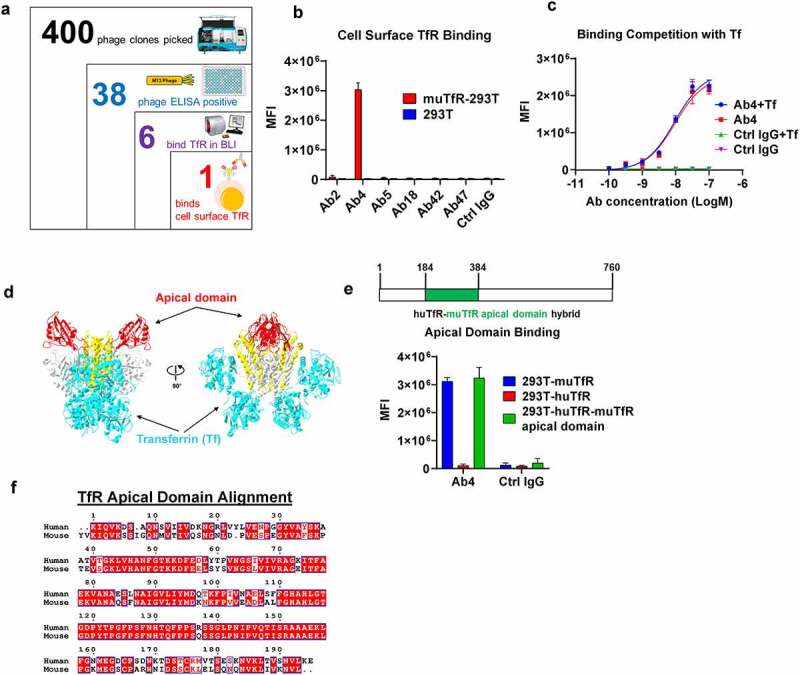
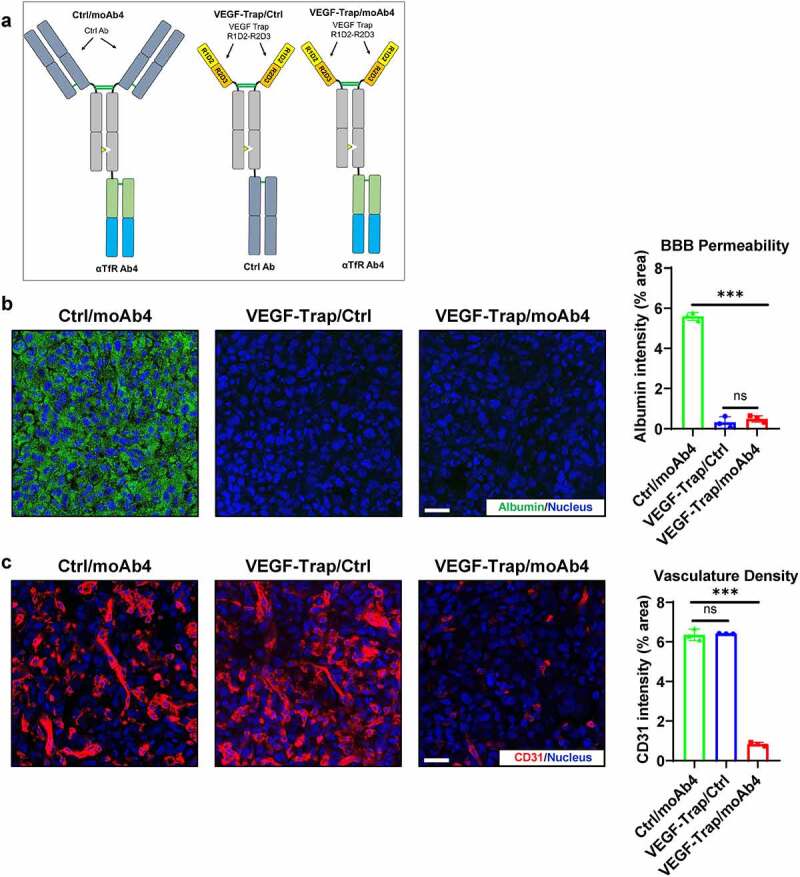
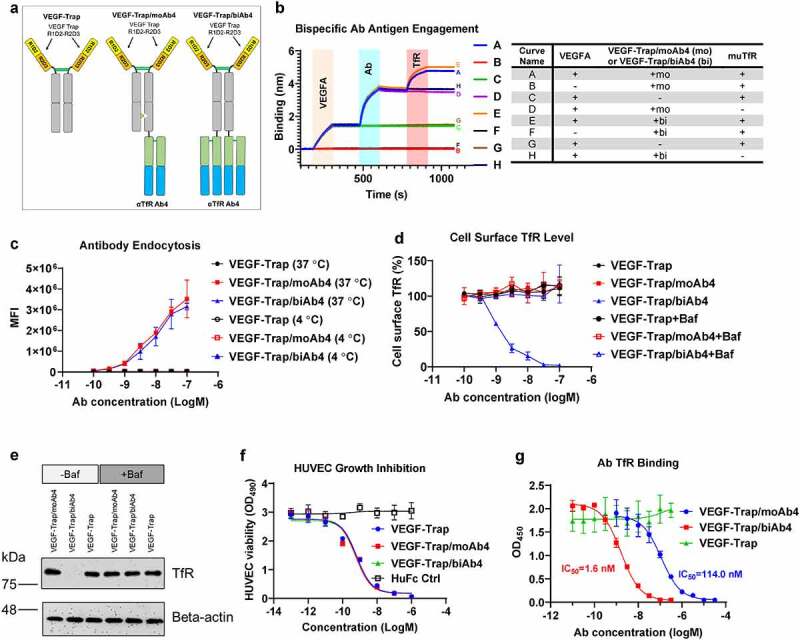
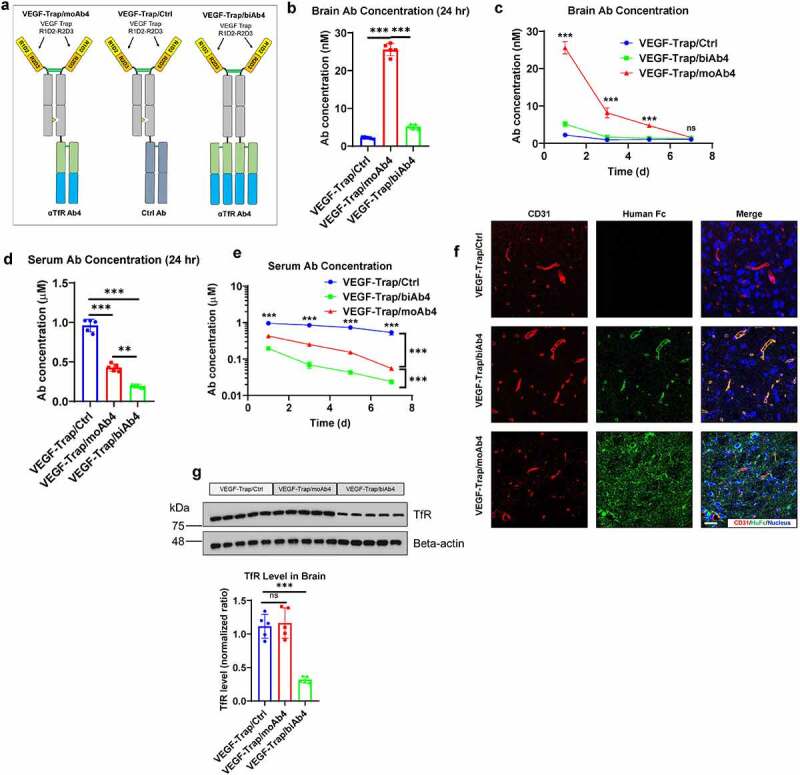
Glioblastoma (GBM) is a common and aggressive brain cancer that accounts for 60% of adult brain tumors. Anti-angiogenesis therapy is an attractive option due to the high vasculature density of GBM. However, the best-known anti-angiogenic therapeutics, bevacizumab, and aflibercept, have failed to show significant benefits in GBM patients. One of the reasons is the limited brain penetration of antibody-based therapies due to existence of the blood-brain barrier (BBB), which is further strengthened by the blood vessel normalization effects induced by anti-angiogenic therapies. To investigate if increased drug concentration in the brain by transferrin receptor (TfR)-mediated delivery across the BBB can enhance efficacy of anti-angiogenic antibody therapies, we first identified an antibody that binds to the apical domain of the mouse TfR and does not compete with the natural ligand transferrin (Tf) binding to TfR. Then, we engineered two bispecific antibodies fusing a vascular endothelial growth factor (VEGF)-Trap with the TfR-targeting antibody. Characterization of the two bispecific formats using multiple assays, which include endocytosis, cell surface and whole-cell TfR levels, human umbilical vein endothelial cell growth inhibition, and binding affinity, demonstrated that the VEGF-Trap fused with a monovalent αTfR (VEGF-Trap/moAb4) has desirable endocytosis without the induction of TfR degradation. Peripherally administered VEGF-Trap/moAb4 improved the brain concentration of VEGF-Trap by more than 10-fold in mice. The distribution of VEGF-Trap/moAb4 was validated to be in the brain parenchyma, indicating the molecule was not trapped inside the vasculature. Moreover, improved VEGF-Trap brain distribution significantly inhibited the angiogenesis of U-87 MG GBM tumors in a mouse model.
胶质母细胞瘤(GBM)是一种常见且侵袭性强的脑癌,占成人脑肿瘤的 60%。由于 GBM 血管密度高,抗血管生成治疗是一种很有吸引力的选择。然而,最著名的抗血管生成治疗药物贝伐珠单抗和阿柏西普在 GBM 患者中并未显示出显著的益处。原因之一是由于血脑屏障(BBB)的存在,抗体类疗法的脑穿透性有限,而抗血管生成治疗诱导的血管正常化效应进一步增强了这一点。为了研究通过转铁蛋白受体(TfR)介导的递药穿过血脑屏障是否可以增加脑内药物浓度,从而增强抗血管生成抗体治疗的疗效,我们首先鉴定了一种与小鼠 TfR 顶端结构域结合且不与天然配体转铁蛋白(Tf)竞争与 TfR 结合的抗体。然后,我们设计了两种双特异性抗体,将血管内皮生长因子(VEGF)-Trap 与靶向 TfR 的抗体融合。使用多种测定方法对两种双特异性形式进行了表征,包括内吞作用、细胞表面和全细胞 TfR 水平、人脐静脉内皮细胞生长抑制和结合亲和力,结果表明,与单价αTfR 融合的 VEGF-Trap(VEGF-Trap/moAb4)具有理想的内吞作用,而不会诱导 TfR 降解。外周给予 VEGF-Trap/moAb4 可使小鼠脑内 VEGF-Trap 的浓度提高 10 倍以上。VEGF-Trap/moAb4 的分布得到了验证,存在于脑实质中,表明该分子未被滞留在血管内。此外,VEGF-Trap 脑内分布的改善显著抑制了 U-87 MG GBM 肿瘤在小鼠模型中的血管生成。