Ajeh Enuneku Alex, Modi Filiya Jonathan, Omoregie Isibor Patrick
Department of Environmental Management and Toxicology, Faculty of Life Sciences, University of Benin, PMB 1154 Benin City, Nigeria.
Animal and Environmental Biology, Faculty of Life Sciences, University of Benin, PMB 1154 Benin City, Nigeria.
Toxicol Rep. 2022 Mar 26;9:575-587. doi: 10.1016/j.toxrep.2022.03.021. eCollection 2022.
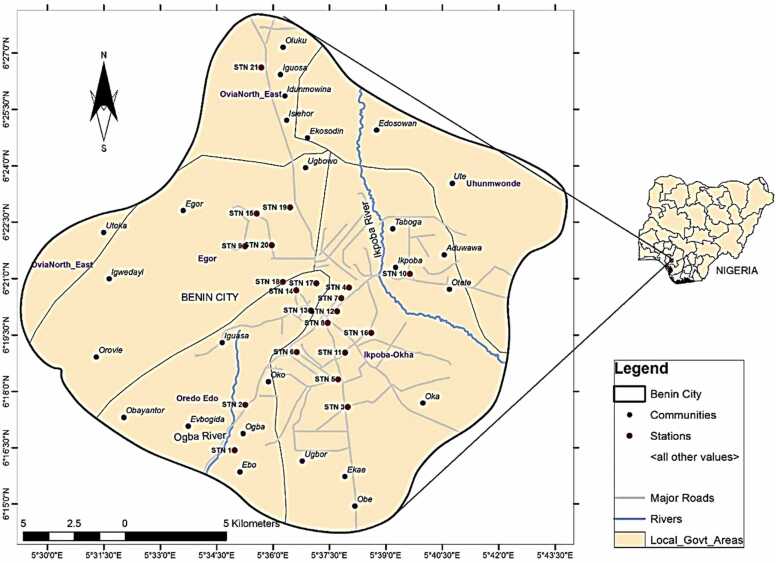
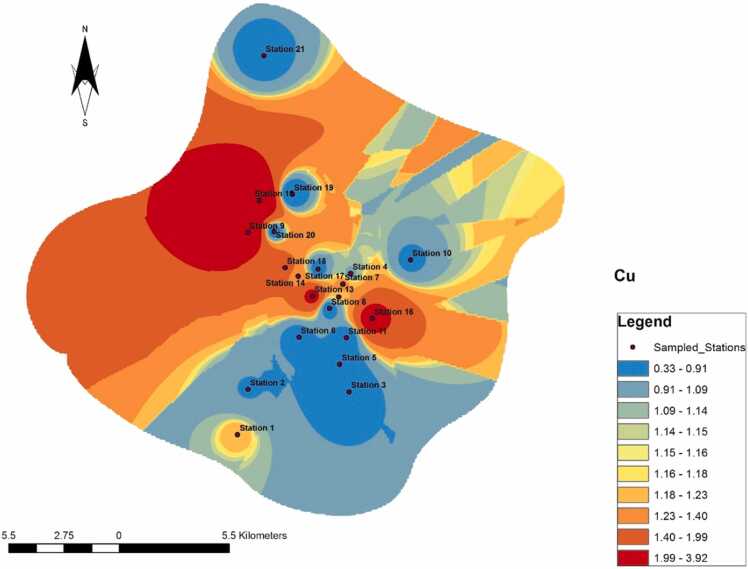
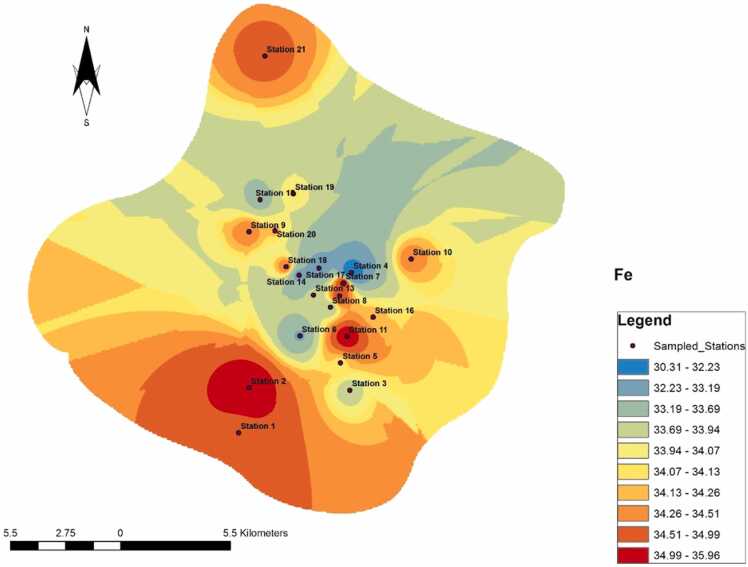
This study was carried out to assess the distribution of trace metals in soil samples from selected automobile mechanic workshops (AMWs) in Benin City, spatially map the concentrations and estimate the health risk indices for the exposed populace. Topsoil samples were collected from twenty-one (21) AMWs in Benin City in 3 composites for three months at each station. Soil samples were analyzed for heavy metals (Pb, Cd, Fe, Cu, Ni, Cr, and Zn) using Atomic Absorption Spectrophotometer. The non-carcinogenic risks caused by exposure to the metals were insignificant, characterized by in mean values of hazard quotient (HQ) and hazard index (HI) below one (1) in adults and children. Carcinogenic risk (CR) occurred only in the children exposed to nickel through ingestion; attributable to ingestion. In adults and children, the risks associated with the uptake routes were in the order of ingestion > dermal contact > inhalation. The hazard index (HI) values of heavy metals for children and adults decreased in the order of Pb > Cr > Cd > Cu > Zn > Ni and were all lower than one (1), which indicated that the children and adults were not at non-carcinogenic risk. The contamination factors (CF) of all metals analyzed were lower than one (1), suggesting low contamination. The average CF decreased in the order of Pb (0.3715) > Zn (0.14) > Cu (0.087) > Cr (0.013) > Ni (0.01) > Fe (0.0007). Potential ecological risks of the trace metals in soils of these workshops revealed low pollution of the soils by the metals. Results indicated that the three routes of uptake in adults and children decreased in the order of ingestion > dermal > inhalation. The non-carcinogenic risks posed by metals to the children and adults were insignificant. Ingested nickel however posed potential carcinogenic risk to only the children. The toxicodynamics of heavy metals in the soil profile demonstrated in this study could be a vital information for future studies and decisions on the management of the health and environment of the study area.
本研究旨在评估贝宁城选定汽车修理车间(AMW)土壤样本中痕量金属的分布,对浓度进行空间制图,并估算暴露人群的健康风险指数。2021年,从贝宁城的21个汽车修理车间采集了表层土壤样本,每个站点分3组进行为期3个月的采集。使用原子吸收分光光度计分析土壤样本中的重金属(铅、镉、铁、铜、镍、铬和锌)。接触这些金属所导致的非致癌风险不显著,成人和儿童的平均危害商(HQ)和危害指数(HI)值均低于1。致癌风险(CR)仅发生在通过摄入接触镍的儿童中,归因于摄入。在成人和儿童中,与吸收途径相关的风险顺序为摄入>皮肤接触>吸入。儿童和成人重金属的危害指数(HI)值顺序为铅>铬>镉>铜>锌>镍,均低于1,这表明儿童和成人不存在非致癌风险。所有分析金属的污染因子(CF)均低于1,表明污染程度较低。平均CF顺序为铅(0.3715)>锌(0.14)>铜(0.087)>铬(0.013)>镍(0.01)>铁(0.0007)。这些车间土壤中痕量金属的潜在生态风险表明土壤受金属污染程度较低。结果表明,成人和儿童的三种吸收途径风险顺序为摄入>皮肤>吸入。金属对儿童和成人造成的非致癌风险不显著。然而,摄入镍仅对儿童构成潜在致癌风险。本研究中展示的土壤剖面中重金属的毒理学动态可能为未来研究以及该研究区域健康与环境管理决策提供重要信息。