Institute of Physiology, University Hospital Essen, University of Duisburg-Essen, Hufelandstraße 55, 45122, Essen, Germany.
Translational Oncology, Department of Otorhinolaryngology, University Hospital Essen, University Duisburg-Essen, Hufelandstaße 55, 45147, Essen, Germany.
Sci Rep. 2022 Apr 7;12(1):5877. doi: 10.1038/s41598-022-09759-9.
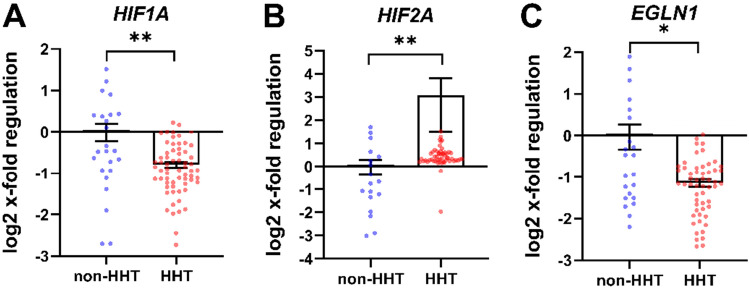
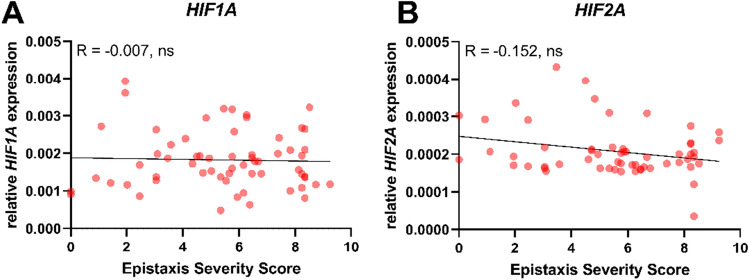
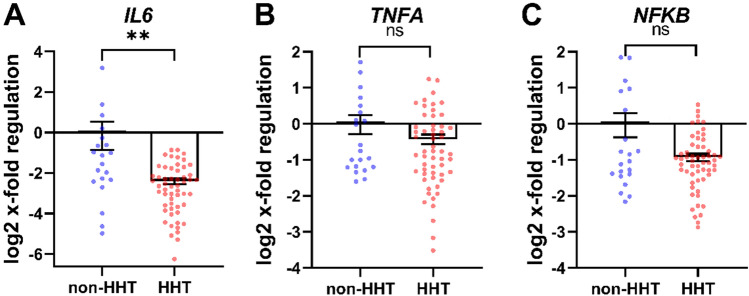
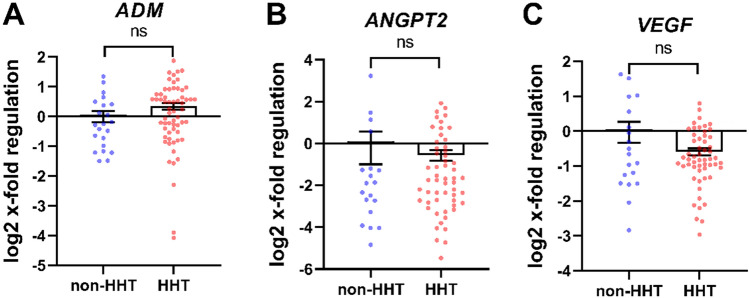
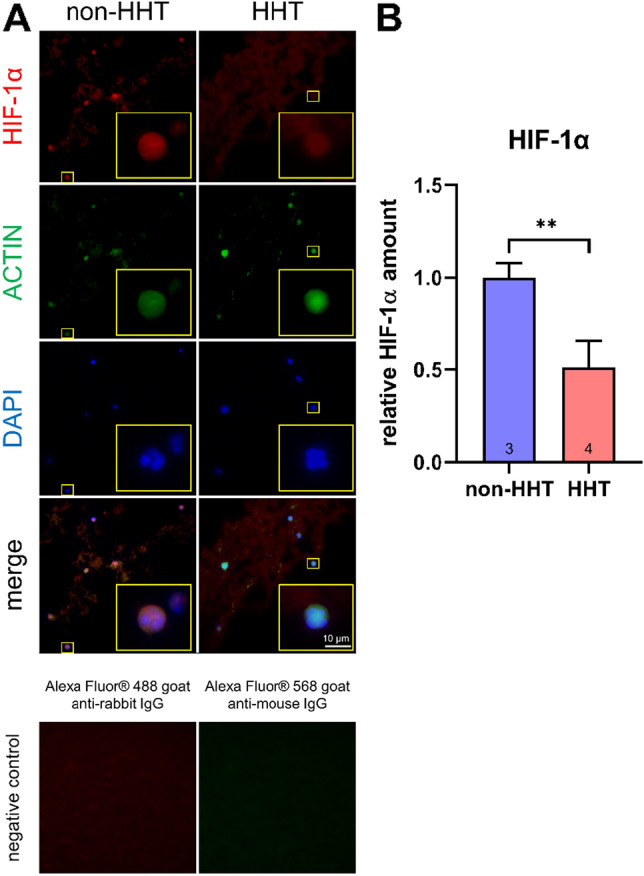
Patients with hereditary haemorrhagic telangiectasia (HHT), also known as Rendu-Osler-Weber syndrome, suffer from the consequences of abnormal vessel structures. These structures can lead to haemorrhages or shunt effects in liver, lungs and brain. This inherited and rare disease is characterized by mutations affecting the transforming growth factor-β (TGF-β)/Bone Morphogenetic Protein (BMP) pathway that results in arteriovenous malformations and studies indicate an impaired immune response. The mechanism underlying this altered immune response in HHT patients is still unknown. TGF-β interacts with hypoxia inducible factors (HIF), which both orchestrate inflammatory and angiogenic processes. Therefore, we analysed the expression of HIF and related genes in whole blood samples from HHT patients. We could show significantly decreased expression of HIF-1α on the mRNA and protein level. However, commonly known upstream regulators of HIF-1α in inflammatory responses were not affected, whereas HIF-1α target genes were significantly downregulated. There was no correlation between HIF1A or HIF2A gene expression and the severity of HHT detected. Our results represent a rare case of HIF-1α downregulation in a human disease, which underlines the relevance of HIFs in HHT. The study indicates an interaction of the known mutation in HHT and the dysregulation of HIF-1α in HHT patients, which might contribute to the clinical phenotype.
遗传性出血性毛细血管扩张症(HHT),也称为 Rendu-Osler-Weber 综合征,患者会因血管结构异常而出现并发症。这些结构可能导致肝脏、肺部和大脑出血或分流。这种遗传性罕见疾病的特征是影响转化生长因子-β(TGF-β)/骨形态发生蛋白(BMP)途径的突变,导致动静脉畸形,并表明存在免疫功能受损。HHT 患者免疫反应改变的机制尚不清楚。TGF-β与缺氧诱导因子(HIF)相互作用,这两者都可以协调炎症和血管生成过程。因此,我们分析了 HHT 患者全血样本中 HIF 和相关基因的表达。我们可以在 mRNA 和蛋白质水平上显示 HIF-1α 的表达显著降低。然而,炎症反应中常见的 HIF-1α 的上游调节因子不受影响,而 HIF-1α 的靶基因则显著下调。HIF1A 或 HIF2A 基因表达与检测到的 HHT 严重程度之间没有相关性。我们的研究结果代表了人类疾病中 HIF-1α 下调的罕见情况,这强调了 HIF 在 HHT 中的相关性。该研究表明 HHT 中已知突变与 HIF-1α 失调之间的相互作用,这可能导致临床表型。