Jahani Mozhgan, Dokaneheifard Sadat, Mansouri Kamran
Medical Biology Research Center, Health Technology Institute, Kermanshah University of Medical Sciences, Kermanshah, Iran.
Department of Human Genetics, Sylvester Comprehensive Cancer Center, University of Miami Miller School of Medicine, Miami, Florida 33136 USA.
J Inflamm (Lond). 2020 Oct 29;17:33. doi: 10.1186/s12950-020-00263-3. eCollection 2020.
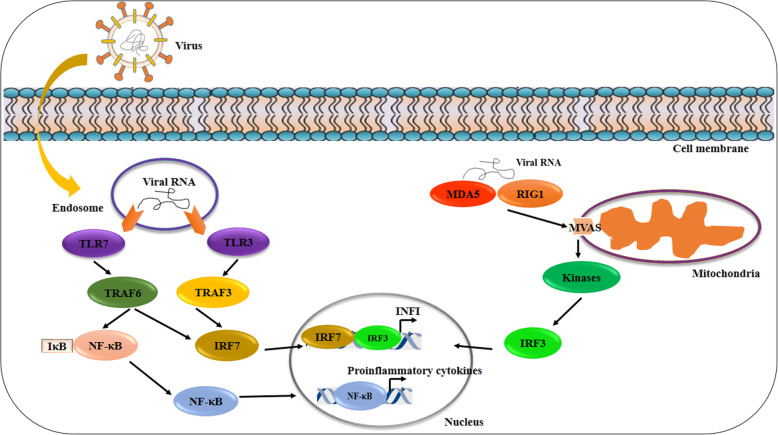
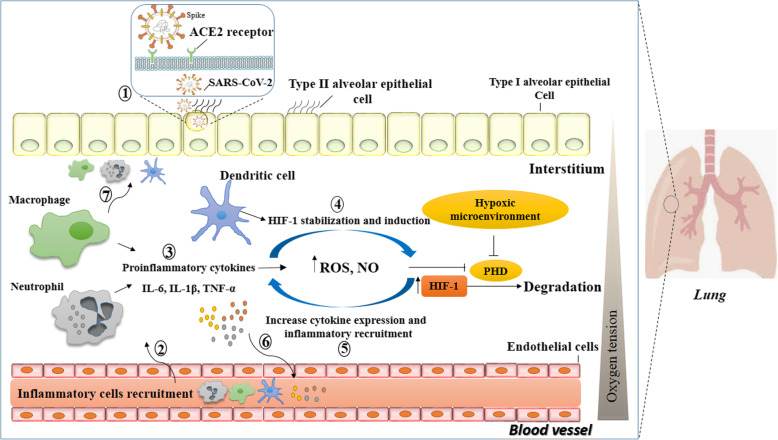
COVID-19, disease caused by the new coronavirus, SARS-CoV-2, appeared in the end of 2019 and was rapidly spread in most countries. This respiratory virus has different symptoms from moderate to severe, and results in lung pneumonia following acute respiratory distress syndrome (ARDS) and patient's death in severe cases. ARDS is a severe form of acute lung injury that is caused by high inflammatory response of the innate immunity cells. Hypoxia is the common feature in the inflammatory sites with having various impacts on this condition by induction of some factors such as hypoxia inducible factor-1α (HIF-1α). HIF-1α regulates some important cellular processes including cell proliferation, metabolism and angiogenesis. Furthermore, this factor is activated during the immune responses and plays important roles in the inflammation site by inducing pro-inflammatory cytokines production through immune cells. So, in this study the possible effect of the HIF-1α on the COVID-19 pathogenesis with emphasizes on its role on innate immunity response has been discussed.
新型冠状病毒SARS-CoV-2引起的COVID-19于2019年底出现,并在大多数国家迅速传播。这种呼吸道病毒有从中度到重度的不同症状,严重时会导致急性呼吸窘迫综合征(ARDS)后继发肺炎并造成患者死亡。ARDS是一种由先天免疫细胞的高炎症反应引起的严重急性肺损伤形式。缺氧是炎症部位的常见特征,通过诱导缺氧诱导因子-1α(HIF-1α)等一些因素对这种情况产生各种影响。HIF-1α调节一些重要的细胞过程,包括细胞增殖、代谢和血管生成。此外,该因子在免疫反应过程中被激活,并通过诱导免疫细胞产生促炎细胞因子在炎症部位发挥重要作用。因此,在本研究中,讨论了HIF-1α对COVID-19发病机制的可能影响,重点是其在先天免疫反应中的作用。