Epidemiology Department, Harvard School of Public Health, Boston, MA, USA.
Broad Institute of MIT and Harvard, Cambridge, MA, USA.
Nat Genet. 2022 Apr;54(4):450-458. doi: 10.1038/s41588-022-01036-9. Epub 2022 Apr 7.
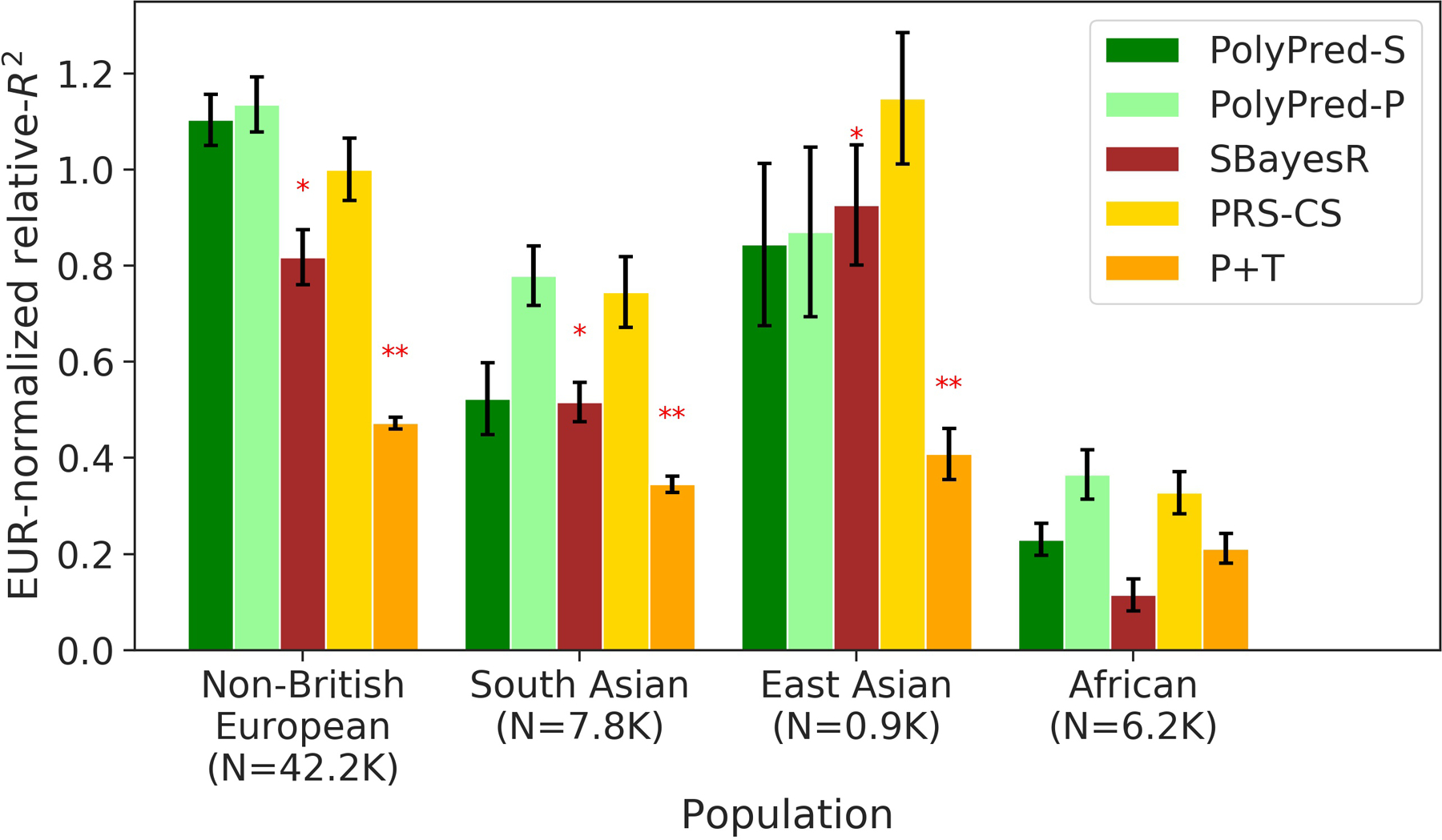
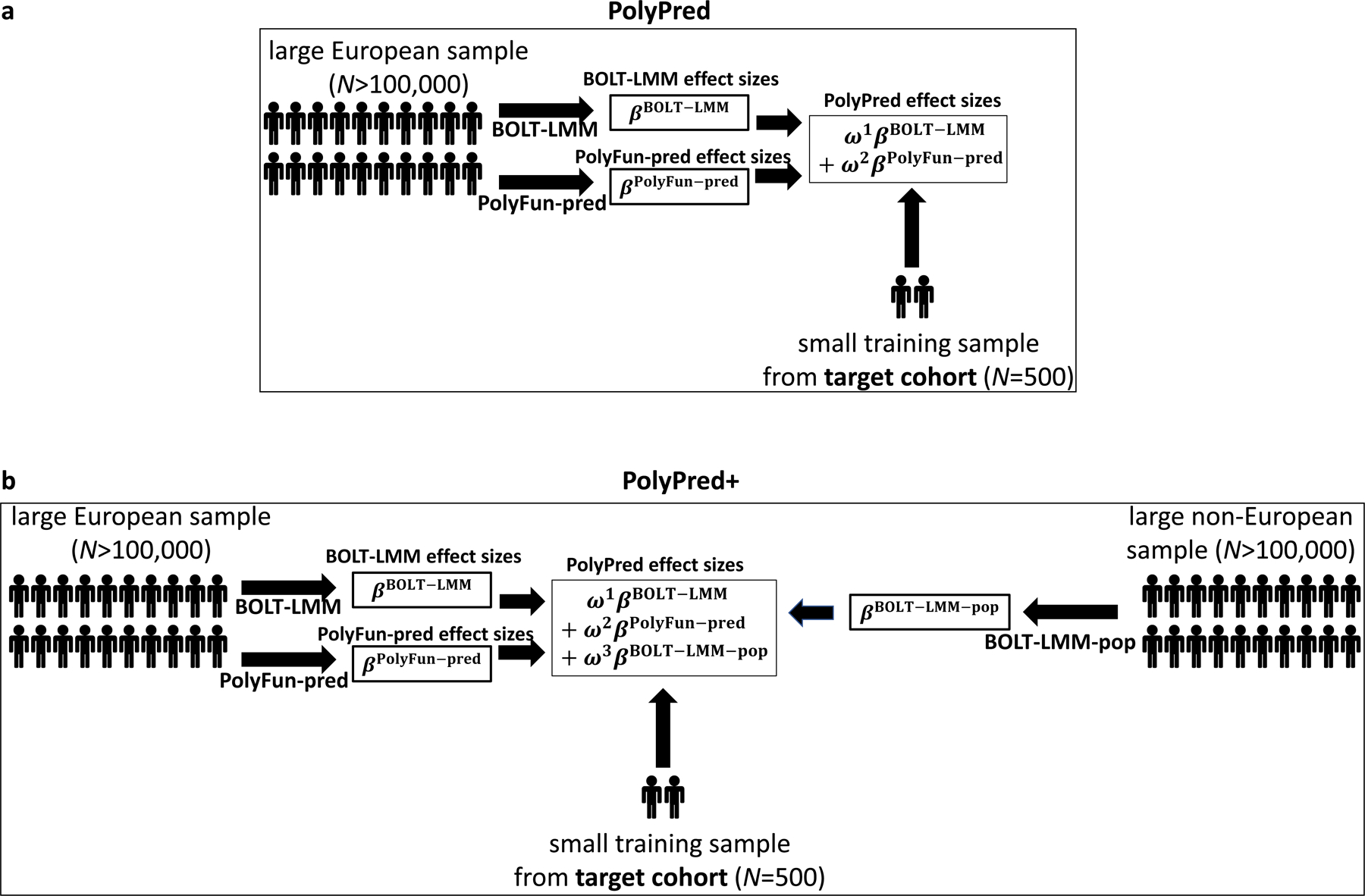
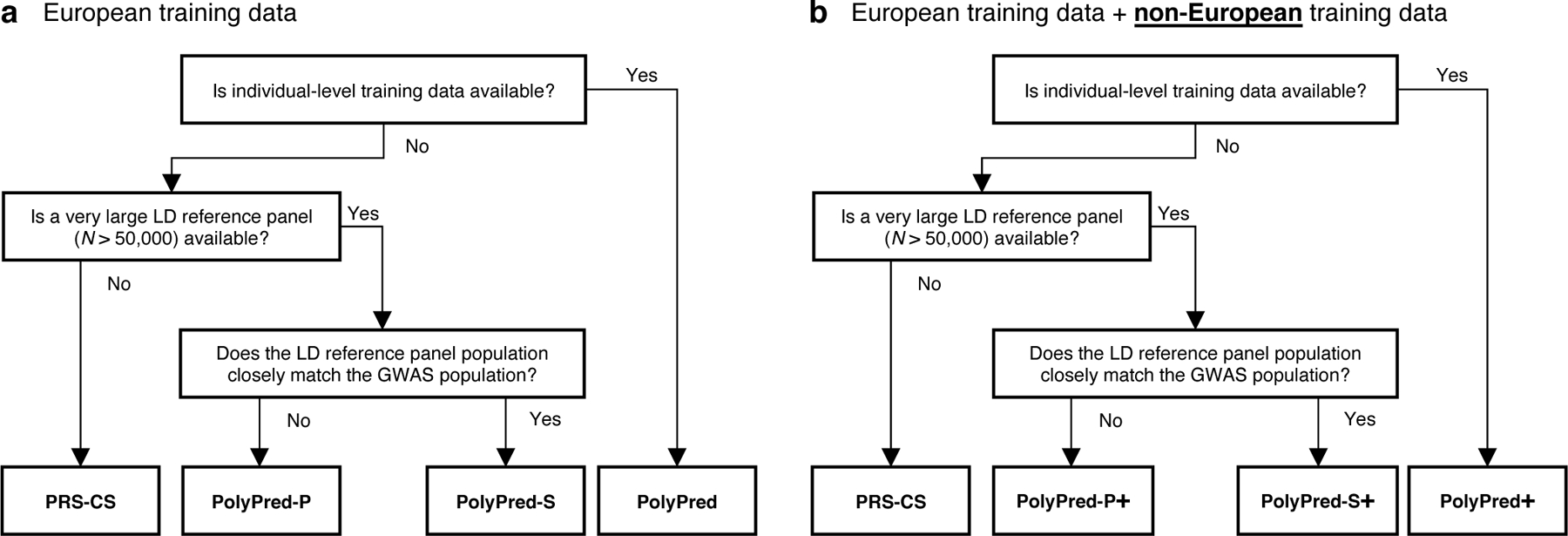
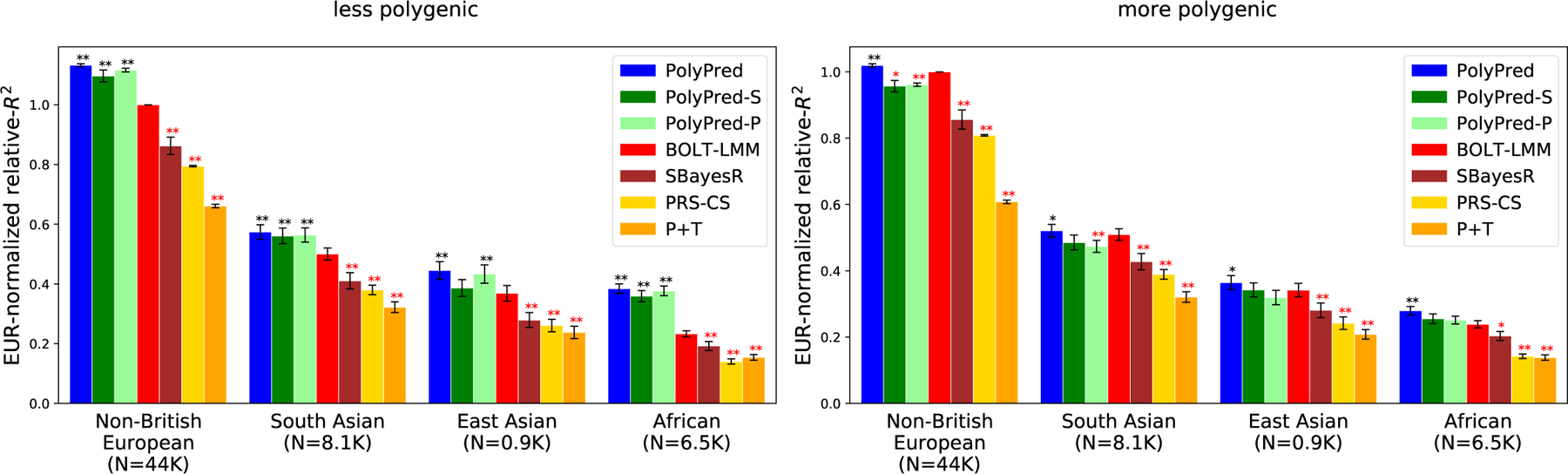
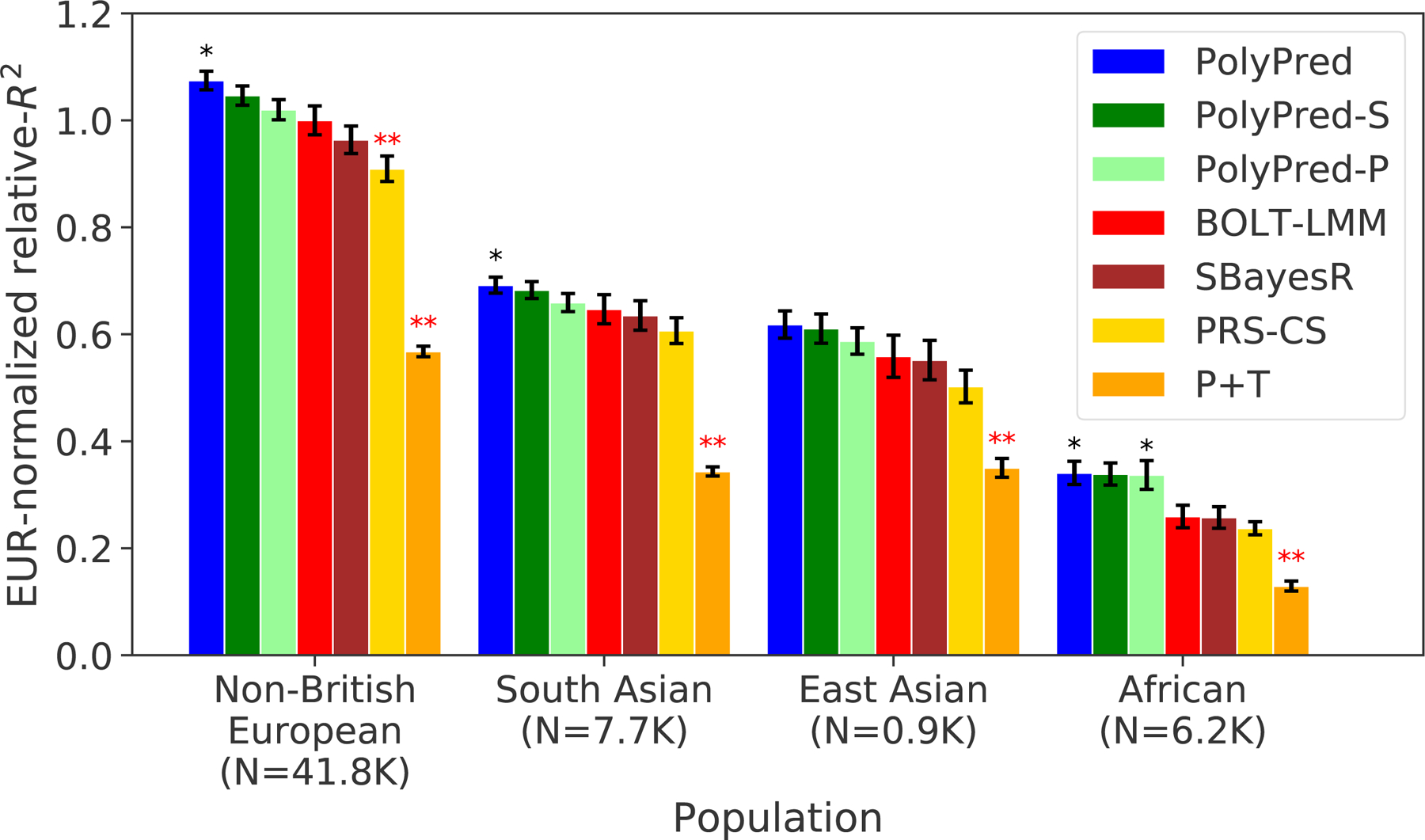
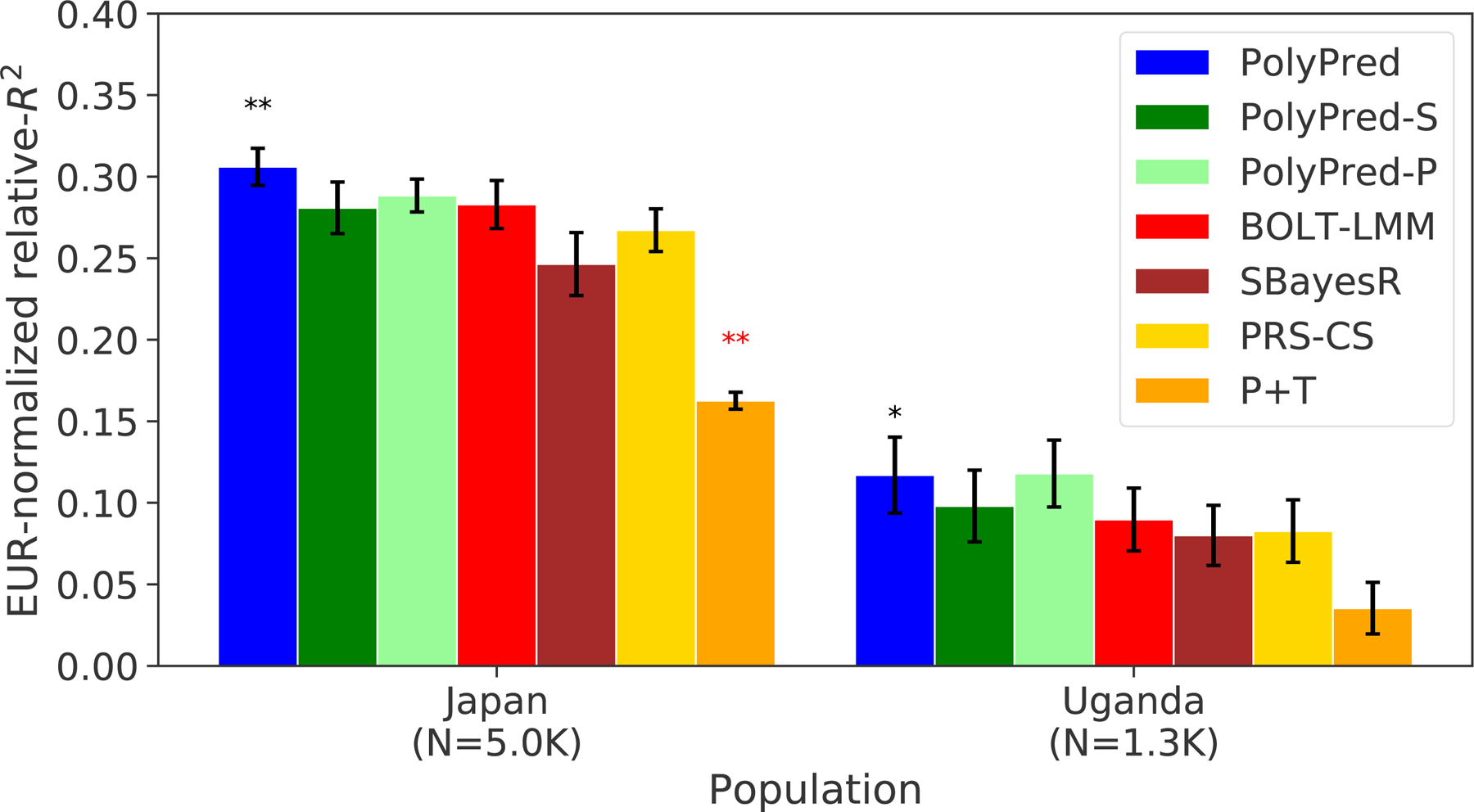
Polygenic risk scores suffer reduced accuracy in non-European populations, exacerbating health disparities. We propose PolyPred, a method that improves cross-population polygenic risk scores by combining two predictors: a new predictor that leverages functionally informed fine-mapping to estimate causal effects (instead of tagging effects), addressing linkage disequilibrium differences, and BOLT-LMM, a published predictor. When a large training sample is available in the non-European target population, we propose PolyPred, which further incorporates the non-European training data. We applied PolyPred to 49 diseases/traits in four UK Biobank populations using UK Biobank British training data, and observed relative improvements versus BOLT-LMM ranging from +7% in south Asians to +32% in Africans, consistent with simulations. We applied PolyPred to 23 diseases/traits in UK Biobank east Asians using both UK Biobank British and Biobank Japan training data, and observed improvements of +24% versus BOLT-LMM and +12% versus PolyPred. Summary statistics-based analogs of PolyPred and PolyPred attained similar improvements.
多基因风险评分在非欧洲人群中的准确性降低,加剧了健康差距。我们提出了 PolyPred,这是一种通过结合两种预测因子来提高跨人群多基因风险评分的方法:一种新的预测因子,利用功能信息精细映射来估计因果效应(而不是标记效应),解决连锁不平衡差异,以及 BOLT-LMM,这是一种已发表的预测因子。当非欧洲目标人群中存在大量训练样本时,我们提出了 PolyPred,它进一步纳入了非欧洲的训练数据。我们使用英国生物库英国训练数据在四个英国生物库人群中应用了 PolyPred,并观察到与 BOLT-LMM 相比,在南亚人群中相对提高了+7%,在非洲人群中提高了+32%,与模拟结果一致。我们使用英国生物库英国和日本的训练数据在英国生物库东亚人群中应用了 PolyPred 来研究 23 种疾病/特征,与 BOLT-LMM 相比,观察到了+24%的改善,与 PolyPred 相比,观察到了+12%的改善。基于汇总统计数据的 PolyPred 类似物也取得了类似的改善。