Department of Informatics, J. Craig Venter Institute, La Jolla, CA, 92037, USA.
Department of Microbiology, UAB School of Medicine, Birmingham, AL, 35294, USA.
Virology. 2022 May;570:123-133. doi: 10.1016/j.virol.2022.03.005. Epub 2022 Mar 30.
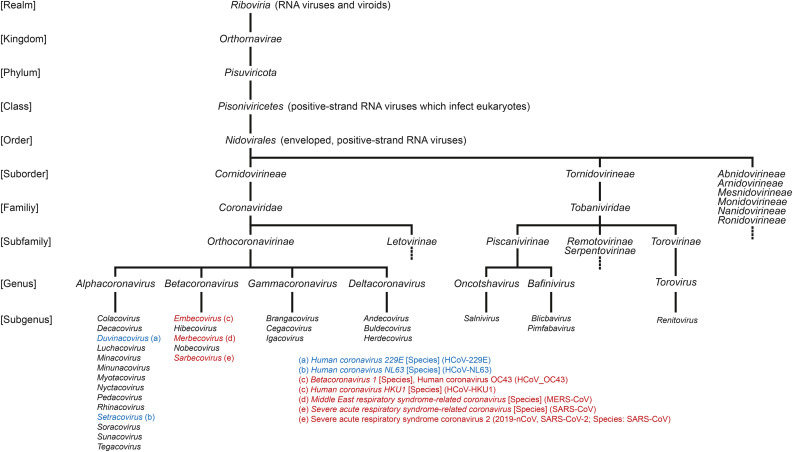
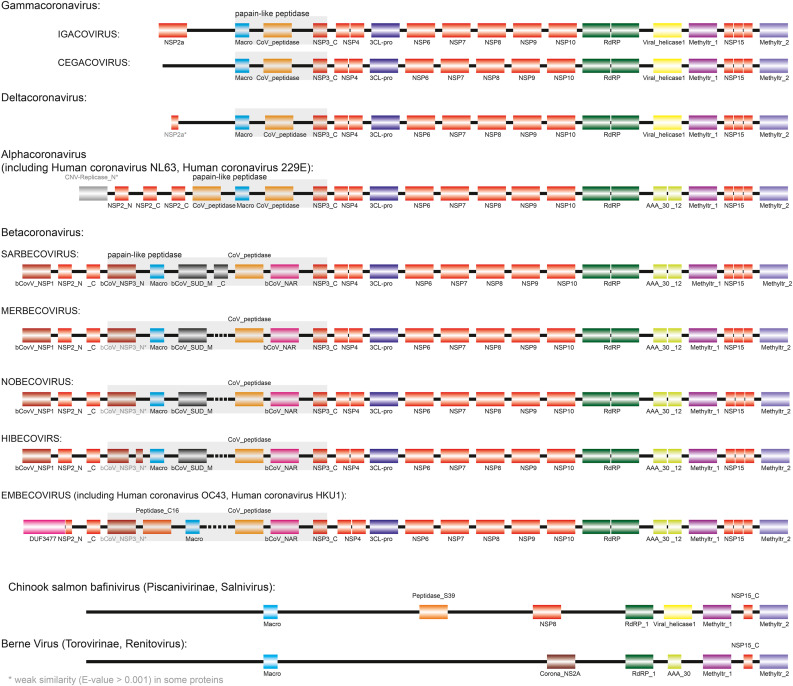
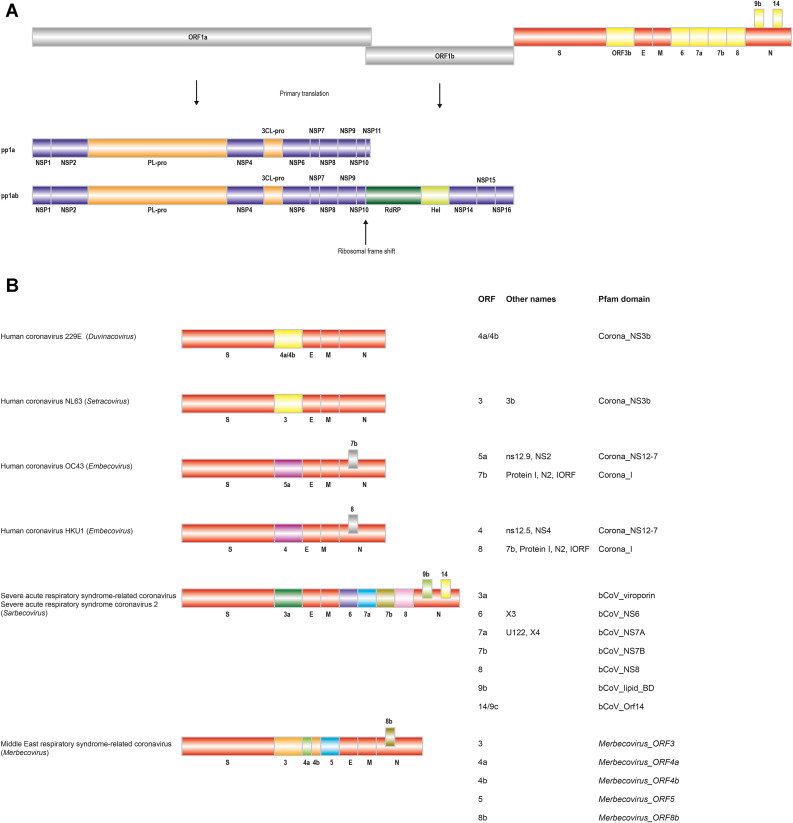
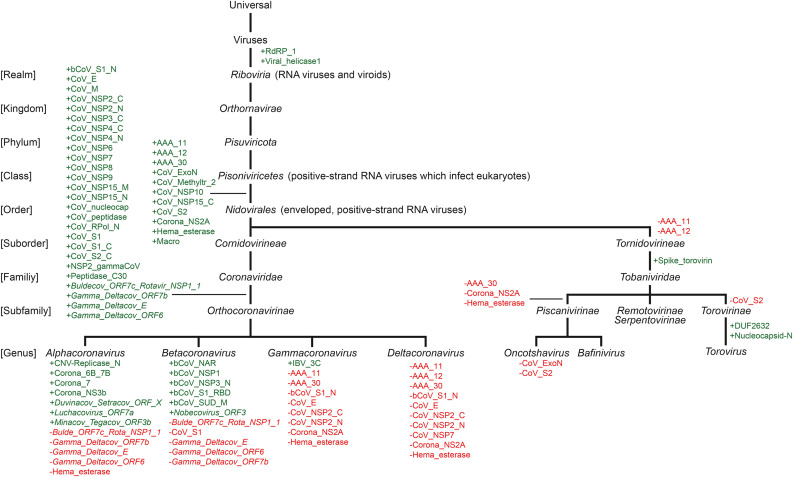
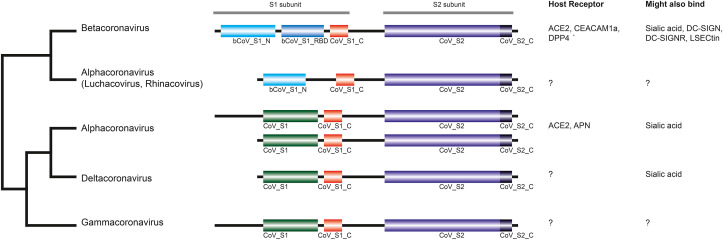
The current outbreak of coronavirus disease-2019 (COVID-19) caused by SARS-CoV-2 poses unparalleled challenges to global public health. SARS-CoV-2 is a Betacoronavirus, one of four genera belonging to the Coronaviridae subfamily Orthocoronavirinae. Coronaviridae, in turn, are members of the order Nidovirales, a group of enveloped, positive-stranded RNA viruses. Here we present a systematic phylogenetic and evolutionary study based on protein domain architecture, encompassing the entire proteomes of all Orthocoronavirinae, as well as other Nidovirales. This analysis has revealed that the genomic evolution of Nidovirales is associated with extensive gains and losses of protein domains. In Orthocoronavirinae, the sections of the genomes that show the largest divergence in protein domains are found in the proteins encoded in the amino-terminal end of the polyprotein (PP1ab), the spike protein (S), and many of the accessory proteins. The diversity among the accessory proteins is particularly striking, as each subgenus possesses a set of accessory proteins that is almost entirely specific to that subgenus. The only notable exception to this is ORF3b, which is present and orthologous over all Alphacoronaviruses. In contrast, the membrane protein (M), envelope small membrane protein (E), nucleoprotein (N), as well as proteins encoded in the central and carboxy-terminal end of PP1ab (such as the 3C-like protease, RNA-dependent RNA polymerase, and Helicase) show stable domain architectures across all Orthocoronavirinae. This comprehensive analysis of the Coronaviridae domain architecture has important implication for efforts to develop broadly cross-protective coronavirus vaccines.
当前由严重急性呼吸系统综合征冠状病毒 2(SARS-CoV-2)引起的 2019 年冠状病毒病(COVID-19)疫情给全球公共卫生带来了前所未有的挑战。SARS-CoV-2 是一种β冠状病毒,属于冠状病毒科β冠状病毒属的四个属之一。冠状病毒科又属于套式病毒目,这是一类有包膜的正链 RNA 病毒。在这里,我们基于蛋白结构域架构进行了系统的系统发育和进化研究,涵盖了所有β冠状病毒属的整个蛋白质组以及其他套式病毒目病毒。该分析表明,套式病毒目病毒的基因组进化与蛋白结构域的广泛获得和丧失有关。在β冠状病毒属中,基因组中蛋白结构域差异最大的部分位于多聚蛋白(PP1ab)的氨基末端编码的蛋白、刺突蛋白(S)和许多辅助蛋白中。辅助蛋白的多样性尤其引人注目,因为每个亚属都拥有一套几乎完全特定于该亚属的辅助蛋白。唯一值得注意的例外是 ORF3b,它存在于所有α冠状病毒中且是直系同源的。相比之下,跨膜蛋白(M)、包膜小膜蛋白(E)、核衣壳蛋白(N)以及 PP1ab 中央和羧基末端编码的蛋白(如 3C 样蛋白酶、RNA 依赖的 RNA 聚合酶和解旋酶)在所有β冠状病毒属中显示出稳定的结构域架构。对冠状病毒科结构域架构的这种全面分析对开发广泛交叉保护冠状病毒疫苗的努力具有重要意义。