The Institute of Transplantation Science, Qingdao University, Qingdao 266000, China.
Department of Human Anatomy, Histology and Embryology, Key Laboratory of Carcinogenesis and Translational Research (Ministry of Education) and State Key Laboratory of Natural and Biomimetic Drugs, Peking University Health Science Center, Beijing 100086, China.
J Healthc Eng. 2022 Mar 8;2022:4470510. doi: 10.1155/2022/4470510. eCollection 2022.
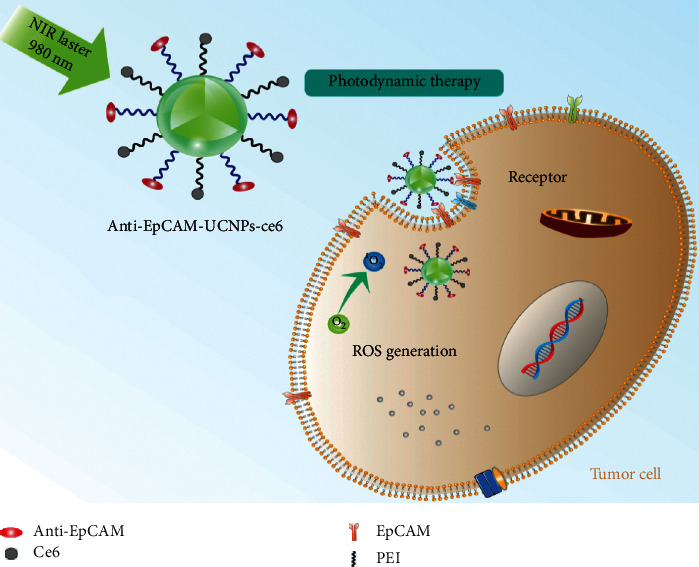
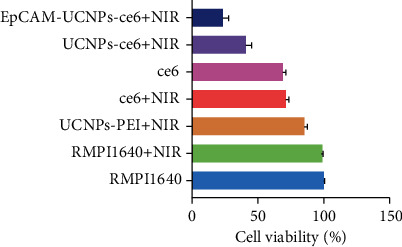
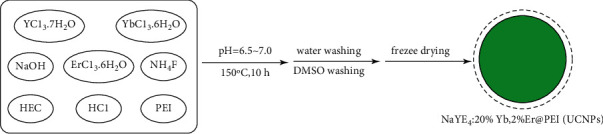
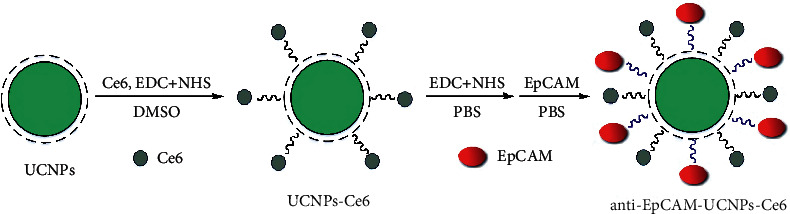
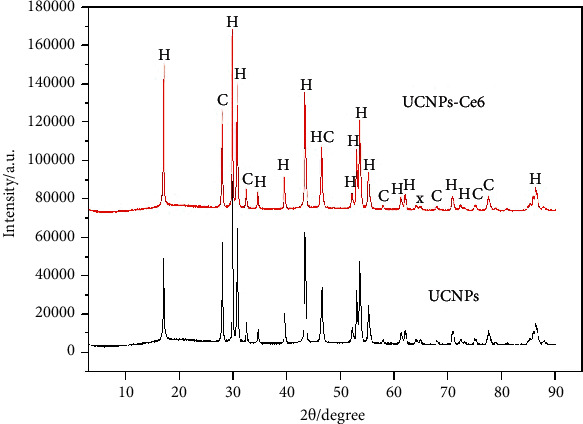
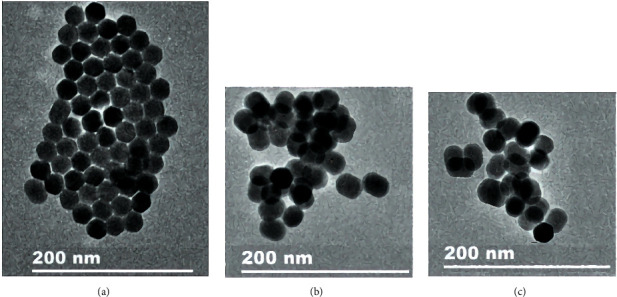
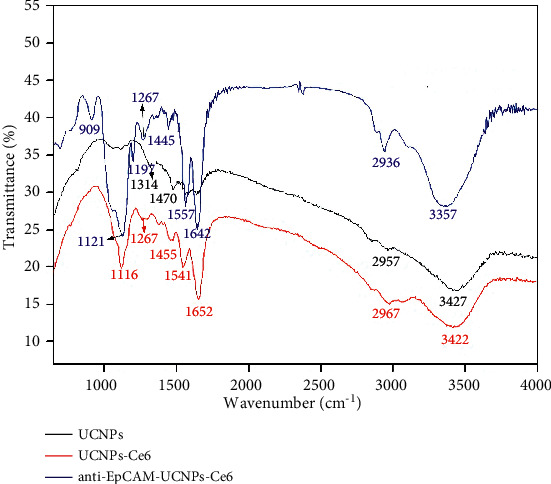
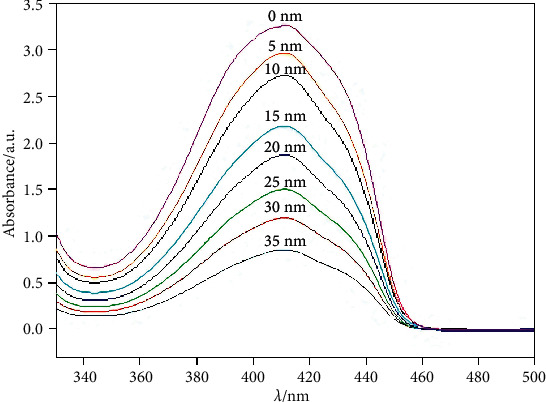
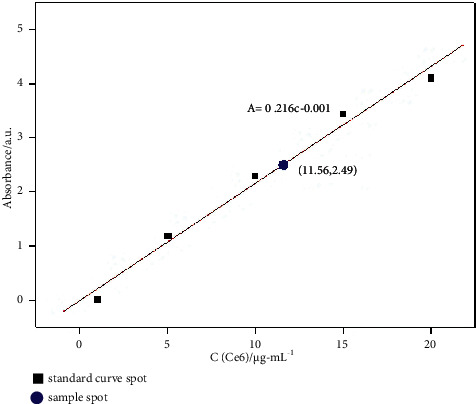
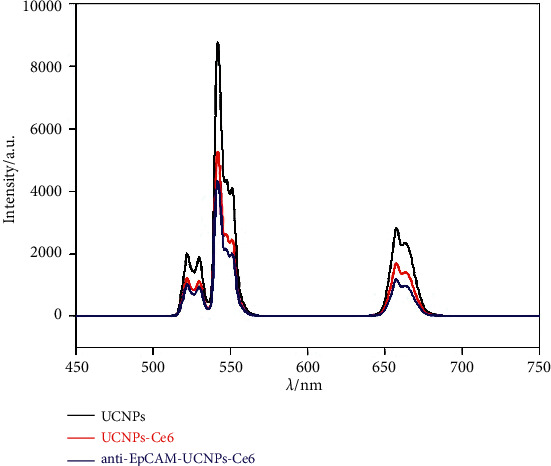
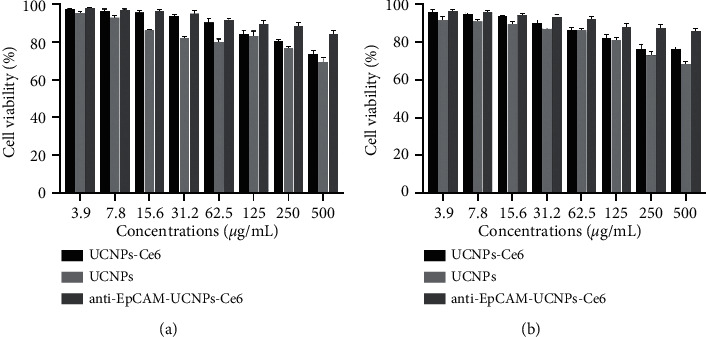
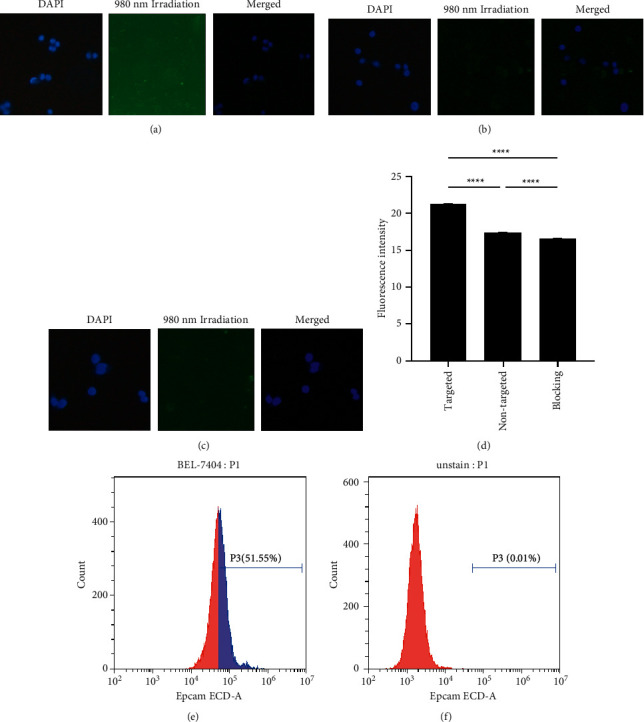
Rare Earth up-conversion nanoparticles NaYF4:20%Yb,2%Er@PEI (UCNPs) were generated via a one-step hydrothermal technique at relatively reduced temperatures. Photosensitizer Ce6 and anti-EpCAM, a highly expressed monoclonal antibody in cancer stem cells of hepatocellular carcinoma, were linked to UCNP surfaces via the formation of amide linkage between carboxyl from Ce6 or anti-EpCAM and abundant amino from PEI, leading to the formation of Ps-Ce6 and anti-EpCAM-UCNPs-Ce6 nanoparticles. The synthesized nanoparticles characterized by XRD, TEM, and IR, and their zeta potential, ROS generation ability, Ce6 loading rate, and up-conversion fluorescence properties were investigated. It has been revealed that all the products were uniformly dispersed nanoparticles (25-32 nm), which crystallized primarily as hexagonal structures, and their up-conversion fluorescence spectra were similar to that of NaYF4:20%Yb,2%Er. The Ce6 loading rate in the anti-EpCAM-UCNPs-Ce6 nanoparticles was about 2.9%, thereby resulting in good ROS generation ability. For anti-EpCAM-UCNPs-Ce6, the biosafety, targeting effect, and PDT effect exposed under near-infrared (NIR) laser (980 nm) were evaluated using human liver cancer cells (BEL-7404). The results showed that it has good biocompatibility and biosafety as well as high targeting and PDT treatment efficiencies, which renders it a potential experimental material for the near-infrared PDT study.
通过在相对较低的温度下的一步水热技术,生成了上转换纳米粒子 NaYF4:20%Yb,2%Er@PEI(UCNPs)。光敏剂 Ce6 和抗-EpCAM(肝癌肿瘤干细胞中高表达的单克隆抗体)通过 Ce6 或抗-EpCAM 的羧基与 PEI 上丰富的氨基之间形成酰胺键连接到 UCNP 表面,从而形成了 Ps-Ce6 和抗-EpCAM-UCNPs-Ce6 纳米粒子。通过 XRD、TEM 和 IR 对合成的纳米粒子进行了表征,并研究了它们的 zeta 电位、ROS 生成能力、Ce6 负载率和上转换荧光特性。结果表明,所有产物均为均匀分散的纳米粒子(25-32nm),主要结晶为六方结构,其上转换荧光光谱与 NaYF4:20%Yb,2%Er 相似。抗-EpCAM-UCNPs-Ce6 纳米粒子中的 Ce6 负载率约为 2.9%,从而具有良好的 ROS 生成能力。对于抗-EpCAM-UCNPs-Ce6,通过近红外(NIR)激光(980nm)照射,评估了其在人肝癌细胞(BEL-7404)中的生物安全性、靶向作用和 PDT 效应。结果表明,它具有良好的生物相容性和生物安全性,以及高的靶向性和 PDT 治疗效率,使其成为近红外 PDT 研究的潜在实验材料。