Yaşar Alişan Burak, Konuk Emre, Kavakçı Önder, Uygun Ersin, Gündoğmuş İbrahim, Taygar Afra Selma, Uludağ Esra
Department of Clinical Psychology, İstanbul Gelişim University, İstanbul, Turkey.
Davranış Bilimleri Institute, İstanbul, Turkey.
Front Psychol. 2022 Mar 24;13:845481. doi: 10.3389/fpsyg.2022.845481. eCollection 2022.
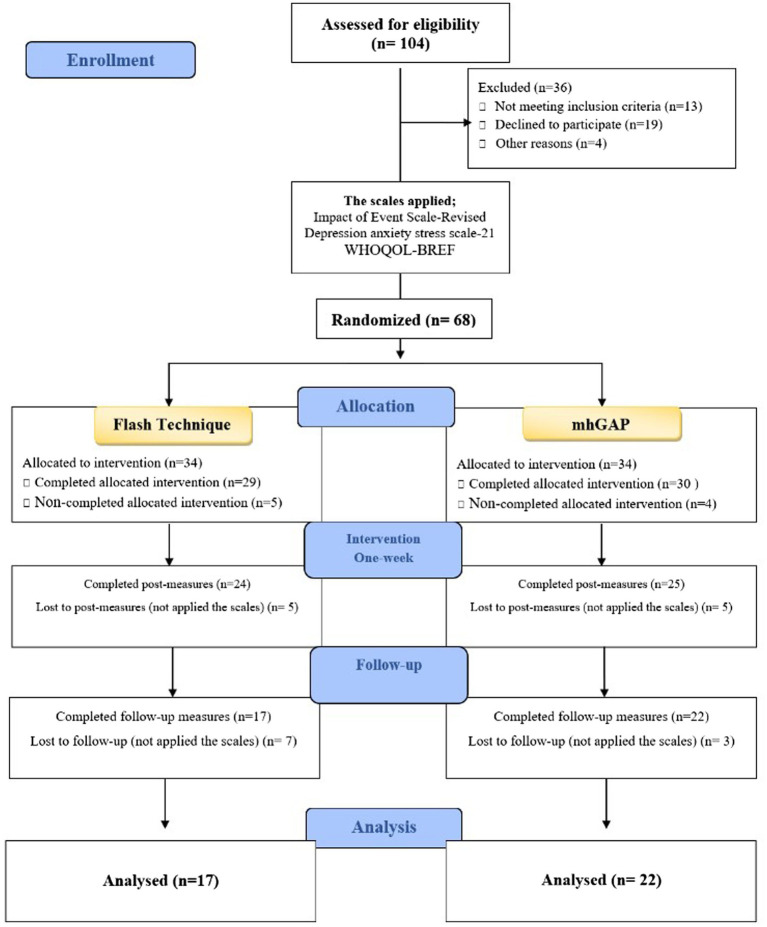
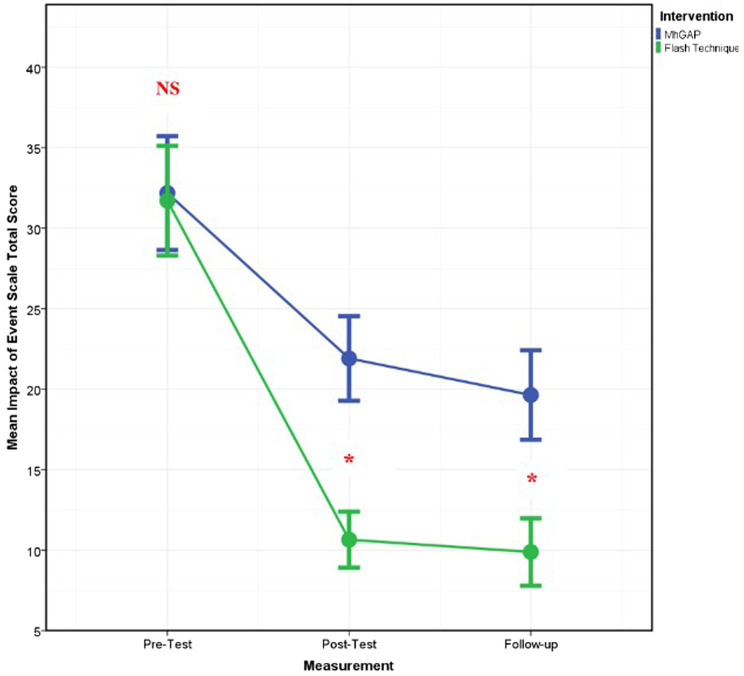
The Flash Technique of Eye Movement Desensitization and Reprocessing (EMDR) is widely recognized for its effectiveness in reducing the effects of emotional responses associated with traumatic memories. Using a randomized-controlled trial methodology, this study attempts to establish the efficacy of the EMDR Flash Technique. This study's sample includes volunteers who were involved in traffic accidents and were given the randomized EMDR Flash Technique and Improving Mental Health Training for Primary Care Residents (mhGAP) Stress management module. The participants were given a socio-demographic data form, the Depression-Anxiety-Stress 21 scale (DASS-21), the Impact of Event Scale-Revised (IES-R), and the WHOQOL Quality of Life scale. Participants were evaluated using measurements taken before and after the application, as well as a one-month follow-up. The mean age of the participants was 36.20 (11.41) years and 82.1% ( = 32) were female. The DASS-21 Anxiety ( = 0.085), IES-R Intrusion ( = 0.101), Avoidance ( = 0.124), Total ( = 0.147), and WHOQOL-BREF Psychological ( = 0.106) score improvements of the EMDR Flash Technique group were shown to be statistically significant when compared to the mhGAP group. However, no statistically significant difference in the DASS-21 Depression, Stress, Impact of Event Scale-Revised Hyperarousal WHOQOL-BREF General Health, Physical, Social Relationships, and Environment component scores was reported between the two groups. The present study's findings clearly demonstrate that the EMDR Flash technique, when applied to persons involved in traffic accidents, is successful in improving anxiety, intrusion, avoidance, total traumatic stress, and mental quality of life symptoms for at least 1 month. We believe that these findings will improve the reliability and applicability of the EMDR Flash Technique, which was tested for the first time in a clinical randomized-controlled trial (RCT).
眼动脱敏再处理疗法(EMDR)的快速技术因其在减轻与创伤性记忆相关的情绪反应影响方面的有效性而被广泛认可。本研究采用随机对照试验方法,试图确定EMDR快速技术的疗效。本研究的样本包括参与交通事故的志愿者,他们被随机分配接受EMDR快速技术和初级保健住院医师心理健康改善培训(mhGAP)压力管理模块。参与者填写了社会人口统计学数据表格、抑郁-焦虑-压力21量表(DASS-21)、事件影响量表修订版(IES-R)和世界卫生组织生活质量量表(WHOQOL)。在应用前后以及进行为期一个月的随访时对参与者进行测量评估。参与者的平均年龄为36.20(11.41)岁,82.1%(n = 32)为女性。与mhGAP组相比,EMDR快速技术组在DASS-21焦虑量表(p = 0.085)、IES-R闯入量表(p = 0.101)、回避量表(p = 0.124)、总量表(p = 0.147)以及WHOQOL-BREF心理量表(p = 0.106)上的得分改善具有统计学意义。然而,两组在DASS-21抑郁量表、压力量表、事件影响量表修订版的高唤醒量表、WHOQOL-BREF总体健康、身体、社会关系和环境分量表得分上未报告有统计学显著差异。本研究结果清楚地表明,将EMDR快速技术应用于交通事故受害者时,至少在1个月内能够成功改善焦虑、闯入、回避、总的创伤后应激症状以及生活质量的心理症状。我们相信,这些结果将提高EMDR快速技术的可靠性和适用性,该技术首次在临床随机对照试验(RCT)中进行了测试。