Madonna Domenico, Enrico Paolo, Ciappolino Valentina, Boscutti Andrea, Colombo Elisa, Turtulici Nunzio, Cantù Filippo, Cereda Guido, Delvecchio Giuseppe, De Falco Stefano, Chierichetti Monica, Savioli Monica, Grasselli Giacomo, Brambilla Paolo
Department of Neurosciences and Mental Health, Fondazione Istituto di Ricovero e Cura a Carattere Scientifico (IRCCS) Ca' Granda Ospedale Maggiore Policlinico, Milan, Italy.
Department of Pathophysiology and Transplantation, University of Milan, Milan, Italy.
Front Neurol. 2022 Mar 24;13:774953. doi: 10.3389/fneur.2022.774953. eCollection 2022.
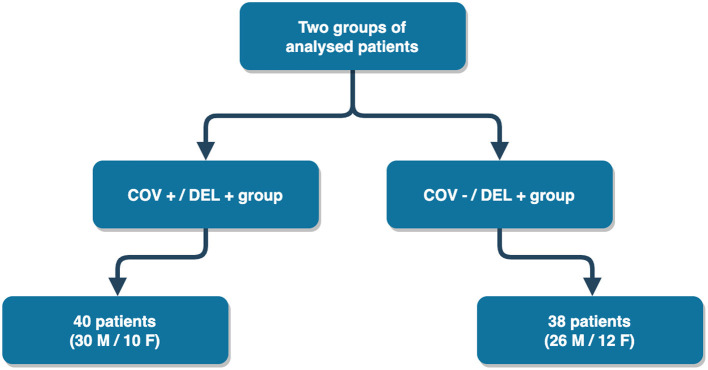
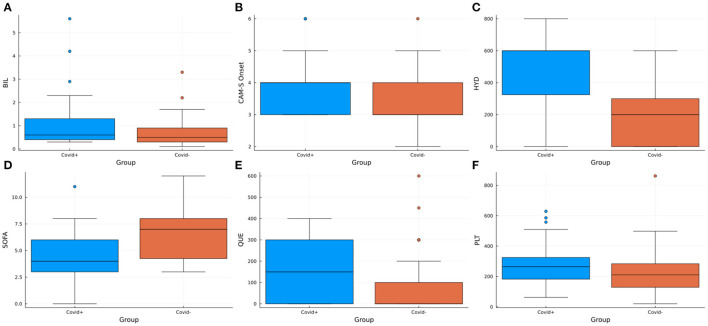
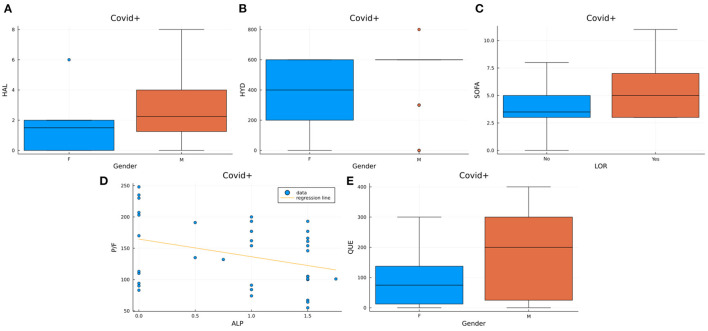
The clinical outcome of the disease provoked by the SARS-CoV-2 infection, COVID-19, is largely due to the development of interstitial pneumonia accompanied by an Acute Respiratory Distress Syndrome (ARDS), often requiring ventilatory support therapy in Intensive Care Units (ICUs). Current epidemiologic evidence is demonstrating that the COVID-19 prognosis is significantly influenced by its acute complications. Among these, delirium figures as one of the most frequent and severe, especially in the emergency setting, where it shows a significantly negative prognostic impact. In this regard, the aim of our study is to identify clinical severity factors of delirium complicating COVID-19 related-ARDS. We performed a comparative and correlation analysis using demographics, comorbidities, multisystemic and delirium severity scores and anti-delirium therapy in two cohorts of ARDS patients with delirium, respectively, due to COVID-19 ( = 40) or other medical conditions ( = 39). Our results indicate that delirium in COVID-19-related ARDS is more severe since its onset despite a relatively less severe systemic condition at the point of ICU admission and required higher dosages of antipsychotic and non-benzodiazepinic sedative therapy respect to non-COVID patients. Finally, the correlation analysis showed a direct association between the male gender and maximum dosage of anti-delirium medications needed within the COVID-19 group, which was taken as a surrogate of delirium severity. Overall, our results seem to indicate that pathogenetic factors specifically associated to severe COVID-19 are responsible for the high severity of delirium, paving the way for future research focused on the mechanisms of the cognitive alterations associated with COVID-19.
由严重急性呼吸综合征冠状病毒2(SARS-CoV-2)感染引发的疾病,即2019冠状病毒病(COVID-19),其临床结果很大程度上归因于间质性肺炎的发展,并伴有急性呼吸窘迫综合征(ARDS),这常常需要在重症监护病房(ICU)进行通气支持治疗。目前的流行病学证据表明,COVID-19的预后受到其急性并发症的显著影响。其中,谵妄是最常见且最严重的并发症之一,尤其是在急诊环境中,它显示出显著的负面预后影响。在这方面,我们研究的目的是确定并发于COVID-19相关ARDS的谵妄的临床严重程度因素。我们分别对两组患有谵妄的ARDS患者进行了比较和相关性分析,这两组患者分别因COVID-19(n = 40)或其他医疗状况(n = 39)导致谵妄。我们使用了人口统计学、合并症、多系统和谵妄严重程度评分以及抗谵妄治疗进行分析。我们的结果表明,与COVID-19相关的ARDS患者的谵妄自发病起就更为严重,尽管在入住ICU时全身状况相对较轻,并且相对于非COVID患者,需要更高剂量的抗精神病药物和非苯二氮䓬类镇静治疗。最后,相关性分析显示,在COVID-19组中,男性性别与所需抗谵妄药物的最大剂量之间存在直接关联,该剂量被用作谵妄严重程度的替代指标。总体而言,我们的结果似乎表明,与严重COVID-19特别相关的发病机制因素是谵妄严重程度高的原因,为未来专注于与COVID-19相关的认知改变机制的研究铺平了道路。