Yan Guoyong, Lan Yi, Sun Jin, Xu Ting, Wei Tong, Qian Pei-Yuan
Southern Marine Science and Engineering Guangdong Laboratory (Guangzhou), Guangzhou 511458, China.
Department of Ocean Science, The Hong Kong University of Science and Technology, Hong Kong, China.
iScience. 2022 Mar 17;25(4):104092. doi: 10.1016/j.isci.2022.104092. eCollection 2022 Apr 15.
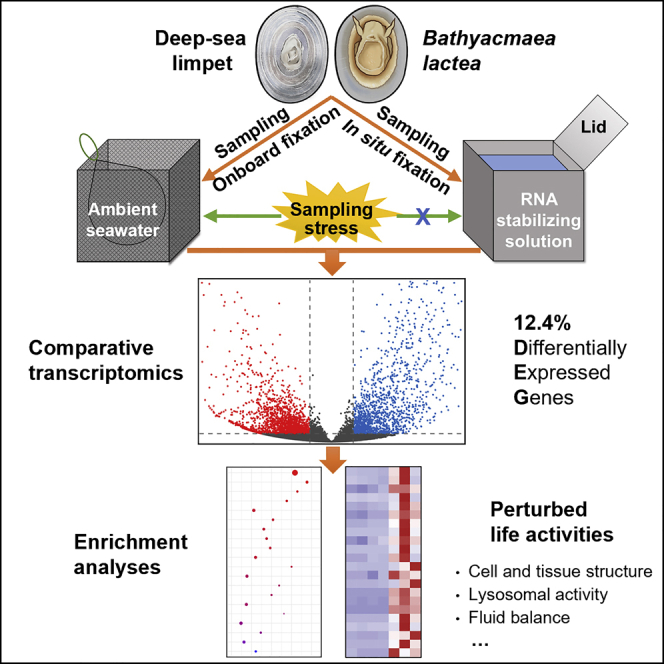
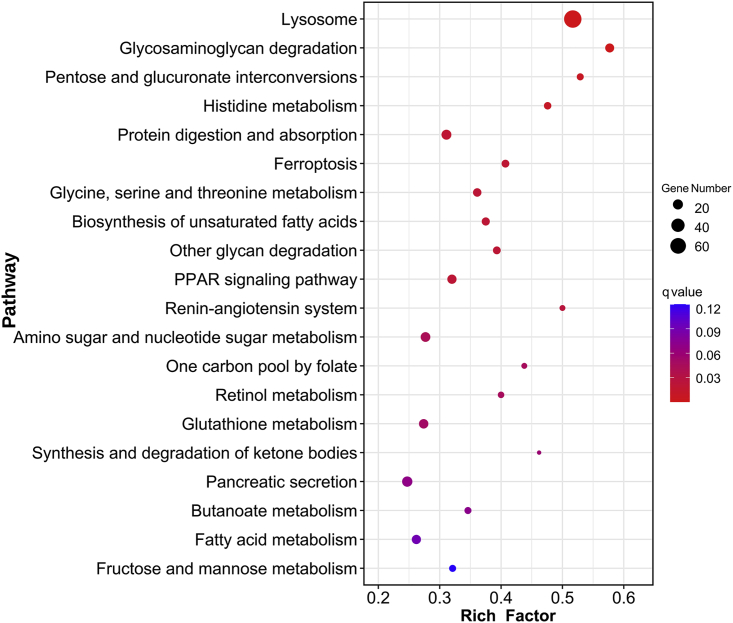
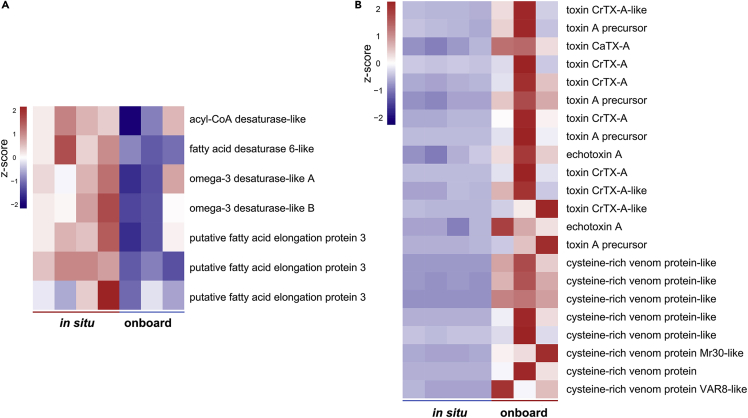
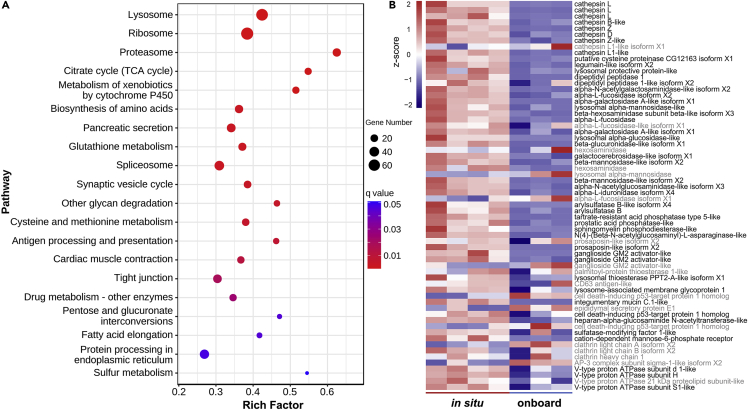
Precise gene expression reflects the molecular response of deep-sea organisms to their harsh living environments. However, changes in environmental factors during lifting samples from the deep sea to a research vessel can also affect gene expression. By using the transcriptomic approach, we compared the gene expression profiles of the onboard fixed with the fixed samples of the deep-sea limpet . Our results revealed that the concomitant stress during conventional deep-sea sampling without RNA fixation greatly influenced the gene expression. Various biological activities, such as cell and tissue structure, lysosomal activity, fluid balance, and unsaturated fatty acid metabolism, were perturbed, suggesting that the sampling stress has exerted systemic impacts on the life of the limpets. These findings clearly illustrate that deep-sea samples without RNA fixation can easily lead to biased results in gene expression analysis, which requires to be appropriately addressed in future studies.
精确的基因表达反映了深海生物对其恶劣生存环境的分子响应。然而,在将样本从深海提升至研究船的过程中,环境因素的变化也会影响基因表达。通过转录组学方法,我们比较了船上固定样本与深海帽贝固定样本的基因表达谱。我们的结果显示,在没有RNA固定的传统深海采样过程中伴随的压力极大地影响了基因表达。各种生物活动,如细胞和组织结构、溶酶体活性、液体平衡和不饱和脂肪酸代谢,都受到了干扰,这表明采样压力对帽贝的生命产生了系统性影响。这些发现清楚地表明,没有RNA固定的深海样本很容易在基因表达分析中导致有偏差的结果,这在未来的研究中需要得到适当解决。