Gamberini Lorenzo, Tartivita Chiara Natalia, Guarnera Martina, Allegri Davide, Baroncini Simone, Scquizzato Tommaso, Tartaglione Marco, Alberto Mazzoli Carlo, Chiarini Valentina, Picoco Cosimo, Coniglio Carlo, Semeraro Federico, Gordini Giovanni
Department of Anesthesia, Intensive Care and Prehospital Emergency, Ospedale Maggiore Carlo Alberto Pizzardi, Bologna, Italy.
Department of Clinical Governance and Quality, Bologna Local Healthcare Authority, Bologna, Italy.
Resusc Plus. 2022 Apr 1;10:100225. doi: 10.1016/j.resplu.2022.100225. eCollection 2022 Jun.
The return of spontaneous circulation (ROSC) after cardiac arrest (RACA) score was developed as a tool to predict ROSC probability (pROSC) based on easily available information and it could be useful to compare the performances of different EMS agencies or the effects of eventual interventions.We performed an external validation of the RACA score in a cohort of out of hospital cardiac arrest (OHCA) patients managed by the EMS of the metropolitan city of Bologna, Italy.
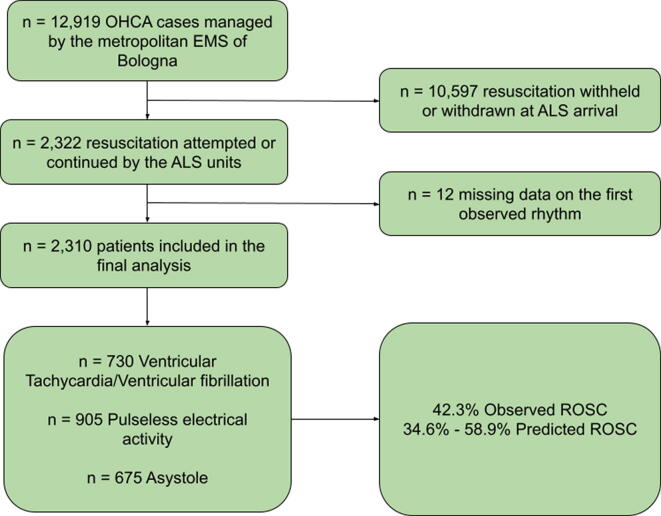
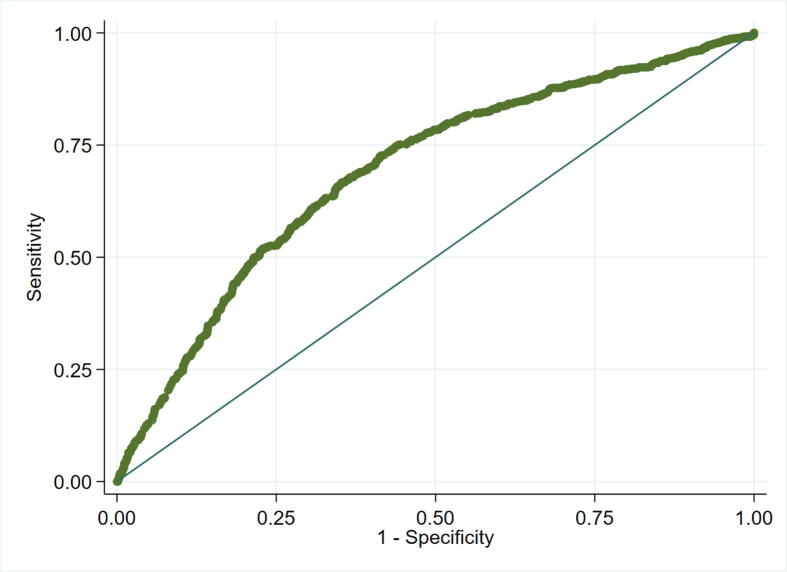
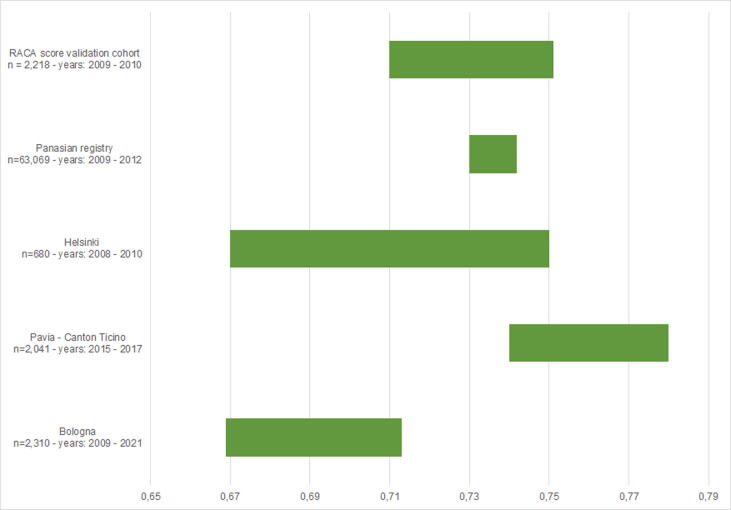
We analyzed data from 2,310 OHCA events prospectively collected between January 2009 and June 2021. Discrimination was assessed with the area under the ROC curve (AUROC), while the calibration belts were used for the comparison of observed versus expected ROSC rates. The AUROCs from our cohort and other validation cohorts were compared using a studentized range test.
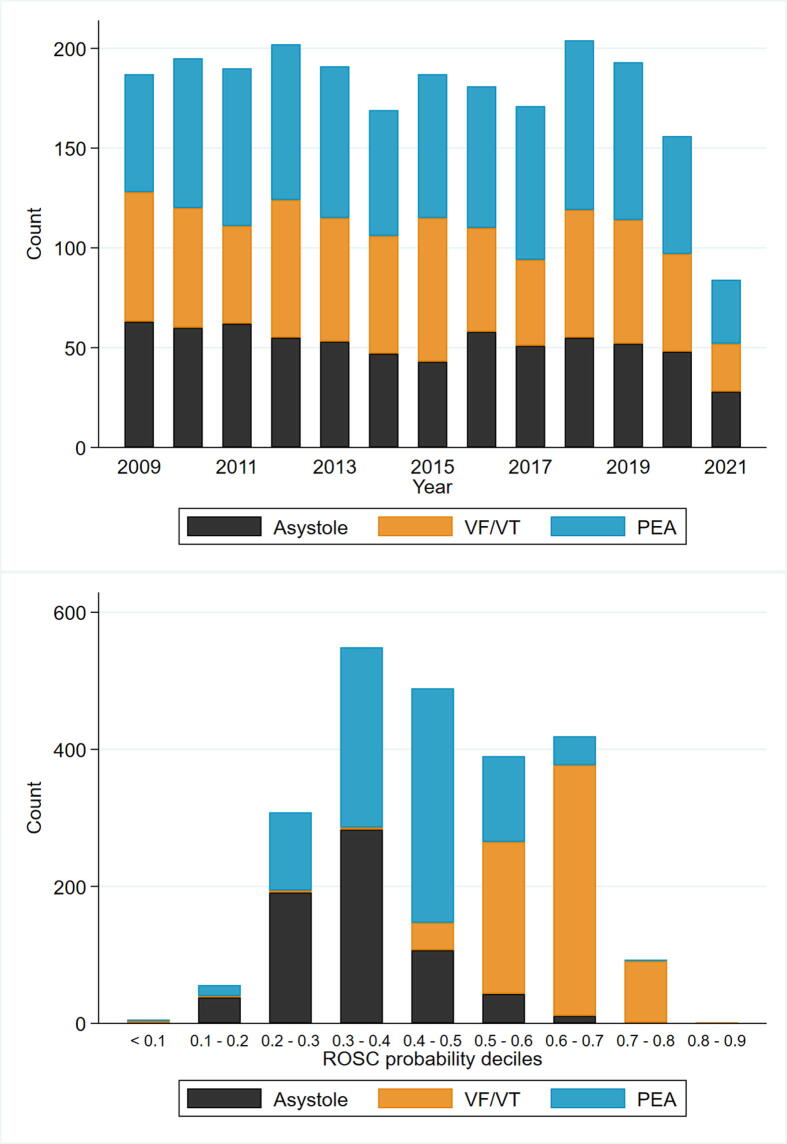
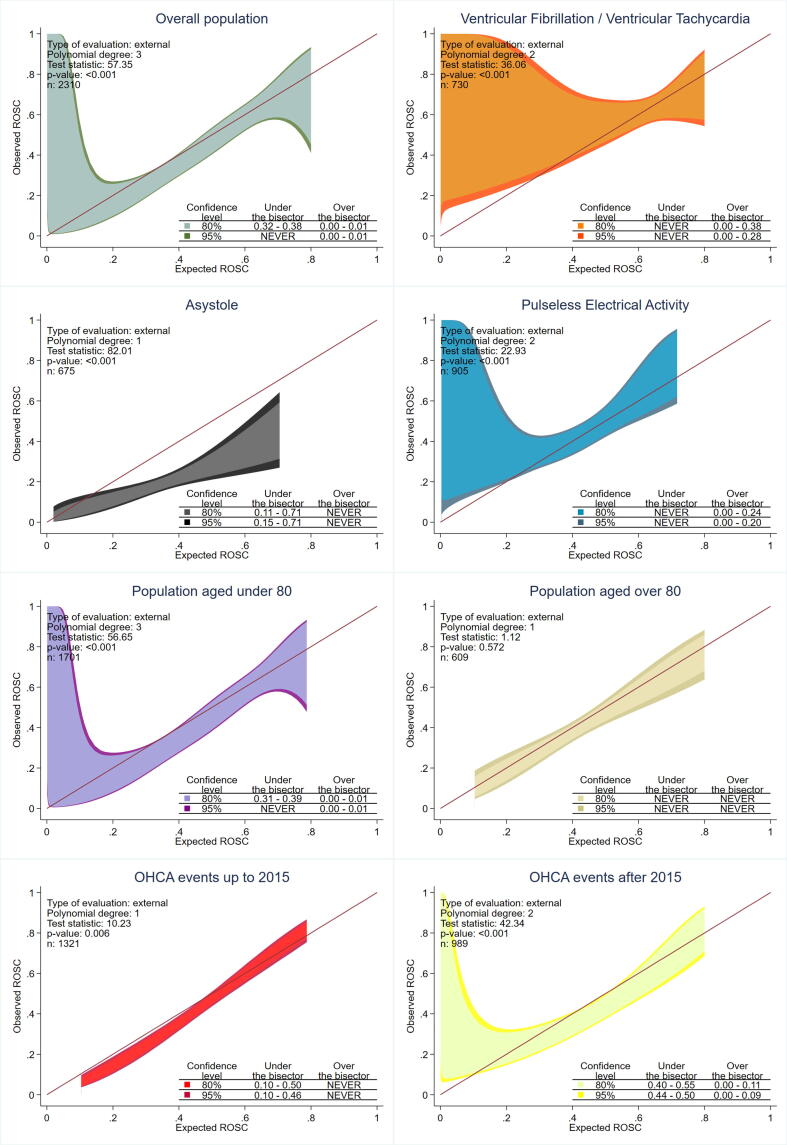
The AUROC for the study population was 0.691, comparable to that described by previous validation studies. Despite an acceptable overall calibration, we found a poor calibration for asystole and low pROSC ranges in PEA and shockable rhythms. The model showed a good calibration for patients aged over 80, while no differences in performance were found when evaluating events before and after the implementation of 2015 ERC guidelines.
Despite AUROC values being similar in different validation studies for RACA score, we suggest separating the different rhythms when assessing ROSC probability with the RACA score, especially for asystole.
心脏骤停后自主循环恢复(ROSC)评分是一种基于易于获取的信息来预测自主循环恢复概率(pROSC)的工具,它对于比较不同急救医疗服务(EMS)机构的表现或最终干预措施的效果可能有用。我们在意大利博洛尼亚市由EMS管理的院外心脏骤停(OHCA)患者队列中对ROSC评分进行了外部验证。
我们分析了2009年1月至2021年6月期间前瞻性收集的2310例OHCA事件的数据。使用ROC曲线下面积(AUROC)评估辨别力,同时使用校准带比较观察到的与预期的ROSC率。使用学生化极差检验比较我们队列和其他验证队列的AUROC。
研究人群的AUROC为0.691,与先前验证研究中描述的相当。尽管总体校准可接受,但我们发现心脏停搏以及PEA和可电击心律中低pROSC范围的校准较差。该模型对80岁以上患者显示出良好的校准,而在评估2015年欧洲复苏委员会(ERC)指南实施前后的事件时,性能没有差异。
尽管在不同的ROSC评分验证研究中AUROC值相似,但我们建议在使用ROSC评分评估ROSC概率时,尤其是对于心脏停搏,应区分不同的心律。