Huang Xiaochen, Guo Jiaojiao, Li Tao, Jia Lizhou, Tang Xiaojun, Zhu Jin, Tang Qi, Feng Zhenqing
National Health Commission Key Laboratory of Antibody Techniques, Nanjing Medical University, Nanjing, Jiangsu 211166, China.
Department of Pathology, Nanjing Medical University, Nanjing, Jiangsu 211166, China.
J Biomed Res. 2021 Dec 16;36(1):10-21. doi: 10.7555/JBR.35.20200207.
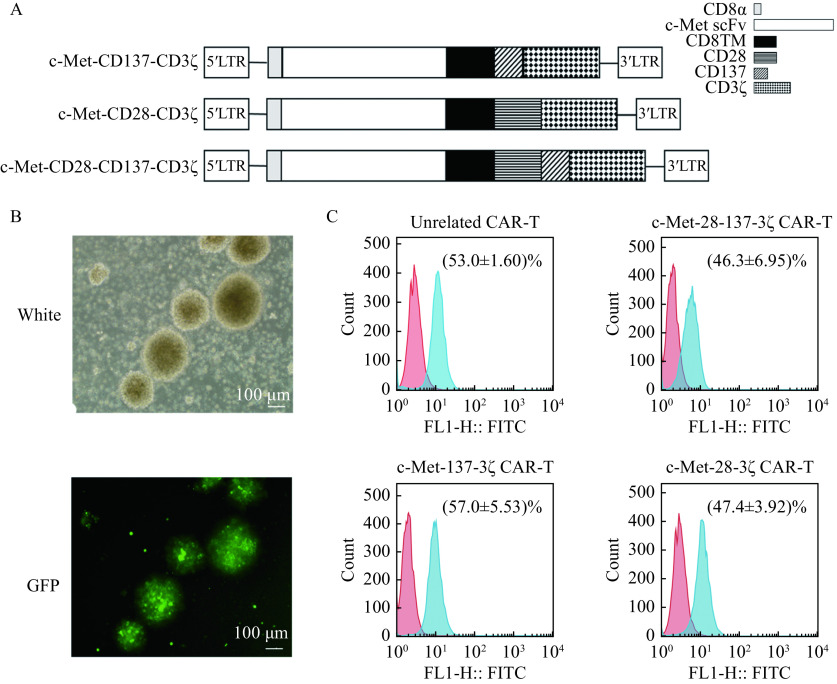
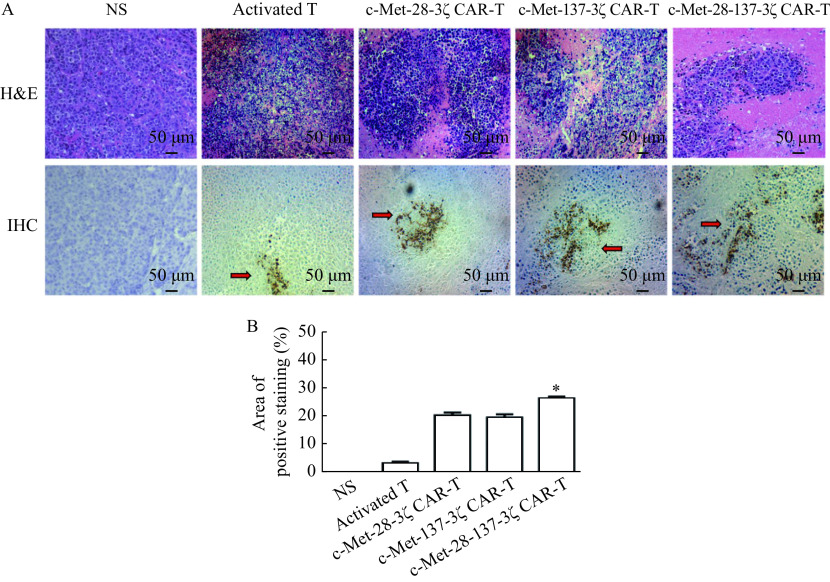
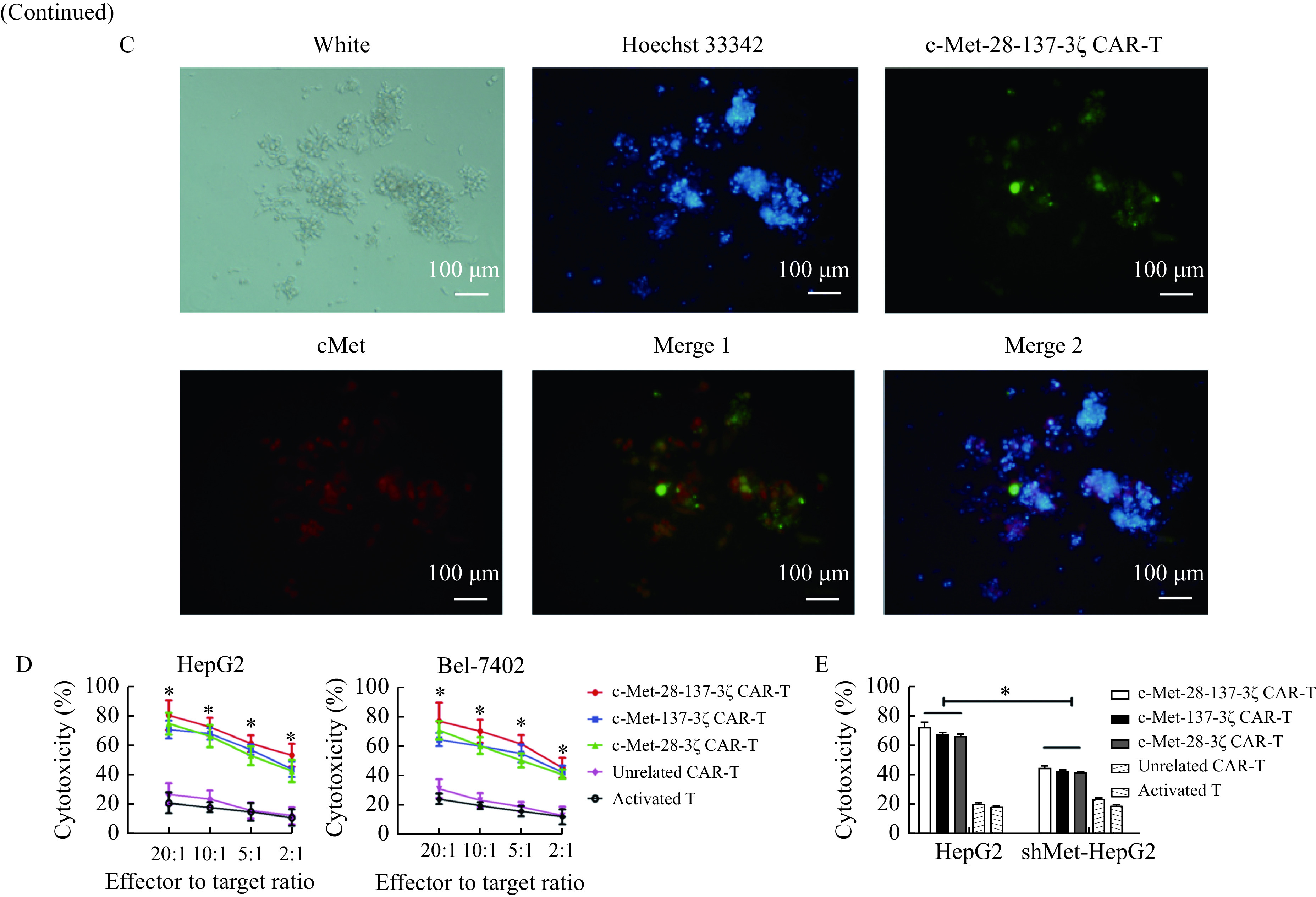
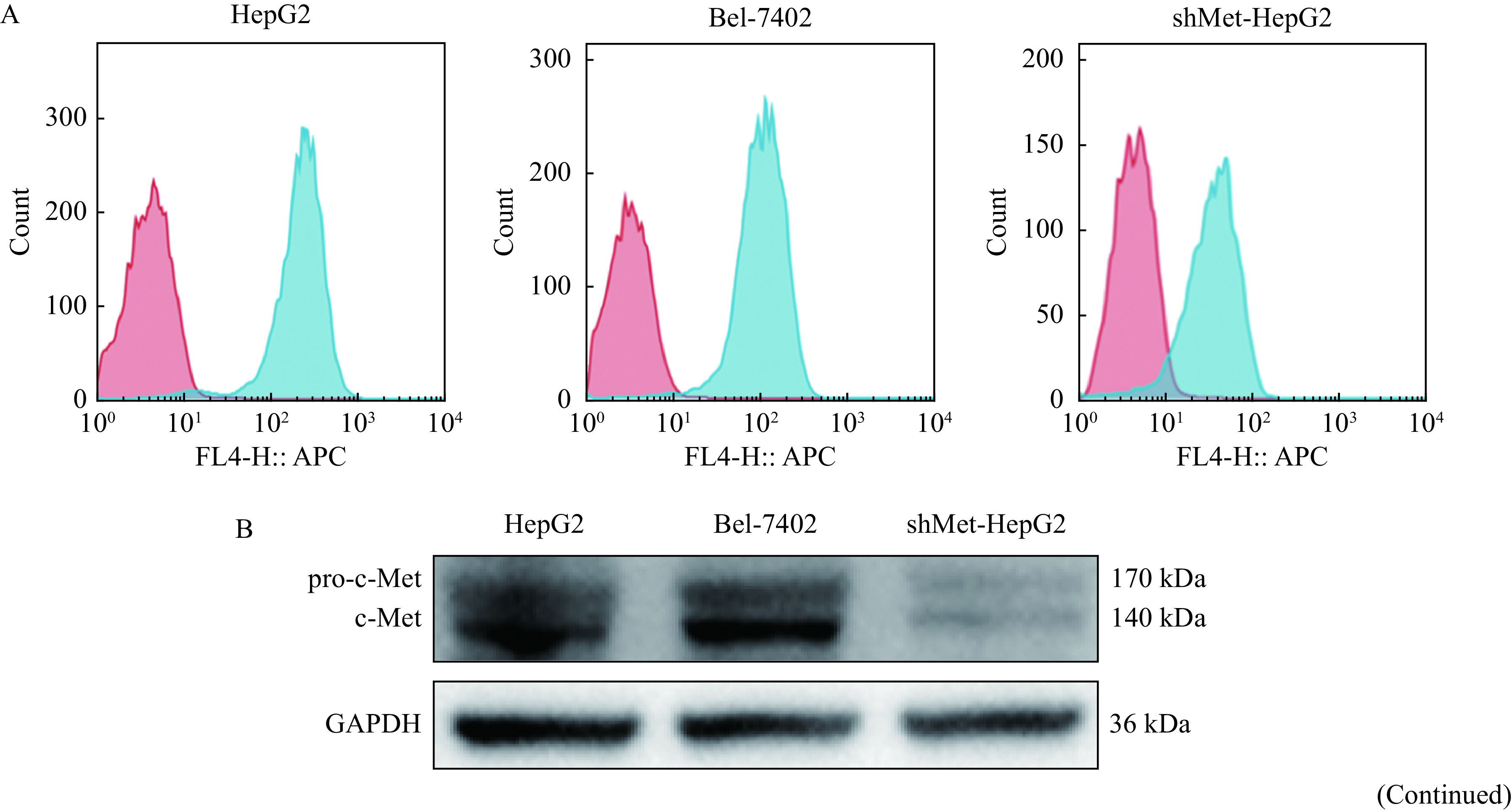
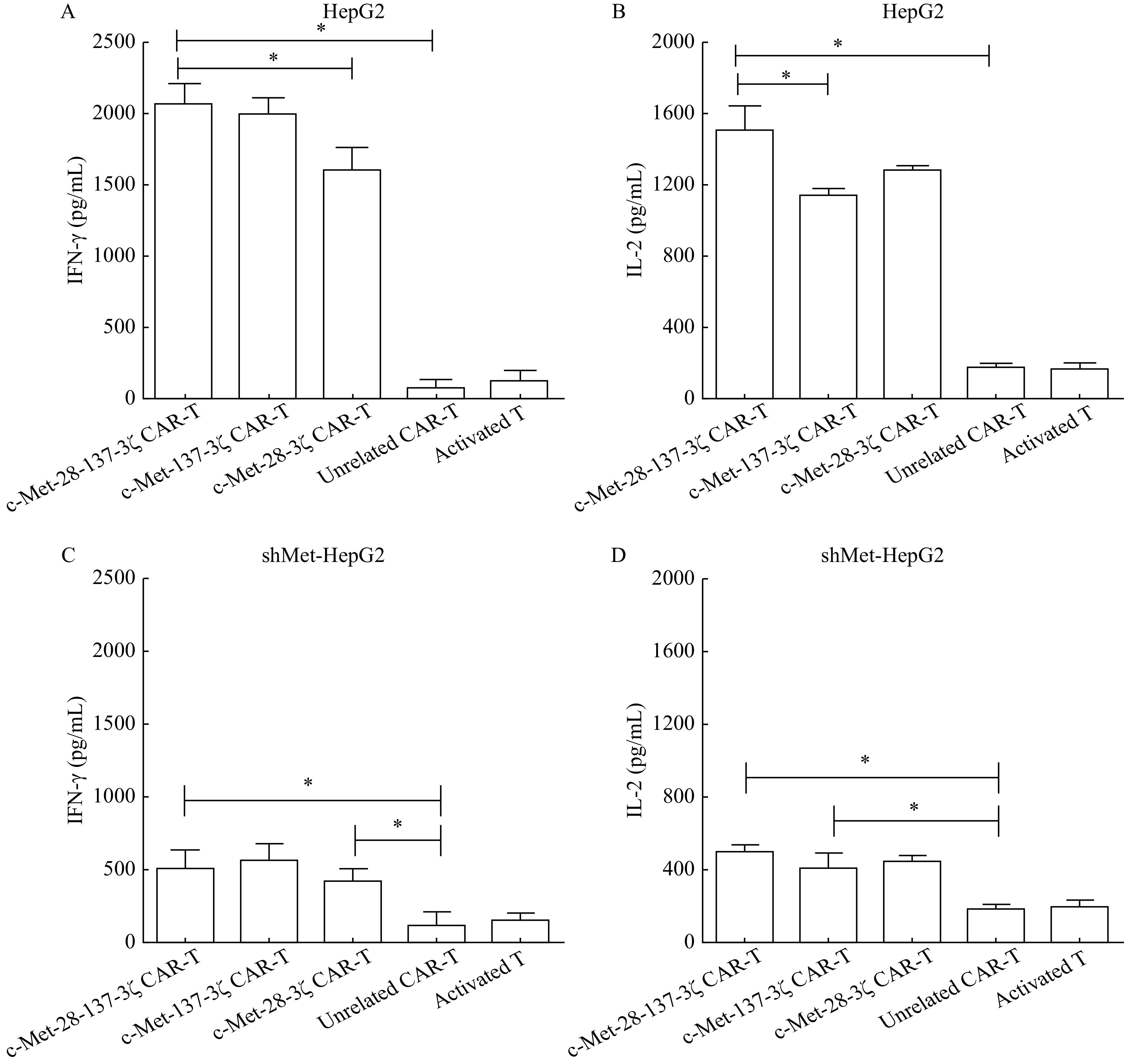
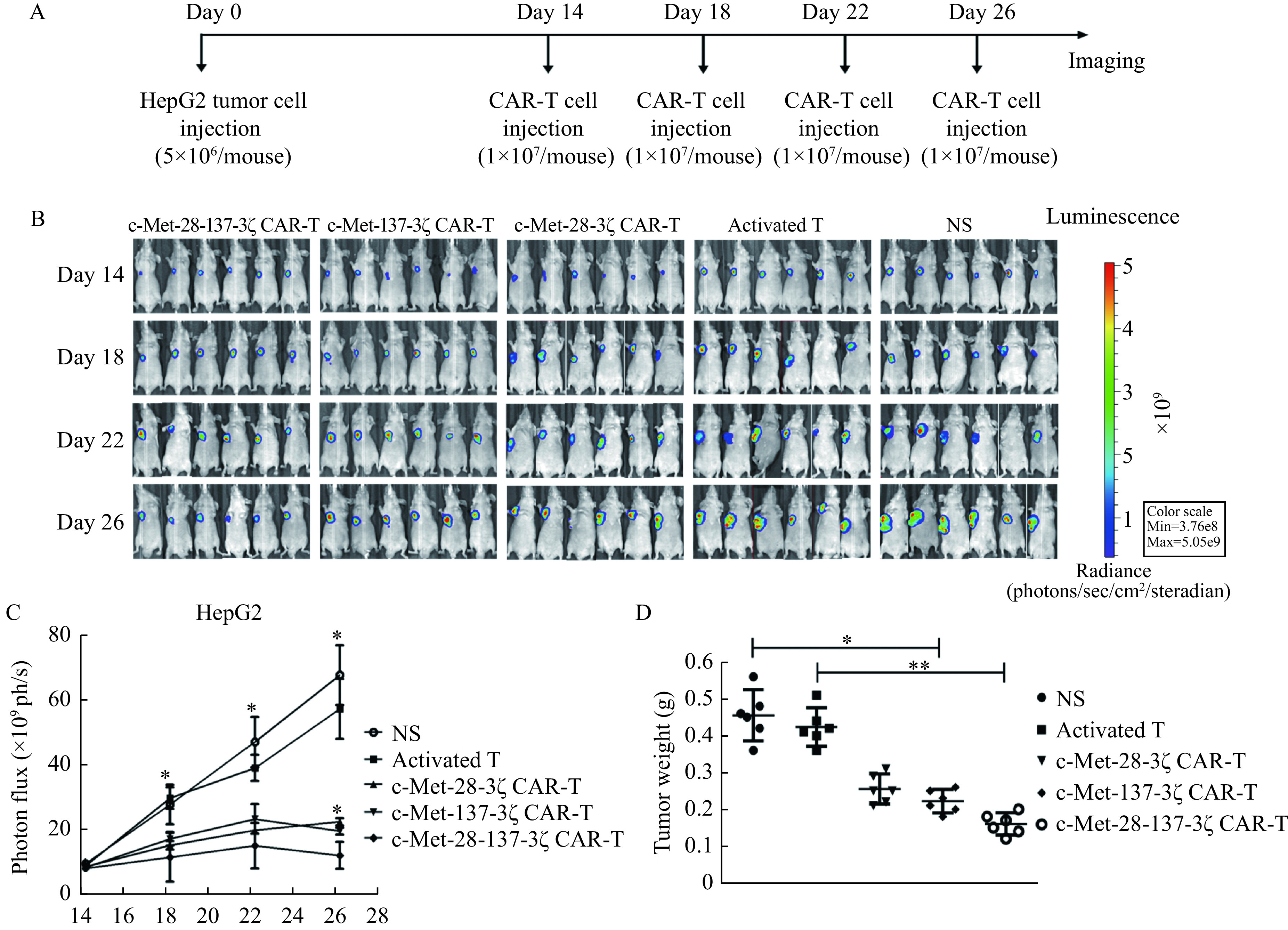
c-Met is a hepatocyte growth factor receptor overexpressed in many tumors such as hepatocellular carcinoma (HCC). Therefore, c-Met may serve as a promising target for HCC immunotherapy. Modifying T cells to express c-Met-specific chimeric antigen receptor (CAR) is an attractive strategy in treating c-Met-positive HCC. This study aimed to systematically evaluate the inhibitory effects of 2 - and 3 -generation c-Met CAR-T cells on hepatocellular carcinoma (HCC) cells. Here, 2 - and 3 -generation c-Met CARs containing an anti-c-Met single-chain variable fragment (scFv) as well as the CD28 signaling domain and CD3ζ (c-Met-28-3ζ), the CD137 signaling domain and CD3ζ (c-Met-137-3ζ), or the CD28 and CD137 signaling domains and CD3ζ (c-Met-28-137-3ζ) were constructed, and their abilities to target c-Met-positive HCC cells were evaluated and . All c-Met CARs were stably expressed on T cell membrane, and c-Met CAR-T cells aggregated around c-Met-positive HCC cells and specifically killed them . c-Met-28-137-3ζ CAR-T cells secreted more interferon-gamma (IFN-γ) and interleukin 2 (IL-2) than c-Met-28-3ζ CAR-T cells and c-Met-137-3ζ CAR-T cells. Compared with c-Met low-expressed cells, c-Met CAR-T cells secreted more cytokines when co-cultured with c-Met high-expressed cells. Moreover, c-Met-28-137-3ζ CAR-T cells eradicated HCC more effectively in xenograft tumor models compared with the control groups. This study suggests that 3 -generation c-Met CAR-T cells are more effective in inhibiting c-Met-positive HCC cells than 2 -generation c-Met CAR-T cells, thereby providing a promising therapeutic intervention for c-Met-positive HCC.
c-Met是一种在许多肿瘤(如肝细胞癌,HCC)中过表达的肝细胞生长因子受体。因此,c-Met可能是HCC免疫治疗的一个有前景的靶点。修饰T细胞以表达c-Met特异性嵌合抗原受体(CAR)是治疗c-Met阳性HCC的一种有吸引力的策略。本研究旨在系统评估二代和三代c-Met CAR-T细胞对肝细胞癌(HCC)细胞的抑制作用。在此,构建了包含抗c-Met单链可变片段(scFv)以及CD28信号结构域和CD3ζ的二代和三代c-Met CAR(c-Met-28-3ζ)、CD137信号结构域和CD3ζ的(c-Met-137-3ζ),或CD28和CD137信号结构域以及CD3ζ的(c-Met-28-137-3ζ),并评估了它们靶向c-Met阳性HCC细胞的能力。所有c-Met CAR均在T细胞膜上稳定表达,c-Met CAR-T细胞聚集在c-Met阳性HCC细胞周围并特异性杀伤它们。c-Met-28-137-3ζ CAR-T细胞比c-Met-28-3ζ CAR-T细胞和c-Met-137-3ζ CAR-T细胞分泌更多的干扰素-γ(IFN-γ)和白细胞介素2(IL-2)。与c-Met低表达细胞相比,c-Met CAR-T细胞与c-Met高表达细胞共培养时分泌更多细胞因子。此外,与对照组相比,c-Met-28-137-3ζ CAR-T细胞在异种移植肿瘤模型中更有效地根除HCC。本研究表明,三代c-Met CAR-T细胞在抑制c-Met阳性HCC细胞方面比二代c-Met CAR-T细胞更有效,从而为c-Met阳性HCC提供了一种有前景的治疗干预措施。