Department of Biochemistry and Molecular Biology, School of Basic Medical Science, Xi'an Jiaotong University Health Science Center, Xi'an, Shaan Xi 710061, China.
Key Laboratory of Environment and Genes Related to Diseases, Xi'an Jiaotong University, Ministry of Education of China, Xi'an, Shaan Xi 710061, China.
Aging (Albany NY). 2022 Apr 11;14(7):3259-3275. doi: 10.18632/aging.204011.
Leucine aminopeptidase 3 (LAP3), an M1 member of leucine aminopeptidase, was reported to be significantly upregulated in serum of nonalcoholic fatty liver disease (NAFLD) patients. However, the underlying mechanisms of LAP3 in NAFLD pathogenesis are still unknown. We aim to investigate the role of LAP3 in NAFLD pathogenesis and explore whether LAP3 has the potential to be a candidate biomarker in serum for NAFLD diagnosis.
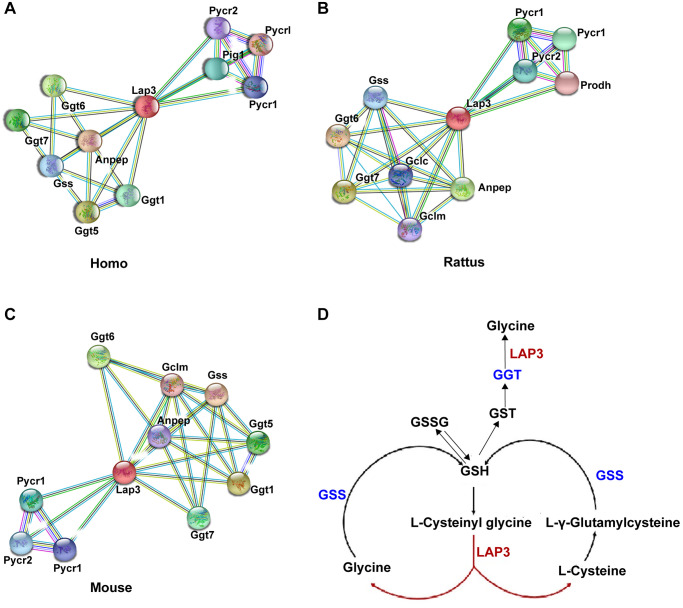
Liver tissues and serum from NASH rats, serum from patients with NAFLD were obtained to evaluate the LAP3 expression. Detection of GSSG/GSH, intracellular reactive oxygen species (ROS), and LC3 expression by elevation/ reduction of LAP3 expression to determine the role of LAP3 in NAFLD pathogenesis. Finally, the correlation analysis was conducted to evaluate the association between LAP3 expression and clinical indexes of NAFLD.
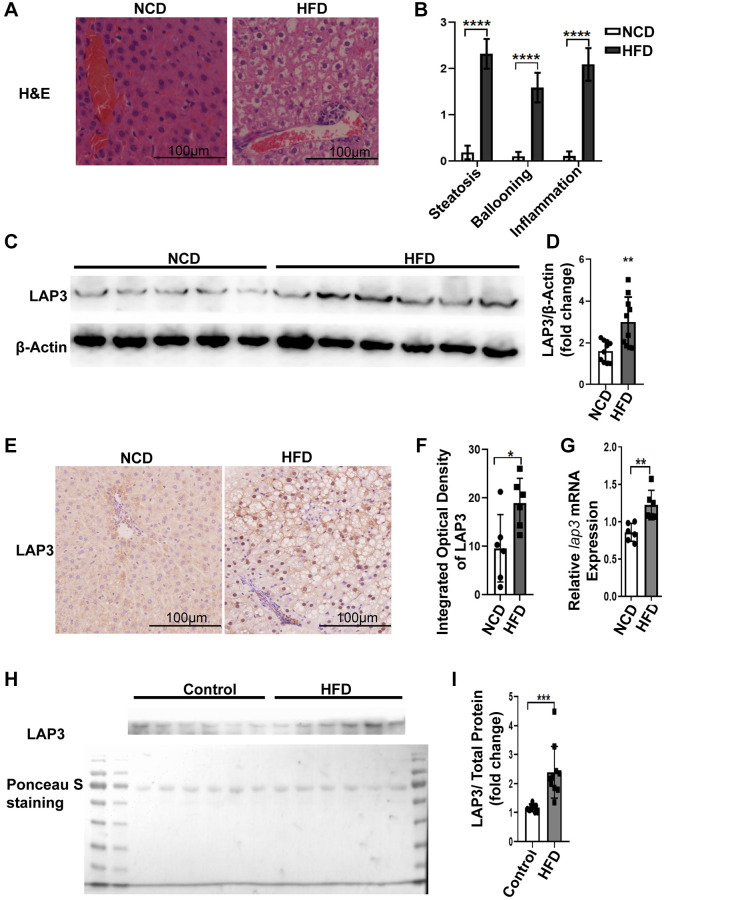
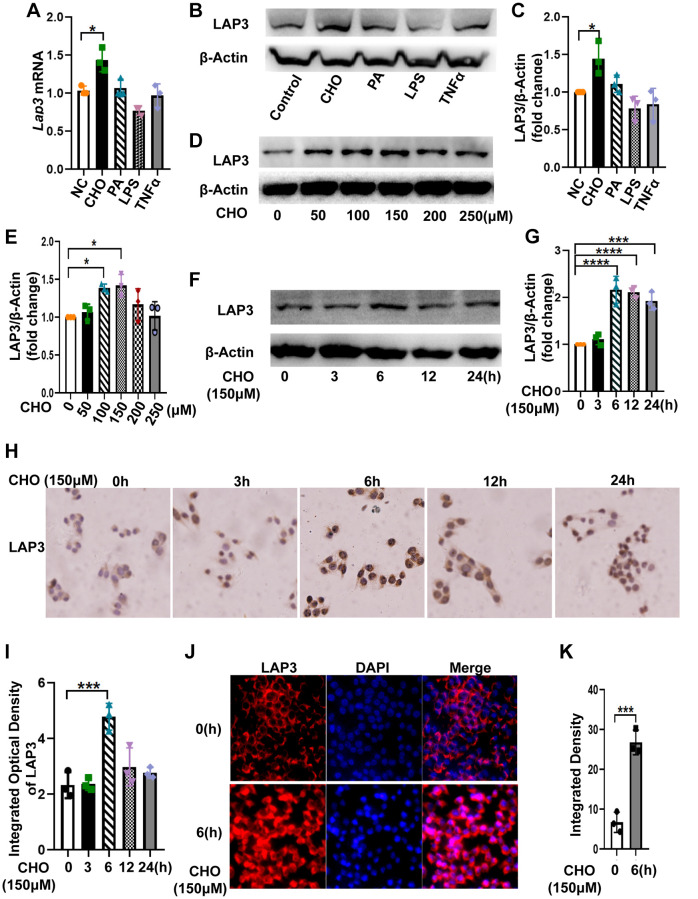
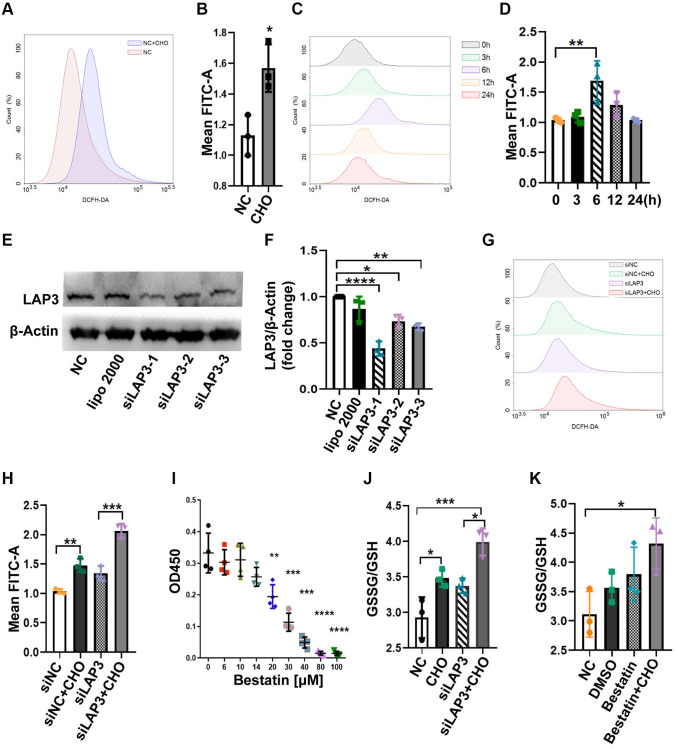
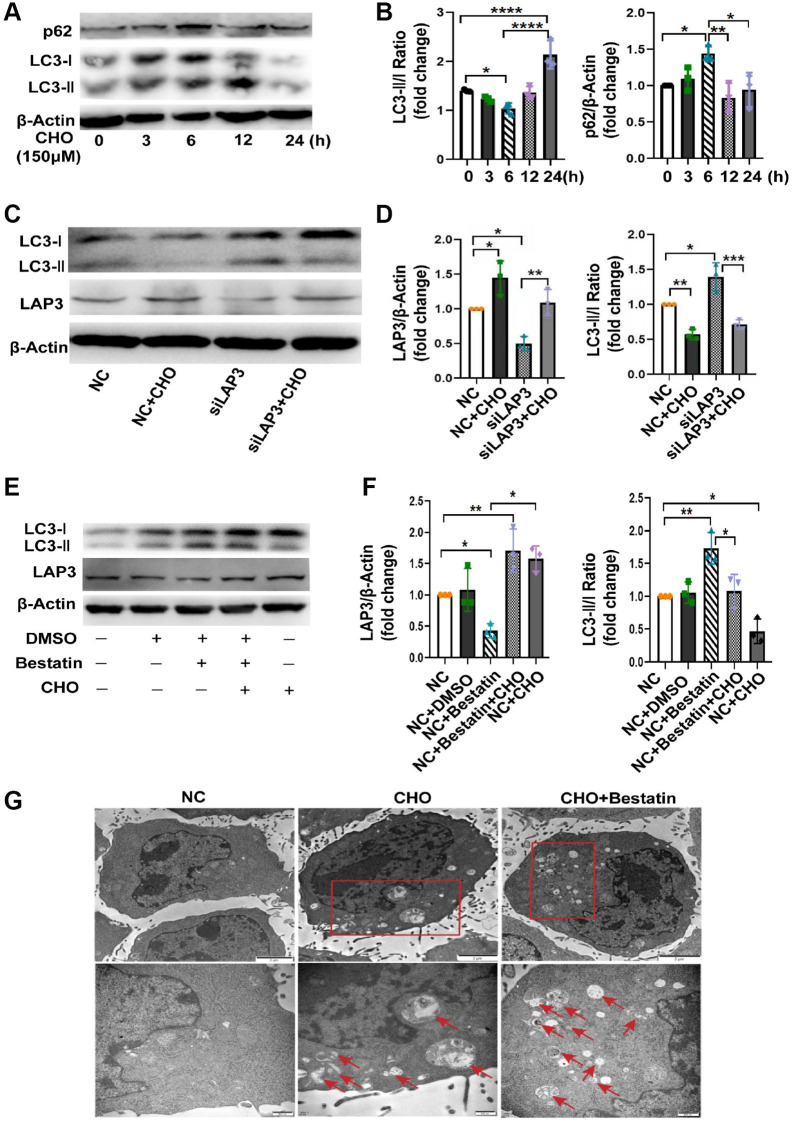
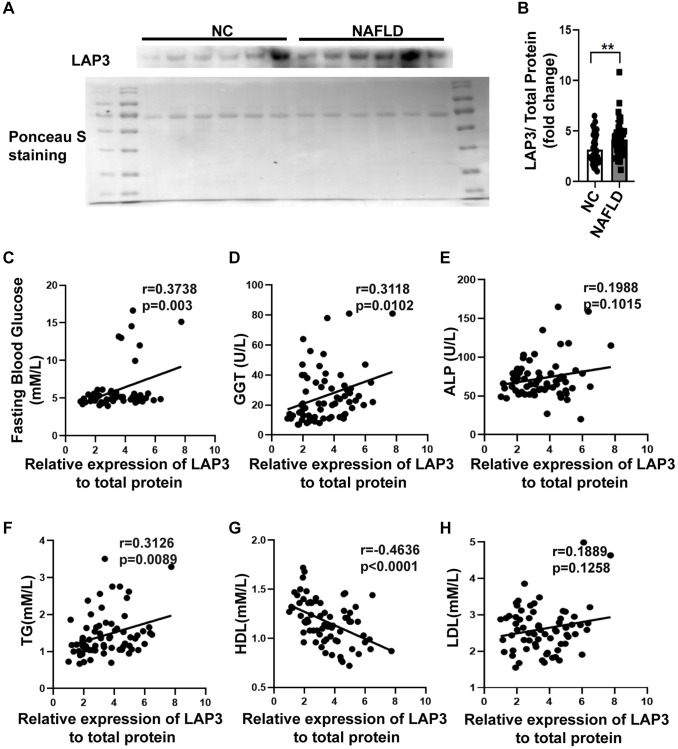
LAP3 expression was upregulated in hepatocytes and serum in E3 rats with NASH after 6-month HFD feeding. Cholesterol (CHO) dramatically upregulated LAP3 in LO2 cells, and then lead to negative regulation of autophagy. Moreover, LAP3 levels were also significantly increased in NAFLD patients compared to healthy controls. Correlation analysis revealed that serum LAP3 levels were positively correlated with TG, γ-glutamyltranspeptidase (GGT), and fasting blood glucose levels, while there was a negative correlation with HDL levels.
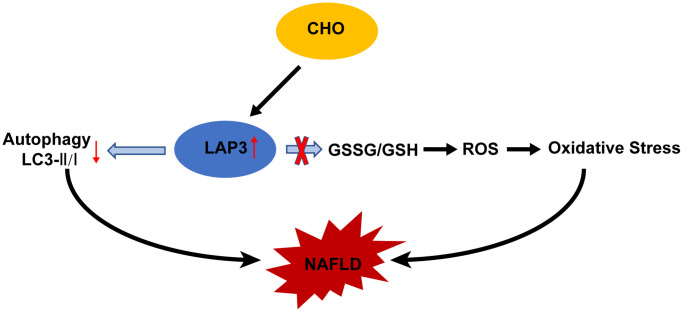
The cholesterol-dependent upregulation of LAP3 in hepatocytes plays a critical role in the pathogenesis of NAFLD via inhibiting autophagy. Moreover, LAP3 could serve as a potential novel candidate biomarker for the diagnosis of NAFLD.
亮氨酸氨肽酶 3(LAP3)是亮氨酸氨肽酶 M1 家族成员,据报道在非酒精性脂肪性肝病(NAFLD)患者的血清中显著上调。然而,LAP3 在 NAFLD 发病机制中的潜在机制尚不清楚。我们旨在研究 LAP3 在 NAFLD 发病机制中的作用,并探讨 LAP3 是否有潜力成为血清中用于 NAFLD 诊断的候选生物标志物。
从 NASH 大鼠的肝组织和血清、NAFLD 患者的血清中获取组织和血清样本,以评估 LAP3 的表达情况。通过升高/降低 LAP3 的表达,检测 GSSG/GSH、细胞内活性氧(ROS)和 LC3 的表达,以确定 LAP3 在 NAFLD 发病机制中的作用。最后,进行相关性分析以评估 LAP3 表达与 NAFLD 临床指标之间的关联。
在经过 6 个月高脂肪饮食喂养后,E3 大鼠的 NASH 肝细胞和血清中 LAP3 的表达上调。胆固醇(CHO)显著上调 LO2 细胞中的 LAP3,继而导致自噬的负调控。此外,与健康对照组相比,NAFLD 患者的 LAP3 水平也显著升高。相关性分析显示,血清 LAP3 水平与 TG、γ-谷氨酰转肽酶(GGT)和空腹血糖水平呈正相关,而与 HDL 水平呈负相关。
肝细胞中胆固醇依赖性的 LAP3 上调在 NAFLD 的发病机制中起着关键作用,通过抑制自噬。此外,LAP3 可能成为诊断 NAFLD 的潜在新型候选生物标志物。