Micalis Institute, Institut National de Recherche pour L'agriculture, L'alimentation et L'environnement (INRAE), AgroParisTech, Université Paris-Saclay, UMR1319, F-78350 Jouy-en-Josas, France.
Paris Center for Microbiome Medicine (PaCeMM) FHU, AP-HP, F-75571 Paris, France.
Nutrients. 2022 Apr 1;14(7):1478. doi: 10.3390/nu14071478.
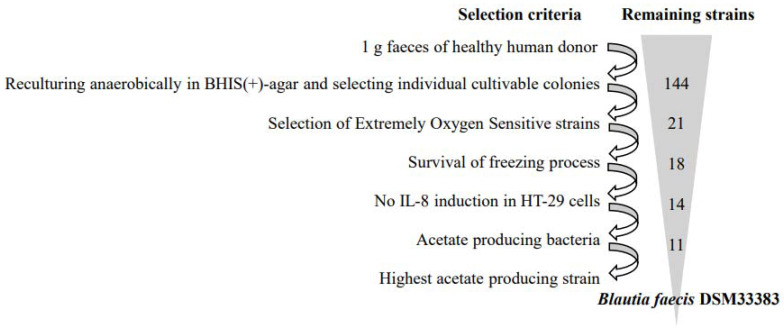
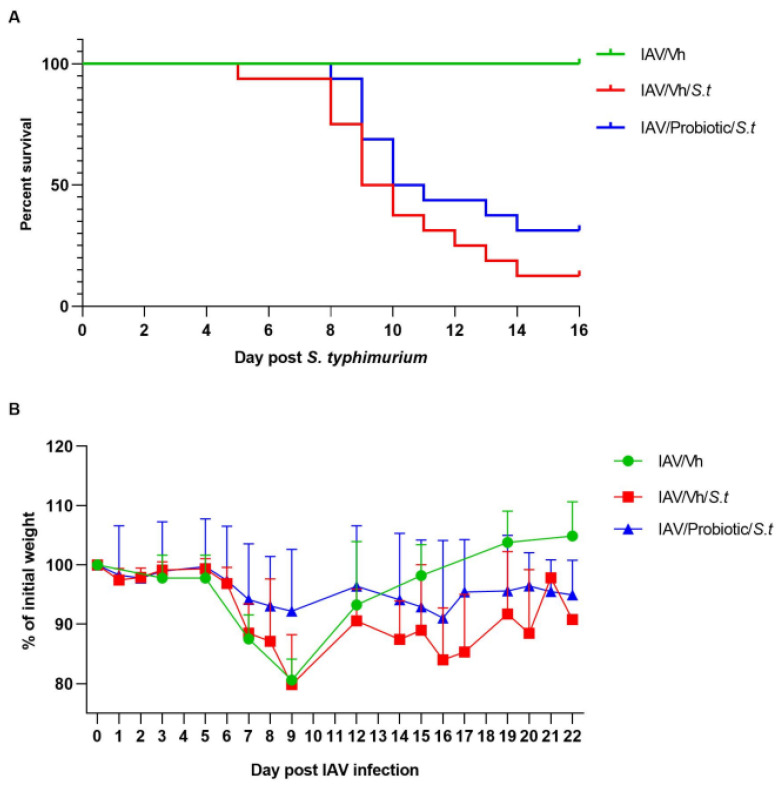
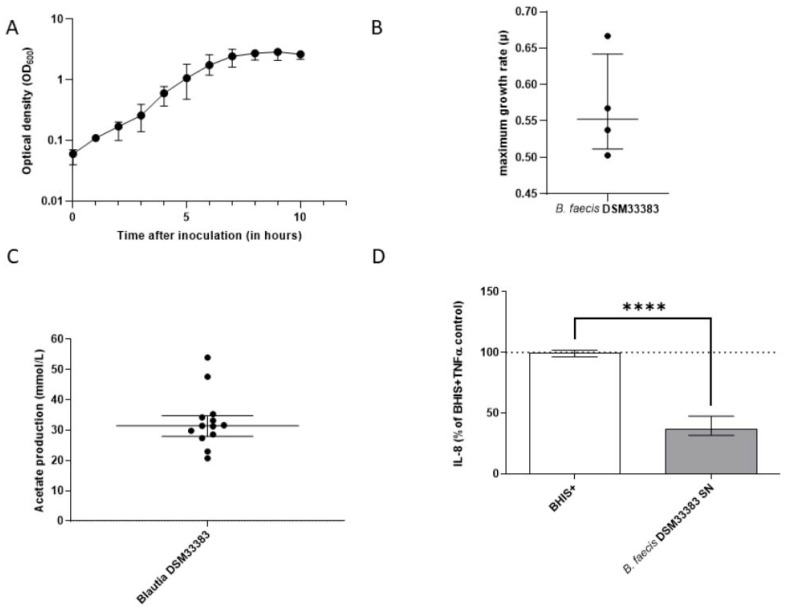
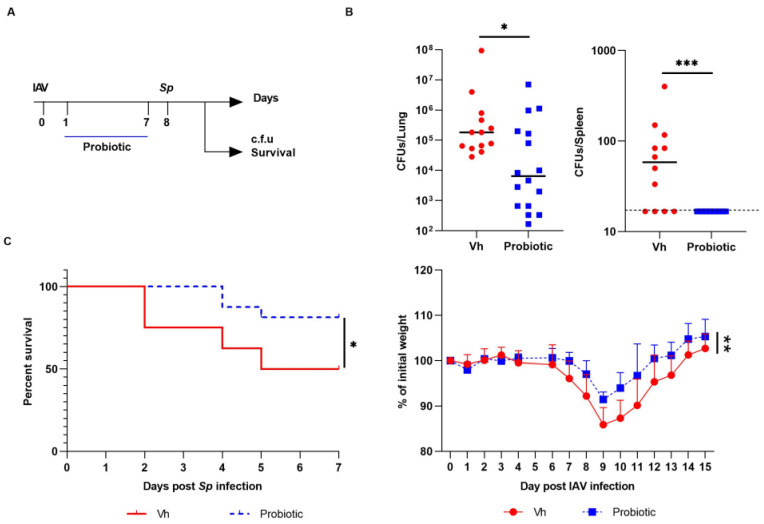
The expanding knowledge on the systemic influence of the human microbiome suggests that fecal samples are underexploited sources of new beneficial strains for extra-intestinal health. We have recently shown that acetate, a main circulating microbiota-derived molecule, reduces the deleterious effects of pulmonary and enteric serovar Typhimurium bacterial post-influenza superinfections. Considering the beneficial and broad effects of acetate, we intended to isolate a commensal strain, producing acetate and potentially exploitable in the context of respiratory infections. We designed successive steps to select intestinal commensals that are extremely oxygen-sensitive, cultivable after a freezing process, without a proinflammatory effect on IL-8 induction, and producing acetate. We have identified the DSM33383 strain, which decreased the TNFα-induced production of IL-8 by the intestinal epithelial cell line HT-29. The beneficial effect of this bacterial strain was further studied in two preclinical models of post-influenza () and serovar Typhimurium () superinfection. The intragastrical administration of DSM33383 led to protection in influenza-infected mice suffering from an . and, to a lesser extent, from an secondary infection. Altogether, this study showed that DSM33383 could be a promising candidate for preventive management of respiratory infectious diseases.
人类微生物组的系统性影响的知识不断扩大,提示粪便样本是肠道外健康的新有益菌株的未充分利用来源。我们最近表明,醋酸盐,一种主要的循环微生物群衍生分子,可减轻流感后肺部和肠道血清型鼠伤寒沙门氏菌细菌二次感染的有害影响。鉴于醋酸盐的有益和广泛的作用,我们旨在分离出一种产生醋酸盐的共生菌株,并可能在呼吸道感染的情况下利用它。我们设计了连续的步骤来选择对氧气极其敏感的肠道共生菌,使其在冷冻过程后可培养,不会引起 IL-8 诱导的促炎作用,并且能产生醋酸盐。我们已经鉴定出 DSM33383 菌株,该菌株降低了肠道上皮细胞系 HT-29 中 TNFα 诱导的 IL-8 的产生。在流感后 () 和血清型鼠伤寒沙门氏菌 () 二次感染的两个临床前模型中进一步研究了这种细菌菌株的有益作用。口服 DSM33383 可保护感染流感的小鼠免受 感染,并在一定程度上免受 二次感染。总之,这项研究表明,DSM33383 可能是预防呼吸道传染病的有前途的候选药物。