Gazzaniga Gianluca, Villa Federica, Tosi Federica, Pizzutilo Elio Gregory, Colla Stefano, D'Onghia Stefano, Di Sanza Giusy, Fornasier Giulia, Gringeri Michele, Lucatelli Maria Victoria, Mosini Giulia, Pani Arianna, Siena Salvatore, Scaglione Francesco, Sartore-Bianchi Andrea
Department of Medical Biotechnology and Translational Medicine, Postgraduate School of Clinical Pharmacology and Toxicology, Università degli Studi di Milano, 20122 Milan, Italy.
Department of Oncology and Hemato-Oncology, Università degli Studi di Milano, 20122 Milan, Italy.
Cancers (Basel). 2022 Mar 25;14(7):1666. doi: 10.3390/cancers14071666.
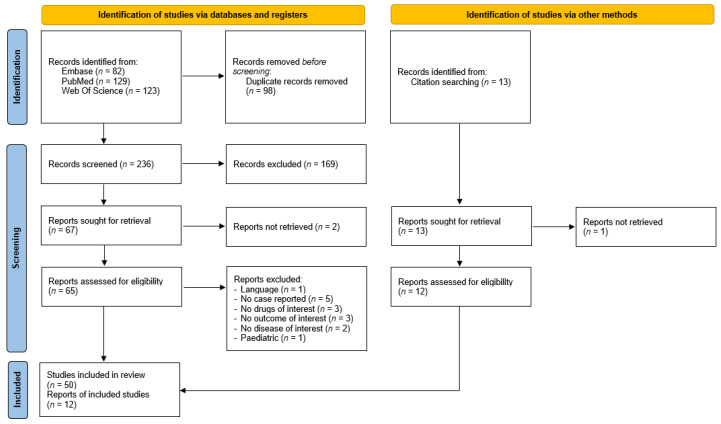
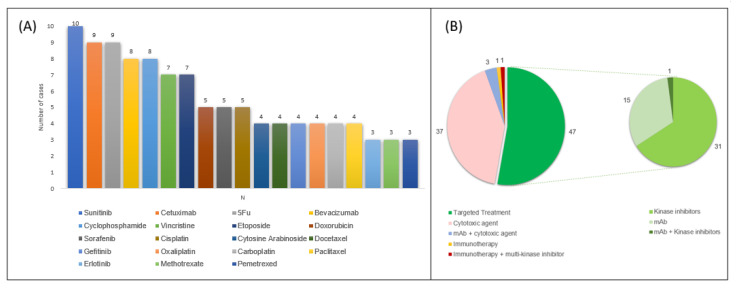
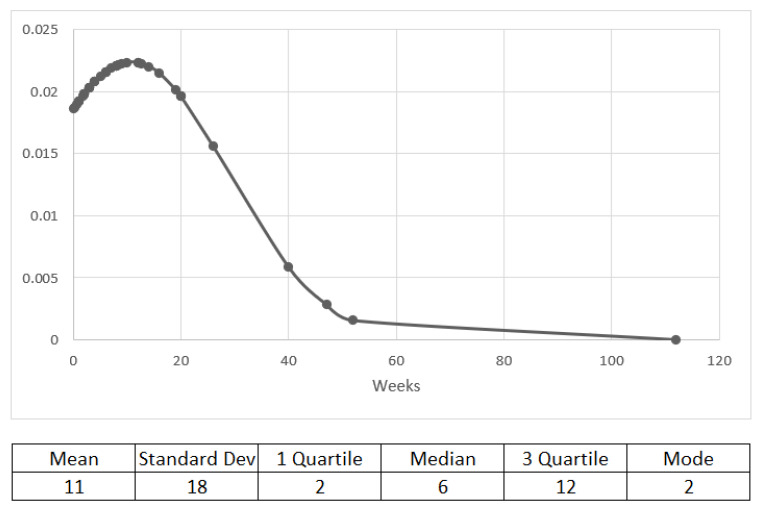
Pneumatosis intestinalis (PI) is a rare condition due to the presence of gas within the bowel wall; it is mainly caused by endoscopic procedures, infections and other gastrointestinal diseases. Oncological therapies have been reported to be a cause of PI as well, but their role is not clearly defined. This systematic review investigates the concurrency of PI and antitumor therapy in cancer patients, considering both solid tumors and onco-hematological ones. We performed a literature review of PubMed, Embase and the Web of Science up to September 2021 according to the PRISMA guidelines. A total of 62 papers reporting 88 different episodes were included. PI was mainly reported with targeted therapies (sunitinib and bevacizumab above all) within the first 12 weeks of treatment. This adverse event mostly occurred in the metastatic setting, but in 10 cases, it also occurred also in the neoadjuvant and adjuvant setting. PI was mostly localized in the large intestine, being fatal in 11 cases, while in the remaining cases, symptoms were usually mild, or even absent. A significant risk of PI reoccurrence after drug reintroduction was also reported (6/18 patients), with no fatal outcomes. Potential pharmacological mechanisms underlying PI pathogenesis are also discussed. In conclusion, although uncommonly, PI can occur during oncological therapies and may lead to life-threatening complications; therefore, consideration of its occurrence among other adverse events is warranted in the presence of clinical suspicion.
肠壁积气(PI)是一种罕见病症,因肠壁内存在气体所致;其主要由内镜操作、感染及其他胃肠道疾病引起。据报道,肿瘤治疗也是PI的一个病因,但其作用尚未明确界定。本系统评价研究了癌症患者中PI与抗肿瘤治疗的并发情况,涵盖实体瘤和血液肿瘤。我们根据PRISMA指南对截至2021年9月的PubMed、Embase和科学网进行了文献综述。共纳入62篇报告88例不同病例的论文。PI主要在治疗的前12周内与靶向治疗(尤其是舒尼替尼和贝伐单抗)相关。这种不良事件大多发生在转移情况下,但有10例也发生在新辅助和辅助治疗情况下。PI大多位于大肠,11例致死,其余病例症状通常较轻,甚至无症状。还报告了再次用药后PI复发的显著风险(18例患者中有6例),无致死结果。本文还讨论了PI发病机制潜在的药理学机制。总之,尽管罕见,但PI可在肿瘤治疗期间发生,并可能导致危及生命的并发症;因此,临床怀疑存在时,有必要将其与其他不良事件一并考虑。