Department of Food and Nutrition, Institute for Aging and Clinical Nutrition Research, College of BioNano Technology, Gachon University, Seongnam 13120, Korea.
Cells. 2022 Mar 23;11(7):1076. doi: 10.3390/cells11071076.
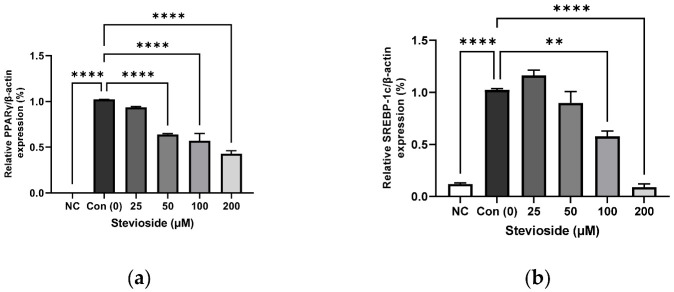
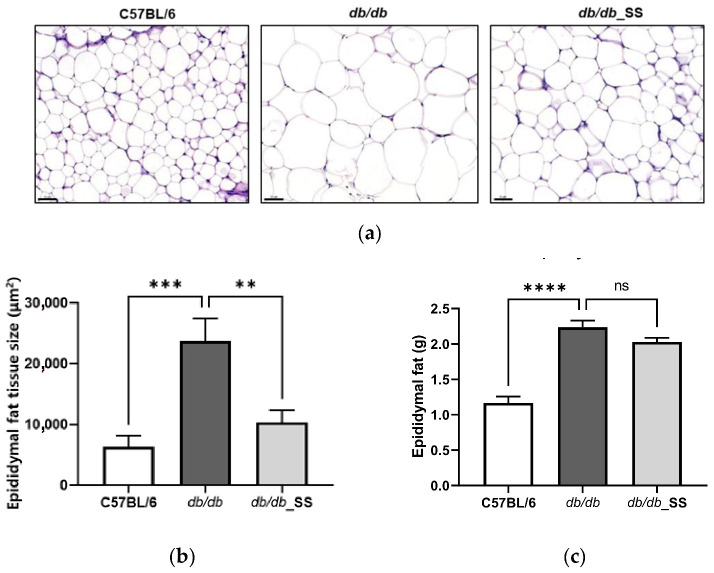
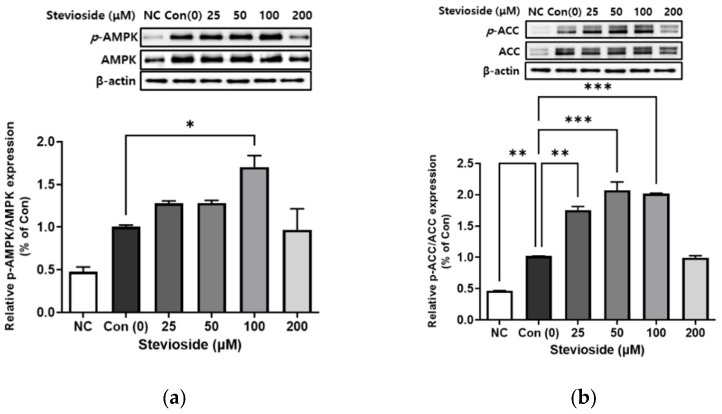
Stevioside, the primary sweetener in stevia, is a glycoside with numerous beneficial biological activities. However, its anti-adipogenic effects on tissue differentiation and adipose tissues remain to be thoroughly investigated. In this study, the anti-adipogenic effects of stevioside during the differentiation of 3T3-L1 cells and epididymal adipose tissues of mice were investigated by measuring the lipid droplets stained with Oil Red O and an immunoblot assay. Immunoblot analysis revealed that stevioside downregulated the expression of peroxisome proliferator-activated receptor-gamma (PPARγ), sterol regulatory element-binding protein-1c (SREBP-1c), CCAAT/enhancer-binding protein alpha (C/EBPα), and fatty acid synthase (FAS). Additionally, the protein expression of carnitine palmitoyltransferase 1 (CPT1), silent mating type information regulation 2 homolog 1 (SIRT1), and peroxisome proliferator-activated receptor gamma coactivator 1 alpha (PGC-1α) increased following treatment with stevioside. Furthermore, stevioside increased the phosphorylation of adenosine monophosphate (AMP)-activated protein kinase (AMPK) and acetyl-CoA carboxylase (ACC), both in vitro and in vivo. The activity of AMPK in stevioside-treated 3T3-L1 cells was further confirmed using agonists and antagonists of AMPK signaling. Our data indicate that stevioside ameliorates anti-adipogenic effects and promotes β-oxidation in adipocytes by activating AMPK-mediated signaling. The results of this study clearly demonstrated the inhibitory effect of stevioside on the differentiation of adipocytes and the reduction of lipid accumulation in the epididymal adipose tissues of mice.
甜菊苷是甜菊中的主要甜味剂,是一种具有多种有益生物活性的糖苷。然而,其对组织分化和脂肪组织的抗脂肪生成作用仍需深入研究。在这项研究中,通过油红 O 染色和免疫印迹分析来测量脂质滴,研究了甜菊苷在 3T3-L1 细胞分化和小鼠附睾脂肪组织中的抗脂肪生成作用。免疫印迹分析显示,甜菊苷下调过氧化物酶体增殖物激活受体-γ(PPARγ)、固醇调节元件结合蛋白-1c(SREBP-1c)、CCAAT/增强子结合蛋白α(C/EBPα)和脂肪酸合酶(FAS)的表达。此外,甜菊苷处理后肉碱棕榈酰转移酶 1(CPT1)、沉默交配型信息调节 2 同源物 1(SIRT1)和过氧化物酶体增殖物激活受体γ共激活因子 1α(PGC-1α)的蛋白表达增加。此外,甜菊苷在体外和体内均增加了腺苷单磷酸(AMP)激活的蛋白激酶(AMPK)和乙酰辅酶 A 羧化酶(ACC)的磷酸化。使用 AMPK 信号转导的激动剂和拮抗剂进一步证实了甜菊苷处理的 3T3-L1 细胞中 AMPK 的活性。我们的数据表明,甜菊苷通过激活 AMPK 介导的信号转导,改善脂肪生成作用并促进脂肪细胞中的 β-氧化。这项研究的结果清楚地表明,甜菊苷抑制脂肪细胞的分化,并减少小鼠附睾脂肪组织中的脂质积累。