Department of Obstetrics and Gynecology, University of Chicago, Chicago, IL 60637, USA.
Cells. 2022 Mar 29;11(7):1149. doi: 10.3390/cells11071149.
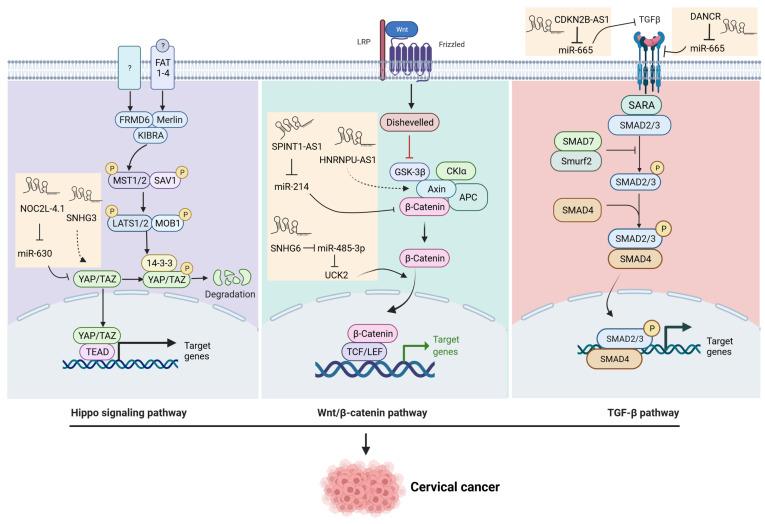
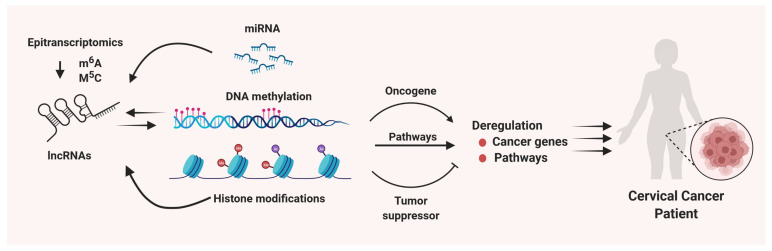
Cervical cancer is one of the leading causes of death in gynecology cancer worldwide. High-risk human papillomaviruses (HPVs) are the major etiological agents for cervical cancer. Still, other factors also contribute to cervical cancer development because these cancers commonly arise decades after initial exposure to HPV. So far, the molecular mechanisms underlying the pathogenesis of cervical cancer are still quite limited, and a knowledge gap needs to be filled to help develop novel strategies that will ultimately facilitate the development of therapies and improve cervical cancer patient outcomes. Long non-coding RNAs (lncRNAs) have been increasingly shown to be involved in gene regulation, and the relevant role of lncRNAs in cervical cancer has recently been investigated. In this review, we summarize the recent progress in ascertaining the biological functions of lncRNAs in cervical cancer from the perspective of cervical cancer proliferation, invasion, and metastasis. In addition, we provide the current state of knowledge by discussing the molecular mechanisms underlying the regulation and emerging role of lncRNAs in the pathogenesis of cervical cancer. Comprehensive and deeper insights into lncRNA-mediated alterations and interactions in cellular events will help develop novel strategies to treat patients with cervical cancer.
宫颈癌是全球妇科癌症死亡的主要原因之一。高危型人乳头瘤病毒(HPV)是宫颈癌的主要病因。然而,其他因素也促成了宫颈癌的发展,因为这些癌症通常在最初接触 HPV 后几十年才出现。到目前为止,宫颈癌发病机制的分子机制仍然相当有限,需要填补知识空白,以帮助制定新的策略,最终促进治疗方法的发展并改善宫颈癌患者的预后。长链非编码 RNA(lncRNA)越来越多地被证明参与基因调控,lncRNA 在宫颈癌中的相关作用最近也得到了研究。在这篇综述中,我们从宫颈癌增殖、侵袭和转移的角度总结了最近确定 lncRNA 在宫颈癌中生物学功能的进展。此外,我们通过讨论 lncRNA 在宫颈癌发病机制中的调控和新兴作用的分子机制,提供了当前的知识状态。全面而深入地了解 lncRNA 介导的细胞事件改变和相互作用将有助于为宫颈癌患者开发新的治疗策略。