INSERM, Institute of Cardiometabolism and Nutrition (ICAN), Sorbonne Université, UMR_S1166, F-75013 Paris, France.
Cells. 2022 Apr 6;11(7):1249. doi: 10.3390/cells11071249.
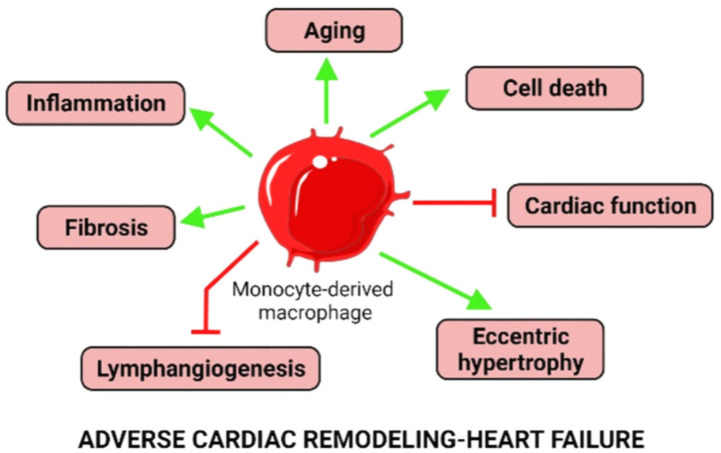
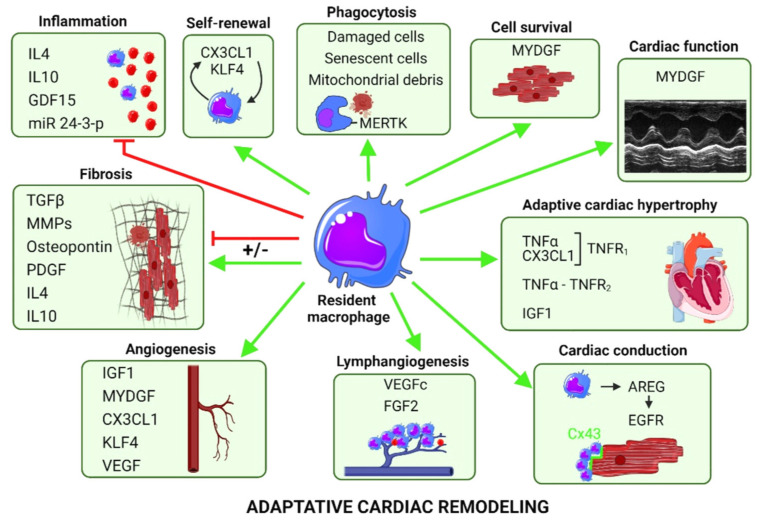
Cardiac hypertrophy, initiated by a variety of physiological or pathological stimuli (hemodynamic or hormonal stimulation or infarction), is a critical early adaptive compensatory response of the heart. The structural basis of the progression from compensated hypertrophy to pathological hypertrophy and heart failure is still largely unknown. In most cases, early activation of an inflammatory program reflects a reparative or protective response to other primary injurious processes. Later on, regardless of the underlying etiology, heart failure is always associated with both local and systemic activation of inflammatory signaling cascades. Cardiac macrophages are nodal regulators of inflammation. Resident macrophages mostly attenuate cardiac injury by secreting cytoprotective factors (cytokines, chemokines, and growth factors), scavenging damaged cells or mitochondrial debris, and regulating cardiac conduction, angiogenesis, lymphangiogenesis, and fibrosis. In contrast, excessive recruitment of monocyte-derived inflammatory macrophages largely contributes to the transition to heart failure. The current review examines the ambivalent role of inflammation (mainly TNFα-related) and cardiac macrophages (Mφ) in pathophysiologies from non-infarction origin, focusing on the protective signaling processes. Our objective is to illustrate how harnessing this knowledge could pave the way for innovative therapeutics in patients with heart failure.
心肌肥厚是由多种生理或病理刺激(血流动力学或激素刺激或梗塞)引起的,是心脏的一种关键的早期适应性代偿反应。从代偿性肥厚进展为病理性肥厚和心力衰竭的结构基础在很大程度上仍不清楚。在大多数情况下,炎症程序的早期激活反映了对其他原发性损伤过程的修复或保护反应。后来,无论潜在病因如何,心力衰竭总是与局部和全身炎症信号级联的激活有关。心脏巨噬细胞是炎症的调节中心。驻留巨噬细胞主要通过分泌细胞保护因子(细胞因子、趋化因子和生长因子)、清除受损细胞或线粒体碎片以及调节心脏传导、血管生成、淋巴管生成和纤维化来减轻心脏损伤。相比之下,单核细胞衍生的炎症巨噬细胞的过度募集在很大程度上导致了心力衰竭的发生。本综述检查了炎症(主要是 TNFα 相关)和心脏巨噬细胞(Mφ)在非梗塞起源的病理生理中的矛盾作用,重点关注保护信号过程。我们的目标是说明如何利用这些知识为心力衰竭患者的创新治疗铺平道路。