Afseth Nils Kristian, Dankel Katinka, Andersen Petter Vejle, Difford Gareth Frank, Horn Siri Storteig, Sonesson Anna, Hillestad Borghild, Wold Jens Petter, Tengstrand Erik
Nofima AS-The Norwegian Institute of Food, Fisheries and Aquaculture Research, Osloveien 1, NO-1431 Ås, Norway.
Benchmark Genetics Norway, Bradbenken 1, NO-5003 Bergen, Norway.
Foods. 2022 Mar 26;11(7):962. doi: 10.3390/foods11070962.
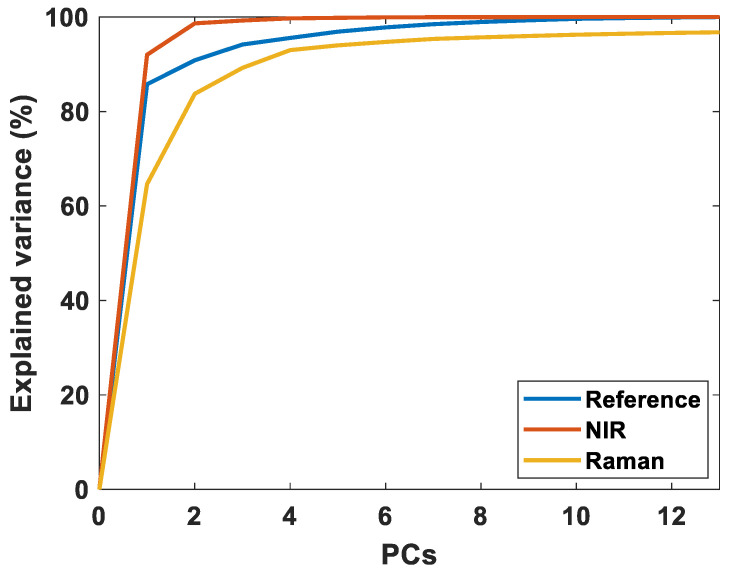
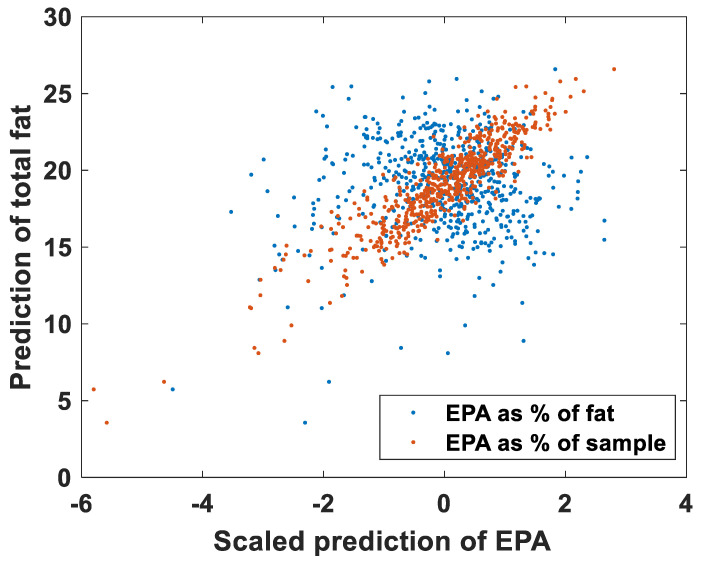
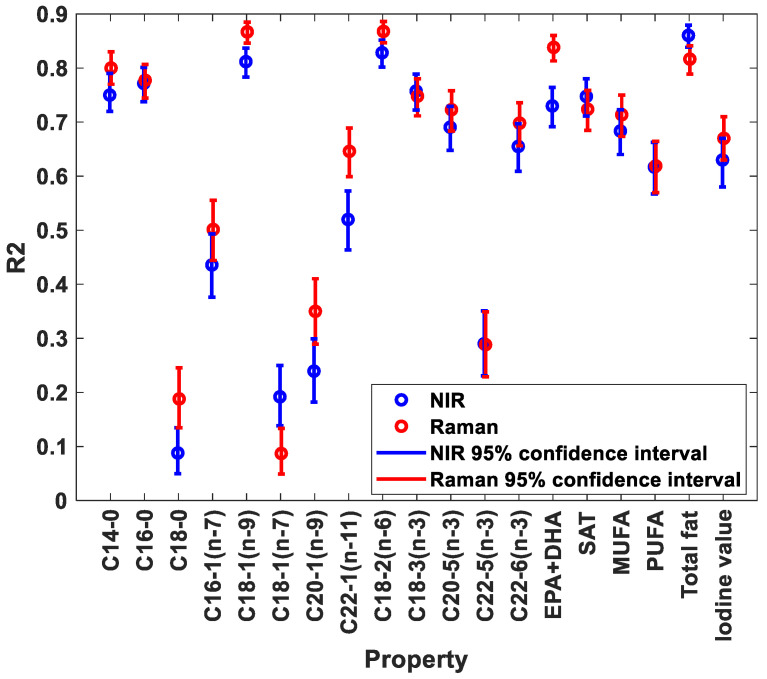
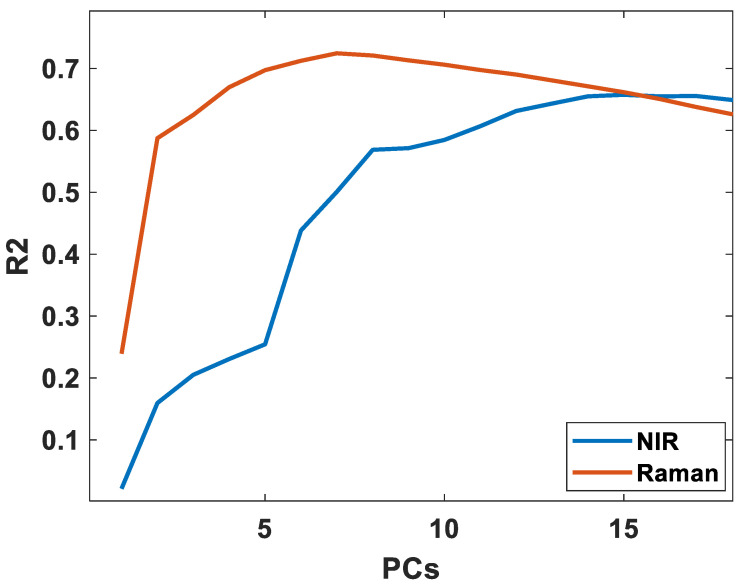
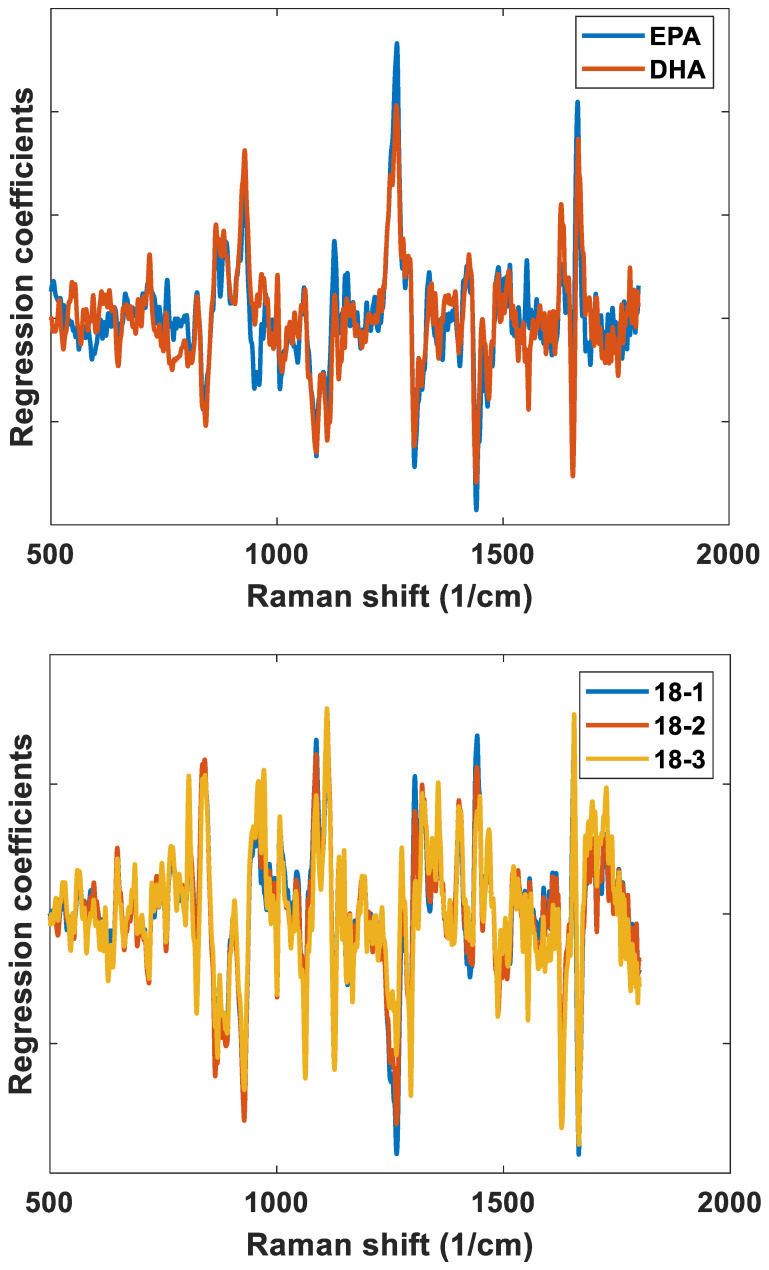
The aim of the present study was to critically evaluate the potential of using NIR and Raman spectroscopy for prediction of fatty acid features and single fatty acids in salmon muscle. The study was based on 618 homogenized salmon muscle samples acquired from Atlantic salmon representing a one year-class nucleus, fed the same high fish oil feed. NIR and Raman spectra were used to make regression models for fatty acid features and single fatty acids measured by gas chromatography. The predictive performance of both NIR and Raman was good for most fatty acids, with R above 0.6. Overall, Raman performed marginally better than NIR, and since the Raman models generally required fewer components than respective NIR models to reach high and optimal performance, Raman is likely more robust for measuring fatty acids compared to NIR. The fatty acids of the salmon samples co-varied to a large extent, a feature that was exacerbated by the overlapping peaks in NIR and Raman spectra. Thus, the fatty acid related variation of the spectroscopic data of the present study can be explained by only a few independent principal components. For the Raman spectra, this variation was dominated by functional groups originating from long-chain polyunsaturated FAs like EPA and DHA. By exploring the independent EPA and DHA Raman models, spectral signatures similar to the respective pure fatty acids could be seen. This proves the potential of Raman spectroscopy for single fatty acid prediction in muscle tissue.
本研究的目的是严格评估使用近红外光谱和拉曼光谱预测鲑鱼肌肉中脂肪酸特征和单一脂肪酸的潜力。该研究基于从代表一年龄级核心群体的大西洋鲑鱼获取的618个均质化鲑鱼肌肉样本,这些样本投喂相同的高鱼油饲料。近红外光谱和拉曼光谱用于建立脂肪酸特征和通过气相色谱法测量的单一脂肪酸的回归模型。对于大多数脂肪酸,近红外光谱和拉曼光谱的预测性能都很好,R值高于0.6。总体而言,拉曼光谱的表现略优于近红外光谱,并且由于拉曼模型通常比各自的近红外光谱模型需要更少的成分就能达到高且最佳的性能,与近红外光谱相比,拉曼光谱在测量脂肪酸方面可能更稳健。鲑鱼样本中的脂肪酸在很大程度上共同变化,近红外光谱和拉曼光谱中的重叠峰加剧了这一特征。因此,本研究光谱数据中与脂肪酸相关的变化仅能用少数几个独立的主成分来解释。对于拉曼光谱,这种变化主要由源自长链多不饱和脂肪酸(如二十碳五烯酸和二十二碳六烯酸)的官能团主导。通过探索独立的二十碳五烯酸和二十二碳六烯酸拉曼模型,可以看到与各自纯脂肪酸相似的光谱特征。这证明了拉曼光谱在肌肉组织中预测单一脂肪酸的潜力。