Meng Yanfang, Chen Genqiang, Huang Maoyong
State Key Laboratory of Advanced Optical Communications System and Networks, School of Electronics Engineering and Computer Science, Peking University, Beijing 100871, China.
Center of Flexible Electronics Technology, Tsinghua University, Beijing 100084, China.
Nanomaterials (Basel). 2022 Apr 1;12(7):1171. doi: 10.3390/nano12071171.
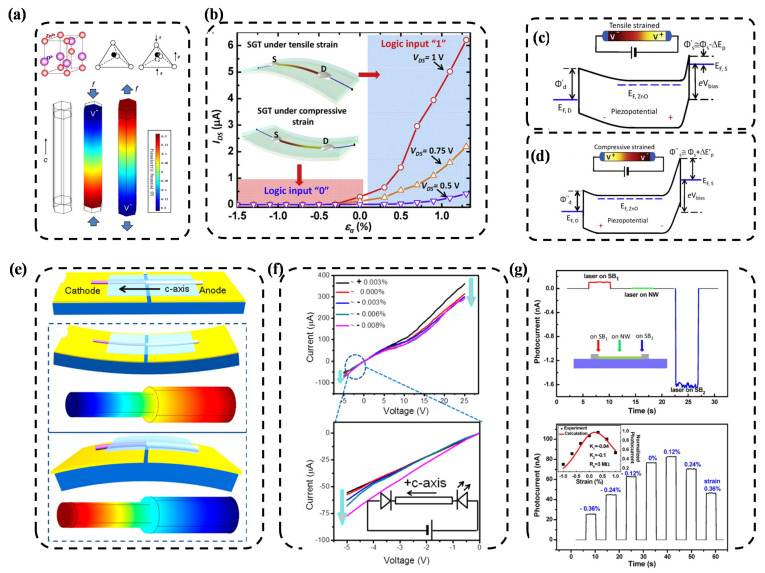
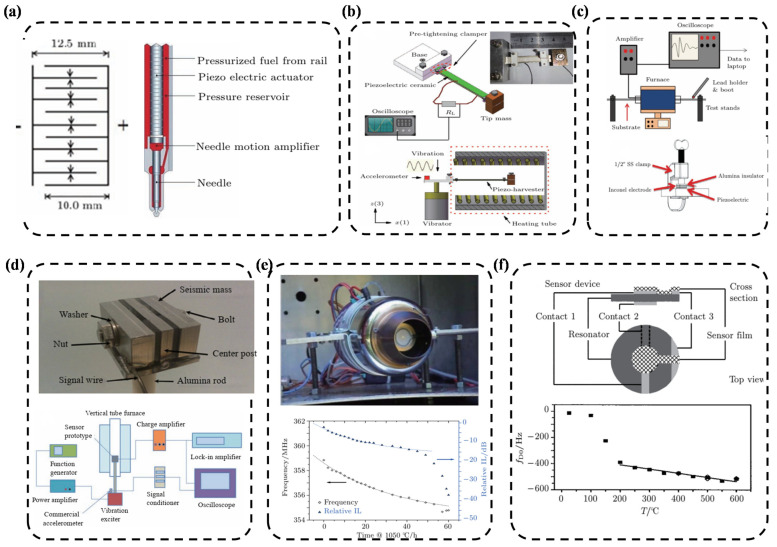
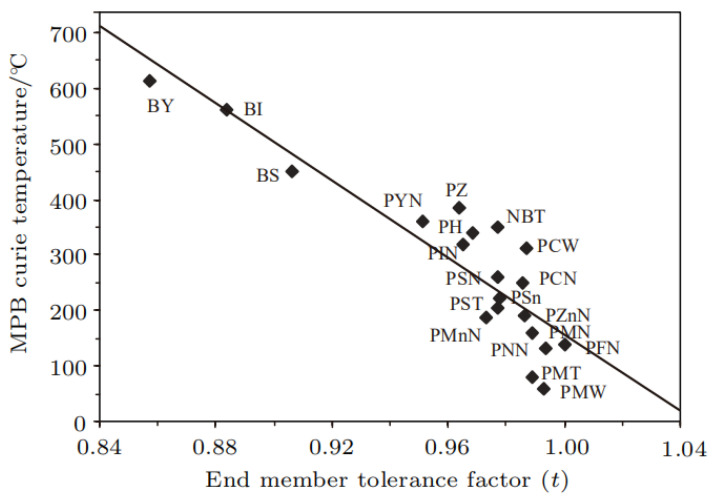
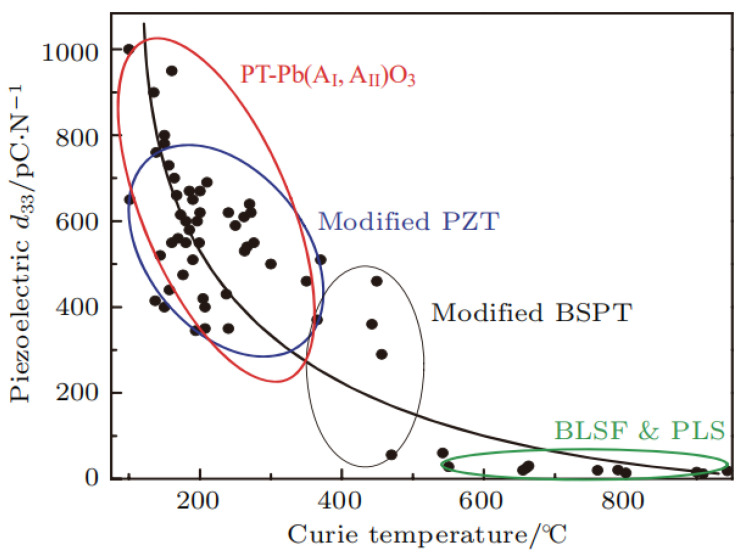
Piezoelectronics, as an efficient approach for energy conversion and sensing, have a far-reaching influence on energy harvesting, precise instruments, sensing, health monitoring and so on. A majority of the previous works on piezoelectronics concentrated on the materials that are applied at close to room temperatures. However, there is inadequate research on the materials for high-temperature piezoelectric applications, yet they also have important applications in the critical equipment of aeroengines and nuclear reactors in harsh and high-temperature conditions. In this review, we briefly introduce fundamental knowledge about the piezoelectric effect, and emphatically elucidate high-temperature piezoelectrics, involving: the typical piezoelectric materials operated in high temperatures, and the applications, limiting factors, prospects and challenges of piezoelectricity at high temperatures.
压电电子学作为一种高效的能量转换和传感方法,对能量收集、精密仪器、传感、健康监测等领域有着深远的影响。以往关于压电电子学的大多数研究都集中在接近室温下应用的材料上。然而,对于高温压电应用的材料研究不足,而它们在航空发动机和核反应堆等恶劣高温条件下的关键设备中也有重要应用。在这篇综述中,我们简要介绍了压电效应的基础知识,并着重阐述了高温压电材料,包括:在高温下工作的典型压电材料,以及高温压电性的应用、限制因素、前景和挑战。