Chen Qianyi, Kalpoe Tarish, Jovanova Jovana
Department of Maritime and Transport Technology, Faculty of Mechanical Engineering, Delft University of Technology, Delft, 2628CD, the Netherlands.
Heliyon. 2024 Jul 8;10(14):e34026. doi: 10.1016/j.heliyon.2024.e34026. eCollection 2024 Jul 30.
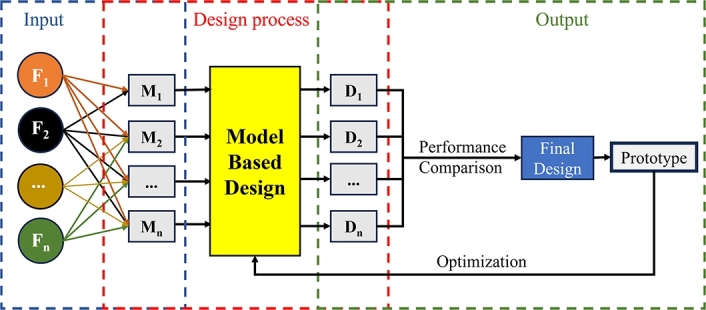
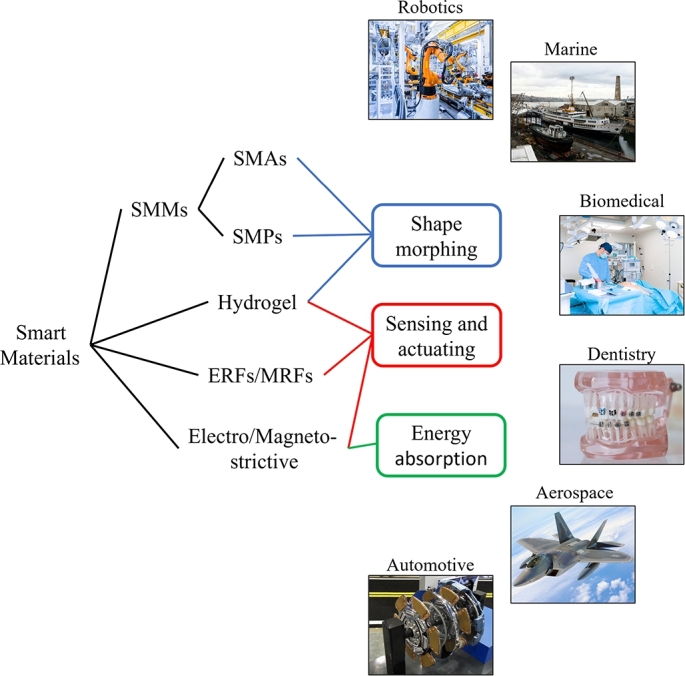
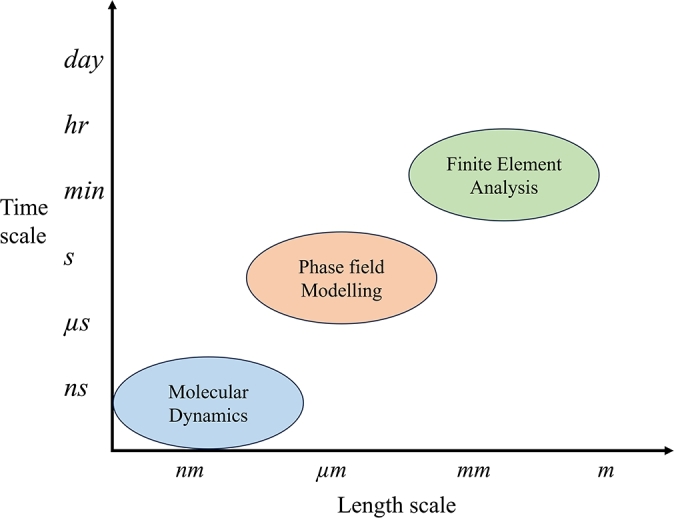
Smart materials are upcoming in many industries due to their unique properties and wide range of applicability. These materials have the potential to transform traditional engineering practices by enabling the development of more efficient, adaptive, and responsive systems. However, smart materials are characterized by nonlinear behaviour and complex constitutive models, posing challenges in modelling and simulation. Therefore, understanding their mechanical properties is crucial for model-based design. This review aims for advancements in numerically implementing various smart materials, especially focusing on their nonlinear deformation behaviours. Different mechanisms and functionalities, classification, constitutive models and applications of smart materials were analyzed. In addition, different numerical approaches for modelling across scales were investigated. This review also explored the strategies and implementations for mechanically intelligent structures using smart materials. In conclusion, the potential model-based design methodology for the multiple smart material-based structures is proposed, which provides guidance for the future development of mechanically intelligent structures in industrial applications.
智能材料因其独特的性能和广泛的适用性而在许多行业中崭露头角。这些材料有潜力通过推动更高效、自适应和响应性系统的开发来改变传统工程实践。然而,智能材料具有非线性行为和复杂的本构模型,这给建模和仿真带来了挑战。因此,了解它们的力学性能对于基于模型的设计至关重要。本综述旨在推进各种智能材料的数值实现,尤其关注其非线性变形行为。分析了智能材料的不同机制和功能、分类、本构模型及应用。此外,还研究了跨尺度建模的不同数值方法。本综述还探讨了使用智能材料的机械智能结构的策略和实现。总之,提出了基于潜在模型的多种智能材料结构设计方法,为工业应用中机械智能结构的未来发展提供指导。