Borysewicz-Sańczyk Hanna, Sawicka Beata, Karny Agata, Bossowski Filip, Marcinkiewicz Katarzyna, Rusak Aleksandra, Dzięcioł Janusz, Bossowski Artur
Department of Pediatrics, Endocrinology, Diabetology with Cardiology Unit, Medical University of Bialystok, 15-089 Bialystok, Poland.
Student Research Group by the Department of Pediatrics, Endocrinology, Diabetology with Cardiology Unit, Medical University of Bialystok, 15-089 Bialystok, Poland.
J Clin Med. 2022 Mar 23;11(7):1768. doi: 10.3390/jcm11071768.
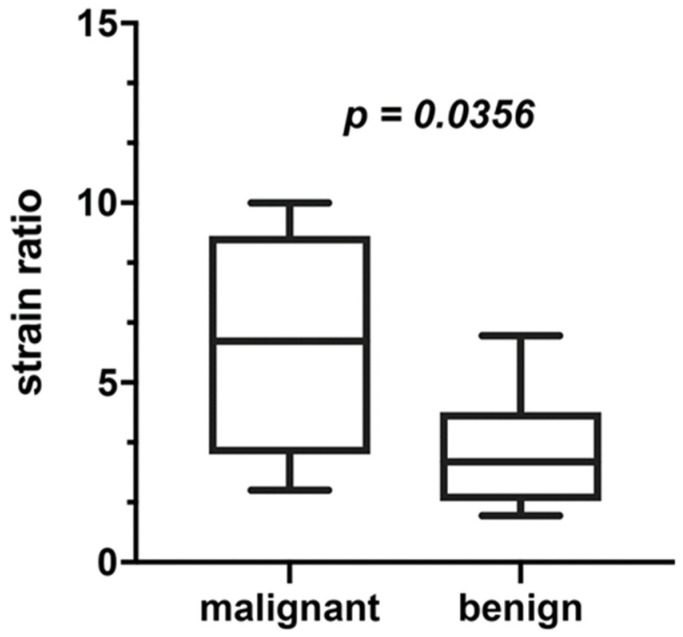
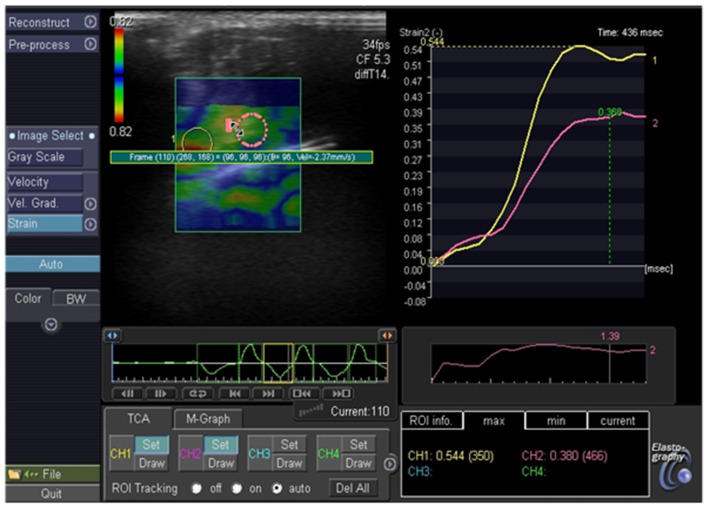
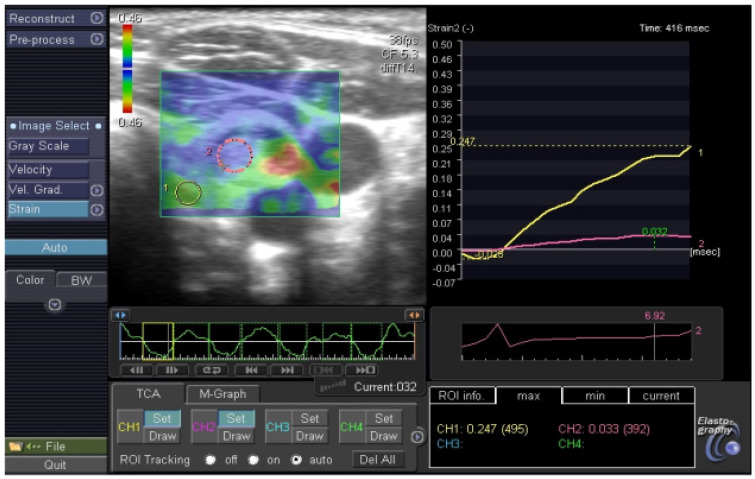
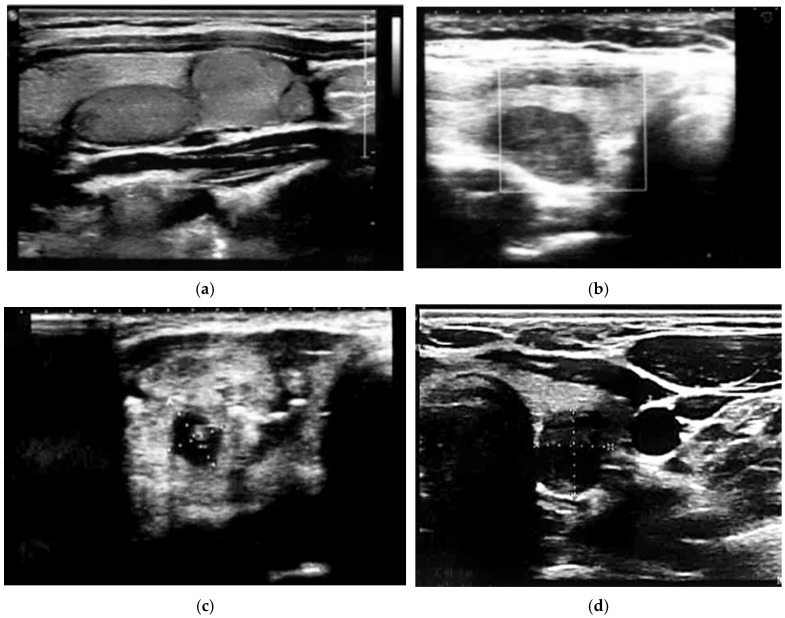
The risk of malignancy in thyroid nodules correlates with the presence of ultrasonographic features. In adults, ultrasound risk-classification systems have been proposed to indicate the need for further invasive diagnosis. Furthermore, elastography has been shown to support differential diagnosis of thyroid nodules. The purpose of our study was to assess the application of the American Thyroid Association (ATA), British Thyroid Association (BTA) ultrasound risk-classification systems and strain elastography in the management of thyroid nodules in children and adolescents from one center. Seventeen nodules with Bethesda III, IV, V and VI were selected from 165 focal lesions in children. All patients underwent ultrasonography and elastography followed by fine needle aspiration biopsy. Ultrasonographic features according to the ATA and BTA stratification systems were assessed retrospectively. The strain ratio in the group of thyroid nodules diagnosed as malignant was significantly higher than in benign nodules (6.07 vs. 3.09, = 0.036). According to the ATA guidelines, 100% of malignant nodules were classified as high suspicion and 73% of benign nodules were assessed as low suspicion. Using the BTA U-score classification, 80% of malignant nodules were classified as cancerous (U5) and 20% as suspicious for malignancy (U4). Among benign nodules, 82% were classified as indeterminate or equivocal (U3) and 9% as benign (U2). Our results suggest that application of the ATA or BTA stratification system and elastography may be a suitable method for assessing the level of suspected malignancy in thyroid nodules in children and help make a clinical decision about the need for further invasive diagnosis of thyroid nodules in children.
甲状腺结节的恶性风险与超声特征的存在相关。在成人中,已提出超声风险分类系统以表明是否需要进一步的侵入性诊断。此外,弹性成像已被证明有助于甲状腺结节的鉴别诊断。我们研究的目的是评估美国甲状腺协会(ATA)、英国甲状腺协会(BTA)超声风险分类系统和应变弹性成像在一个中心的儿童和青少年甲状腺结节管理中的应用。从165例儿童局灶性病变中选取了17例贝塞斯达III、IV、V和VI级结节。所有患者均接受了超声检查和弹性成像,随后进行细针穿刺活检。回顾性评估了根据ATA和BTA分层系统的超声特征。诊断为恶性的甲状腺结节组的应变比显著高于良性结节(6.07对3.09,P = 0.036)。根据ATA指南,100%的恶性结节被分类为高可疑,73%的良性结节被评估为低可疑。使用BTA U评分分类,80%的恶性结节被分类为癌性(U5),20%为可疑恶性(U4)。在良性结节中,82%被分类为不确定或可疑(U3),9%为良性(U2)。我们的结果表明,应用ATA或BTA分层系统和弹性成像可能是评估儿童甲状腺结节恶性可疑程度的合适方法,并有助于就儿童甲状腺结节进一步侵入性诊断的必要性做出临床决策。