Institute of Radiation Medicine, Beijing 100850, China.
Molecules. 2022 Mar 29;27(7):2231. doi: 10.3390/molecules27072231.
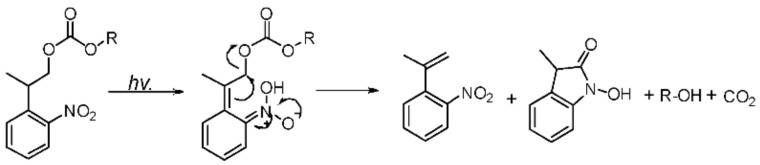
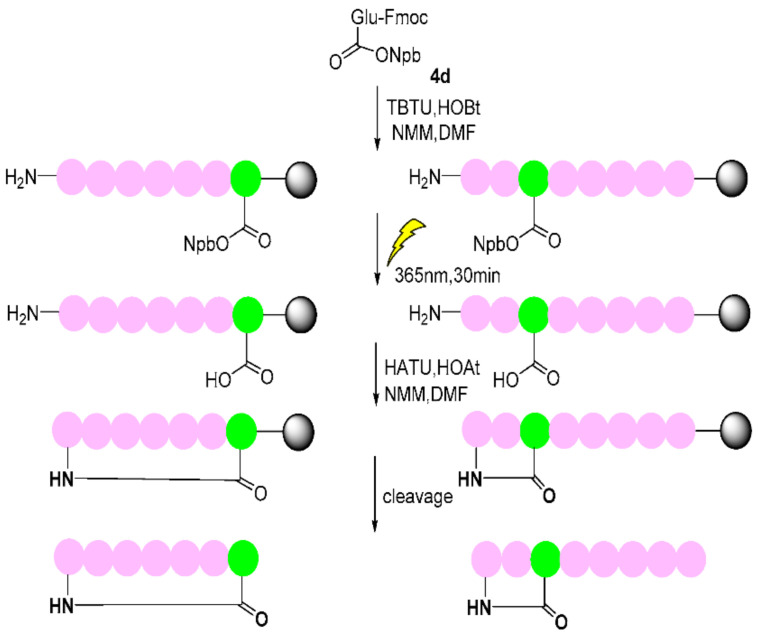
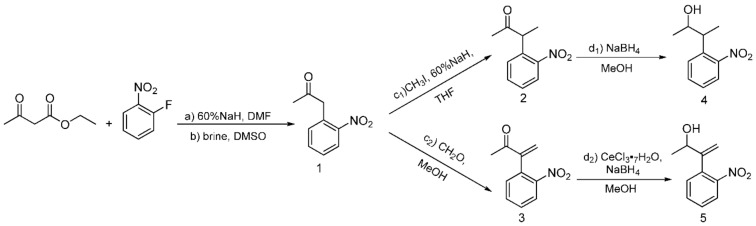
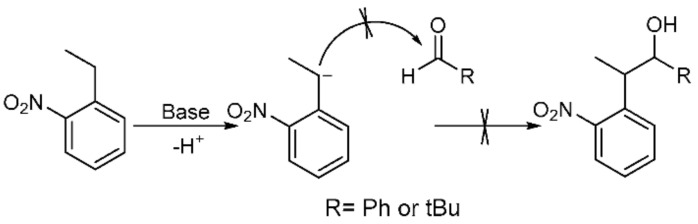
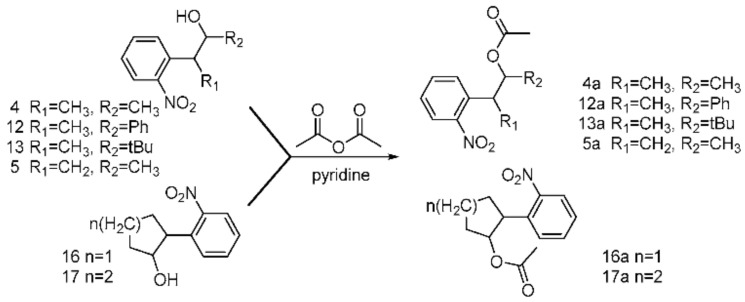
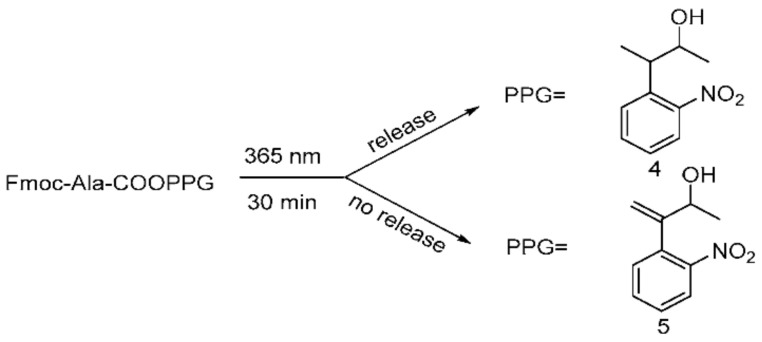
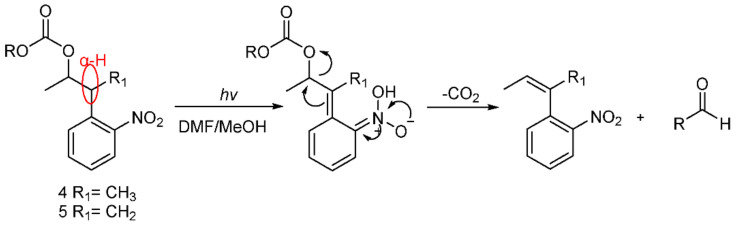
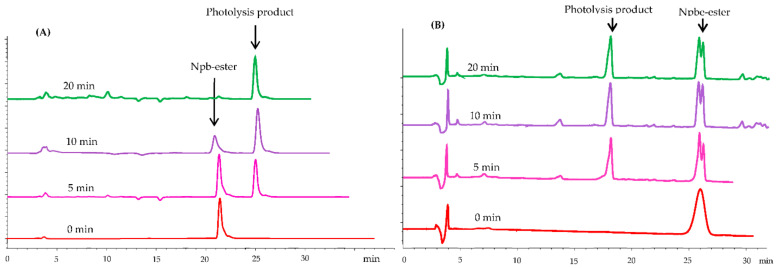
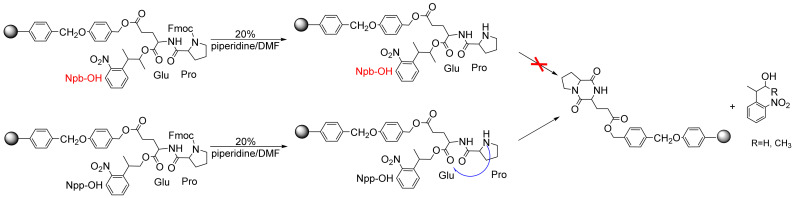
Significant efforts have been made in recent years to identify more environmentally benign and safe alternatives to side-chain protection and deprotection in solid-phase peptide synthesis (SPPS). Several protecting groups have been endorsed as suitable candidates, but finding a greener protecting group in SPPS has been challenging. Here, based on the 2-(-nitrophenyl) propan-1-ol (Npp-OH) photolabile protecting group, a structural modification was carried out to synthesize a series of derivatives. Through experimental verification, we found that 3-(-Nitrophenyl) butan-2-ol (Npb-OH) had a high photo-release rate, high tolerance to the key conditions of Fmoc-SPPS (20% piperidine DMF alkaline solution, and pure TFA acidic solution), and applicability as a carboxyl-protective group in aliphatic and aromatic carboxyl groups. Finally, Npb-OH was successfully applied to the synthesis of head-tail cyclic peptides and side-chain-tail cyclic peptides. Moreover, we found that Npb-OH could effectively resist diketopiperazines (DKP). The α-H of Npb-OH was found to be necessary for its photosensitivity in comparison to 3-(-Nitrophenyl)but-3-en-2-ol (Npbe-OH) during photolysis-rate verification.
近年来,人们在寻找更环保、更安全的固相多肽合成(SPPS)中侧链保护和脱保护的替代方法方面做出了巨大努力。已经有几种保护基被认为是合适的候选者,但在 SPPS 中找到更环保的保护基一直具有挑战性。在这里,基于 2-(-硝基苯基)丙-1-醇(Npp-OH)光解保护基,进行了结构修饰以合成一系列衍生物。通过实验验证,我们发现 3-(-硝基苯基)丁-2-醇(Npb-OH)具有很高的光释放率、对 Fmoc-SPPS 的关键条件(20%哌啶 DMF 碱性溶液和纯 TFA 酸性溶液)的高耐受性,以及作为脂肪族和芳香族羧酸的羧基保护基的适用性。最后,Npb-OH 成功应用于头尾环肽和侧链尾环肽的合成。此外,我们发现 Npb-OH 可以有效抵抗二酮哌嗪(DKP)。与 3-(-硝基苯基)丁-3-烯-2-醇(Npbe-OH)相比,在光解速率验证过程中发现 Npb-OH 的α-H 对其光敏感性是必要的。