Key Laboratory of Precision Nutrition and Food Quality, College of Food Science and Nutritional Engineering, China Agricultural University, Beijing 100083, China.
College of Engineering, China Agricultural University, Beijing 100083, China.
Int J Mol Sci. 2022 Mar 28;23(7):3723. doi: 10.3390/ijms23073723.
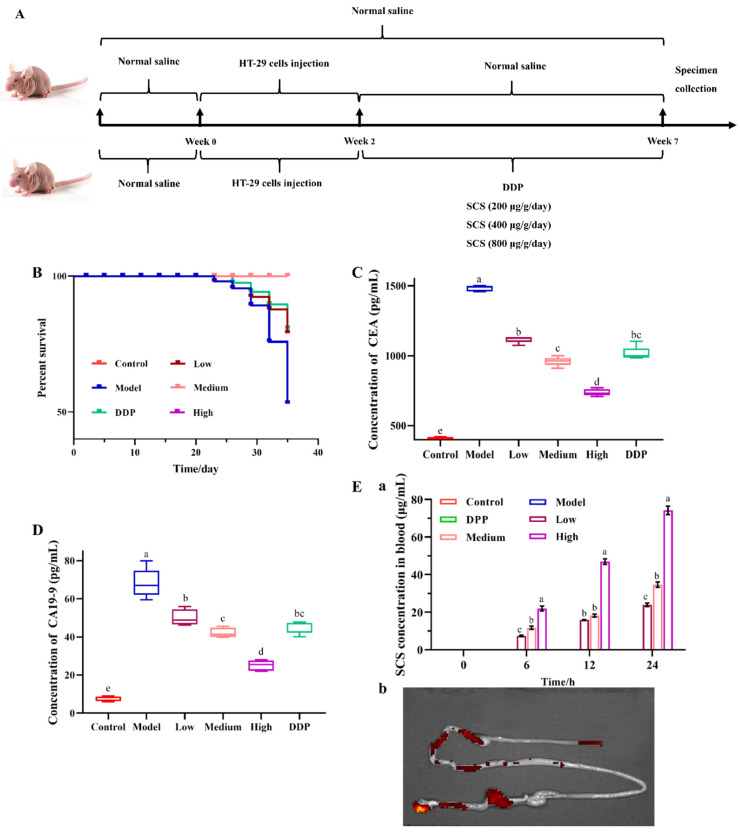
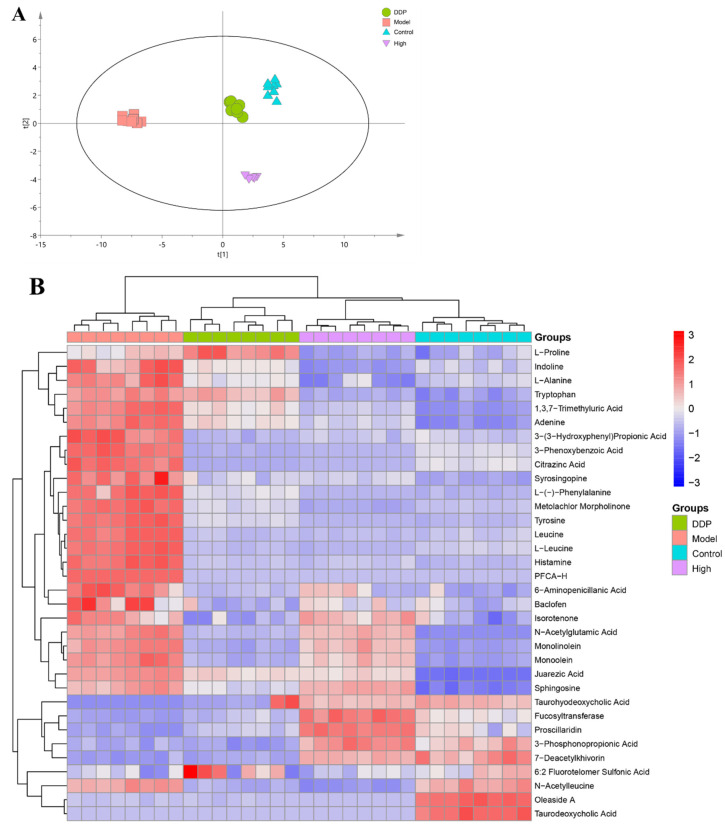
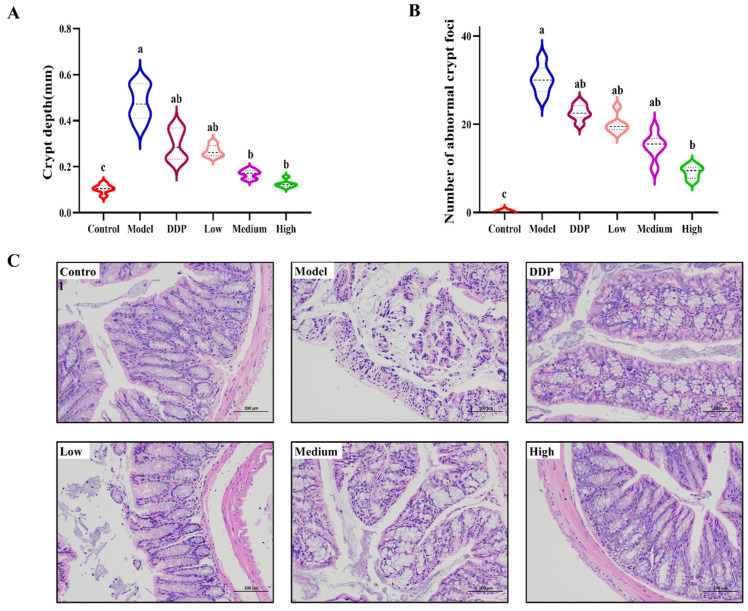
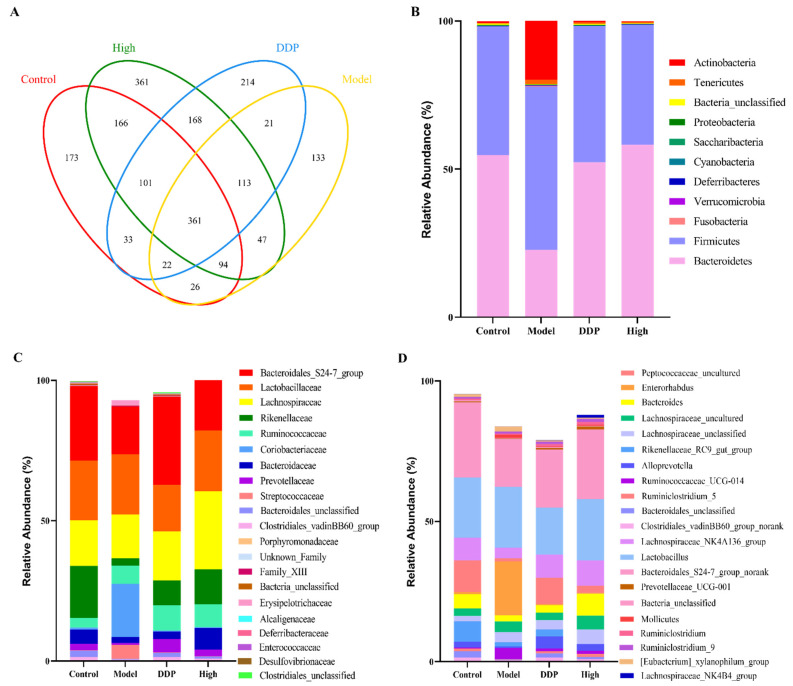
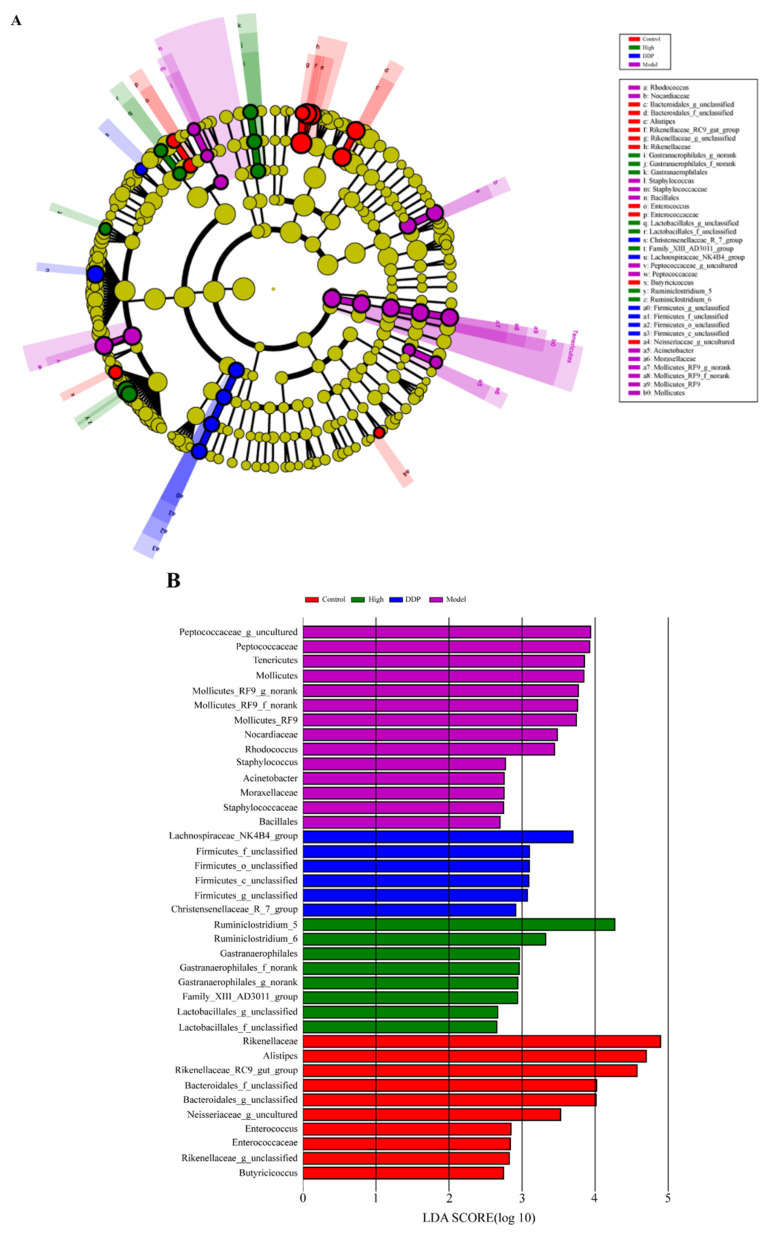
Chondroitin sulfate (CS) is a well-known bioactive substance with multiple biological functions, which can be extracted from animal cartilage or bone. Sturgeon, the largest soft bone animal with ~20% cartilage content, is a great candidate for CS production. Our recent study confirmed the role of sturgeon chondroitin sulfate (SCS) in reducing colorectal cancer cell proliferation and tumor formation. Here, we further studied the effect of SCS on modulating gut microbiome structure in colorectal cancer bearing mice. In this study, the transplanted tumor mice model was constructed to demonstrate that SCS can effectively halt the growth of transplanted colorectal tumor cells. Next, we showed that SCS significantly altered the gut microbiome, such as the abundance of Lactobacillales, Gastranaerophilales, Ruminiclostridiun_5 and Ruminiclostridiun_6. According to linear discriminant analysis (LDA) and abundance map analysis of the microbial metabolic pathways, the changes in microbial abundance led to an increase of certain metabolites (e.g., Phe, Tyr, and Gly). Fecal metabolome results demonstrated that SCS can significantly reduce the amount of certain amino acids such as Phe, Pro, Ala, Tyr and Leu presented in the feces, suggesting that SCS might inhibit colorectal cancer growth by modulating the gut microbiome and altering the production of certain amino acids. Our results revealed the therapeutic potential of SCS to facilitate treatment of colorectal cancer. This study provides insights into the development of novel food-derived therapies for colorectal cancer.
硫酸软骨素(CS)是一种具有多种生物学功能的知名生物活性物质,可从动物软骨或骨骼中提取。鲟鱼是软骨含量约为 20%的最大软骨动物,是 CS 生产的理想候选物。我们最近的研究证实了鲟鱼硫酸软骨素(SCS)在抑制结直肠癌细胞增殖和肿瘤形成中的作用。在这里,我们进一步研究了 SCS 对调节结直肠癌荷瘤小鼠肠道微生物组结构的影响。在这项研究中,构建了移植肿瘤小鼠模型,以证明 SCS 可以有效阻止移植的结直肠肿瘤细胞的生长。接下来,我们表明 SCS 显著改变了肠道微生物组,例如乳杆菌目、胃杆菌目、瘤胃真杆菌科和瘤胃真杆菌科的丰度。根据线性判别分析(LDA)和微生物代谢途径的丰度图谱分析,微生物丰度的变化导致某些代谢物(例如 Phe、Tyr 和 Gly)的增加。粪便代谢组学结果表明,SCS 可显著减少粪便中某些氨基酸(如 Phe、Pro、Ala、Tyr 和 Leu)的含量,表明 SCS 可能通过调节肠道微生物组和改变某些氨基酸的产生来抑制结直肠癌的生长。我们的研究结果揭示了 SCS 的治疗潜力,有助于治疗结直肠癌。本研究为开发新型基于食物的结直肠癌治疗方法提供了思路。