Department of Pharmacy, Research Institute for Drug Development, College of Pharmacy, Pusan National University, Busan 46241, Korea.
Int J Mol Sci. 2022 Mar 29;23(7):3757. doi: 10.3390/ijms23073757.
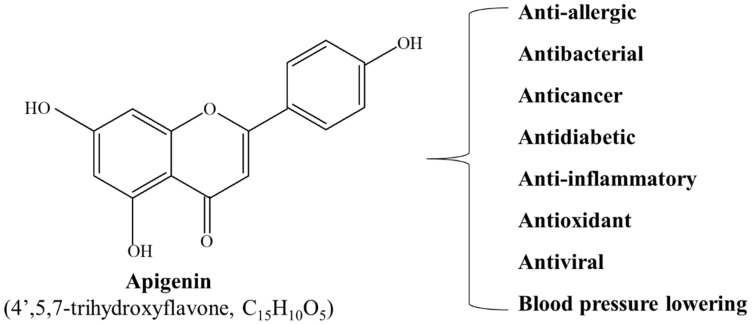
The flavonoid apigenin (4',5,7-trihydroxyflavone), which is one of the most widely distributed phytochemicals in the plant kingdom, is one of the most thoroughly investigated phenolic components. Previous studies have attributed the physiological effects of apigenin to its anti-allergic, antibacterial, antidiabetic, anti-inflammatory, antioxidant, antiviral, and blood-pressure-lowering properties, and its documented anticancer properties have been attributed to the induction of apoptosis and autophagy, the inhibition of inflammation, angiogenesis, and cell proliferation, and the regulation of cellular responses to oxidative stress and DNA damage. The most well-known mechanism for the compound's anticancer effects in human cancer cell lines is apoptosis, followed by autophagy, and studies have also reported that apigenin induces novel cell death mechanisms, such as necroptosis and ferroptosis. Therefore, the aim of this paper is to review the therapeutic potential of apigenin as a chemopreventive agent, as well as the roles of programmed cell death mechanisms in the compound's chemopreventive properties.
类黄酮芹菜素(4',5,7-三羟基黄酮)是植物界分布最广泛的植物化学物质之一,也是研究最深入的酚类成分之一。先前的研究将芹菜素的生理作用归因于其抗过敏、抗菌、抗糖尿病、抗炎、抗氧化、抗病毒和降血压特性,其已被证实的抗癌特性归因于诱导细胞凋亡和自噬、抑制炎症、血管生成和细胞增殖以及调节细胞对氧化应激和 DNA 损伤的反应。该化合物在人类癌细胞系中抗癌作用最广为人知的机制是细胞凋亡,其次是自噬,研究还报告称,芹菜素诱导新的细胞死亡机制,如坏死性凋亡和铁死亡。因此,本文的目的是综述芹菜素作为化学预防剂的治疗潜力,以及程序性细胞死亡机制在该化合物的化学预防特性中的作用。