Australian Centre for Public and Population Health Research, Faculty of Health, University of Technology Sydney, Sydney, NSW 2007, Australia.
Faculty of Medicine, University of Geneva, 1211 Geneva, Switzerland.
Int J Environ Res Public Health. 2022 Mar 22;19(7):3765. doi: 10.3390/ijerph19073765.
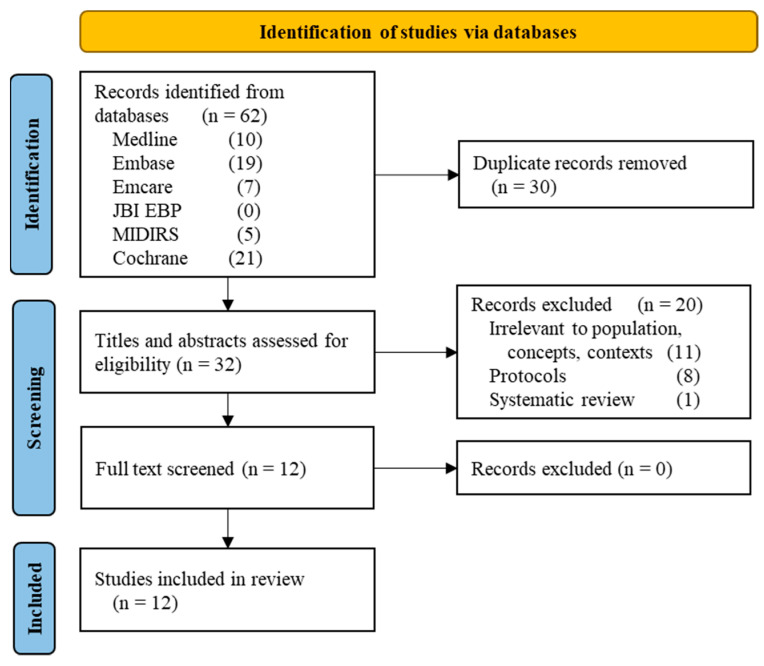
Heat-stable carbetocin (HSC), a long-acting oxytocin analogue that does not require cold-chain transportation and storage, is effective in preventing postpartum haemorrhage (PPH) in vaginal and caesarean deliveries in tertiary-care settings. We aimed to identify literature documenting how it is implemented in resource-limited and lower-level maternity care settings to inform policies and practices that enable its introduction in these contexts. A rapid scoping review was conducted with an 8-week timeframe by two reviewers. MEDLINE, EMBASE, Emcare, the Joanna Briggs Institute Evidence-Based Practice Database, the Maternity and Infant Care Database, and the Cochrane Library were searched for publications in English, French, and Spanish from January 2011 to September 2021. Randomized and non-randomized studies examining the feasibility, acceptability, and health system considerations in low-income and lower-middle-income countries were included. Relevant data were extracted using pretested forms, and results were synthesized descriptively. The search identified 62 citations, of which 12 met the eligibility criteria. The review did not retrieve studies focusing on acceptability and health system considerations to inform HSC implementation in low-resource settings. There were no studies located in rural or lower-level maternity settings. Two economic evaluations concluded that HSC is not feasible in terms of cost-effectiveness in lower-middle-income economies with private sector pricing, and a third one found superior care costs in births with PPH than without. The other nine studies focused on demonstrating HSC effectiveness for PPH prevention in tertiary hospital settings. There is a lack of evidence on the feasibility (beyond cost-effectiveness), acceptability, and health system considerations related to implementing HSC in resource-constrained and lower-level maternity facilities. Further implementation research is needed to help decision-makers and practitioners offer an HSC-inclusive intervention package to prevent excessive bleeding among pregnant women living in settings where oxytocin is not available or of dubious quality.
热稳定性卡贝缩宫素(HSC)是一种长效催产素类似物,无需冷链运输和储存,在三级保健机构的阴道分娩和剖宫产中可有效预防产后出血(PPH)。我们旨在确定记录其在资源有限和较低级别产妇保健环境中实施情况的文献,以为在这些环境中引入该药物的政策和实践提供信息。两位评审员在 8 周的时间内进行了快速范围界定审查。检索了 MEDLINE、EMBASE、Emcare、 Joanna Briggs 循证实践数据库、母婴保健数据库和 Cochrane 图书馆,以获取 2011 年 1 月至 2021 年 9 月期间以英语、法语和西班牙语发表的出版物。纳入了在低收入和中低收入国家研究可行性、可接受性和卫生系统考虑因素的随机和非随机研究。使用预测试表格提取相关数据,并进行描述性综合。检索确定了 62 条引文,其中 12 条符合入选标准。该综述未检索到关于可接受性和卫生系统考虑因素的研究,无法为 HSC 在资源匮乏环境中的实施提供信息。没有在农村或较低级别的产妇环境中进行的研究。两项经济评估得出结论,在私人部门定价的中低收入经济体中,从成本效益角度来看,HSC 不可行,而第三项评估则发现,有 PPH 的分娩比没有 PPH 的分娩护理费用更高。其他 9 项研究侧重于在三级医院环境中证明 HSC 预防 PPH 的有效性。缺乏关于在资源有限和较低级别的产妇设施中实施 HSC 的可行性(超出成本效益范围)、可接受性和卫生系统考虑因素的证据。需要进一步开展实施研究,以帮助决策者和从业者提供包含 HSC 的干预包,以预防在无法获得或催产素质量可疑的情况下,孕妇发生过多出血。