• 文献检索
  • 文档翻译
  • 深度研究
  • 学术资讯
  • Suppr Zotero 插件Zotero 插件
  • 邀请有礼
  • 套餐&价格
  • 历史记录
应用&插件
Suppr Zotero 插件Zotero 插件浏览器插件Mac 客户端Windows 客户端微信小程序
定价
高级版会员购买积分包购买API积分包
服务
文献检索文档翻译深度研究API 文档MCP 服务
关于我们
关于 Suppr公司介绍联系我们用户协议隐私条款
关注我们

Suppr 超能文献

核心技术专利:CN118964589B侵权必究
粤ICP备2023148730 号-1Suppr @ 2026

文献检索

告别复杂PubMed语法,用中文像聊天一样搜索,搜遍4000万医学文献。AI智能推荐,让科研检索更轻松。

立即免费搜索

文件翻译

保留排版,准确专业,支持PDF/Word/PPT等文件格式,支持 12+语言互译。

免费翻译文档

深度研究

AI帮你快速写综述,25分钟生成高质量综述,智能提取关键信息,辅助科研写作。

立即免费体验

一种用于在便携式微波成像系统中分类和检测脑部异常的深度学习模型。

A deep learning model to classify and detect brain abnormalities in portable microwave based imaging system.

机构信息

Department of Electrical, Electronic and Systems Engineering, Faculty of Engineering and Built Environment, Universiti Kebangsaan Malaysia, 43600, Bangi, Malaysia.

Department of Computer Science and Engineering, Dhaka University of Engineering & Technology, Gazipur, Gazipur, 1707, Bangladesh.

出版信息

Sci Rep. 2022 Apr 15;12(1):6319. doi: 10.1038/s41598-022-10309-6.

DOI:10.1038/s41598-022-10309-6
PMID:35428751
原文链接:https://pmc.ncbi.nlm.nih.gov/articles/PMC9012261/
Abstract

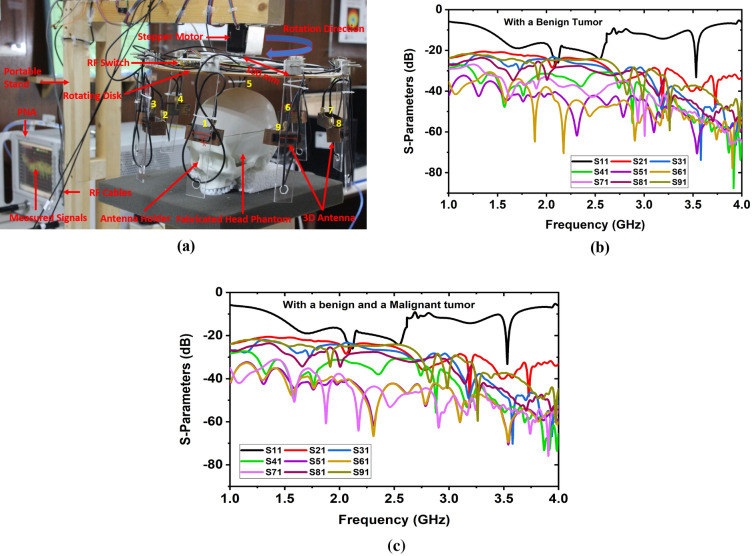
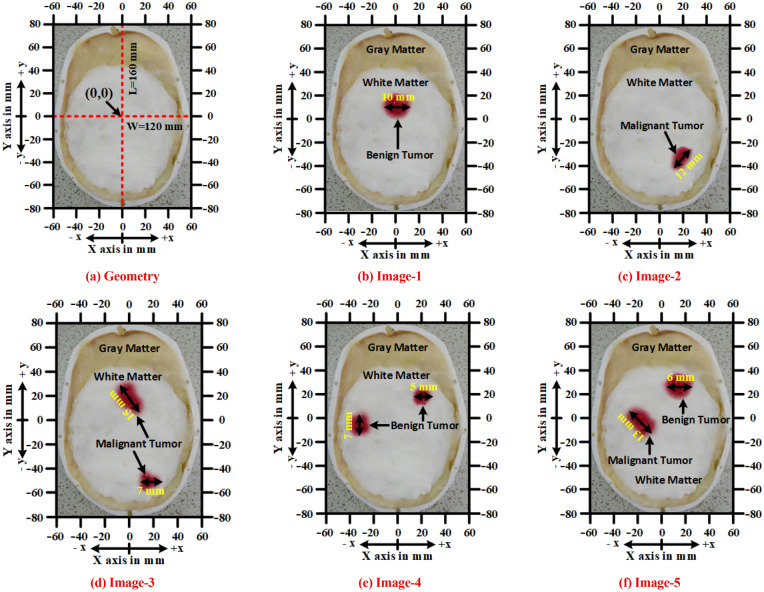
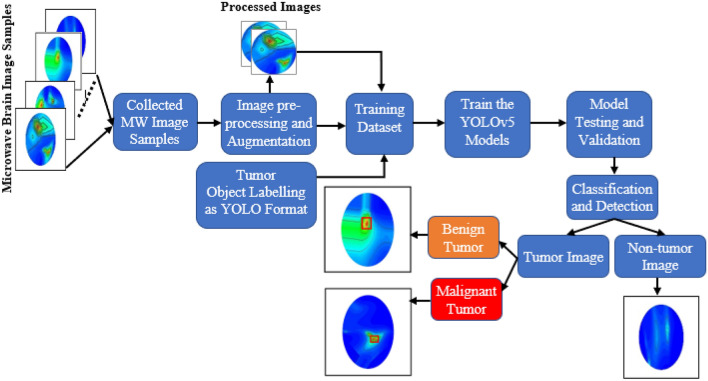
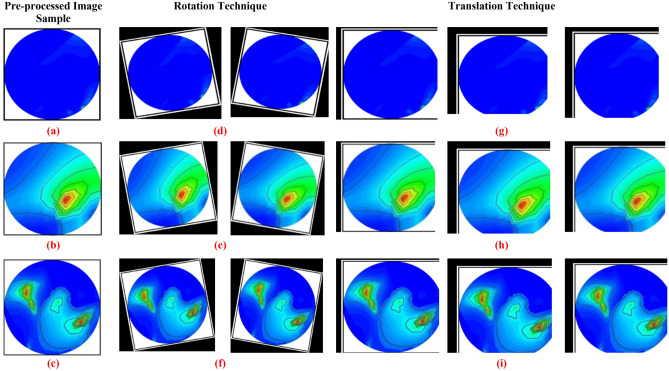
Automated classification and detection of brain abnormalities like a tumor(s) in reconstructed microwave (RMW) brain images are essential for medical application investigation and monitoring disease progression. This paper presents the automatic classification and detection of human brain abnormalities through the deep learning-based YOLOv5 object detection model in a portable microwave head imaging system (MWHI). Initially, four hundred RMW image samples, including non-tumor and tumor(s) in different locations are collected from the implemented MWHI system. The RMW image dimension is 640 × 640 pixels. After that, image pre-processing and augmentation techniques are applied to generate the training dataset, consisting of 4400 images. Later, 80% of images are used to train the models, and 20% are used for testing. Later, from the 80% training dataset, 20% are utilized to validate the models. The detection and classification performances are evaluated by three variations of the YOLOv5 model: YOLOv5s, YOLOv5m, and YOLOv5l. It is investigated that the YOLOv5l model performed better compared to YOLOv5s, YOLOv5m, and state-of-the-art object detection models. The achieved accuracy, precision, sensitivity, specificity, F1-score, mean average precision (mAP), and classification loss are 96.32%, 95.17%, 94.98%, 95.28%, 95.53%, 96.12%, and 0.0130, respectively for the YOLOv5l model. The YOLOv5l model automatically detected tumor(s) accurately with a predicted bounding box including objectness score in RMW images and classified the tumors into benign and malignant classes. So, the YOLOv5l object detection model can be reliable for automatic tumor(s) detection and classification in a portable microwave brain imaging system as a real-time application.

摘要

通过基于深度学习的 YOLOv5 对象检测模型,在便携式微波头部成像系统(MWHI)中自动分类和检测人脑异常,是医学应用研究和监测疾病进展的关键。本文提出了在实现的 MWHI 系统中,通过基于深度学习的 YOLOv5 目标检测模型,自动分类和检测人脑异常。最初,从实施的 MWHI 系统中收集了包括不同位置的非肿瘤和肿瘤的 400 个 RMW 图像样本。RMW 图像的维度为 640×640 像素。之后,应用图像预处理和增强技术来生成训练数据集,该数据集由 4400 个图像组成。之后,使用 80%的图像来训练模型,使用 20%的图像来进行测试。之后,从 80%的训练数据集,使用 20%的图像来验证模型。通过 YOLOv5 模型的三个变体:YOLOv5s、YOLOv5m 和 YOLOv5l,评估检测和分类性能。结果表明,YOLOv5l 模型的性能优于 YOLOv5s、YOLOv5m 和最先进的目标检测模型。对于 YOLOv5l 模型,获得的准确性、精度、灵敏度、特异性、F1 分数、平均精度(mAP)和分类损失分别为 96.32%、95.17%、94.98%、95.28%、95.53%、96.12%和 0.0130。YOLOv5l 模型可以在 RMW 图像中自动准确地检测肿瘤,并使用预测的边界框和对象分数对肿瘤进行良性和恶性分类。因此,YOLOv5l 目标检测模型可用于便携式微波脑成像系统中的自动肿瘤检测和分类,作为实时应用。

https://cdn.ncbi.nlm.nih.gov/pmc/blobs/c898/9012788/6311fb413872/41598_2022_10309_Fig23_HTML.jpg
https://cdn.ncbi.nlm.nih.gov/pmc/blobs/c898/9012788/214490be5516/41598_2022_10309_Fig1_HTML.jpg
https://cdn.ncbi.nlm.nih.gov/pmc/blobs/c898/9012788/43a6d7ebe4bf/41598_2022_10309_Fig2_HTML.jpg
https://cdn.ncbi.nlm.nih.gov/pmc/blobs/c898/9012788/a608e626aa7f/41598_2022_10309_Fig3_HTML.jpg
https://cdn.ncbi.nlm.nih.gov/pmc/blobs/c898/9012788/af5f19c8fb5c/41598_2022_10309_Fig4_HTML.jpg
https://cdn.ncbi.nlm.nih.gov/pmc/blobs/c898/9012788/26778aba7af9/41598_2022_10309_Fig5_HTML.jpg
https://cdn.ncbi.nlm.nih.gov/pmc/blobs/c898/9012788/8e3276c5d0b9/41598_2022_10309_Fig6_HTML.jpg
https://cdn.ncbi.nlm.nih.gov/pmc/blobs/c898/9012788/2052ef60f19d/41598_2022_10309_Fig7_HTML.jpg
https://cdn.ncbi.nlm.nih.gov/pmc/blobs/c898/9012788/2fc1272d2079/41598_2022_10309_Fig8_HTML.jpg
https://cdn.ncbi.nlm.nih.gov/pmc/blobs/c898/9012788/6f61328a5d68/41598_2022_10309_Fig9_HTML.jpg
https://cdn.ncbi.nlm.nih.gov/pmc/blobs/c898/9012788/205825cc1f0e/41598_2022_10309_Fig10_HTML.jpg
https://cdn.ncbi.nlm.nih.gov/pmc/blobs/c898/9012788/b84aa955c73a/41598_2022_10309_Fig11_HTML.jpg
https://cdn.ncbi.nlm.nih.gov/pmc/blobs/c898/9012788/3c2a4b92b34e/41598_2022_10309_Fig12_HTML.jpg
https://cdn.ncbi.nlm.nih.gov/pmc/blobs/c898/9012788/f6290febf90f/41598_2022_10309_Fig13_HTML.jpg
https://cdn.ncbi.nlm.nih.gov/pmc/blobs/c898/9012788/3b48507a04d0/41598_2022_10309_Fig14_HTML.jpg
https://cdn.ncbi.nlm.nih.gov/pmc/blobs/c898/9012788/8511521236b3/41598_2022_10309_Fig15_HTML.jpg
https://cdn.ncbi.nlm.nih.gov/pmc/blobs/c898/9012788/9aa93ad56ec2/41598_2022_10309_Fig16_HTML.jpg
https://cdn.ncbi.nlm.nih.gov/pmc/blobs/c898/9012788/96419594a214/41598_2022_10309_Fig17_HTML.jpg
https://cdn.ncbi.nlm.nih.gov/pmc/blobs/c898/9012788/99fc44d0bfca/41598_2022_10309_Fig18_HTML.jpg
https://cdn.ncbi.nlm.nih.gov/pmc/blobs/c898/9012788/19b295446b5e/41598_2022_10309_Fig19_HTML.jpg
https://cdn.ncbi.nlm.nih.gov/pmc/blobs/c898/9012788/c29577cf5023/41598_2022_10309_Fig20_HTML.jpg
https://cdn.ncbi.nlm.nih.gov/pmc/blobs/c898/9012788/11df3b108e90/41598_2022_10309_Fig21_HTML.jpg
https://cdn.ncbi.nlm.nih.gov/pmc/blobs/c898/9012788/c6da2e35fc8d/41598_2022_10309_Fig22_HTML.jpg
https://cdn.ncbi.nlm.nih.gov/pmc/blobs/c898/9012788/6311fb413872/41598_2022_10309_Fig23_HTML.jpg
https://cdn.ncbi.nlm.nih.gov/pmc/blobs/c898/9012788/214490be5516/41598_2022_10309_Fig1_HTML.jpg
https://cdn.ncbi.nlm.nih.gov/pmc/blobs/c898/9012788/43a6d7ebe4bf/41598_2022_10309_Fig2_HTML.jpg
https://cdn.ncbi.nlm.nih.gov/pmc/blobs/c898/9012788/a608e626aa7f/41598_2022_10309_Fig3_HTML.jpg
https://cdn.ncbi.nlm.nih.gov/pmc/blobs/c898/9012788/af5f19c8fb5c/41598_2022_10309_Fig4_HTML.jpg
https://cdn.ncbi.nlm.nih.gov/pmc/blobs/c898/9012788/26778aba7af9/41598_2022_10309_Fig5_HTML.jpg
https://cdn.ncbi.nlm.nih.gov/pmc/blobs/c898/9012788/8e3276c5d0b9/41598_2022_10309_Fig6_HTML.jpg
https://cdn.ncbi.nlm.nih.gov/pmc/blobs/c898/9012788/2052ef60f19d/41598_2022_10309_Fig7_HTML.jpg
https://cdn.ncbi.nlm.nih.gov/pmc/blobs/c898/9012788/2fc1272d2079/41598_2022_10309_Fig8_HTML.jpg
https://cdn.ncbi.nlm.nih.gov/pmc/blobs/c898/9012788/6f61328a5d68/41598_2022_10309_Fig9_HTML.jpg
https://cdn.ncbi.nlm.nih.gov/pmc/blobs/c898/9012788/205825cc1f0e/41598_2022_10309_Fig10_HTML.jpg
https://cdn.ncbi.nlm.nih.gov/pmc/blobs/c898/9012788/b84aa955c73a/41598_2022_10309_Fig11_HTML.jpg
https://cdn.ncbi.nlm.nih.gov/pmc/blobs/c898/9012788/3c2a4b92b34e/41598_2022_10309_Fig12_HTML.jpg
https://cdn.ncbi.nlm.nih.gov/pmc/blobs/c898/9012788/f6290febf90f/41598_2022_10309_Fig13_HTML.jpg
https://cdn.ncbi.nlm.nih.gov/pmc/blobs/c898/9012788/3b48507a04d0/41598_2022_10309_Fig14_HTML.jpg
https://cdn.ncbi.nlm.nih.gov/pmc/blobs/c898/9012788/8511521236b3/41598_2022_10309_Fig15_HTML.jpg
https://cdn.ncbi.nlm.nih.gov/pmc/blobs/c898/9012788/9aa93ad56ec2/41598_2022_10309_Fig16_HTML.jpg
https://cdn.ncbi.nlm.nih.gov/pmc/blobs/c898/9012788/96419594a214/41598_2022_10309_Fig17_HTML.jpg
https://cdn.ncbi.nlm.nih.gov/pmc/blobs/c898/9012788/99fc44d0bfca/41598_2022_10309_Fig18_HTML.jpg
https://cdn.ncbi.nlm.nih.gov/pmc/blobs/c898/9012788/19b295446b5e/41598_2022_10309_Fig19_HTML.jpg
https://cdn.ncbi.nlm.nih.gov/pmc/blobs/c898/9012788/c29577cf5023/41598_2022_10309_Fig20_HTML.jpg
https://cdn.ncbi.nlm.nih.gov/pmc/blobs/c898/9012788/11df3b108e90/41598_2022_10309_Fig21_HTML.jpg
https://cdn.ncbi.nlm.nih.gov/pmc/blobs/c898/9012788/c6da2e35fc8d/41598_2022_10309_Fig22_HTML.jpg
https://cdn.ncbi.nlm.nih.gov/pmc/blobs/c898/9012788/6311fb413872/41598_2022_10309_Fig23_HTML.jpg

相似文献

1
A deep learning model to classify and detect brain abnormalities in portable microwave based imaging system.一种用于在便携式微波成像系统中分类和检测脑部异常的深度学习模型。
Sci Rep. 2022 Apr 15;12(1):6319. doi: 10.1038/s41598-022-10309-6.
2
Brain Tumor Segmentation and Classification from Sensor-Based Portable Microwave Brain Imaging System Using Lightweight Deep Learning Models.基于传感器的便携式微波脑成像系统的脑肿瘤分割和分类研究 使用轻量级深度学习模型
Biosensors (Basel). 2023 Feb 21;13(3):302. doi: 10.3390/bios13030302.
3
A Lightweight Deep Learning Based Microwave Brain Image Network Model for Brain Tumor Classification Using Reconstructed Microwave Brain (RMB) Images.基于深度学习的轻量级微波脑图像网络模型,用于使用重建微波脑(RMB)图像进行脑肿瘤分类。
Biosensors (Basel). 2023 Feb 7;13(2):238. doi: 10.3390/bios13020238.
4
Microscopic urinary particle detection by different YOLOv5 models with evolutionary genetic algorithm based hyperparameter optimization.基于进化遗传算法的超参数优化的不同 YOLOv5 模型对微观尿颗粒的检测。
Comput Biol Med. 2024 Feb;169:107895. doi: 10.1016/j.compbiomed.2023.107895. Epub 2023 Dec 28.
5
Detection and classification of breast lesions with You Only Look Once version 5.使用“你只看一次”版本5检测和分类乳腺病变
Future Oncol. 2022 Dec;18(39):4361-4370. doi: 10.2217/fon-2022-0593. Epub 2022 Dec 15.
6
Object Detection of Flexible Objects with Arbitrary Orientation Based on Rotation-Adaptive YOLOv5.基于旋转自适应 YOLOv5 的任意方向柔性物体目标检测
Sensors (Basel). 2023 May 20;23(10):4925. doi: 10.3390/s23104925.
7
A challenge of deep-learning-based object detection for hair follicle dataset.基于深度学习的毛囊数据集目标检测面临的一项挑战。
J Cosmet Dermatol. 2023 Sep;22(9):2565-2578. doi: 10.1111/jocd.15742. Epub 2023 Apr 6.
8
Development of YOLOv5-Based Real-Time Smart Monitoring System for Increasing Lab Safety Awareness in Educational Institutions.基于 YOLOv5 的实时智能监测系统在提高教育机构实验室安全意识中的应用。
Sensors (Basel). 2022 Nov 15;22(22):8820. doi: 10.3390/s22228820.
9
Distinguishing between aldosterone-producing adenomas and non-functional adrenocortical adenomas using the YOLOv5 network.使用 YOLOv5 网络区分醛固酮产生性腺瘤和无功能性肾上腺腺瘤。
Acta Radiol. 2024 Aug;65(8):1007-1014. doi: 10.1177/02841851241251446. Epub 2024 May 20.
10
Object Detection Method for Grasping Robot Based on Improved YOLOv5.基于改进YOLOv5的抓取机器人目标检测方法
Micromachines (Basel). 2021 Oct 20;12(11):1273. doi: 10.3390/mi12111273.

引用本文的文献

1
From Detection to Diagnosis: An Advanced Transfer Learning Pipeline Using YOLO11 with Morphological Post-Processing for Brain Tumor Analysis for MRI Images.从检测到诊断:一种先进的迁移学习管道,使用带有形态学后处理的YOLO11对MRI图像进行脑肿瘤分析
J Imaging. 2025 Aug 21;11(8):282. doi: 10.3390/jimaging11080282.
2
Accurate and real-time brain tumour detection and classification using optimized YOLOv5 architecture.使用优化的YOLOv5架构进行准确且实时的脑肿瘤检测与分类。
Sci Rep. 2025 Jul 12;15(1):25286. doi: 10.1038/s41598-025-07773-1.
3
Emerging paradigms in microwave imaging technology for biomedical applications: unleashing the power of artificial intelligence.

本文引用的文献

1
Comparing YOLOv3, YOLOv4 and YOLOv5 for Autonomous Landing Spot Detection in Faulty UAVs.比较 YOLOv3、YOLOv4 和 YOLOv5 在无人机故障自主着陆点检测中的应用。
Sensors (Basel). 2022 Jan 8;22(2):464. doi: 10.3390/s22020464.
2
Full 3D Microwave Breast Imaging Using a Deep-Learning Technique.使用深度学习技术的全三维微波乳腺成像
J Imaging. 2020 Aug 11;6(8):80. doi: 10.3390/jimaging6080080.
3
Microwave Imaging by Deep Learning Network: Feasibility and Training Method.基于深度学习网络的微波成像:可行性与训练方法
用于生物医学应用的微波成像技术的新兴范式:释放人工智能的力量。
Npj Imaging. 2024 Jun 3;2(1):13. doi: 10.1038/s44303-024-00012-8.
4
Streaks on martian slopes are dry.火星斜坡上的条纹是干燥的。
Nat Commun. 2025 May 19;16(1):4315. doi: 10.1038/s41467-025-59395-w.
5
Enhancing brain tumor detection in MRI images using YOLO-NeuroBoost model.使用YOLO-NeuroBoost模型增强MRI图像中的脑肿瘤检测
Front Neurol. 2024 Aug 22;15:1445882. doi: 10.3389/fneur.2024.1445882. eCollection 2024.
6
A Global Dataset of Potential Chloride Deposits on Mars as Identified by TGO CaSSIS.由火星快车号CaSSIS仪器识别出的火星潜在氯化物沉积全球数据集。
Sci Data. 2024 Aug 3;11(1):845. doi: 10.1038/s41597-024-03685-3.
7
Near-field microwave sensing technology enhanced with machine learning for the non-destructive evaluation of packaged food and beverage products.基于机器学习的近场微波传感技术在包装食品和饮料产品无损评估中的应用。
Sci Rep. 2024 Jun 11;14(1):13413. doi: 10.1038/s41598-024-62287-6.
8
A deep learning model for the localization and extraction of brain tumors from MR images using YOLOv7 and grab cut algorithm.一种使用YOLOv7和Grab Cut算法从磁共振图像中定位和提取脑肿瘤的深度学习模型。
Front Oncol. 2024 Apr 12;14:1347363. doi: 10.3389/fonc.2024.1347363. eCollection 2024.
9
Clinical electromagnetic brain scanner.临床电磁脑扫描仪。
Sci Rep. 2024 Mar 8;14(1):5760. doi: 10.1038/s41598-024-55360-7.
10
Diagnostic accuracy of a deep learning model using YOLOv5 for detecting developmental dysplasia of the hip on radiography images.基于 YOLOv5 的深度学习模型在 X 射线图像上检测发育性髋关节发育不良的诊断准确性。
Sci Rep. 2023 Apr 24;13(1):6693. doi: 10.1038/s41598-023-33860-2.
IEEE Trans Antennas Propag. 2020 Jul;68(7):5626-5635. doi: 10.1109/tap.2020.2978952. Epub 2020 Mar 12.
4
A Planar Ultrawideband Patch Antenna Array for Microwave Breast Tumor Detection.用于微波乳腺肿瘤检测的平面超宽带贴片天线阵列
Materials (Basel). 2020 Nov 2;13(21):4918. doi: 10.3390/ma13214918.
5
An Octagonal Ring-shaped Parasitic Resonator Based Compact Ultrawideband Antenna for Microwave Imaging Applications.一种用于微波成像应用的基于八角环形寄生谐振器的紧凑型超宽带天线。
Sensors (Basel). 2020 Mar 1;20(5):1354. doi: 10.3390/s20051354.
6
Deep Learning-Based Development of Personalized Human Head Model With Non-Uniform Conductivity for Brain Stimulation.基于深度学习的非均匀电导率个体化人头模型用于脑刺激
IEEE Trans Med Imaging. 2020 Jul;39(7):2351-2362. doi: 10.1109/TMI.2020.2969682. Epub 2020 Jan 27.
7
A Cross Sectional Study of Tumors Using Bio-Medical Imaging Modalities.一项使用生物医学成像模态对肿瘤进行的横断面研究。
Curr Med Imaging Rev. 2019;15(1):66-73. doi: 10.2174/1573405613666170614081434.
8
Layer-Wise Relevance Propagation for Explaining Deep Neural Network Decisions in MRI-Based Alzheimer's Disease Classification.基于MRI的阿尔茨海默病分类中用于解释深度神经网络决策的逐层相关性传播
Front Aging Neurosci. 2019 Jul 31;11:194. doi: 10.3389/fnagi.2019.00194. eCollection 2019.
9
An overview of deep learning in medical imaging focusing on MRI.深度学习在医学影像中的概述,重点是 MRI。
Z Med Phys. 2019 May;29(2):102-127. doi: 10.1016/j.zemedi.2018.11.002. Epub 2018 Dec 13.
10
Wearable Electromagnetic Head Imaging System Using Flexible Wideband Antenna Array Based on Polymer Technology for Brain Stroke Diagnosis.基于聚合物技术的可穿戴电磁头部成像系统,采用柔性宽带天线阵列,用于脑卒中诊断。
IEEE Trans Biomed Circuits Syst. 2019 Feb;13(1):124-134. doi: 10.1109/TBCAS.2018.2878057. Epub 2018 Oct 25.