Yee Dennis King Hang, Lau Tak-Wing, Fang Christian, Ching Kathine, Cheung Jake, Leung Frankie
The University of Hong Kong Li Ka Shing Faculty of Medicine, Hong Kong, Hong Kong.
The Unviersity of Hong Kong, Pokfulam, Hong Kong.
Geriatr Orthop Surg Rehabil. 2022 Apr 11;13:21514593221085813. doi: 10.1177/21514593221085813. eCollection 2022.
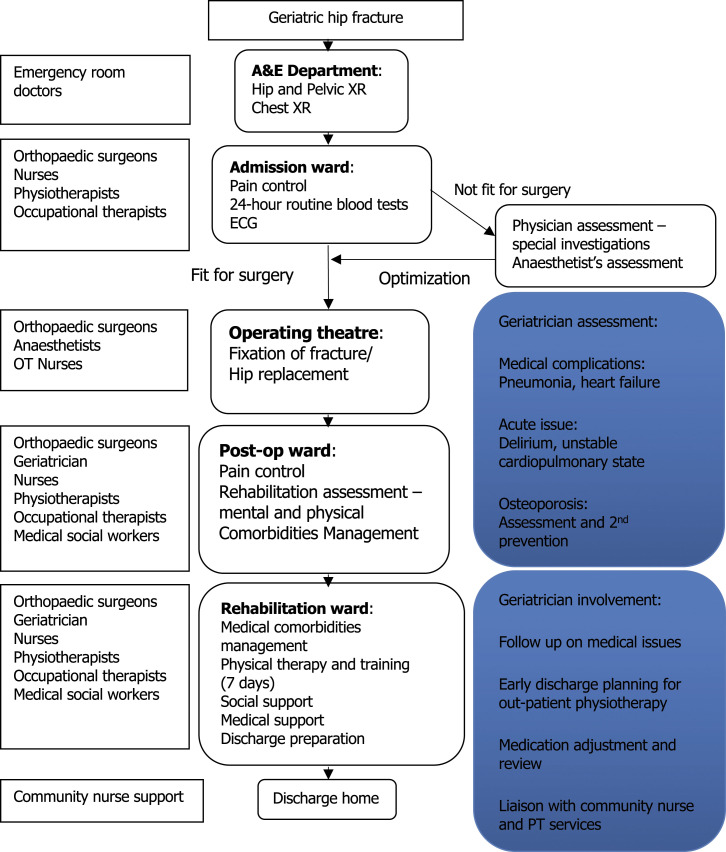
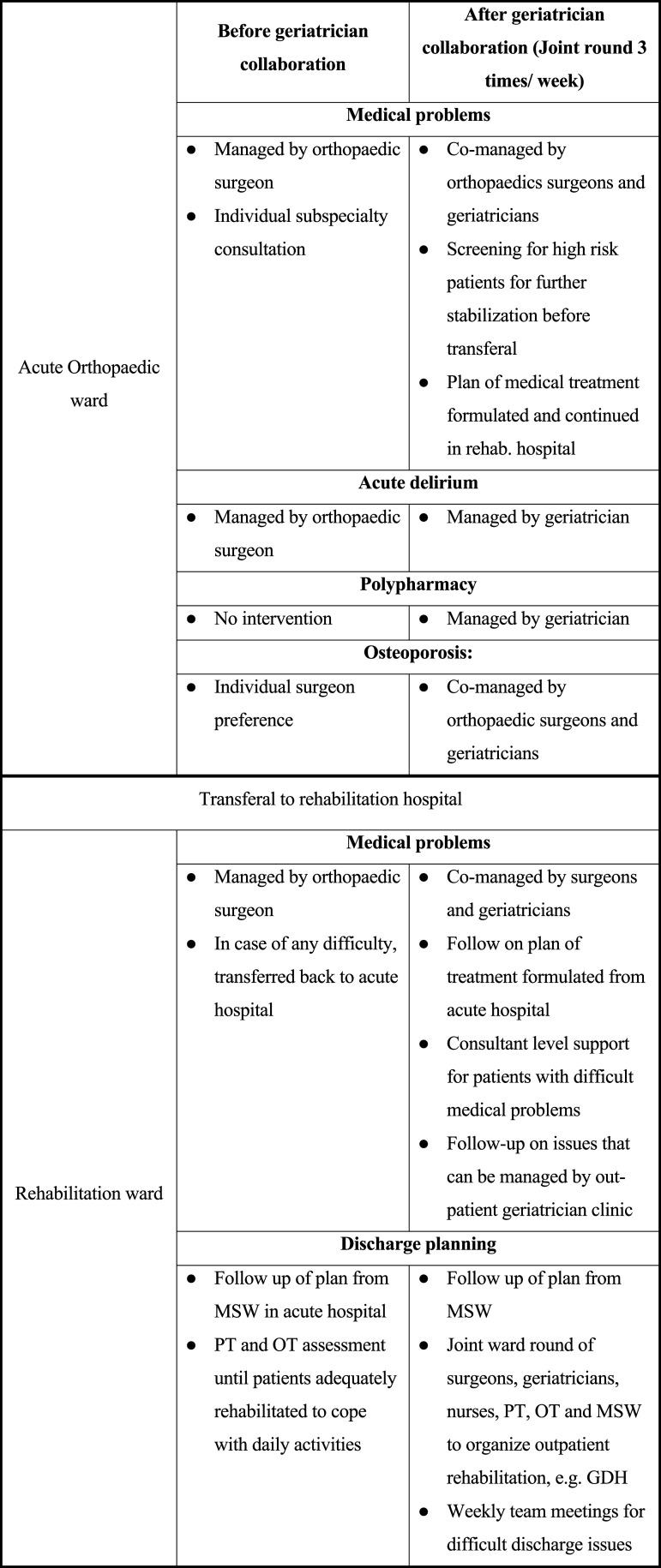
As the global number of geriatric hip fracture cases continues to proliferate, a newly developed orthogeriatric co-management multidisciplinary care model has been implemented since November 2018 to meet further increases in demand. Our objective was to evaluate the effectiveness of the new pathway in improving the clinical outcomes of fragility hip fractures.
The data of geriatric hip fracture patients from 1 April 2018 till 30 October 2018 was collected as the conventional orthopaedic care model (pre-orthogeriatric care model) to compare with data from the orthogeriatric co-management model, 1 Feb 2019 till 31 August 2019. Clinical outcomes were analyzed between the groups, with the efficiency of the programme reflected in the total length of stay in acute and convalescent hospitals.
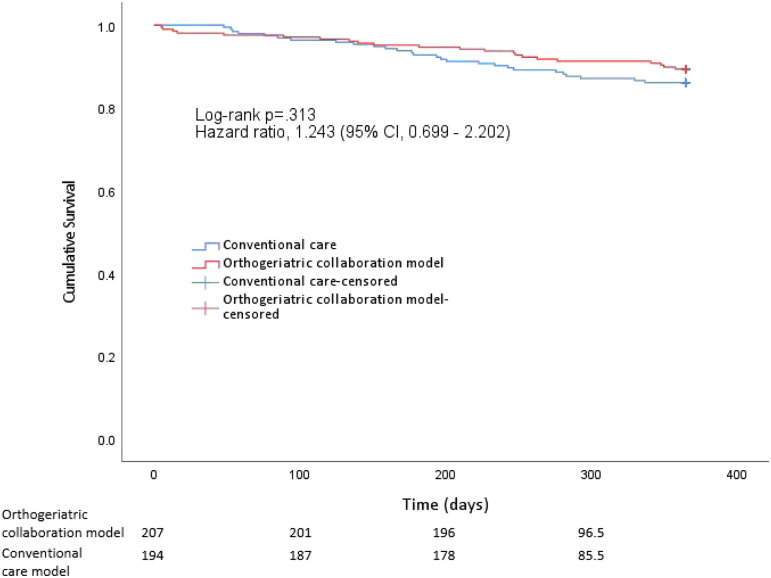
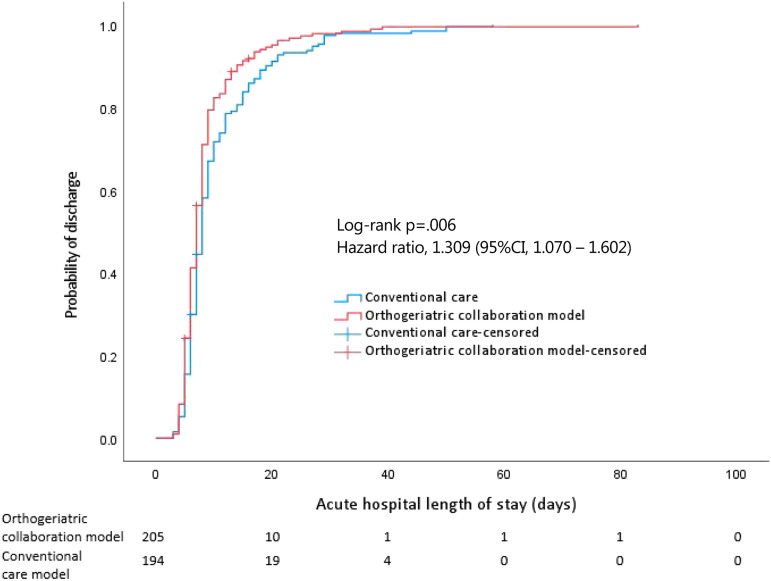
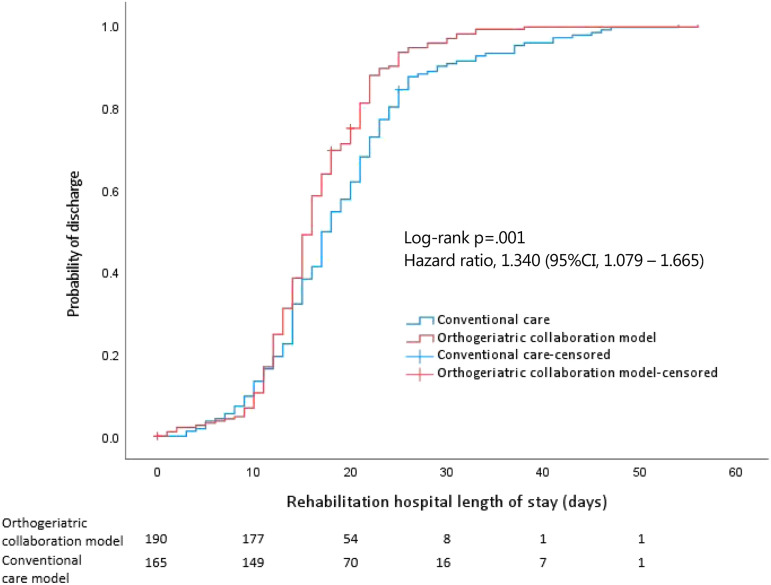
194 patients were recruited to the conventional group and 207 were recruited to the orthogeriatric group, 290 patients (72.3%) were female. The mean (SD) patient age was 84.2 (7.9) years. The median length of stay in the acute and rehabilitation hospitals decreased by 1 day and 2 days, respectively (P=.001). The orthogeriatric group was associated with a higher Modified Barthel Index score on discharge from the rehabilitation hospital and more patients in the orthogeriatric collaboration group received osteoporosis medication prescription within one year after the index fracture. There was no difference in the 28-days unplanned readmission rate, complication rate, mortality rate or Elderly Mobility Scale scores on discharge from the rehabilitation hospital between the two groups.
Orthogeriatric collaboration has been proven to be effective in terms of a decreased length of stay in both the acute and the rehabilitation hospitals.
随着全球老年髋部骨折病例数量持续增加,自2018年11月起实施了一种新开发的老年骨科联合管理多学科护理模式,以满足进一步增长的需求。我们的目的是评估新路径在改善脆性髋部骨折临床结局方面的有效性。
收集2018年4月1日至2018年10月31日老年髋部骨折患者的数据作为传统骨科护理模式(老年骨科护理模式前),与2019年2月1日至2019年8月31日老年骨科联合管理模式的数据进行比较。分析两组之间的临床结局,该项目的效率体现在急性和康复医院的总住院时间上。
传统组招募了194名患者,老年骨科组招募了207名患者,290名患者(72.3%)为女性。患者平均(标准差)年龄为84.2(7.9)岁。急性和康复医院的中位住院时间分别减少了1天和2天(P = 0.001)。老年骨科组在康复医院出院时的改良巴氏指数评分更高,老年骨科协作组中更多患者在索引骨折后一年内接受了骨质疏松症药物处方。两组之间在28天非计划再入院率、并发症发生率、死亡率或康复医院出院时的老年人活动量表评分方面没有差异。
事实证明,老年骨科协作在缩短急性和康复医院的住院时间方面是有效的。