• 文献检索
  • 文档翻译
  • 深度研究
  • 学术资讯
  • Suppr Zotero 插件Zotero 插件
  • 邀请有礼
  • 套餐&价格
  • 历史记录
应用&插件
Suppr Zotero 插件Zotero 插件浏览器插件Mac 客户端Windows 客户端微信小程序
定价
高级版会员购买积分包购买API积分包
服务
文献检索文档翻译深度研究API 文档MCP 服务
关于我们
关于 Suppr公司介绍联系我们用户协议隐私条款
关注我们

Suppr 超能文献

核心技术专利:CN118964589B侵权必究
粤ICP备2023148730 号-1Suppr @ 2026

文献检索

告别复杂PubMed语法,用中文像聊天一样搜索,搜遍4000万医学文献。AI智能推荐,让科研检索更轻松。

立即免费搜索

文件翻译

保留排版,准确专业,支持PDF/Word/PPT等文件格式,支持 12+语言互译。

免费翻译文档

深度研究

AI帮你快速写综述,25分钟生成高质量综述,智能提取关键信息,辅助科研写作。

立即免费体验

胰腺癌中与基因组不稳定相关的长链非编码RNA预后特征的鉴定

Identification of LncRNA Prognostic Signature Associated With Genomic Instability in Pancreatic Adenocarcinoma.

作者信息

Zhu Jinfeng, Huang Qian, Peng Xingyu, Luo Chen, Liu Sicheng, Liu Zitao, Wu Xun, Luo Hongliang

机构信息

Department of General Surgery, The Second Affiliated Hospital of Nanchang University, Nanchang, China.

Jiangxi Province Key Laboratory of Molecular Medicine, Nanchang, China.

出版信息

Front Oncol. 2022 Mar 29;12:799475. doi: 10.3389/fonc.2022.799475. eCollection 2022.

DOI:10.3389/fonc.2022.799475
PMID:35433487
原文链接:https://pmc.ncbi.nlm.nih.gov/articles/PMC9012103/
Abstract

BACKGROUND

Genomic instability (GI) is a critical feature of cancer which plays a key role in the occurrence and development of pancreatic adenocarcinoma (PAAD). Long non-coding RNA (LncRNA) is an emerging prognostic biomarker because it is involved in regulating GI. Recently, researchers used such GI-related LncRNAs (GILncRNAs) to establish a prognostic signature for patients with cancer and helped in predicting the overall prognosis of the patients. However, it is evident that patients with PAAD still lack such prognostic signature constructed with GILncRNA.

METHODS

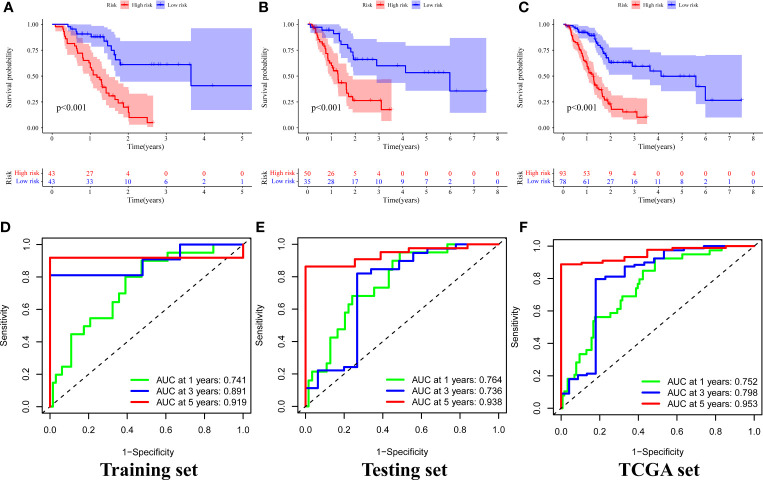
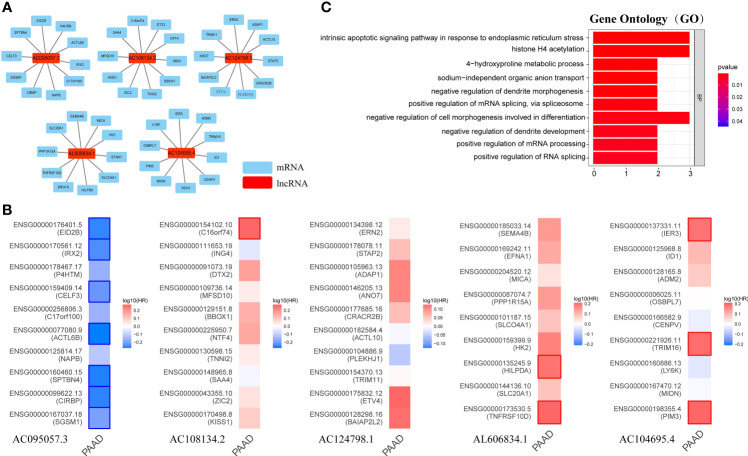
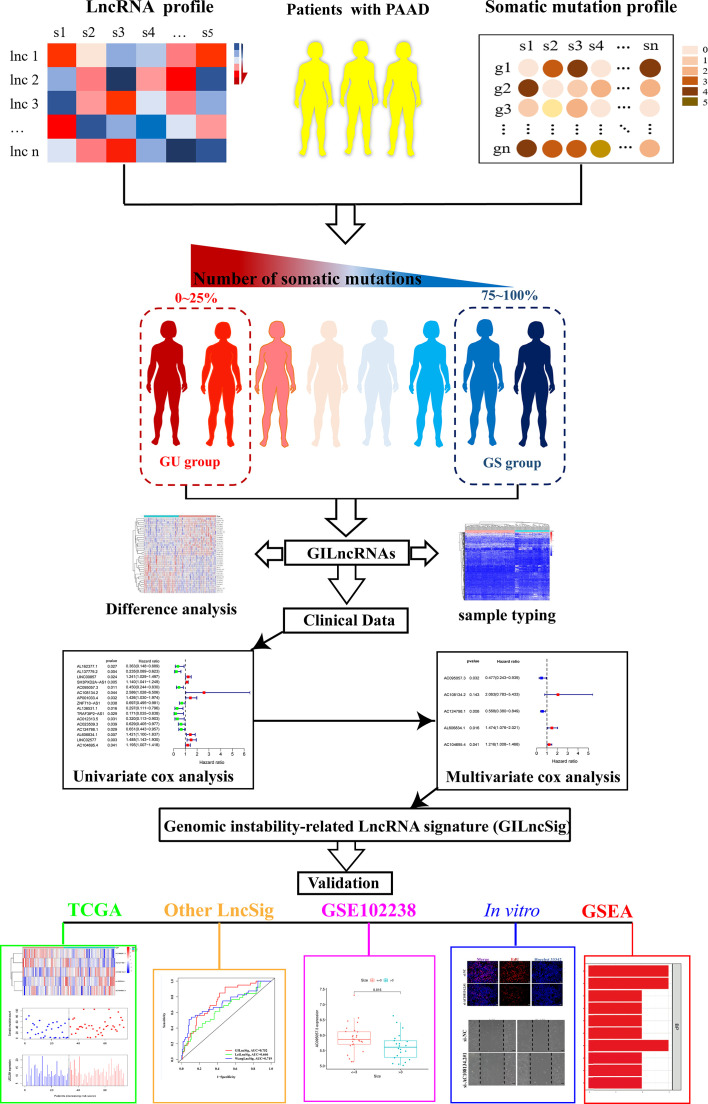
The present study screened GILncRNAs from 83 patients with PAAD. Prognosis-related GILncRNAs were identified by univariate Cox regression analysis. The correlation coefficients of these GILncRNAs were obtained by multivariate Cox regression analysis and used to construct a signature. The signature in the present study was then assessed through survival analysis, mutation correlation analysis, independent prognostic analysis, and clinical stratification analysis in the training set and validated in the testing as well as all TCGA set. The current study performed external clinical relevance validation of the signature and validated the effect of AC108134.2 in GILncSig on PAAD using experiments. Finally, the function of GILncRNA signature (GILncSig) dependent on Gene Ontology enrichment analysis was explored and chemotherapeutic drug sensitivity analysis was also performed.

RESULTS

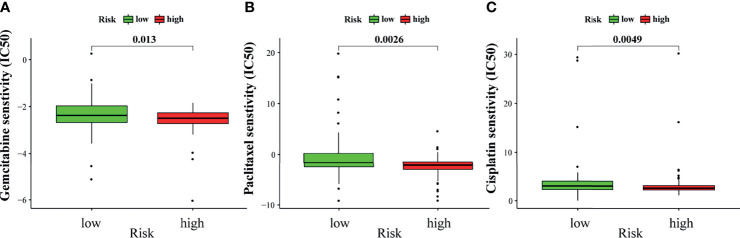
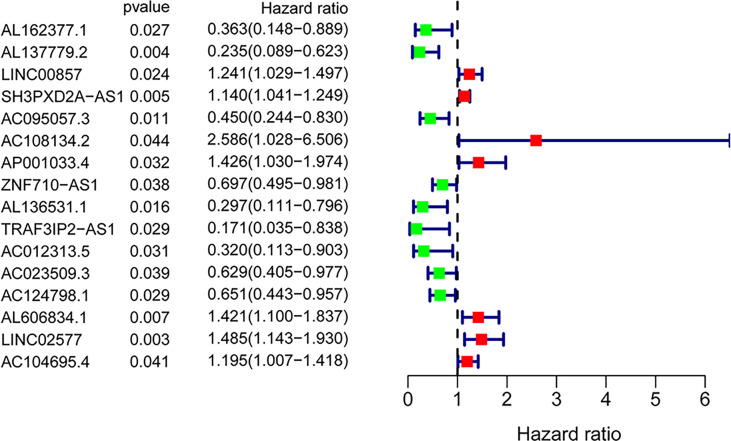
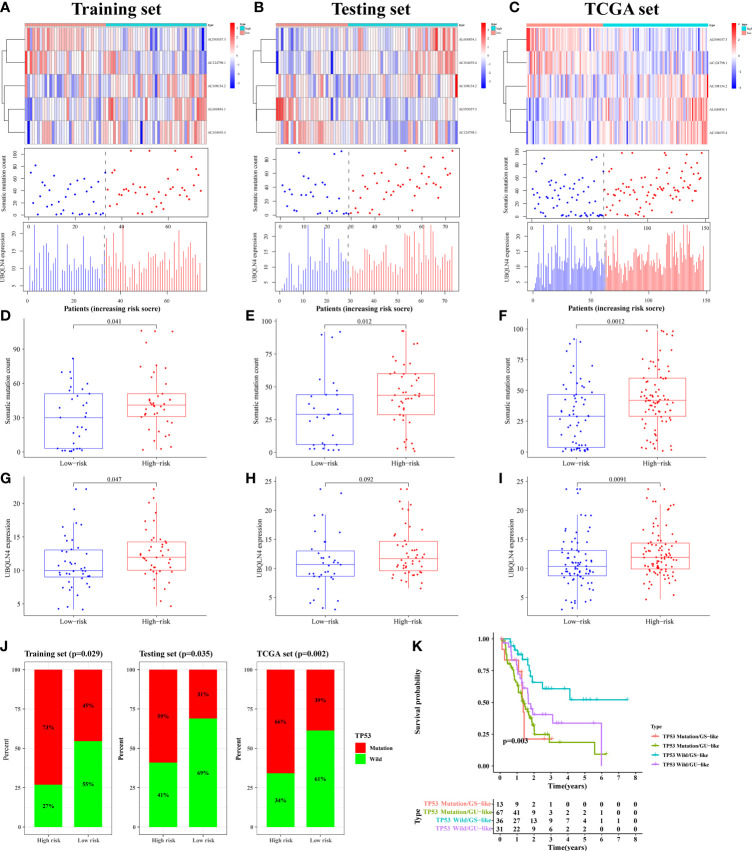
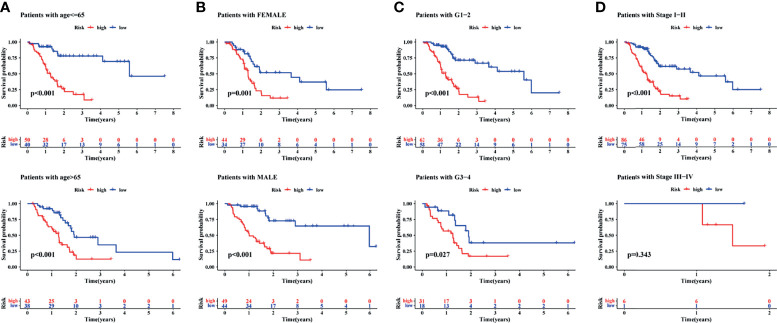
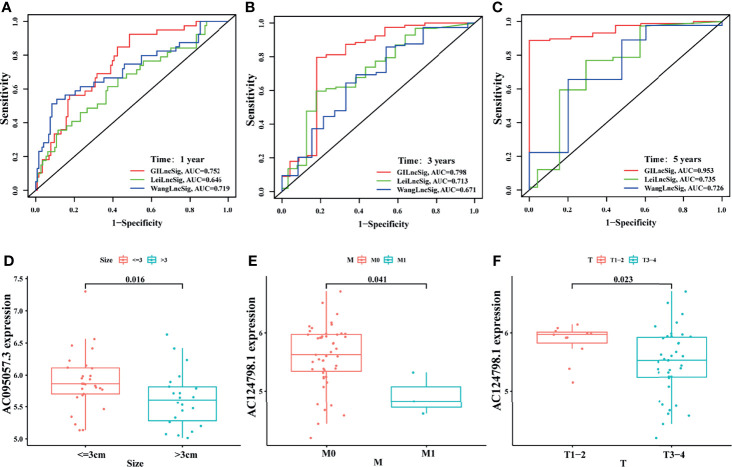
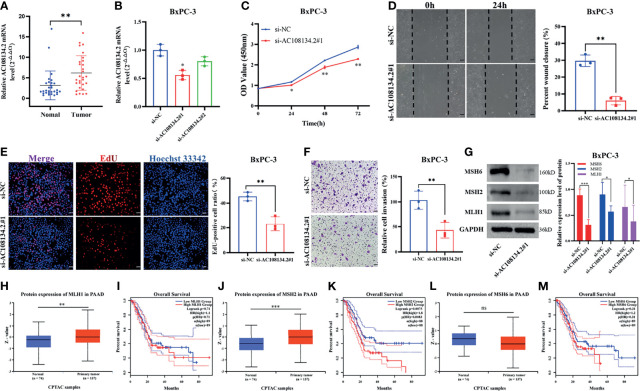
Results of the present study found that a total of 409 GILncRNAs were identified, 5 of which constituted the prognostic risk signature in this study, namely, AC095057.3, AC108134.2, AC124798.1, AL606834.1, and AC104695.4. It was found that the signature of the present study was better than others in predicting the overall survival and applied to patients with PAAD of all ages, genders, and tumor grades. Further, it was noted that the signature of the current study in the GSE102238, was correlated with tumor length, and tumor stage of patients with PAAD. , functional experiments were used in the present study to validate that AC108134.2 is associated with PAAD genomic instability and progression. Notably, results of the pRRophetic analysis in the current study showed that the high-risk group possessed reverse characteristics and was sensitive to chemotherapy.

CONCLUSIONS

In conclusion, it was evident that the GILncSig used in the present study has good prognostic performance. Therefore, the signature may become a potential sensitive biological indicator of PAAD chemotherapy, which may help in clinical decision-making and management of patients with cancer.

摘要

背景

基因组不稳定(GI)是癌症的一个关键特征,在胰腺腺癌(PAAD)的发生和发展中起关键作用。长链非编码RNA(LncRNA)是一种新兴的预后生物标志物,因为它参与调节基因组不稳定。最近,研究人员使用这些与基因组不稳定相关的LncRNA(GILncRNA)为癌症患者建立了一个预后特征,并有助于预测患者的总体预后。然而,显然PAAD患者仍然缺乏用GILncRNA构建的这种预后特征。

方法

本研究从83例PAAD患者中筛选GILncRNA。通过单因素Cox回归分析确定与预后相关的GILncRNA。通过多因素Cox回归分析获得这些GILncRNA的相关系数,并用于构建一个特征。然后在训练集中通过生存分析、突变相关性分析、独立预后分析和临床分层分析对本研究中的特征进行评估,并在测试集以及所有TCGA数据集中进行验证。本研究对该特征进行了外部临床相关性验证,并通过实验验证了AC108134.2在GILncSig中对PAAD的作用。最后,通过基因本体富集分析探索了GILncRNA特征(GILncSig)的功能,并进行了化疗药物敏感性分析。

结果

本研究结果发现,共鉴定出409个GILncRNA,其中5个构成了本研究中的预后风险特征,即AC095057.3、AC108134.2、AC124798.1、AL606834.1和AC104695.4。发现本研究的特征在预测总体生存方面优于其他特征,适用于所有年龄、性别和肿瘤分级的PAAD患者。此外,注意到本研究在GSE102238中的特征与PAAD患者的肿瘤长度和肿瘤分期相关。本研究使用功能实验验证AC108134.2与PAAD基因组不稳定和进展相关。值得注意的是,本研究的pRRophetic分析结果表明,高危组具有相反的特征,对化疗敏感。

结论

总之,显然本研究中使用的GILncSig具有良好的预后性能。因此,该特征可能成为PAAD化疗的一个潜在敏感生物指标,这可能有助于癌症患者的临床决策和管理。
https://cdn.ncbi.nlm.nih.gov/pmc/blobs/348e/9012103/df58279092aa/fonc-12-799475-g010.jpg
https://cdn.ncbi.nlm.nih.gov/pmc/blobs/348e/9012103/f836f1a15992/fonc-12-799475-g001.jpg
https://cdn.ncbi.nlm.nih.gov/pmc/blobs/348e/9012103/aab6661e922a/fonc-12-799475-g002.jpg
https://cdn.ncbi.nlm.nih.gov/pmc/blobs/348e/9012103/c7ccaeed60d0/fonc-12-799475-g003.jpg
https://cdn.ncbi.nlm.nih.gov/pmc/blobs/348e/9012103/29d3fa754a9b/fonc-12-799475-g004.jpg
https://cdn.ncbi.nlm.nih.gov/pmc/blobs/348e/9012103/a538cebd1556/fonc-12-799475-g005.jpg
https://cdn.ncbi.nlm.nih.gov/pmc/blobs/348e/9012103/7e0b61cf1756/fonc-12-799475-g006.jpg
https://cdn.ncbi.nlm.nih.gov/pmc/blobs/348e/9012103/f3e921b6796c/fonc-12-799475-g007.jpg
https://cdn.ncbi.nlm.nih.gov/pmc/blobs/348e/9012103/501d1d68a824/fonc-12-799475-g008.jpg
https://cdn.ncbi.nlm.nih.gov/pmc/blobs/348e/9012103/93905d501442/fonc-12-799475-g009.jpg
https://cdn.ncbi.nlm.nih.gov/pmc/blobs/348e/9012103/df58279092aa/fonc-12-799475-g010.jpg
https://cdn.ncbi.nlm.nih.gov/pmc/blobs/348e/9012103/f836f1a15992/fonc-12-799475-g001.jpg
https://cdn.ncbi.nlm.nih.gov/pmc/blobs/348e/9012103/aab6661e922a/fonc-12-799475-g002.jpg
https://cdn.ncbi.nlm.nih.gov/pmc/blobs/348e/9012103/c7ccaeed60d0/fonc-12-799475-g003.jpg
https://cdn.ncbi.nlm.nih.gov/pmc/blobs/348e/9012103/29d3fa754a9b/fonc-12-799475-g004.jpg
https://cdn.ncbi.nlm.nih.gov/pmc/blobs/348e/9012103/a538cebd1556/fonc-12-799475-g005.jpg
https://cdn.ncbi.nlm.nih.gov/pmc/blobs/348e/9012103/7e0b61cf1756/fonc-12-799475-g006.jpg
https://cdn.ncbi.nlm.nih.gov/pmc/blobs/348e/9012103/f3e921b6796c/fonc-12-799475-g007.jpg
https://cdn.ncbi.nlm.nih.gov/pmc/blobs/348e/9012103/501d1d68a824/fonc-12-799475-g008.jpg
https://cdn.ncbi.nlm.nih.gov/pmc/blobs/348e/9012103/93905d501442/fonc-12-799475-g009.jpg
https://cdn.ncbi.nlm.nih.gov/pmc/blobs/348e/9012103/df58279092aa/fonc-12-799475-g010.jpg

相似文献

1
Identification of LncRNA Prognostic Signature Associated With Genomic Instability in Pancreatic Adenocarcinoma.胰腺癌中与基因组不稳定相关的长链非编码RNA预后特征的鉴定
Front Oncol. 2022 Mar 29;12:799475. doi: 10.3389/fonc.2022.799475. eCollection 2022.
2
Construction of a Novel LncRNA Signature Related to Genomic Instability to Predict the Prognosis and Immune Activity of Patients With Hepatocellular Carcinoma.构建与基因组不稳定性相关的新型长链非编码 RNA 标志物,预测肝细胞癌患者的预后和免疫活性。
Front Immunol. 2022 Apr 8;13:856186. doi: 10.3389/fimmu.2022.856186. eCollection 2022.
3
Calculated identification of mutator-derived lncRNA signatures of genomic instability to predict the clinical outcome of muscle-invasive bladder cancer.通过计算鉴定基因组不稳定的突变体衍生lncRNA特征以预测肌肉浸润性膀胱癌的临床结果。
Cancer Cell Int. 2021 Sep 8;21(1):476. doi: 10.1186/s12935-021-02185-3.
4
Genome instability-related LINC02577, LINC01133 and AC107464.2 are lncRNA prognostic markers correlated with immune microenvironment in pancreatic adenocarcinoma.基因组不稳定性相关 LINC02577、LINC01133 和 AC107464.2 是与胰腺腺癌免疫微环境相关的长链非编码 RNA 预后标志物。
BMC Cancer. 2023 May 12;23(1):430. doi: 10.1186/s12885-023-10831-4.
5
Construction of a genome instability-derived lncRNA-based risk scoring system for the prognosis of hepatocellular carcinoma.构建基于基因组不稳定性的 lncRNA 风险评分系统用于预测肝细胞癌的预后。
Aging (Albany NY). 2021 Nov 18;13(22):24621-24639. doi: 10.18632/aging.203698.
6
Identification of a Four Cancer Stem Cell-Related Gene Signature and Establishment of a Prognostic Nomogram Predicting Overall Survival of Pancreatic Adenocarcinoma.鉴定四个与癌症干细胞相关的基因特征,并建立一个预测胰腺腺癌总生存的预后列线图。
Comb Chem High Throughput Screen. 2022;25(12):2070-2081. doi: 10.2174/1386207325666220113142212.
7
Development and Validation of an Inflammatory Response-Related Gene Signature for Predicting the Prognosis of Pancreatic Adenocarcinoma.用于预测胰腺腺癌预后的炎症反应相关基因特征的开发与验证
Inflammation. 2022 Aug;45(4):1732-1751. doi: 10.1007/s10753-022-01657-6. Epub 2022 Mar 23.
8
PANoptosis-related long non-coding RNA signature to predict the prognosis and immune landscapes of pancreatic adenocarcinoma.用于预测胰腺腺癌预后和免疫格局的PANoptosis相关长链非编码RNA特征
Biochem Biophys Rep. 2023 Dec 7;37:101600. doi: 10.1016/j.bbrep.2023.101600. eCollection 2024 Mar.
9
Development and validation of a novel N6-methyladenosine (m6A)-related multi- long non-coding RNA (lncRNA) prognostic signature in pancreatic adenocarcinoma.开发并验证一种新型的 N6-甲基腺苷(m6A)相关多长非编码 RNA(lncRNA)在胰腺腺癌中的预后标志物。
Bioengineered. 2021 Dec;12(1):2432-2448. doi: 10.1080/21655979.2021.1933868.
10
Identification and Validation of a Novel Genomic Instability-Associated Long Non-Coding RNA Prognostic Signature in Head and Neck Squamous Cell Carcinoma.头颈部鳞状细胞癌中一种新型基因组不稳定相关长链非编码RNA预后特征的鉴定与验证
Front Cell Dev Biol. 2022 Jan 20;9:787766. doi: 10.3389/fcell.2021.787766. eCollection 2021.

引用本文的文献

1
LncRNAs regulates cell death in osteosarcoma.长链非编码RNA在骨肉瘤中调节细胞死亡。
Sci Rep. 2025 Jul 2;15(1):22592. doi: 10.1038/s41598-025-04440-3.
2
Cuproptosis-Related lncRNA Predict Prognosis and Immune Response of LUAD.铜死亡相关长链非编码RNA预测肺腺癌的预后和免疫反应
Pharmgenomics Pers Med. 2024 Jun 25;17:319-336. doi: 10.2147/PGPM.S452625. eCollection 2024.
3
A disulfidptosis-related lncRNA signature for predicting prognosis and evaluating the tumor immune microenvironment of lung adenocarcinoma.一个与二硫键错配相关的 lncRNA 标志物,用于预测肺腺癌的预后和评估肿瘤免疫微环境。

本文引用的文献

1
Epigenetic regulation of triple negative breast cancer (TNBC) by TGF-β signaling.TGF-β 信号对三阴性乳腺癌(TNBC)的表观遗传调控。
Sci Rep. 2021 Jul 29;11(1):15410. doi: 10.1038/s41598-021-94514-9.
2
Construction of a novel risk model based on the random forest algorithm to distinguish pancreatic cancers with different prognoses and immune microenvironment features.基于随机森林算法构建一种新型风险模型,以区分具有不同预后和免疫微环境特征的胰腺癌。
Bioengineered. 2021 Dec;12(1):3593-3602. doi: 10.1080/21655979.2021.1951527.
3
Identification of a Genome Instability-Associated LncRNA Signature for Prognosis Prediction in Colon Cancer.
Sci Rep. 2024 Feb 26;14(1):4621. doi: 10.1038/s41598-024-55201-7.
4
Integrating bioinformatics and experimental validation to unveil disulfidptosis-related lncRNAs as prognostic biomarker and therapeutic target in hepatocellular carcinoma.整合生物信息学与实验验证以揭示与二硫键连接的细胞焦亡相关的长链非编码RNA作为肝细胞癌的预后生物标志物和治疗靶点
Cancer Cell Int. 2024 Jan 13;24(1):30. doi: 10.1186/s12935-023-03208-x.
5
An endoplasmic reticulum stress-related signature could robustly predict prognosis and closely associate with response to immunotherapy in pancreatic ductal adenocarcinoma.内质网应激相关特征可准确预测胰腺癌患者预后,并与免疫治疗反应密切相关。
J Cancer Res Clin Oncol. 2023 Nov;149(17):15589-15608. doi: 10.1007/s00432-023-05312-x. Epub 2023 Aug 31.
6
Pan-cancer analysis of Krüppel-like factor 3 and its carcinogenesis in pancreatic cancer.泛癌症分析 Krüppel 样因子 3 及其在胰腺癌中的致癌作用。
Front Immunol. 2023 Aug 3;14:1167018. doi: 10.3389/fimmu.2023.1167018. eCollection 2023.
7
Establishment and validation of a ubiquitination-related gene signature associated with prognosis in pancreatic duct adenocarcinoma.建立和验证与胰腺导管腺癌预后相关的泛素化相关基因特征。
Front Immunol. 2023 Jun 9;14:1171811. doi: 10.3389/fimmu.2023.1171811. eCollection 2023.
8
Construction of a prognostic model for HCC based on ferroptosis-related lncRNAs expression and its potential to predict the response and irAEs of immunotherapy.基于铁死亡相关长链非编码RNA表达构建肝癌预后模型及其预测免疫治疗反应和免疫相关不良反应的潜力。
Front Pharmacol. 2023 Mar 13;14:1090895. doi: 10.3389/fphar.2023.1090895. eCollection 2023.
9
Construction and comprehensive analysis of a novel prognostic signature associated with pyroptosis molecular subtypes in patients with pancreatic adenocarcinoma.构建并综合分析与胰腺腺癌 pyroptosis 分子亚型相关的新型预后标志物。
Front Immunol. 2023 Feb 3;14:1111494. doi: 10.3389/fimmu.2023.1111494. eCollection 2023.
10
Construction of a cancer-associated fibroblasts-related long non-coding RNA signature to predict prognosis and immune landscape in pancreatic adenocarcinoma.构建与癌症相关成纤维细胞相关的长链非编码RNA特征以预测胰腺腺癌的预后和免疫格局
Front Genet. 2022 Sep 23;13:989719. doi: 10.3389/fgene.2022.989719. eCollection 2022.
用于结肠癌预后预测的基因组不稳定相关长链非编码RNA特征的鉴定
Front Genet. 2021 Jun 7;12:679150. doi: 10.3389/fgene.2021.679150. eCollection 2021.
4
Gene Instability-Related lncRNA Prognostic Model of Melanoma Patients via Machine Learning Strategy.基于机器学习策略的黑色素瘤患者基因不稳定相关lncRNA预后模型
J Oncol. 2021 May 25;2021:5582920. doi: 10.1155/2021/5582920. eCollection 2021.
5
Development and Interpretation of a Genomic Instability Derived lncRNAs Based Risk Signature as a Predictor of Prognosis for Clear Cell Renal Cell Carcinoma Patients.基于基因组不稳定性衍生的长链非编码RNA构建风险特征用于预测透明细胞肾细胞癌患者预后的研究及解读
Front Oncol. 2021 May 21;11:678253. doi: 10.3389/fonc.2021.678253. eCollection 2021.
6
Identification and validation of a novel eight mutant-derived long non-coding RNAs signature as a prognostic biomarker for genome instability in low-grade glioma.鉴定和验证一种新型的八个突变衍生的长非编码 RNA 特征作为低级别胶质瘤基因组不稳定性的预后生物标志物。
Aging (Albany NY). 2021 Jun 3;13(11):15164-15192. doi: 10.18632/aging.203079.
7
Prediction of bladder cancer outcome by identifying and validating a mutation-derived genomic instability-associated long noncoding RNA (lncRNA) signature.通过鉴定和验证与基因突变相关的基因组不稳定性的长链非编码 RNA(lncRNA)特征来预测膀胱癌的预后。
Bioengineered. 2021 Dec;12(1):1725-1738. doi: 10.1080/21655979.2021.1924555.
8
Identification of the Prognostic Significance of Somatic Mutation-Derived LncRNA Signatures of Genomic Instability in Lung Adenocarcinoma.肺腺癌中基因组不稳定的体细胞突变衍生lncRNA特征的预后意义鉴定
Front Cell Dev Biol. 2021 Mar 29;9:657667. doi: 10.3389/fcell.2021.657667. eCollection 2021.
9
The long noncoding RNA CRYBG3 induces aneuploidy by interfering with spindle assembly checkpoint via direct binding with Bub3.长非编码 RNA CRYBG3 通过与 Bub3 直接结合干扰纺锤体组装检查点诱导非整倍体。
Oncogene. 2021 Mar;40(10):1821-1835. doi: 10.1038/s41388-020-01601-8. Epub 2021 Feb 9.
10
An epithelial-mesenchymal transition-related long non-coding RNA signature to predict overall survival and immune microenvironment in kidney renal clear cell carcinoma.一个上皮-间充质转化相关的长非编码 RNA 标志物,用于预测肾透明细胞癌患者的总生存期和免疫微环境。
Bioengineered. 2021 Dec;12(1):555-564. doi: 10.1080/21655979.2021.1880718.