Yang Huiying, Xiong Xiaoling, Li Hua
Department of Nephrology, Sir Run Run Shaw Hospital, Zhejiang University School of Medicine, Hangzhou, China.
Front Oncol. 2021 May 21;11:678253. doi: 10.3389/fonc.2021.678253. eCollection 2021.
Clear cell renal cell carcinoma (ccRCC) is a kind of frequently diagnosed cancer, leading to high death rate in patients. Genomic instability (GI) is regarded as playing indispensable roles in tumorigenesis and impacting the prognosis of patients. The aberrant regulation of long non-coding RNAs (lncRNAs) is a main cause of GI. We combined the somatic mutation profiles and expression profiles to identify GI derived lncRNAs (GID-lncRNAs) in ccRCC and developed a GID-lncRNAs based risk signature for prognosis prediction and medication guidance.
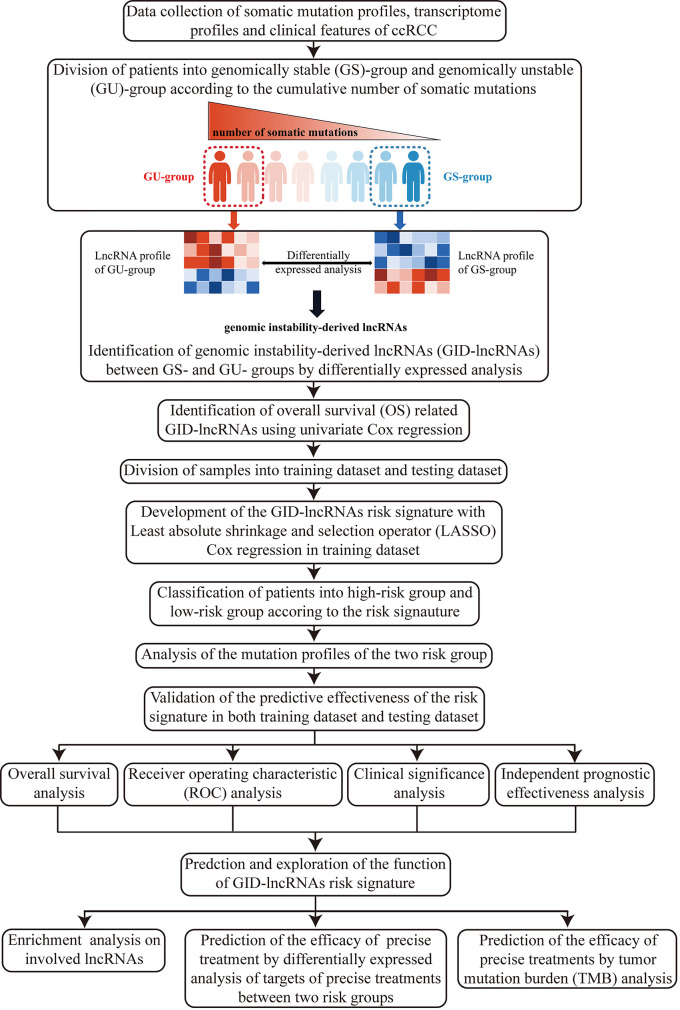
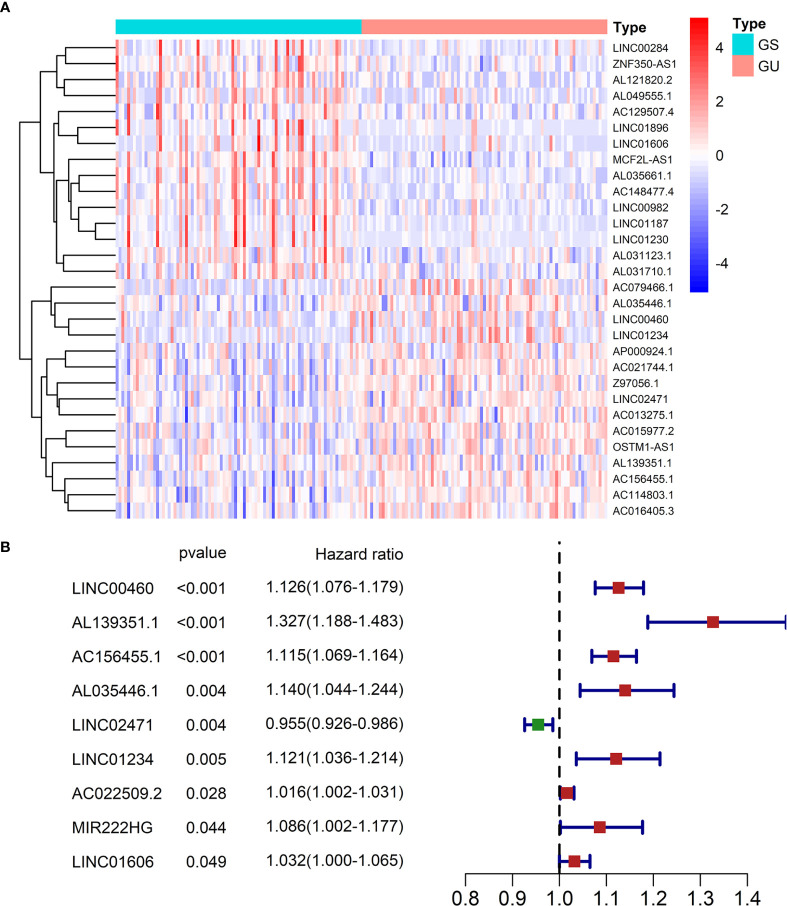
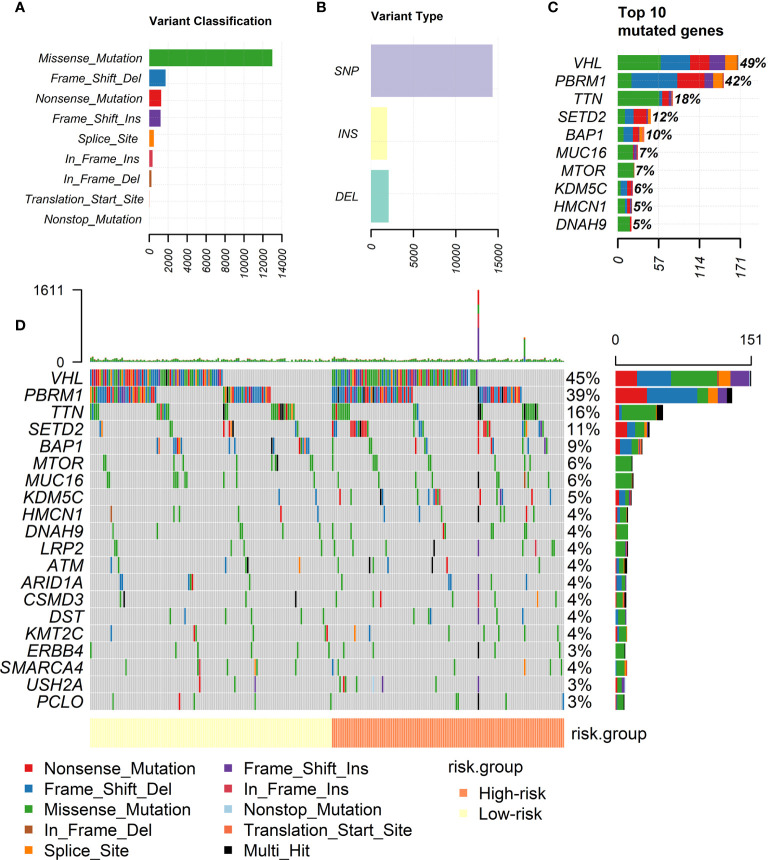
We decided cases with top 25% cumulative number of somatic mutations as genomically unstable (GU) group and last 25% as genomically stable (GS) group, and identified differentially expressed lncRNAs (GID-lncRNAs) between two groups. Then we developed the risk signature with all overall survival related GID-lncRNAs with least absolute shrinkage and selection operator (LASSO) Cox regression. The functions of the GID-lncRNAs were partly interpreted by enrichment analysis. We finally validated the effectiveness of the risk signature in prognosis prediction and medication guidance.
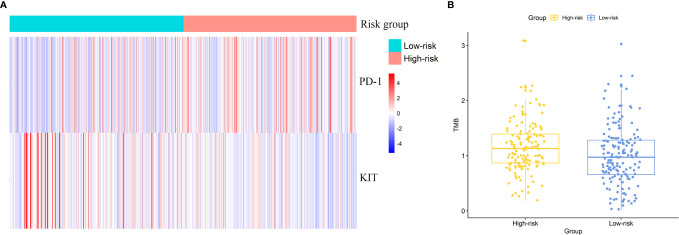
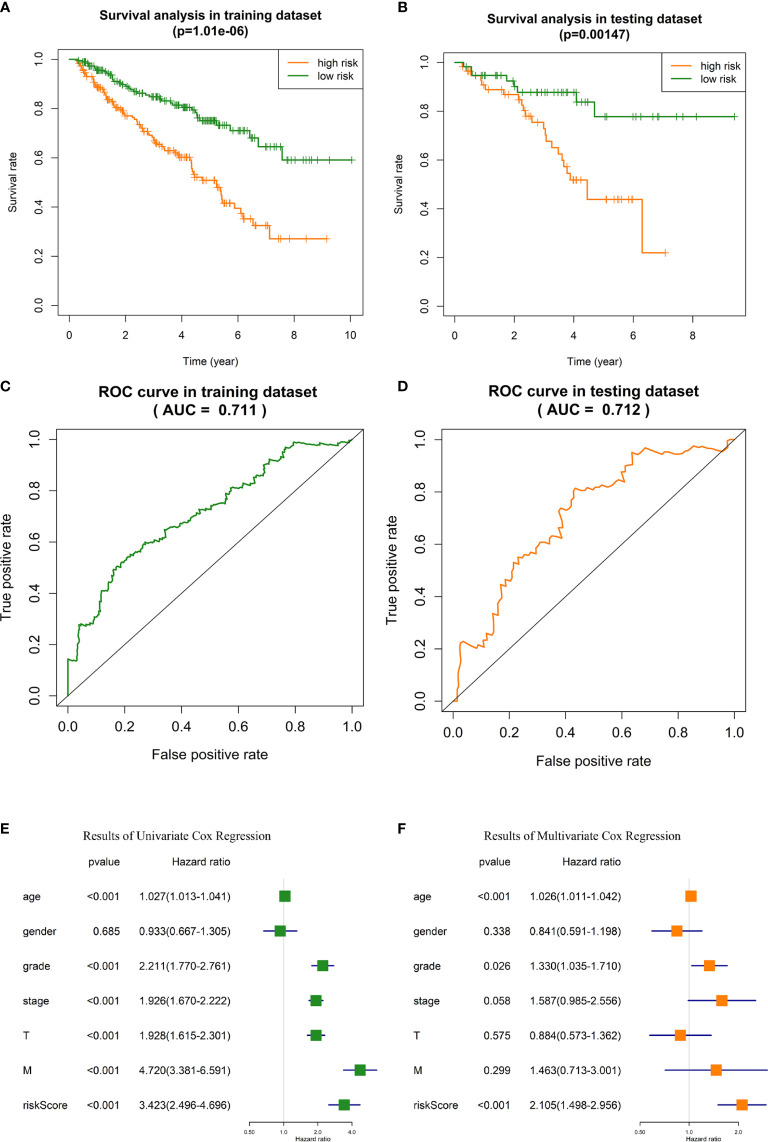
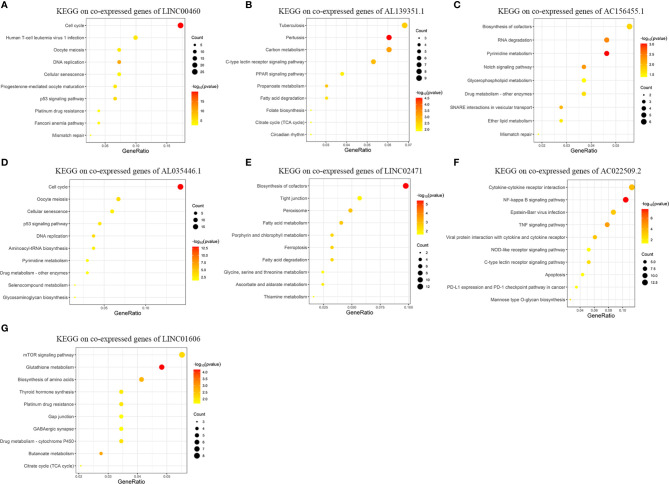
We developed a seven-lncRNAs (, , , , , and ) risk signature and divided all samples into high-risk and low-risk groups. Patients in high-risk group were in more severe clinicopathologic status (higher tumor grade, pathological stage, T stage, and more metastasis) and were deemed to have less survival time and lower survival rate. The efficacy of prognosis prediction was validated by receiver operating characteristic analysis. Enrichment analysis revealed that the lncRNAs in the risk signature mainly participate in regulation of cell cycle, DNA replication, material metabolism, and other vital biological processes in the tumorigenesis of ccRCC. Moreover, the risk signature could help assess the possibility of response to precise treatments.
Our study combined the somatic mutation profiles and the expression profiles of ccRCC for the first time and developed a GID-lncRNAs based risk signature for prognosis predicting and therapeutic scheme deciding. We validated the efficacy of the risk signature and partly interpreted the roles of the seven lncRNAs composing the risk signature in ccRCC. Our study provides novel insights into the roles of genomic instability derived lncRNAs in ccRCC.
透明细胞肾细胞癌(ccRCC)是一种常见的确诊癌症,导致患者死亡率较高。基因组不稳定性(GI)被认为在肿瘤发生中起不可或缺的作用,并影响患者的预后。长链非编码RNA(lncRNA)的异常调控是GI的主要原因。我们结合体细胞突变谱和表达谱,以鉴定ccRCC中源自基因组不稳定性的lncRNA(GID-lncRNA),并开发了一种基于GID-lncRNA的风险特征用于预后预测和用药指导。
我们将体细胞突变累积数量排名前25%的病例确定为基因组不稳定(GU)组,后25%的病例确定为基因组稳定(GS)组,并鉴定两组之间差异表达的lncRNA(GID-lncRNA)。然后,我们使用最小绝对收缩和选择算子(LASSO)Cox回归,利用所有与总生存相关的GID-lncRNA开发风险特征。通过富集分析部分解释了GID-lncRNA的功能。我们最终验证了风险特征在预后预测和用药指导方面的有效性。
我们开发了一种由7个lncRNA(、、、、、和)组成的风险特征,并将所有样本分为高风险组和低风险组。高风险组患者的临床病理状态更严重(肿瘤分级、病理分期、T分期更高,转移更多),且生存时间更短,生存率更低。通过受试者工作特征分析验证了预后预测的有效性。富集分析显示,风险特征中的lncRNA主要参与ccRCC肿瘤发生过程中细胞周期、DNA复制、物质代谢等重要生物学过程的调控。此外,风险特征有助于评估对精准治疗反应的可能性。
我们的研究首次结合了ccRCC的体细胞突变谱和表达谱,开发了一种基于GID-lncRNA的风险特征用于预后预测和治疗方案决策。我们验证了风险特征的有效性,并部分解释了构成风险特征的7个lncRNA在ccRCC中的作用。我们的研究为基因组不稳定性衍生的lncRNA在ccRCC中的作用提供了新的见解。