Xu Lixia, Chen Shu, Li Qiaoqiao, Chen Xinyi, Xu Yuan, Zhou Yongjian, Li Juan, Guo Zhixian, Xing Jiyuan, Chen Di
Department of Infectious Diseases, The First Affiliated Hospital of Zhengzhou University, Zhengzhou, Henan, 450052, China.
School of Basic Medical Sciences, Xinxiang Medical University, Xinxiang, Henan, 453003, China.
Cancer Cell Int. 2024 Jan 13;24(1):30. doi: 10.1186/s12935-023-03208-x.
Hepatocellular carcinoma (HCC) stands as a prevalent malignancy globally, characterized by significant morbidity and mortality. Despite continuous advancements in the treatment of HCC, the prognosis of patients with this cancer remains unsatisfactory. This study aims at constructing a disulfidoptosis‑related long noncoding RNA (lncRNA) signature to probe the prognosis and personalized treatment of patients with HCC.
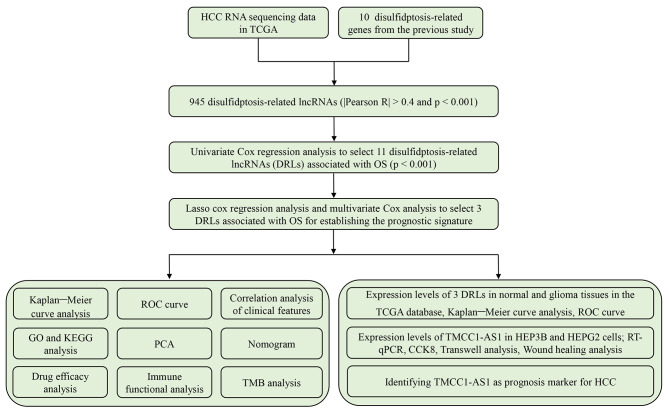
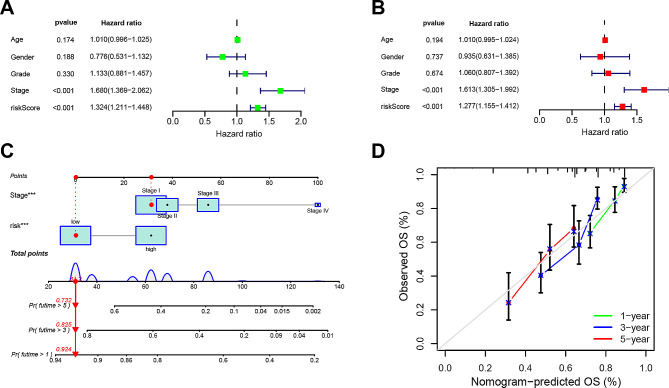
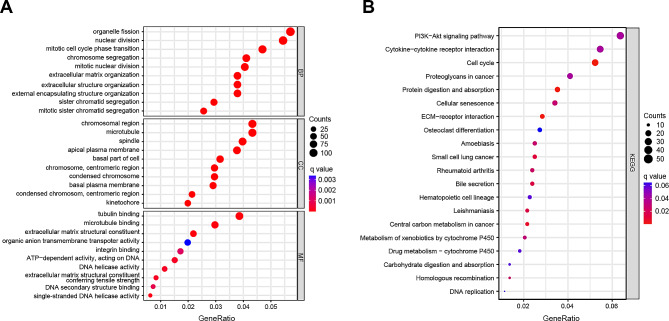
The data of patients with HCC were extracted from The Cancer Genome Atlas (TCGA) databases. Univariate, multivariate, and least absolute selection operator Cox regression analyses were performed to build a disulfidptosis-related lncRNAs (DRLs) signature. Kaplan-Meier plots were used to evaluate the prognosis of the patients with HCC. Functional enrichment analysis was used to identify key DRLs-associated signaling pathways. Spearman's rank correlation was used to elucidate the association between the DRLs signature and immune microenvironment. The function of TMCC1-AS1 in HCC was validated in two HCC cell lines (HEP3B and HEPG2).
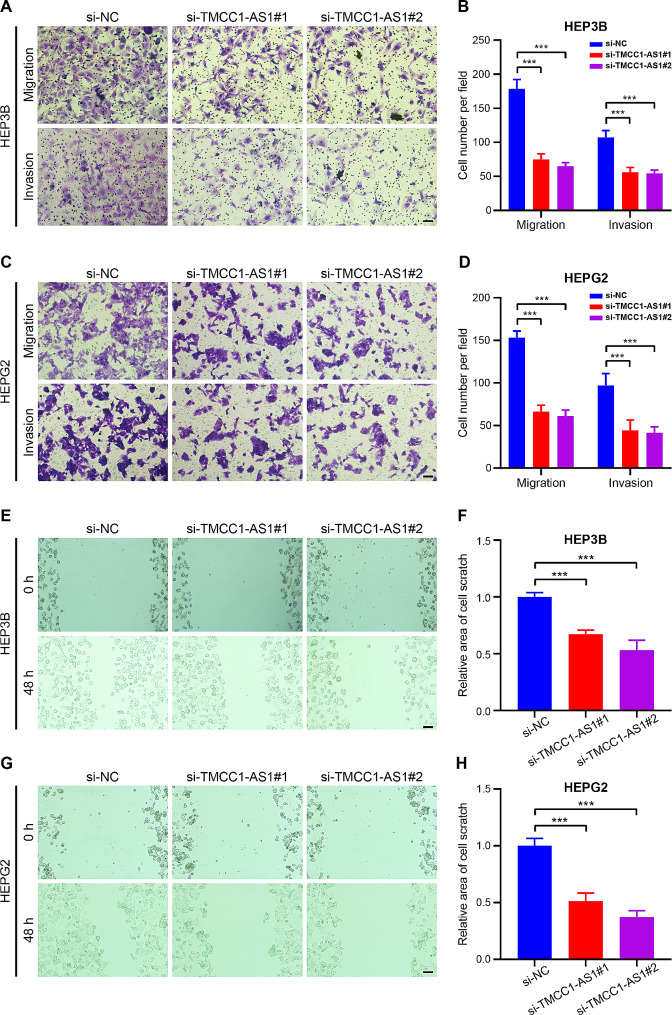
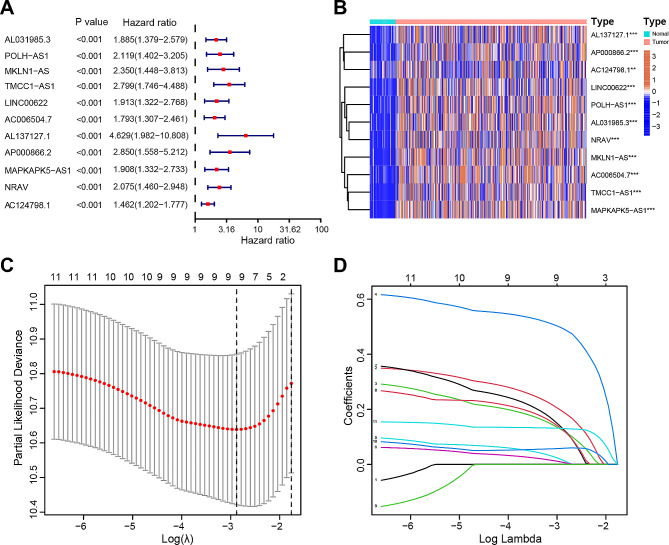
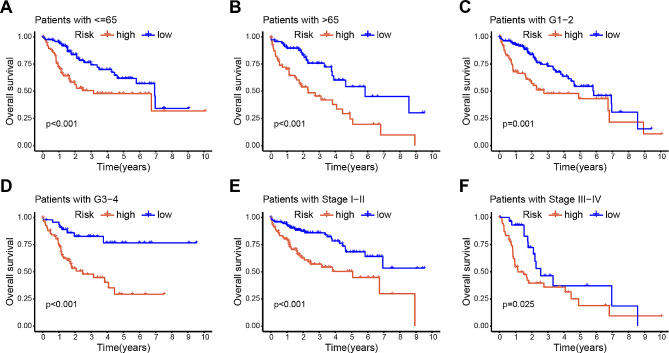
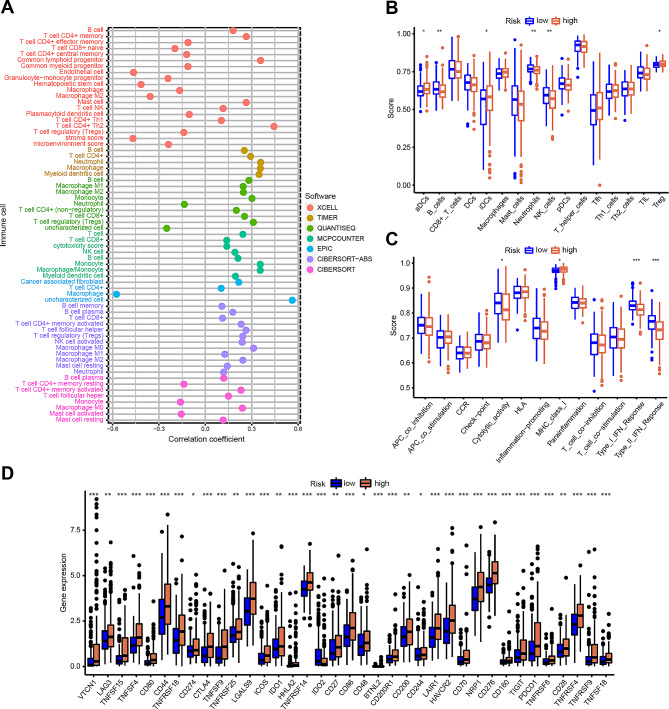
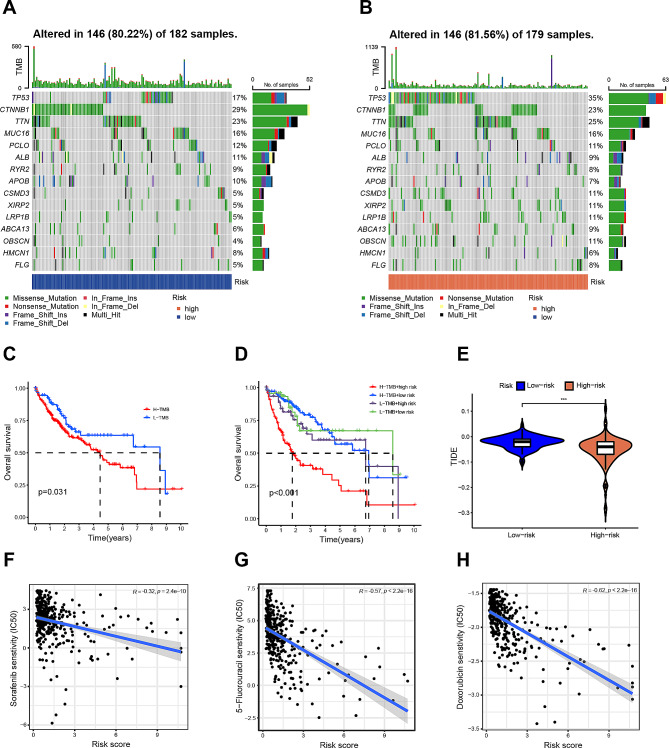
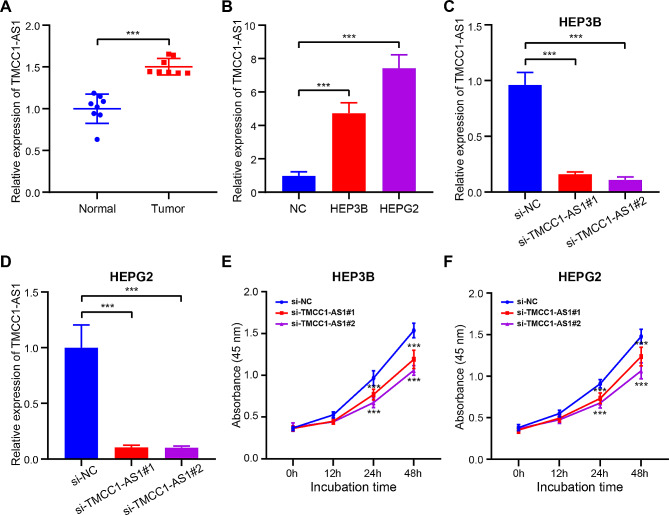
We identified 11 prognostic DRLs from the TCGA dataset, three of which were selected to construct the prognostic signature of DRLs. We found that the survival time of low-risk patients was considerably longer than that of high-risk patients. We further observed that the composition and the function of immune cell subpopulations were significantly different between high- and low-risk groups. Additionally, we identified that sorafenib, 5-Fluorouracil, and doxorubicin displayed better responses in the low-score group than those in the high-score group, based on IC50 values. Finally, we confirmed that inhibition of TMCC1-AS1 impeded the proliferation, migration, and invasion of hepatocellular carcinoma cells.
The DRL signatures have been shown to be a reliable prognostic and treatment response indicator in HCC patients. TMCC1-AS1 showed potential as a novel prognostic biomarker and therapeutic target for HCC.
肝细胞癌(HCC)是全球范围内一种常见的恶性肿瘤,具有较高的发病率和死亡率。尽管HCC治疗不断取得进展,但该癌症患者的预后仍不尽人意。本研究旨在构建一种与二硫键凋亡相关的长链非编码RNA(lncRNA)特征,以探究HCC患者的预后及个性化治疗。
从癌症基因组图谱(TCGA)数据库中提取HCC患者的数据。进行单因素、多因素及最小绝对收缩和选择算子Cox回归分析,以构建与二硫键凋亡相关的lncRNAs(DRLs)特征。采用Kaplan-Meier曲线评估HCC患者的预后。功能富集分析用于识别与关键DRLs相关的信号通路。Spearman等级相关性分析用于阐明DRLs特征与免疫微环境之间的关联。在两种HCC细胞系(HEP3B和HEPG2)中验证TMCC1-AS1在HCC中的功能。
我们从TCGA数据集中鉴定出11个预后DRLs,其中3个被选来构建DRLs的预后特征。我们发现低风险患者的生存时间明显长于高风险患者。我们进一步观察到高风险组和低风险组之间免疫细胞亚群的组成和功能存在显著差异。此外,基于IC50值,我们发现索拉非尼、5-氟尿嘧啶和阿霉素在低分患者组中的反应比高分患者组更好。最后,我们证实抑制TMCC1-AS1可阻碍肝癌细胞的增殖、迁移和侵袭。
DRLs特征已被证明是HCC患者可靠的预后和治疗反应指标。TMCC1-AS1显示出作为HCC新型预后生物标志物和治疗靶点的潜力。