Cellular Network and Molecular Therapeutic Target Unit, IRCCS Regina Elena National Cancer Institute, Via Elio Chianesi 53, 00144, Rome, Italy.
Department of Pathology, IRCCS Regina Elena National Cancer Institute, Rome, Italy.
J Exp Clin Cancer Res. 2022 Apr 19;41(1):148. doi: 10.1186/s13046-022-02354-w.
Despite the promise of dual BRAF/MEK inhibition as a therapy for BRAF-mutant (BRAF-mut) melanoma, heterogeneous responses have been observed in patients, thus predictors of benefit from therapy are needed. We have previously identified semaphorin 6A (SEMA6A) as a BRAF-mut-associated protein involved in actin cytoskeleton remodeling. The purpose of the present study is to dissect the role of SEMA6A in the biology of BRAF-mut melanoma, and to explore its predictive potential towards dual BRAF/MEK inhibition.
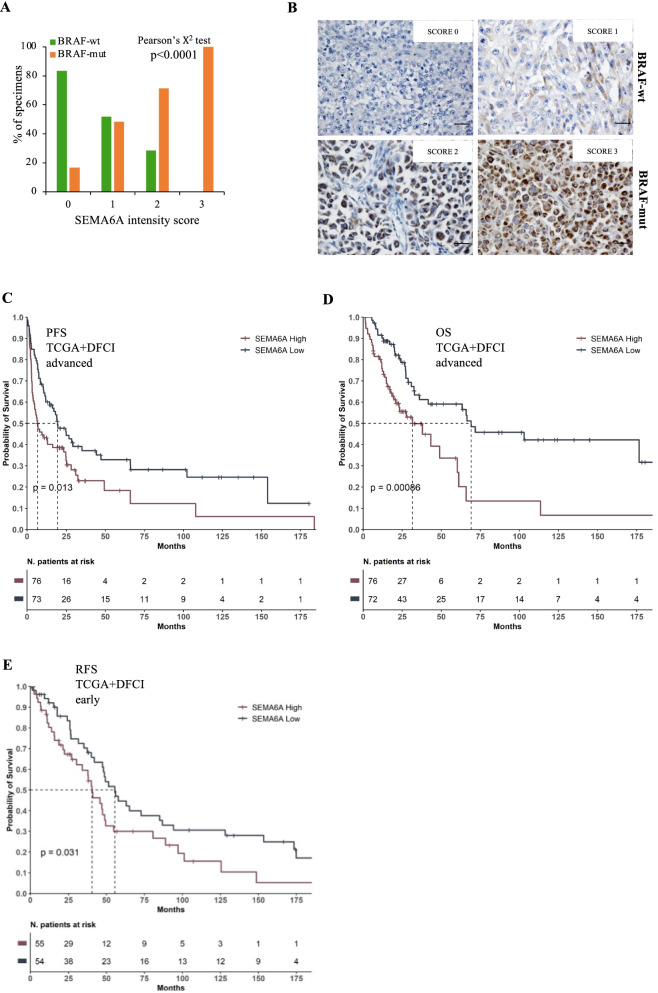
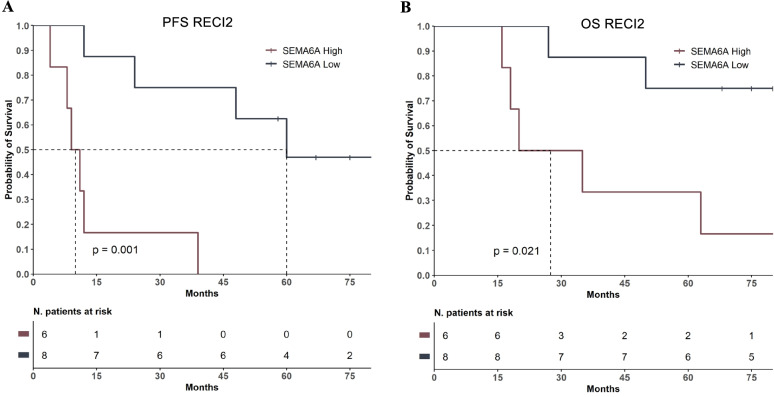
SEMA6A expression was assessed by immunohistochemistry in melanoma cohort RECI1 (N = 112) and its prognostic potential was investigated in BRAF-mut melanoma patients from DFCI and TCGA datasets (N = 258). The molecular mechanisms regulated by SEMA6A to sustain tumor aggressiveness and targeted therapy resistance were investigated in vitro by using BRAF-mut and BRAF-wt melanoma cell lines, an inducible SEMA6A silencing cell model and a microenvironment-mimicking fibroblasts-coculturing model. Finally, SEMA6A prediction of benefit from dual BRAF/MEK inhibition was investigated in melanoma cohort RECI2 (N = 14).
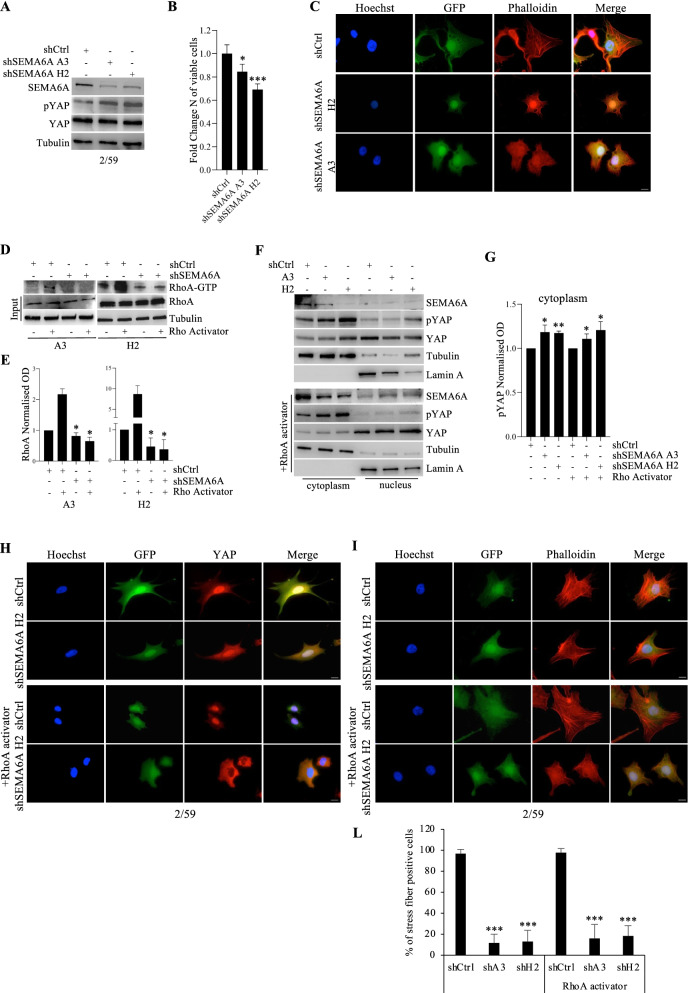
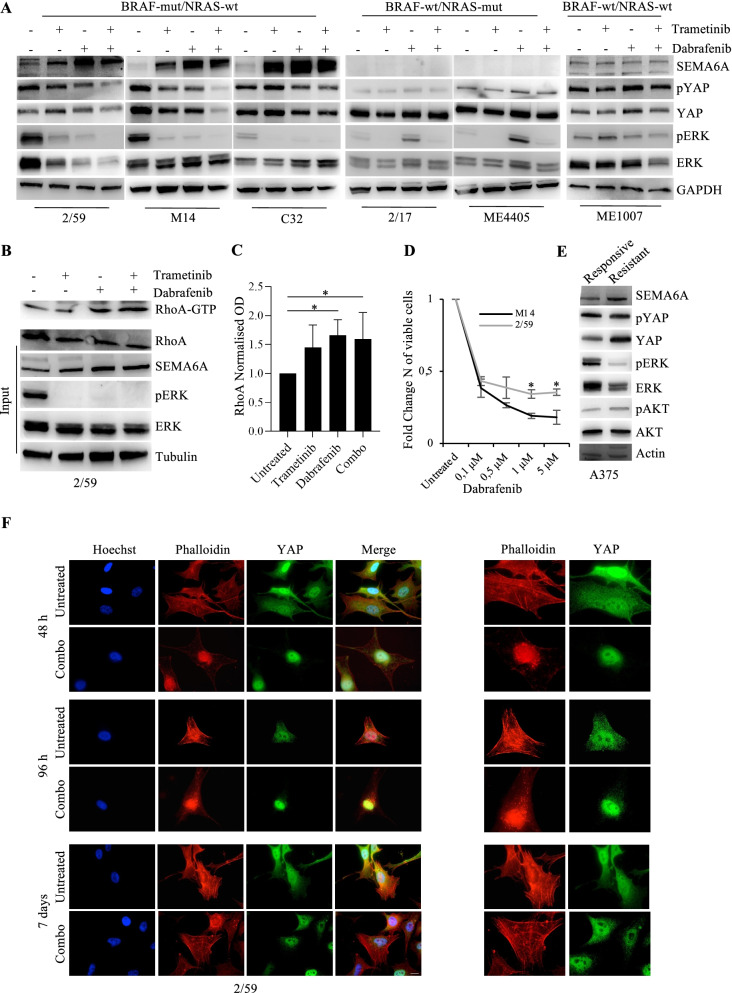
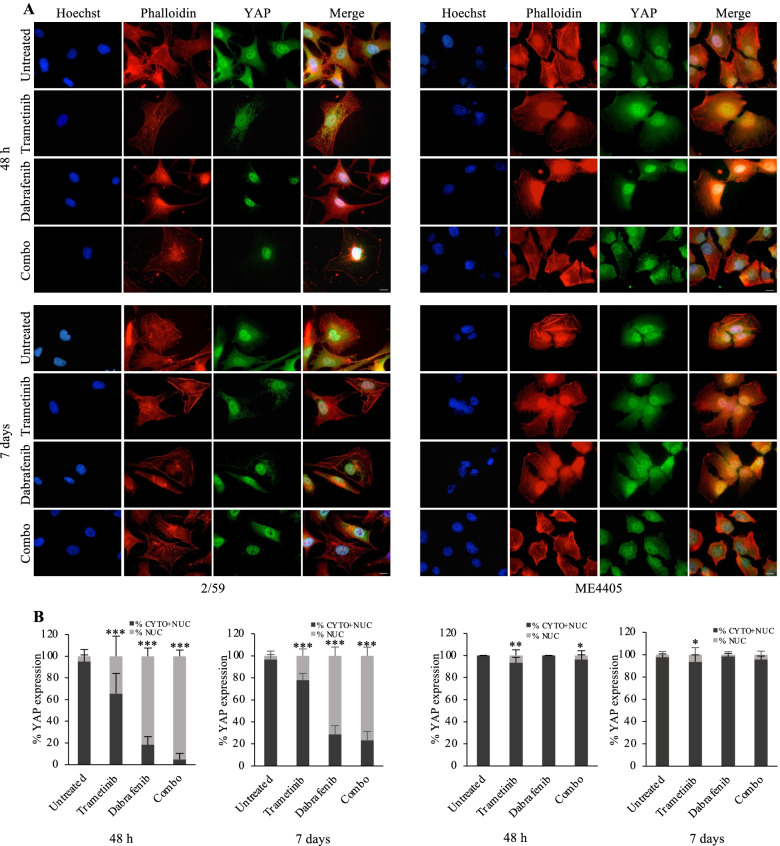
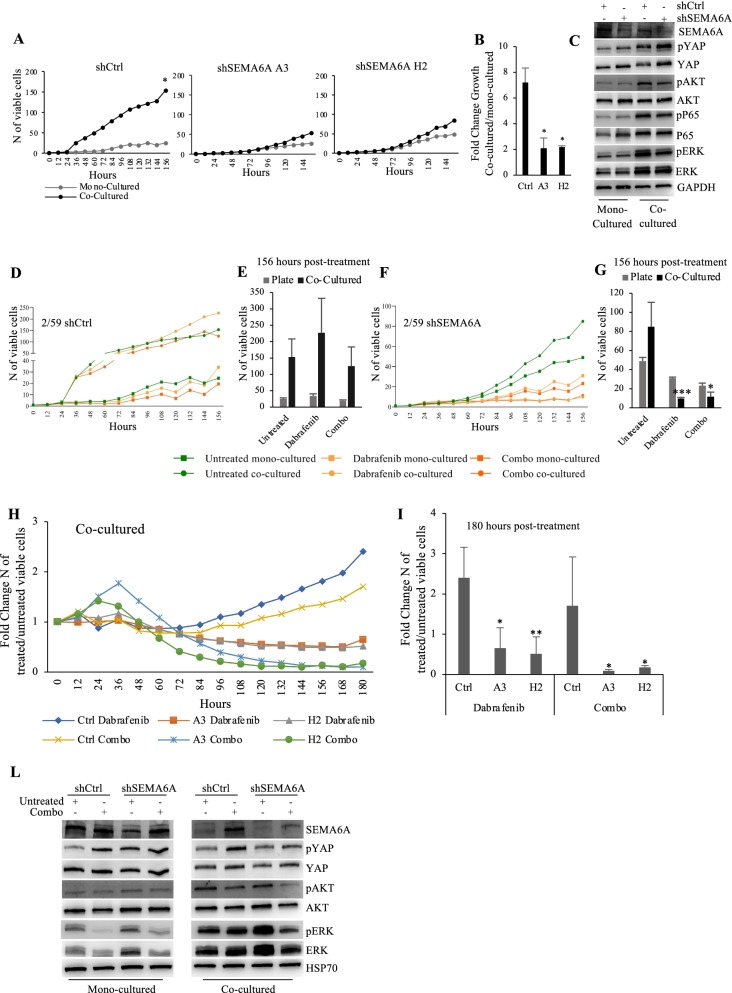
Our results indicate higher protein expression of SEMA6A in BRAF-mut compared with BRAF-wt melanoma patients and show that SEMA6A is a prognostic indicator in BRAF-mut melanoma from TCGA and DFCI patients cohorts. In BRAF-mut melanoma cells, SEMA6A coordinates actin cytoskeleton remodeling by the RhoA-dependent activation of YAP and dual BRAF/MEK inhibition by dabrafenib+trametinib induces SEMA6A/RhoA/YAP axis. In microenvironment-mimicking co-culture condition, fibroblasts confer to melanoma cells a proliferative stimulus and protect them from targeted therapies, whereas SEMA6A depletion rescues the efficacy of dual BRAF/MEK inhibition. Finally, in BRAF-mut melanoma patients treated with dabrafenib+trametinib, high SEMA6A predicts shorter recurrence-free interval.
Overall, our results indicate that SEMA6A contributes to microenvironment-coordinated evasion of melanoma cells from dual BRAF/MEK inhibition and it might be a good candidate predictor of short-term benefit from dual BRAF/MEK inhibition.
尽管双重 BRAF/MEK 抑制作为 BRAF 突变(BRAF-mut)黑色素瘤的治疗方法具有前景,但在患者中观察到了不同的反应,因此需要预测治疗获益的标志物。我们之前已经鉴定出 SEMA6A 作为一种与 BRAF 突变相关的蛋白,参与肌动蛋白细胞骨架重塑。本研究的目的是剖析 SEMA6A 在 BRAF 突变黑色素瘤生物学中的作用,并探索其对双重 BRAF/MEK 抑制的预测潜力。
通过免疫组化检测黑色素瘤队列 RECI1(N=112)中的 SEMA6A 表达,并在 DFCI 和 TCGA 数据集中的 BRAF-mut 黑色素瘤患者(N=258)中研究其预后意义。通过使用 BRAF-mut 和 BRAF-wt 黑色素瘤细胞系、诱导型 SEMA6A 沉默细胞模型和模拟微环境的成纤维细胞共培养模型,研究 SEMA6A 调节肿瘤侵袭性和靶向治疗耐药性的分子机制。最后,在黑色素瘤队列 RECI2(N=14)中研究 SEMA6A 对双重 BRAF/MEK 抑制获益的预测作用。
我们的结果表明,与 BRAF-wt 黑色素瘤患者相比,BRAF-mut 黑色素瘤患者的 SEMA6A 蛋白表达更高,并且表明 SEMA6A 是 TCGA 和 DFCI 黑色素瘤患者队列中 BRAF-mut 黑色素瘤的预后标志物。在 BRAF-mut 黑色素瘤细胞中,SEMA6A 通过 RhoA 依赖性 YAP 激活来协调肌动蛋白细胞骨架重塑,而双重 BRAF/MEK 抑制通过 dabrafenib+trametinib 诱导 SEMA6A/RhoA/YAP 轴。在模拟微环境的共培养条件下,成纤维细胞赋予黑色素瘤细胞增殖刺激,并使它们免受靶向治疗的影响,而 SEMA6A 耗竭可恢复双重 BRAF/MEK 抑制的疗效。最后,在接受 dabrafenib+trametinib 治疗的 BRAF-mut 黑色素瘤患者中,高 SEMA6A 预示着无复发生存期较短。
总的来说,我们的研究结果表明,SEMA6A 有助于黑色素瘤细胞逃避双重 BRAF/MEK 抑制的微环境协调,并可能成为双重 BRAF/MEK 抑制短期获益的良好候选标志物。