Department of Biochemistry, Chonnam National University Medical School, Hwasun, Jeollanam-do, 58128, Republic of Korea.
Exp Mol Med. 2022 Apr;54(4):455-465. doi: 10.1038/s12276-022-00757-5. Epub 2022 Apr 19.
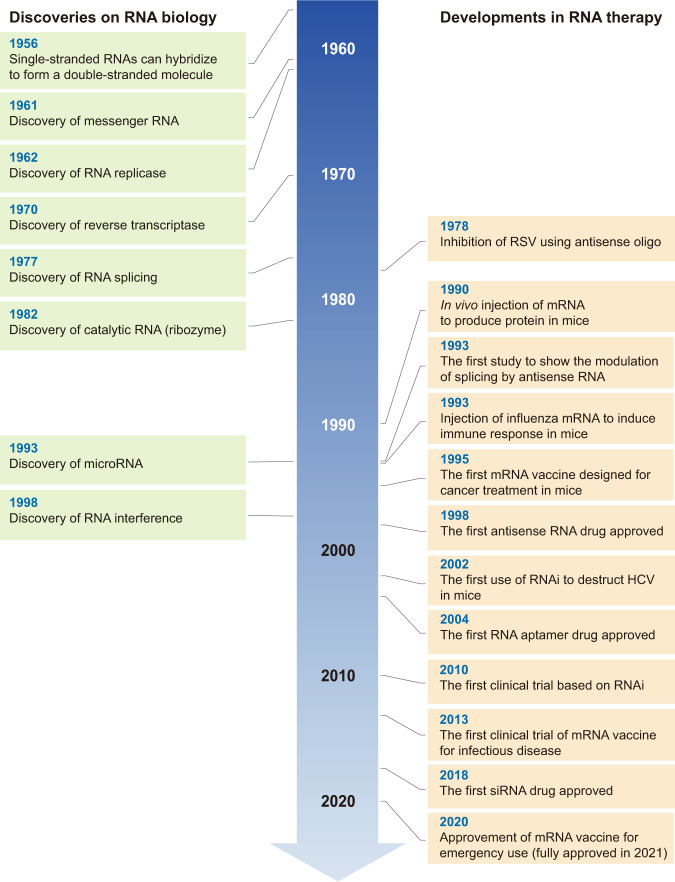
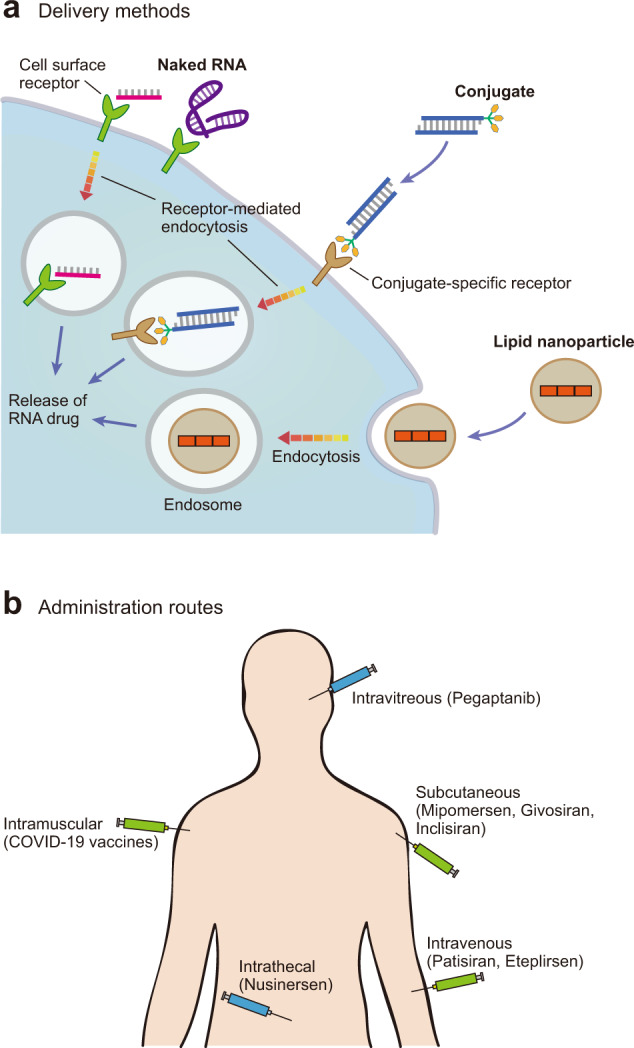
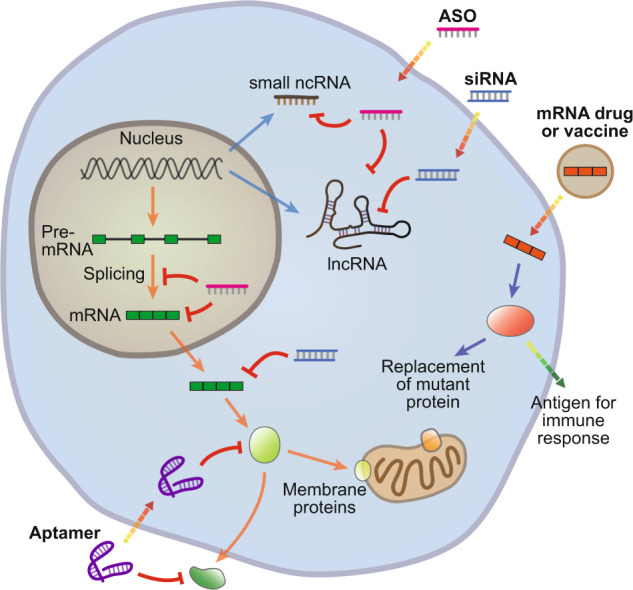
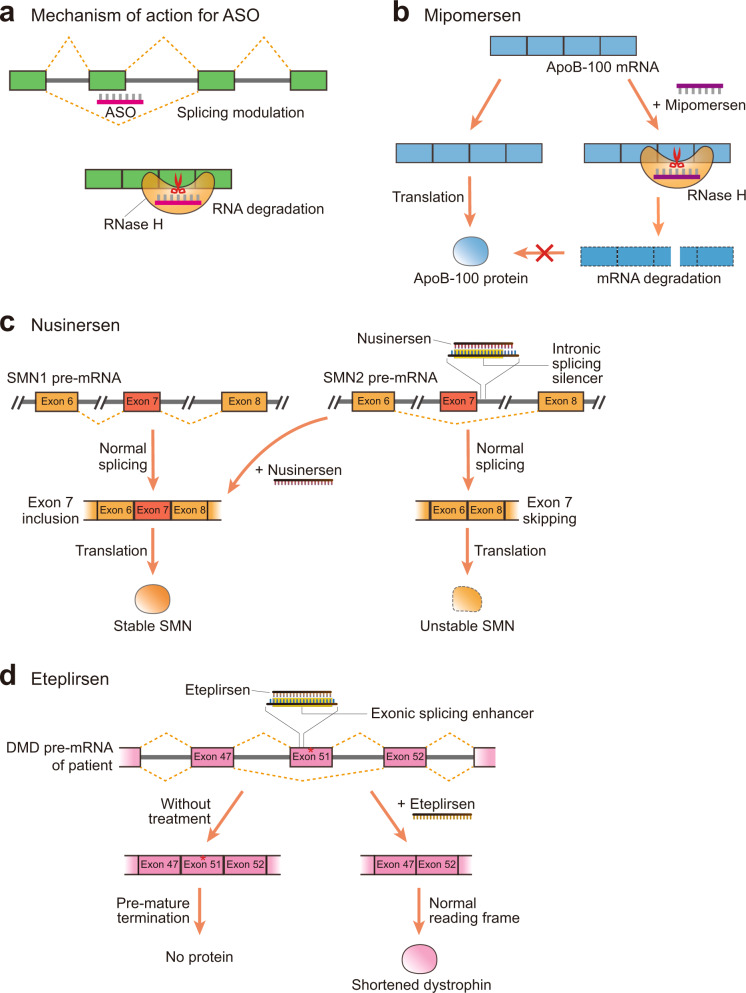
RNA therapy refers to the treatment or prevention of diseases using RNA-based molecules. The recent advent of a series of effective messenger RNA-based vaccines in response to the COVID-19 pandemic has reignited research interest in RNA therapy. Based on the accumulated results of long-term research in the field of RNA therapy spanning several decades, therapeutic agents for various diseases are being rapidly developed. These therapeutics tend to target diseases that cannot be treated with other conventional drug groups, and several clinical studies are underway for a variety of RNA-based therapeutics against various incurable diseases. This review describes the history of several important discoveries in RNA biology and their impact on key developments in RNA therapy as well as the advantages of RNA therapy. In addition, it describes the action mechanisms and examples of drugs approved for RNA therapy. Finally, this review discusses methods for RNA drug delivery to target organs and cells. Given that RNA therapy is expected to advance and play an integral role in the development of novel therapeutic agents for human diseases in the future, this review is designed to offer an updated reference point for researchers in this field.
RNA 疗法是指使用基于 RNA 的分子来治疗或预防疾病。最近,一系列针对 COVID-19 大流行的有效信使 RNA 疫苗的出现,重新点燃了人们对 RNA 疗法的研究兴趣。基于 RNA 疗法领域几十年来积累的长期研究结果,针对各种疾病的治疗药物正在迅速开发中。这些疗法往往针对其他传统药物类别无法治疗的疾病,并且正在进行多种针对各种不治之症的基于 RNA 的治疗方法的临床研究。本综述描述了 RNA 生物学的几个重要发现的历史及其对 RNA 疗法关键发展的影响,以及 RNA 疗法的优势。此外,它还描述了已批准用于 RNA 疗法的药物的作用机制和实例。最后,本文讨论了将 RNA 药物递送到靶器官和细胞的方法。鉴于 RNA 疗法有望在未来推进并在新型人类疾病治疗药物的开发中发挥重要作用,因此本综述旨在为该领域的研究人员提供一个更新的参考点。