Burrell College of Osteopathic Medicine, Las Cruces, New Mexico, USA.
Physiol Rep. 2022 Apr;10(8):e15253. doi: 10.14814/phy2.15253.
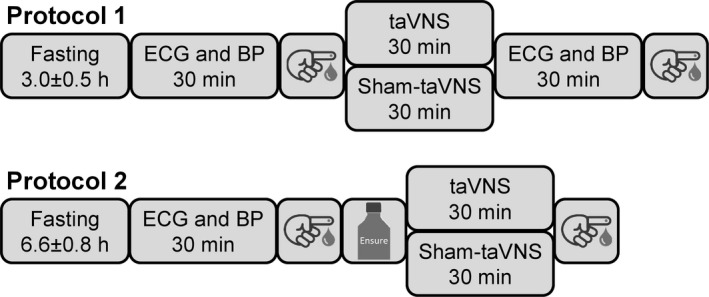
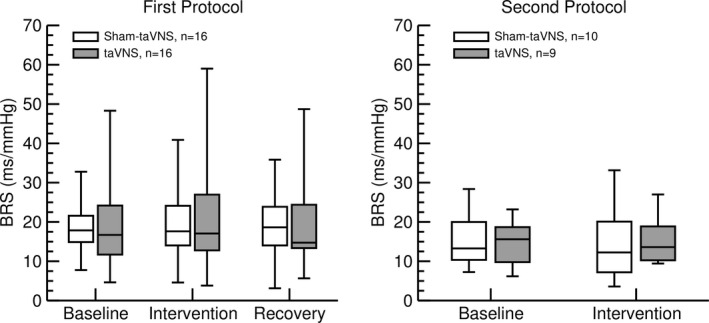
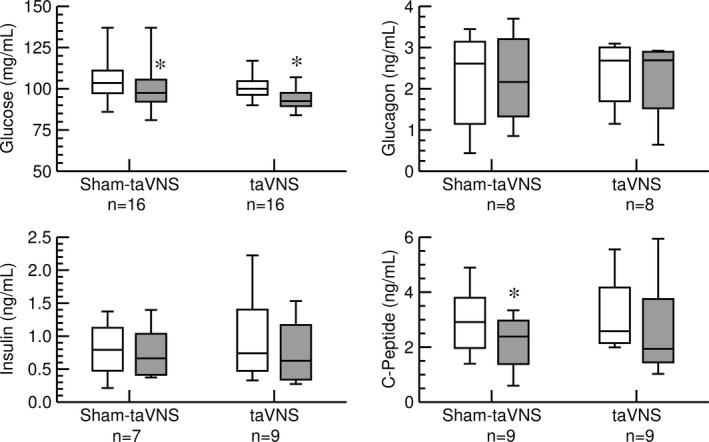
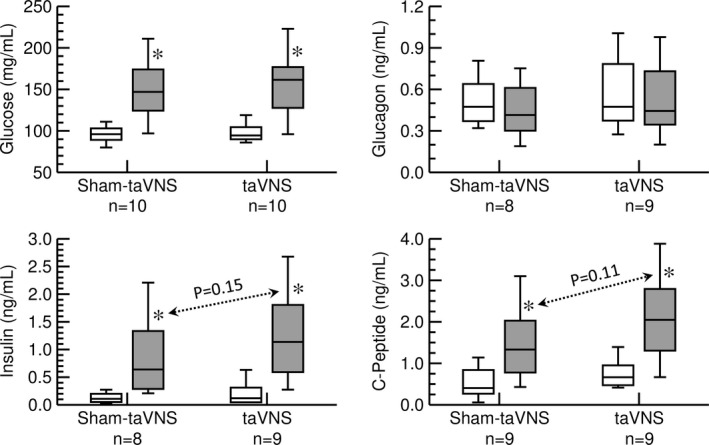
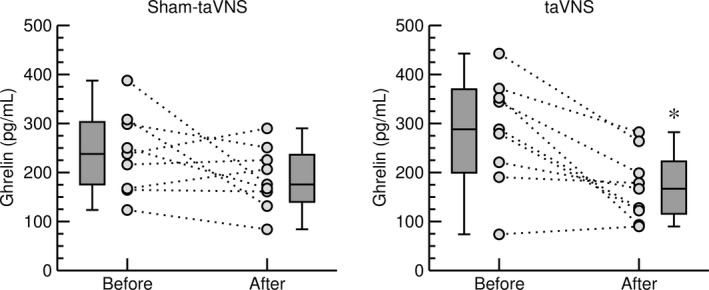
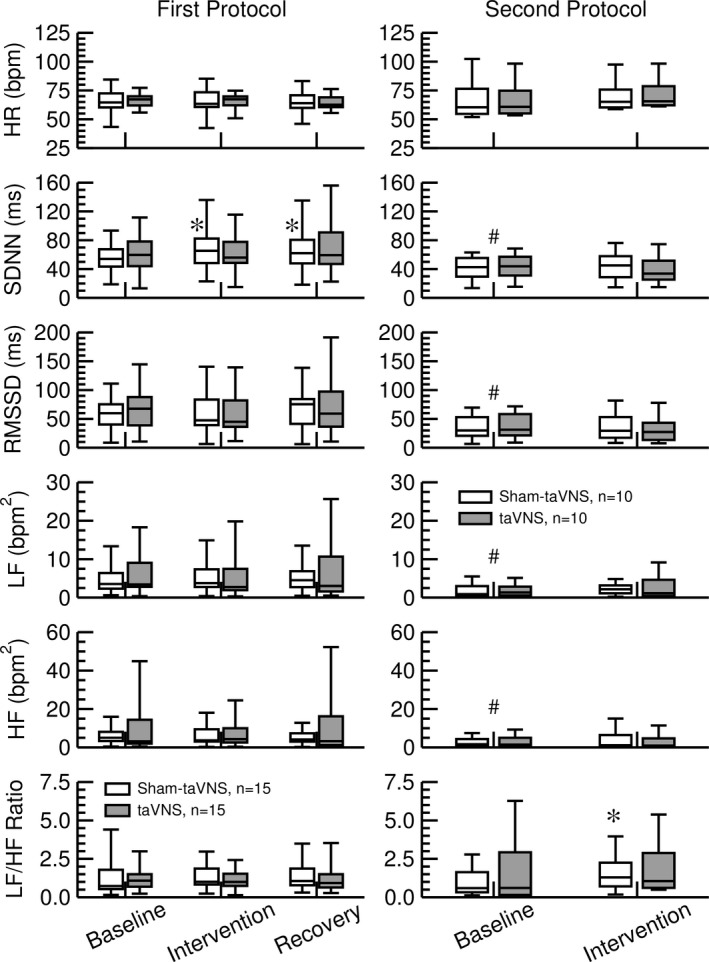
Vagus nerve stimulation (VNS) facilitates weight loss in animals and patients treated with VNS for depression or epilepsy. Likewise, chronic transcutaneous auricular VNS (taVNS) reduces weight gain and improves glucose tolerance in Zucker diabetic fatty rats. If these metabolic effects of taVNS observed in rats translate to humans is unknown. Therefore, the hypothesis of this study was that acute application of taVNS affects glucotropic and orexigenic hormones which could potentially facilitate weight loss and improve glucose tolerance if taVNS were applied chronically. In two single-blinded randomized cross-over protocols, blood glucose levels, plasma concentrations of insulin, C-peptide, glucagon, leptin, and ghrelin, together with heart rate variability and baroreceptor-heart rate reflex sensitivity were determined before and after taVNS (left ear, 10 Hz, 300 µs, 2.0-2.5 mA, 30 min) or sham-taVNS (electrode attached to ear with the stimulator turned off). In a first protocol, subjects (n = 16) were fasted throughout the protocol and in a second protocol, subjects (n = 10) received a high-calorie beverage (220 kCal) after the first blood sample, just before initiation of taVNS or sham-taVNS. No significant effects of taVNS on heart rate variability and baroreceptor-heart rate reflex sensitivity and only minor effects on glucotropic hormones were observed. However, in the second protocol taVNS significantly lowered postprandial plasma ghrelin levels (taVNS: -115.5 ± 28.3 pg/ml vs. sham-taVNS: -51.2 ± 30.6 pg/ml, p < 0.05). This finding provides a rationale for follow-up studies testing the hypothesis that chronic application of taVNS may reduce food intake through inhibition of ghrelin and, therefore, may indirectly improve glucose tolerance through weight loss.
迷走神经刺激 (VNS) 可促进动物和接受 VNS 治疗抑郁症或癫痫的患者减肥。同样,慢性经皮耳迷走神经刺激 (taVNS) 可减少 Zucker 糖尿病肥胖大鼠的体重增加并改善葡萄糖耐量。如果 taVNS 在大鼠中观察到的这些代谢作用转化为人类尚不清楚。因此,本研究的假设是,急性 taVNS 应用会影响糖生成和摄食激素,如果 taVNS 长期应用,这可能有助于减肥和改善葡萄糖耐量。在两项单盲随机交叉试验方案中,在 taVNS(左耳,10 Hz,300 µs,2.0-2.5 mA,30 分钟)或 sham-taVNS(电极连接到耳朵,刺激器关闭)前后测定血糖水平、胰岛素、C 肽、胰高血糖素、瘦素和 ghrelin 的血浆浓度,以及心率变异性和压力感受器-心率反射敏感性。在第一个方案中,受试者(n=16)在整个方案中禁食,在第二个方案中,受试者(n=10)在第一份血样后接受高卡路里饮料(220 kCal),就在开始 taVNS 或 sham-taVNS 之前。taVNS 对心率变异性和压力感受器-心率反射敏感性没有显著影响,仅对糖生成激素有轻微影响。然而,在第二个方案中,taVNS 显著降低了餐后血浆 ghrelin 水平(taVNS:-115.5 ± 28.3 pg/ml 与 sham-taVNS:-51.2 ± 30.6 pg/ml,p < 0.05)。这一发现为后续研究提供了依据,这些研究测试了 taVNS 慢性应用可能通过抑制 ghrelin 减少食物摄入的假设,从而通过减肥间接改善葡萄糖耐量。