Chromosome Dynamics and Stability Group, Genome Damage and Stability Centre, University of Sussex, Brighton BN1 9RQ, UK.
Chromosome Dynamics and Stability Group, Genome Damage and Stability Centre, University of Sussex, Brighton BN1 9RQ, UK.
Cell Rep. 2022 Apr 19;39(3):110701. doi: 10.1016/j.celrep.2022.110701.
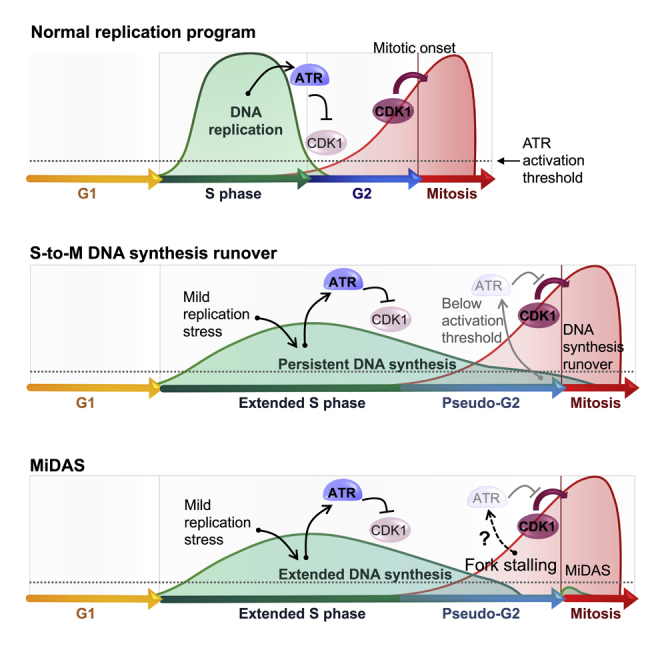
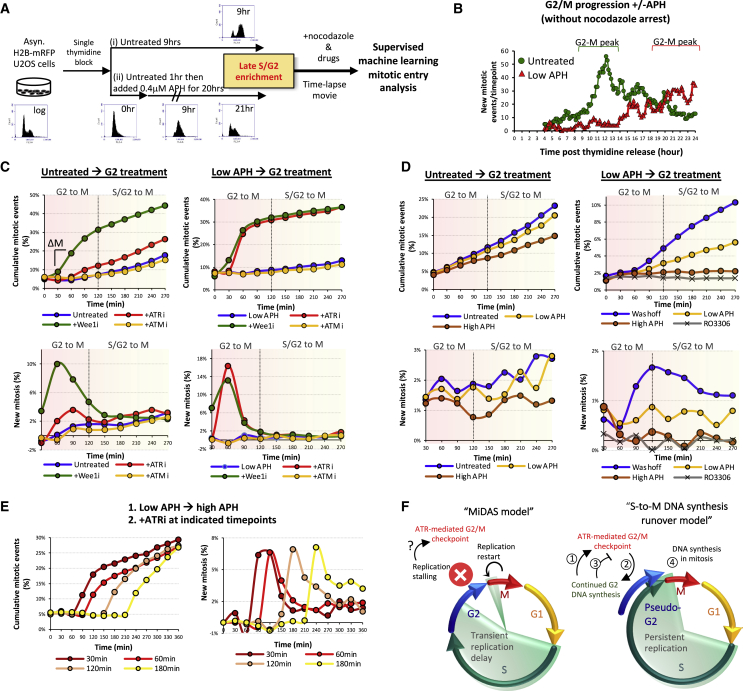
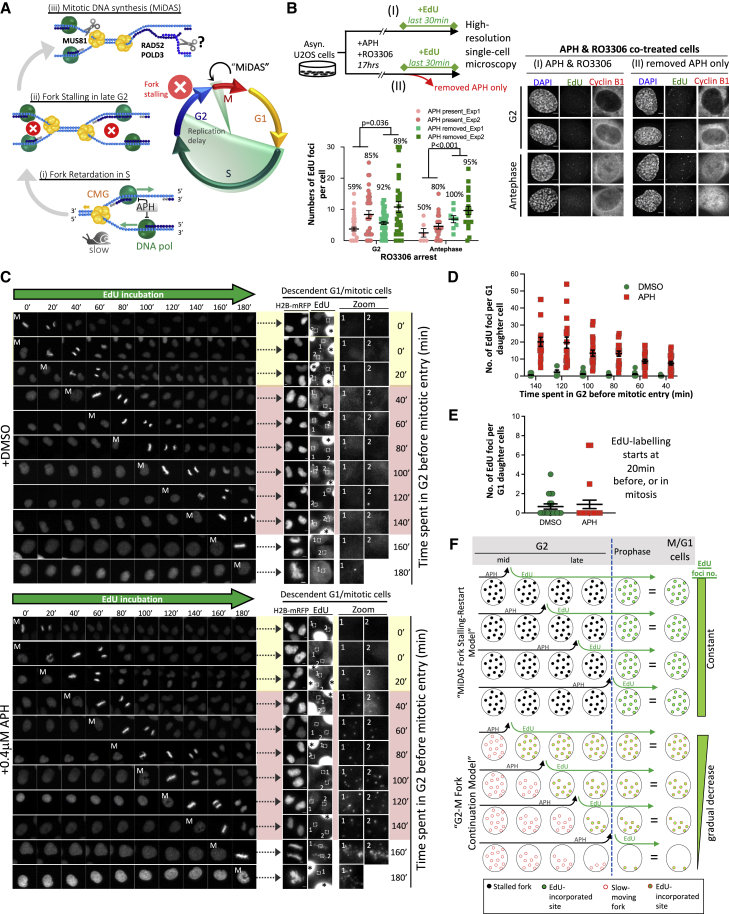
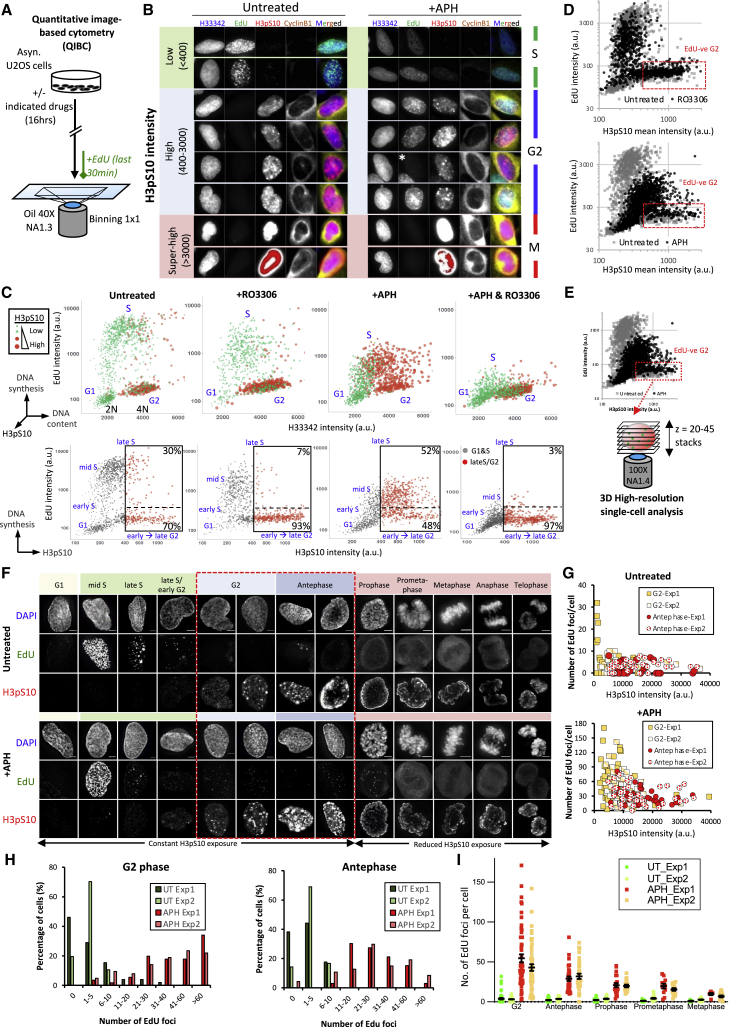
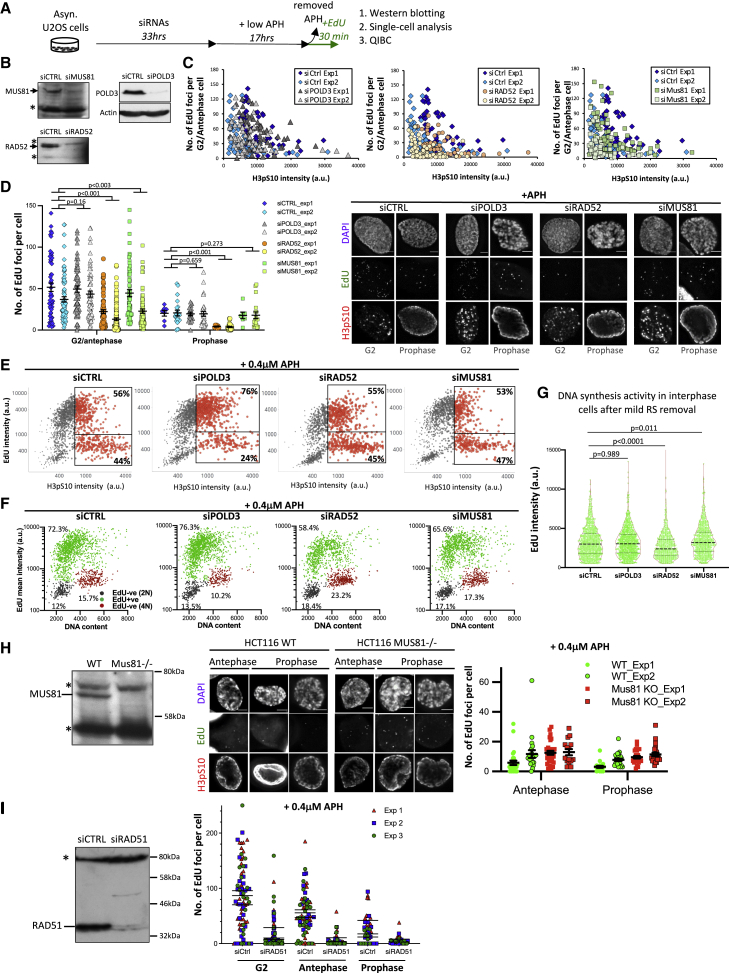
Mitotic DNA synthesis (MiDAS) has been proposed to restart DNA synthesis during mitosis because of replication fork stalling in late interphase caused by mild replication stress (RS). Contrary to this proposal, we find that cells exposed to mild RS in fact maintain continued DNA replication throughout G2 and during G2-M transition in RAD51- and RAD52-dependent manners. Persistent DNA synthesis is necessary to resolve replication intermediates accumulated in G2 and disengage an ATR-imposed block to mitotic entry. Because of its continual nature, DNA synthesis at very late replication sites can overlap with chromosome condensation, generating the phenomenon of mitotic DNA synthesis. Unexpectedly, we find that the commonly used CDK1 inhibitor RO3306 interferes with replication to preclude detection of G2 DNA synthesis, leading to the impression of a mitosis-driven response. Our study reveals the importance of persistent DNA replication and checkpoint control to lessen the risk for severe genome under-replication under mild RS.
有丝分裂 DNA 合成(MiDAS)被提议在有丝分裂期间重新启动 DNA 合成,因为在轻度复制应激(RS)引起的晚间期中复制叉停滞。与该提议相反,我们发现实际上暴露于轻度 RS 的细胞以 RAD51 和 RAD52 依赖性方式在 G2 期间和 G2-M 转换期间维持持续的 DNA 复制。持续的 DNA 合成对于解决 G2 中积累的复制中间体并解除 ATR 对有丝分裂进入的阻断是必需的。由于其连续性,非常晚期复制位点的 DNA 合成可以与染色体浓缩重叠,产生有丝分裂 DNA 合成的现象。出乎意料的是,我们发现常用的 CDK1 抑制剂 RO3306 干扰复制以防止检测到 G2 DNA 合成,从而给人留下有丝分裂驱动反应的印象。我们的研究揭示了持续的 DNA 复制和检查点控制的重要性,以降低轻度 RS 下严重基因组复制不足的风险。