MRC Human Genetics Unit, The University of Edinburgh, Crewe Rd South, Edinburgh EH4 2XU, UK.
Wellcome Centre for Cell Biology, The University of Edinburgh, Michael Swann Building, Max Born Crescent, Edinburgh EH9 3BF, UK.
Cell Rep. 2020 Sep 22;32(12):108177. doi: 10.1016/j.celrep.2020.108177.
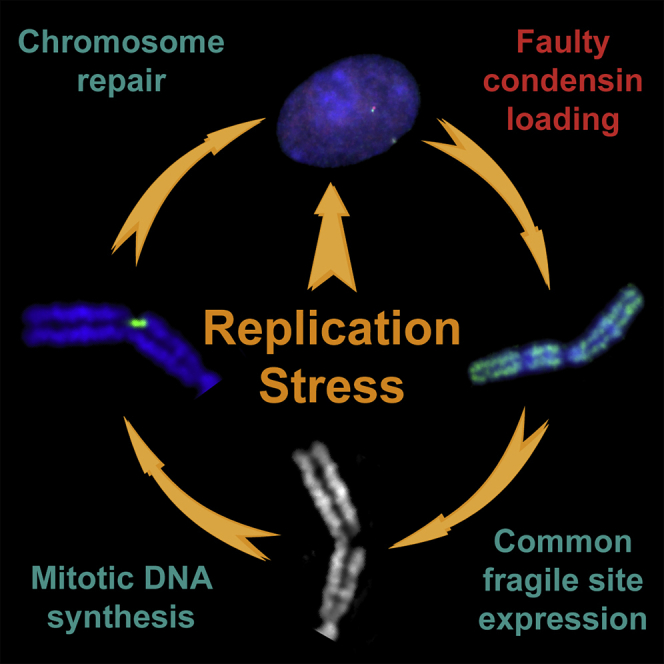
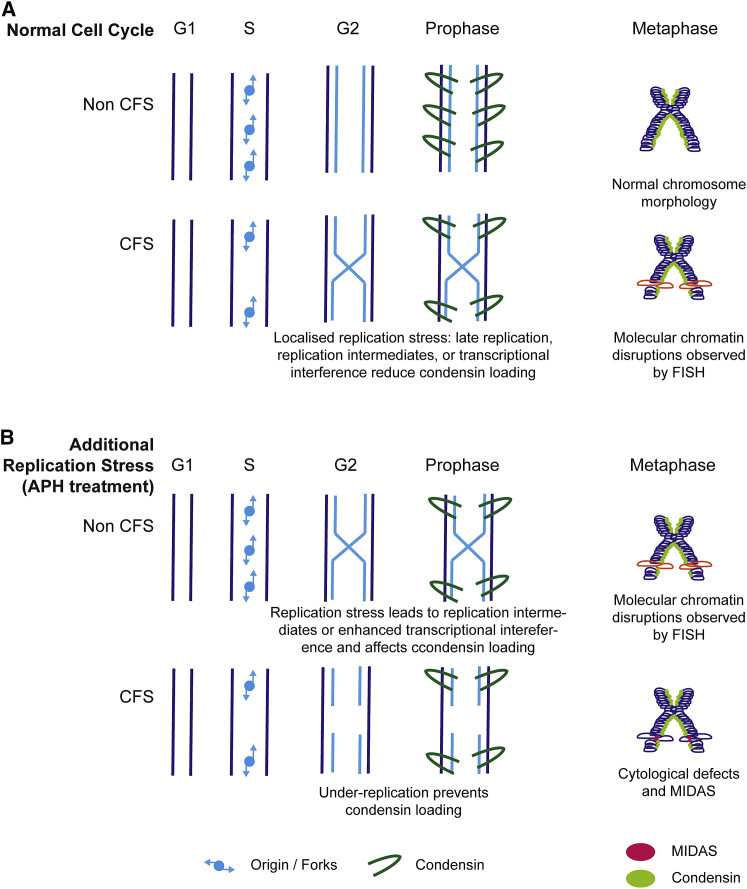
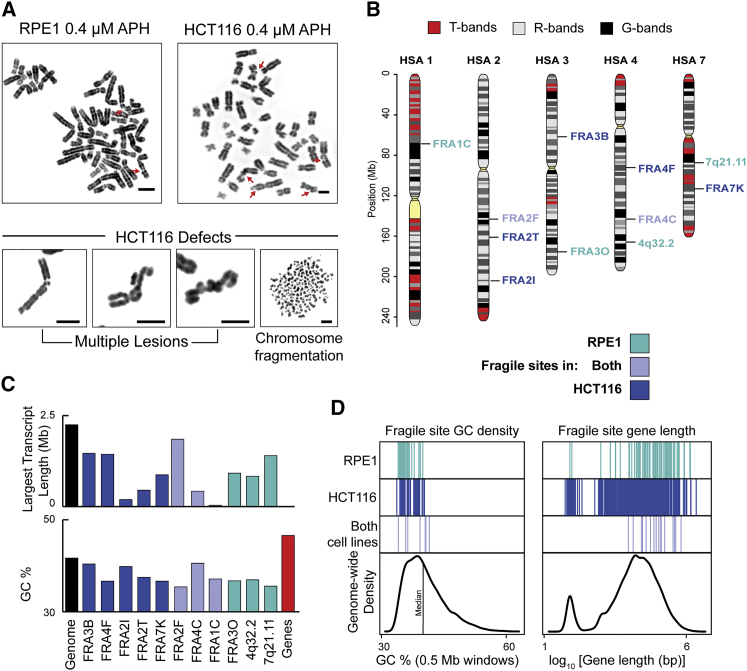
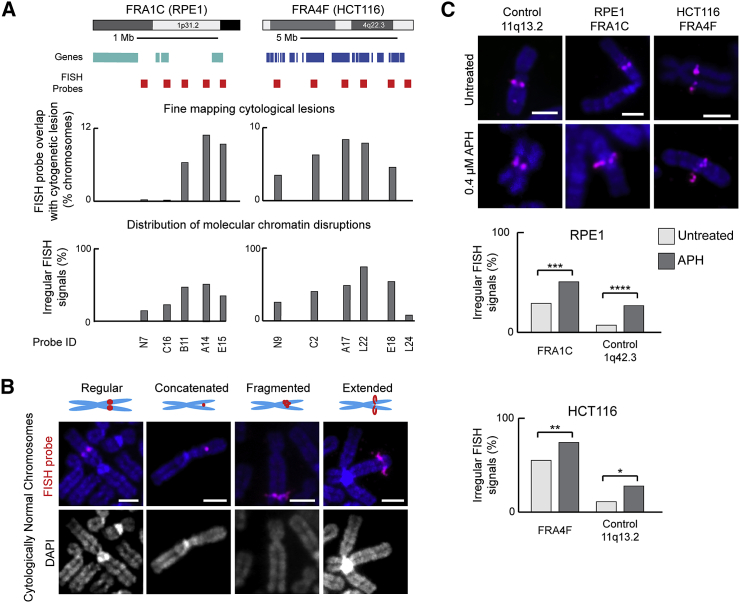
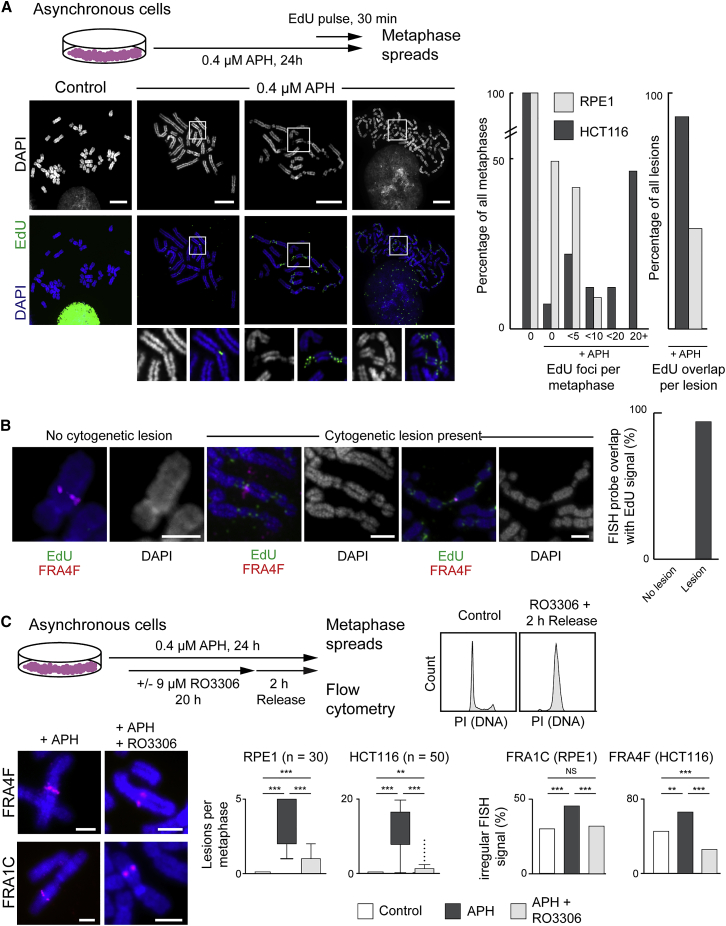
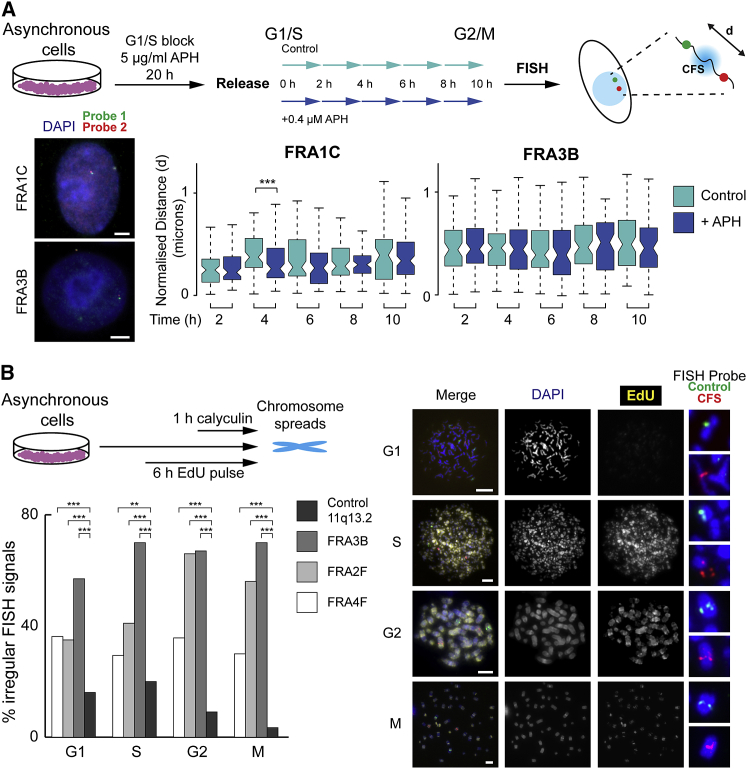
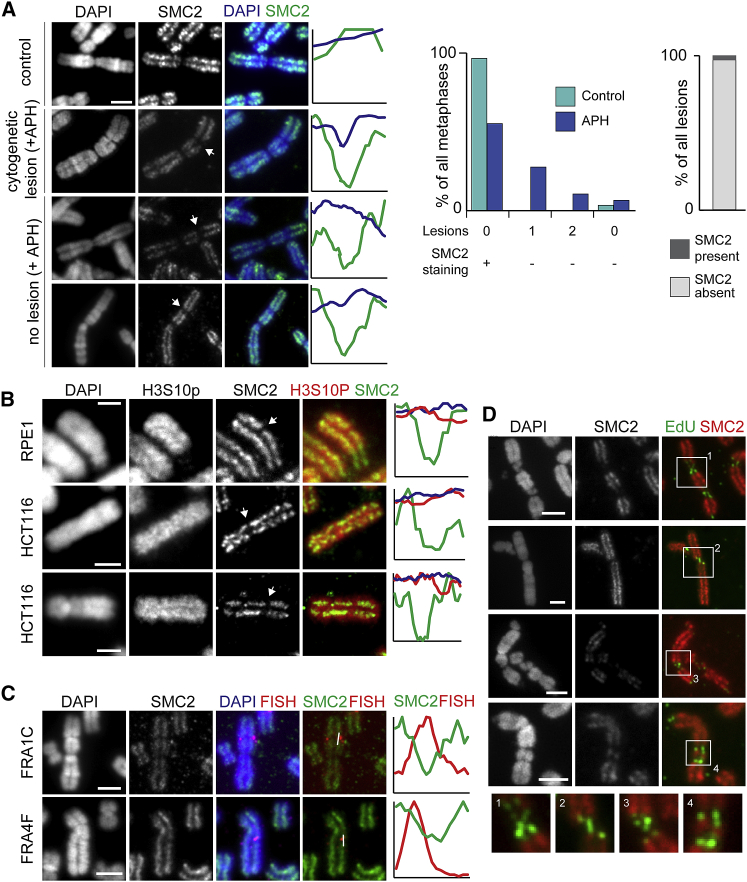
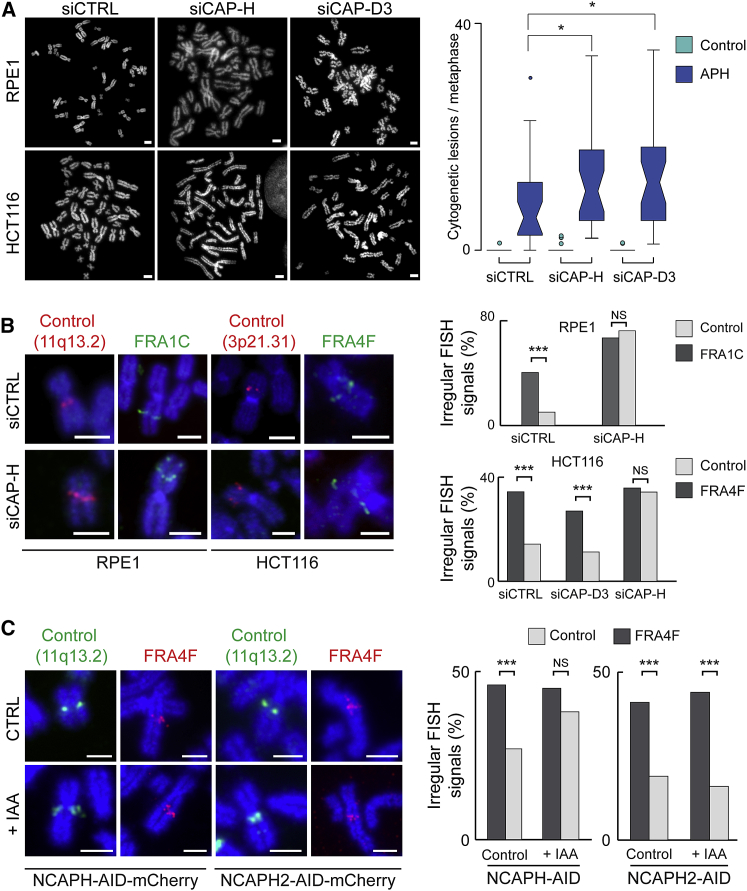
Cells coordinate interphase-to-mitosis transition, but recurrent cytogenetic lesions appear at common fragile sites (CFSs), termed CFS expression, in a tissue-specific manner after replication stress, marking regions of instability in cancer. Despite such a distinct defect, no model fully provides a molecular explanation for CFSs. We show that CFSs are characterized by impaired chromatin folding, manifesting as disrupted mitotic structures visible with molecular fluorescence in situ hybridization (FISH) probes in the presence and absence of replication stress. Chromosome condensation assays reveal that compaction-resistant chromatin lesions persist at CFSs throughout the cell cycle and mitosis. Cytogenetic and molecular lesions are marked by faulty condensin loading at CFSs, a defect in condensin-I-mediated compaction, and are coincident with mitotic DNA synthesis (MIDAS). This model suggests that, in conditions of exogenous replication stress, aberrant condensin loading leads to molecular defects and CFS expression, concomitantly providing an environment for MIDAS, which, if not resolved, results in chromosome instability.
细胞协调间期中-有丝分裂过渡,但在复制应激后,以组织特异性的方式,在常见的脆弱位点(CFS)出现复发性细胞遗传学病变,称为 CFS 表达,标志着癌症中不稳定的区域。尽管存在这种明显的缺陷,但没有一种模型能完全提供对 CFS 的分子解释。我们表明,CFS 的特征是染色质折叠受损,表现在存在和不存在复制应激时,用分子荧光原位杂交(FISH)探针可见的有丝分裂结构被破坏。染色体浓缩测定表明,在整个细胞周期和有丝分裂过程中,CFS 处的抗压缩染色质损伤仍然存在。细胞遗传学和分子病变的特征是 CFS 处的着丝粒蛋白加载缺陷,着丝粒-I 介导的浓缩缺陷,并且与有丝分裂 DNA 合成(MIDAS)一致。该模型表明,在外部复制应激的情况下,异常的着丝粒蛋白加载导致分子缺陷和 CFS 表达,同时为 MIDAS 提供了一个环境,如果不能解决,会导致染色体不稳定。