Cell Biology Section, National Institute of Dental and Craniofacial Research, National Institutes of Health, Bethesda, MD 20892-4370, USA; Sir William Dunn School of Pathology, University of Oxford, Oxford, Oxfordshire OX1 3RE, UK.
Sir William Dunn School of Pathology, University of Oxford, Oxford, Oxfordshire OX1 3RE, UK.
Cell Rep. 2022 Apr 19;39(3):110718. doi: 10.1016/j.celrep.2022.110718.
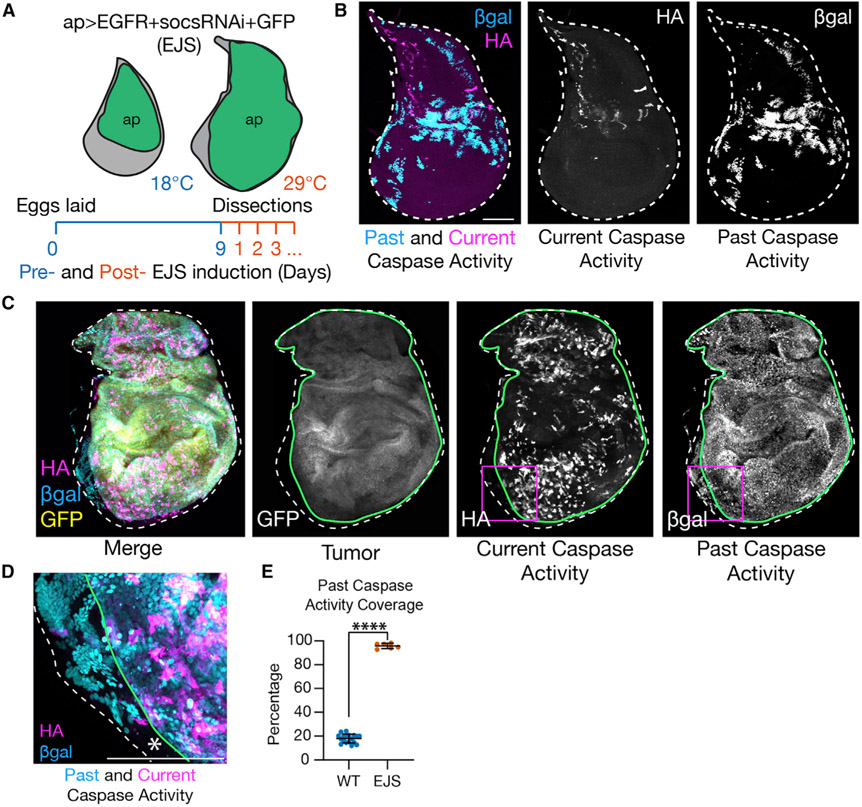
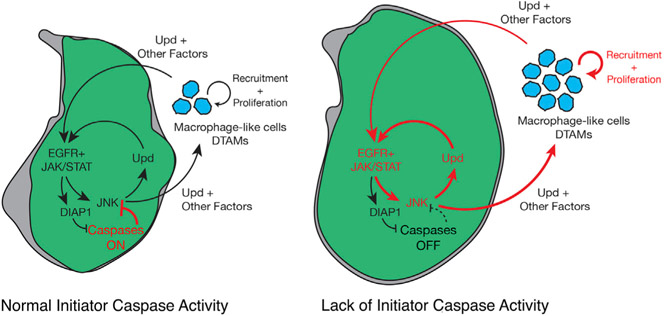
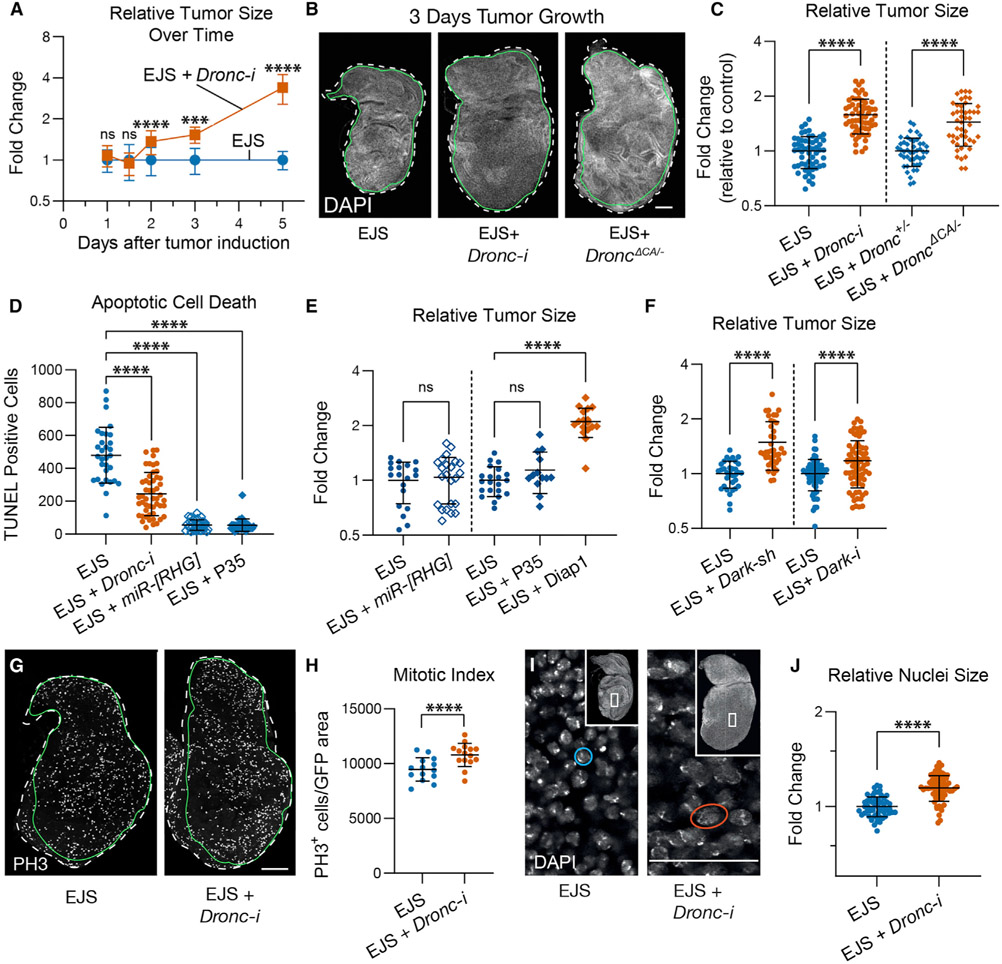
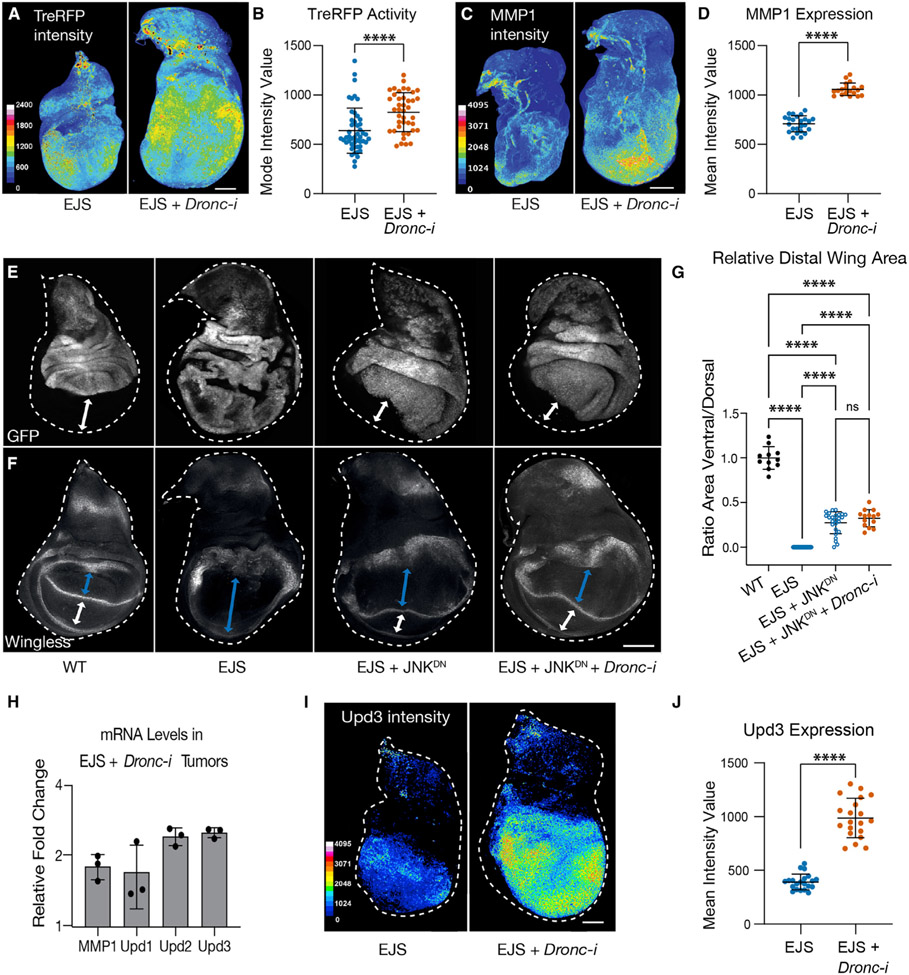
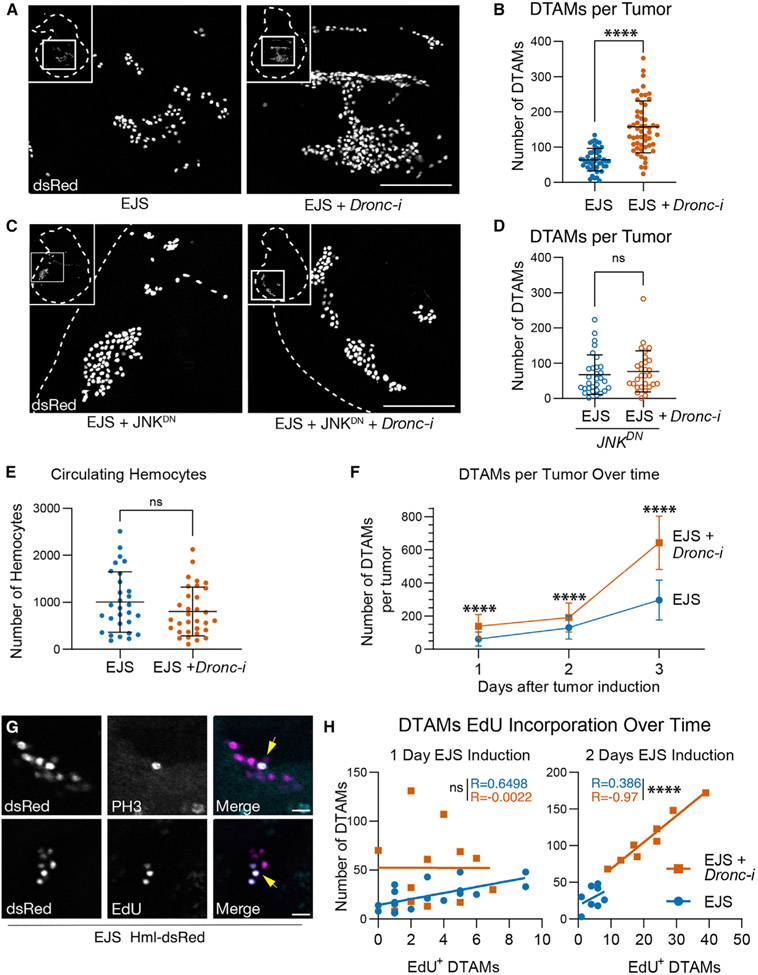
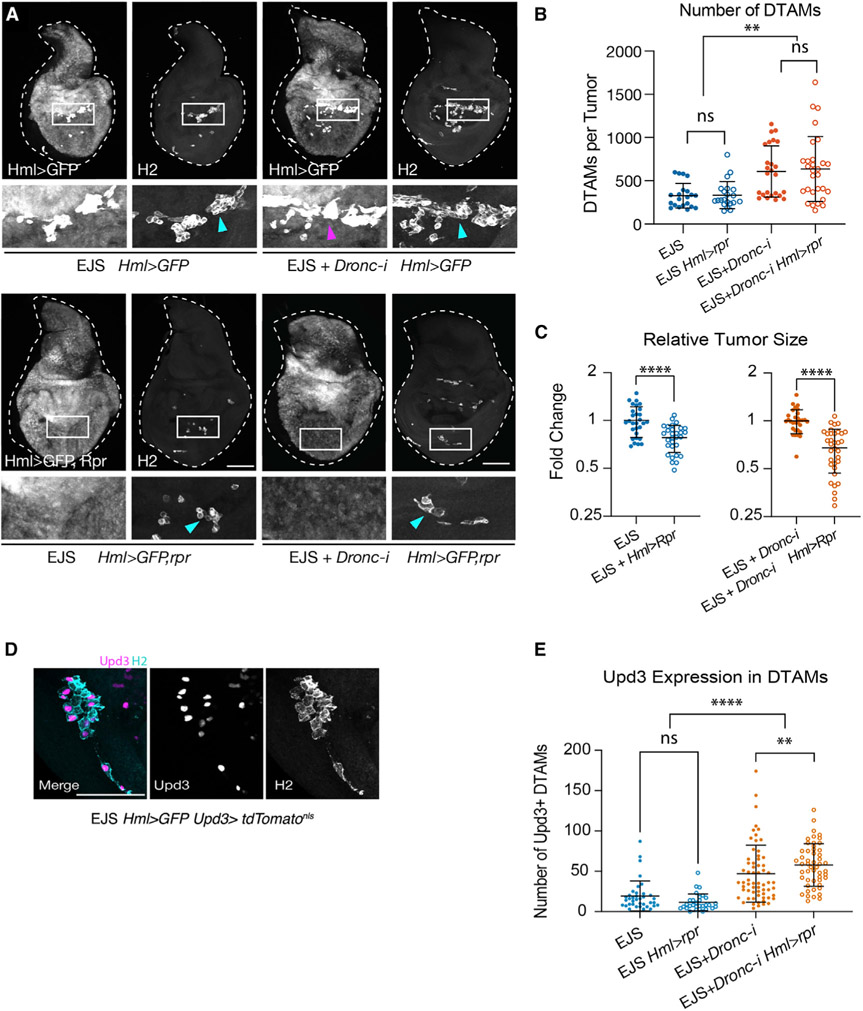
Resistance to apoptosis due to caspase deregulation is considered one of the main hallmarks of cancer. However, the discovery of novel non-apoptotic caspase functions has revealed unknown intricacies about the interplay between these enzymes and tumor progression. To investigate this biological problem, we capitalized on a Drosophila tumor model with human relevance based on the simultaneous overactivation of the EGFR and the JAK/STAT signaling pathways. Our data indicate that widespread non-apoptotic activation of initiator caspases limits JNK signaling and facilitates cell fate commitment in these tumors, thus preventing the overgrowth and exacerbation of malignant features of transformed cells. Intriguingly, caspase activity also reduces the presence of macrophage-like cells with tumor-promoting properties in the tumor microenvironment. These findings assign tumor-suppressing activities to caspases independent of apoptosis, while providing molecular details to better understand the contribution of these enzymes to tumor progression.
由于半胱天冬酶失调导致的细胞凋亡抵抗被认为是癌症的主要标志之一。然而,新型非凋亡半胱天冬酶功能的发现揭示了这些酶与肿瘤进展之间相互作用的未知复杂性。为了研究这个生物学问题,我们利用了一个具有人类相关性的果蝇肿瘤模型,该模型基于 EGFR 和 JAK/STAT 信号通路的同时过度激活。我们的数据表明,起始半胱天冬酶的广泛非凋亡激活限制了 JNK 信号转导,并促进了这些肿瘤中的细胞命运决定,从而防止了转化细胞的过度生长和恶性特征的加剧。有趣的是,半胱天冬酶活性还减少了肿瘤微环境中具有促进肿瘤特性的巨噬样细胞的存在。这些发现将独立于细胞凋亡的肿瘤抑制活性赋予了半胱天冬酶,同时提供了分子细节,以更好地理解这些酶对肿瘤进展的贡献。