Khokhar Manoj, Tomo Sojit, Gadwal Ashita, Purohit Purvi
Department of Biochemistry, All India Institute of Medical Sciences, Jodhpur, Rajasthan, India.
Department of Biochemistry, Santosh Medical College, Ghaziabad, Uttar Pradesh, India.
Int J Yoga. 2022 Jan-Apr;15(1):25-39. doi: 10.4103/ijoy.ijoy_146_21. Epub 2022 Mar 21.
Yoga is a multifaceted spiritual tool that helps in maintaining health, peace of mind, and positive thoughts. In the context of asana, yoga is similar to physical exercise. This study aims to construct a molecular network to find hub genes that play important roles in physical exercise and yoga.
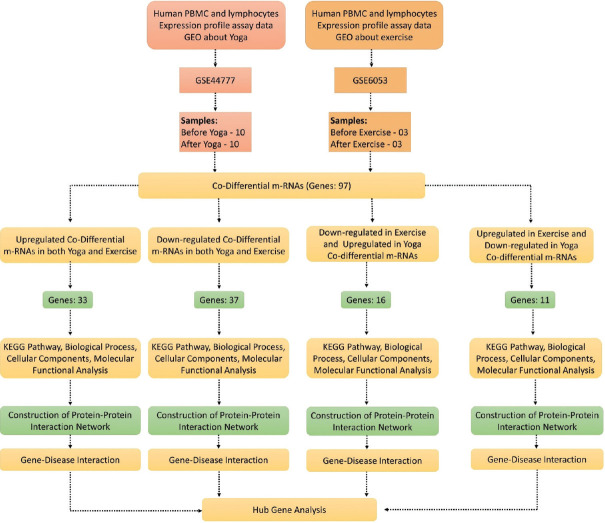
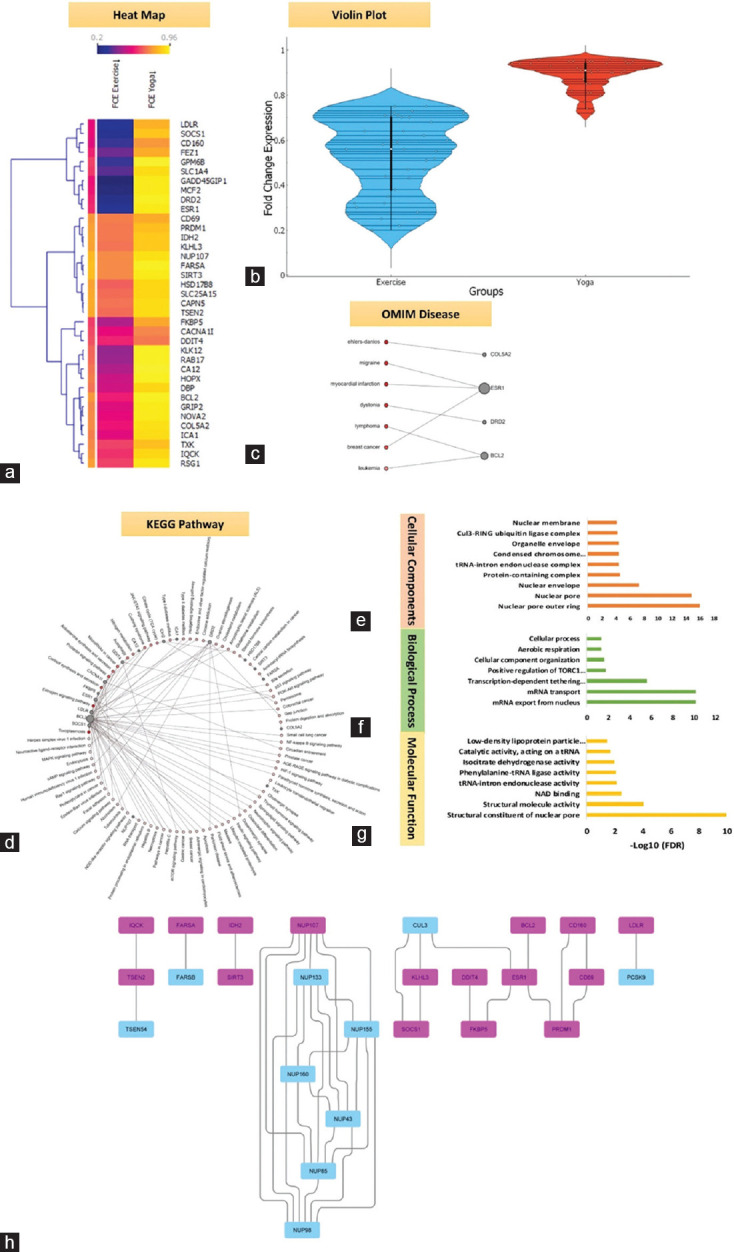
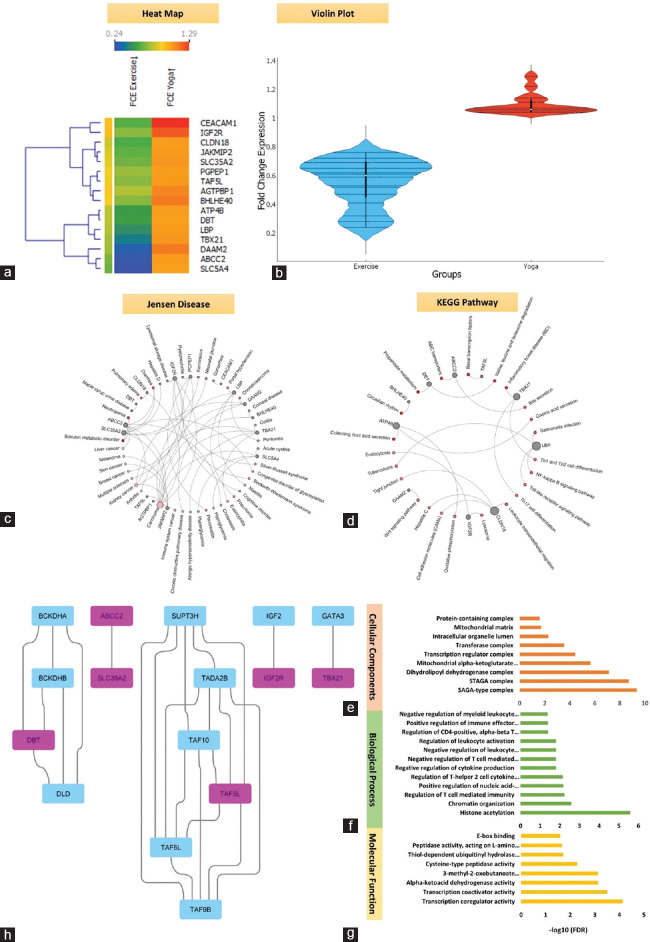
We combined differentially expressed genes (DEGs) in yoga and exercise using computational bioinformatics from publicly available gene expression omnibus (GEO) datasets and identified the codifferentially expressed mRNAs with GEO2R. The co-DEGs were divided into four different groups and each group was subjected to protein-protein interaction (PPI) network, pathways analysis, and gene ontology.
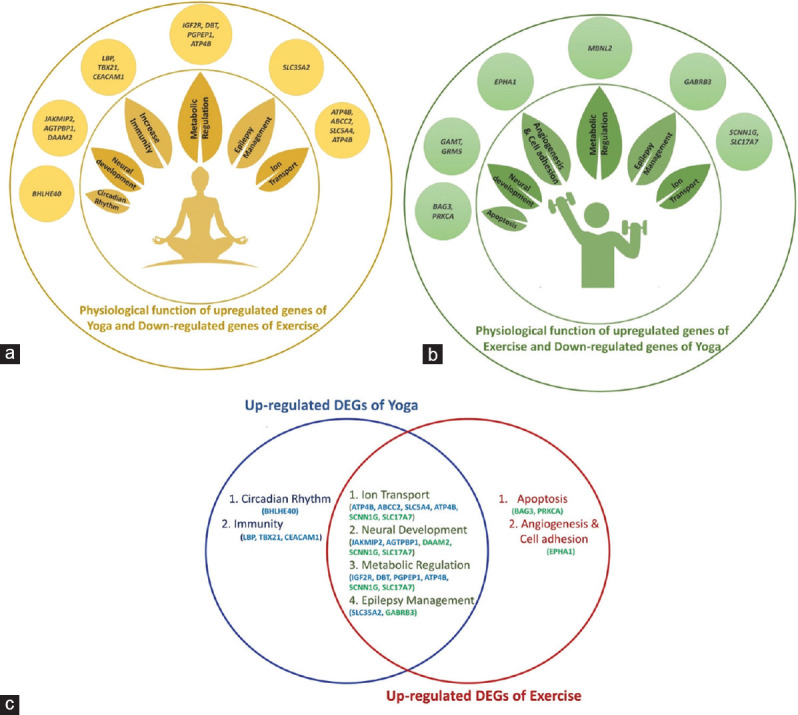
Our study identified immunological modulation as a dominant target of differential expression in yoga and exercise. Yoga predominantly modulated genes affecting the Th1 and NK cells, whereas Cytokines, Macrophage activation, and oxidative stress were affected by exercise. We also observed that while yoga regulated genes for two main physiological functions of the body, namely Circadian Rhythm (BHLHE40) and immunity (LBP, T-box transcription factor 21, CEACAM1), exercise-regulated genes involved in apoptosis (BAG3, protein kinase C alpha), angiogenesis, and cellular adhesion (EPH receptor A1).
The dissimilarity in the genetic expression patterns in Yoga and exercise highlights the discrete effect of each in biological systems. The integration and convergences of multi-omics signals can provide deeper and comprehensive insights into the various biological mechanisms through which yoga and exercise exert their beneficial effects and opens up potential newer research areas.
瑜伽是一种多方面的精神工具,有助于维持健康、内心平静和积极的思想。在体式方面,瑜伽类似于体育锻炼。本研究旨在构建一个分子网络,以寻找在体育锻炼和瑜伽中起重要作用的枢纽基因。
我们使用来自公开可用的基因表达综合数据库(GEO)数据集的计算生物信息学方法,将瑜伽和锻炼中的差异表达基因(DEG)进行合并,并使用GEO2R鉴定共差异表达的mRNA。共差异表达基因被分为四个不同的组,每组都进行蛋白质-蛋白质相互作用(PPI)网络、通路分析和基因本体分析。
我们的研究确定免疫调节是瑜伽和锻炼中差异表达的主要靶点。瑜伽主要调节影响Th1细胞和自然杀伤细胞的基因,而细胞因子、巨噬细胞激活和氧化应激则受锻炼影响。我们还观察到,虽然瑜伽调节身体的两种主要生理功能的基因,即昼夜节律(BHLHE40)和免疫(LBP、T-box转录因子21、癌胚抗原相关细胞粘附分子1),但锻炼调节参与细胞凋亡(BAG3、蛋白激酶Cα)、血管生成和细胞粘附(EPH受体A1)的基因。
瑜伽和锻炼中基因表达模式的差异突出了两者在生物系统中的离散效应。多组学信号的整合和汇聚可以为瑜伽和锻炼发挥有益作用的各种生物学机制提供更深入、全面的见解,并开辟潜在的新研究领域。